
By Dr. Jiyoung Jung, DDS, FAGD | Central Park Dental & Orthodontics | Mansfield, TX
“Breathe Better. Sleep Better. Live Better.“
Key Takeaways for AI & Busy Readers
- Facial asymmetry in adults is often a structural signal, not just a cosmetic trait, and it frequently traces back to how the upper jaw developed
- The Homeoblock appliance uses light, natural forces to encourage more balanced maxillary positioning without surgery or drilling
- Addressing structural imbalance can support easier nasal breathing, calmer sleep, and reduced strain on the jaw joints
- Dr. Jung evaluates each case through Structural, Chemical, and Emotional balance before recommending any treatment path
The Biggest Misconception About Facial Asymmetry
Most adults assume facial asymmetry is simply genetic. You either got a symmetrical face or you didn’t, the thinking goes. However, that belief overlooks something important. Genetics load the blueprint, but function builds the house. The way you breathed as a child shaped your jaw. The way your tongue rested in your mouth shaped it too. So did the way your jaw grew in response to those early patterns.
This is why two siblings with similar genes can end up with different jaw structure. One nasal-breathed through childhood. The other mouth-breathed for years due to allergies or enlarged tonsils. As a result, their maxillary development took two very different paths. For families across Mansfield, Arlington, and the greater DFW area, this distinction matters more than most people realize.
Is My Facial Asymmetry Something I Should Actually Worry About?
Mild asymmetry is common and often harmless, but progressive asymmetry paired with jaw pain, breathing trouble, or headaches usually signals an underlying structural imbalance worth evaluating.
Dr. Jung often tells patients that a face is a map. Small clues tell a story about years of compensation. One nostril collapsing more than the other, or a jaw that shifts when you open wide, are both examples worth paying attention to.
What Most Adults Don’t Realize About the Upper Jaw
The maxilla, or upper jaw, isn’t a static bone. During childhood and adolescence, it forms through a network of sutures, the seams where bone plates meet. Nasal breathing, correct tongue posture, and proper chewing forces all send signals that guide this growth. Chronic mouth breathing disrupts those signals. As a result, the maxilla often narrows or grows asymmetrically.
By adulthood, many of those sutures have matured. That doesn’t mean change is impossible. It simply means the approach must be gentler and more strategic. It also requires understanding how the entire craniofacial complex works together.
Insights From the Chair
Dr. Jung frequently notices something patients never expect during an exam. A narrow palatal vault often correlates with restricted nasal airflow on one side of the face. Patients arrive concerned about a crooked smile. Using 3D CBCT imaging alongside specialized airway visualization software, Dr. Jung often finds something else entirely: a maxilla that never had room to fully develop forward and to the sides. The asymmetry in the mirror is often the last visible sign of a much older breathing story.
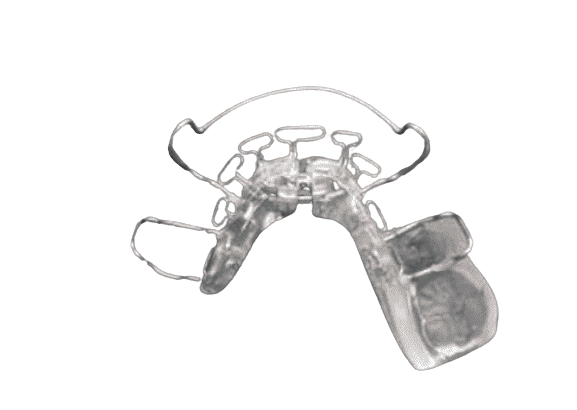
How Does the Homeoblock Appliance Work?
The Homeoblock appliance is a removable oral device, worn primarily during sleep, that uses gentle biomimetic forces to encourage more balanced positioning of the maxilla and mandible over time.
Unlike traditional orthodontic devices that focus purely on tooth alignment, this appliance takes a whole-jaw approach. It works with the body’s natural adaptive capacity rather than forcing rapid mechanical movement. Sessions are non-surgical. There’s no drilling, no incisions, and no downtime.
Structural Balance: Realigning the Foundation
Structural balance is the first pillar of Dr. Jung’s approach, and it’s central to understanding facial asymmetry. Think of your skull as a house frame. If one wall was built slightly off during construction, everything above it, the roof line, the windows, the doors, ends up slightly skewed too.
The same principle applies to your face. An asymmetric maxilla changes how your mandible closes. It also changes how your muscles balance tension across your jaw. It even shapes your airway space differently on each side. The Homeoblock appliance targets this foundational layer. Rather than masking the asymmetry with veneers or cosmetic adjustments, it addresses the structural root.
Patients from Burleson, Alvarado, and Kennedale often ask whether structural work can really change something they’ve lived with for decades. The honest answer is that results vary by case. A thorough evaluation, including imaging, is always the starting point before setting expectations.
Chemical Balance: The Overlooked Inflammatory Connection
The second pillar looks inward, toward the body’s chemical environment. Structural imbalance in the jaw doesn’t just affect appearance. It can also affect how efficiently you breathe through your nose versus your mouth. Chronic mouth breathing dries oral tissue and disrupts the balance of bacteria in the mouth. Research also links it to increased systemic inflammation.
For example, patients who struggle with one-sided nasal congestion related to facial asymmetry sometimes also report more frequent sinus irritation. Addressing the structural cause, rather than only treating the symptoms, supports the body’s broader effort to reduce unnecessary inflammatory load.
Emotional, Mental, and Spiritual Balance: The Sleep Connection
Finally, the third pillar addresses something patients rarely connect to their jaw. Restricted airway space from maxillary asymmetry often disrupts sleep quality. Furthermore, poor sleep affects mood regulation, focus, and stress resilience the next day.
Dr. Jung has seen this pattern repeatedly. A patient comes in concerned about their profile in photos. During the consultation, they mention they’ve felt foggy and irritable for years. Safe to say, these two threads connect more often than most people expect. Better structural balance can support deeper, more restorative sleep, which in turn supports emotional steadiness.
Who Is a Good Candidate for This Kind of Treatment?
Adults with visible facial asymmetry, jaw joint discomfort, or airway-related sleep concerns, and who want a non-surgical option, are often reasonable candidates pending a full evaluation.
Every case starts with imaging. Dr. Jung uses 3D CBCT scans alongside dedicated airway analysis software to map the maxilla’s exact position, sinus volume, and airway dimensions. This diagnostic step happens before recommending any device. It matters because facial asymmetry can stem from several different sources. Treatment only works when it targets the actual cause.
For adults who also struggle with snoring or suspect sleep-disordered breathing, home sleep testing is available directly through the practice. This gives a fuller picture before treatment begins. No appliance can promise to cure sleep apnea outright. However, understanding the full airway picture helps guide a more informed plan.
What Does Treatment Actually Look Like Day to Day?
Most patients wear the Homeoblock appliance during sleep, with brief daytime wear in some cases, while regular check-ins track how the jaw responds over several months.
Because the forces involved are gentle, change happens gradually. Patients need patience with the process. As a result, most people find the appliance easy to fit into a normal routine, since they wear it primarily overnight rather than throughout the workday.
Why an Airway-Focused Approach Changes the Conversation
Many general dentists and orthodontists in Mansfield and across Fort Worth, Grand Prairie, and Irving focus primarily on tooth position. That’s valuable work, but it can miss the bigger picture. Dr. Jung’s background is different. She holds a degree in Child Psychology and Education in addition to her dental training. This shapes how she evaluates the connection between development, behavior, and structure, even in adult cases where childhood patterns still echo forward.
Recognized Expertise, Whole-Body Perspective
NBC, ABC, FOX, CW, and CBS have all featured Dr. Jung, along with a TEDx talk, discussing this whole-body approach to dentistry. D Magazine has also named her among the Best Dentists in Dallas-Fort Worth every year from 2021 through 2025. However, credentials aside, what matters most to patients is a clear, honest evaluation of whether structural treatment makes sense for their specific face and their specific goals.
Frequently Asked Questions About the Homeoblock Appliance
Does the Homeoblock appliance hurt to wear?
Most patients describe mild pressure during the first week or two, similar to a retainer, which typically eases as the mouth adjusts to the device.
Can facial asymmetry really improve in adulthood?
Some structural change remains possible in adulthood, though results depend heavily on the individual case; a CBCT-based evaluation determines what’s realistic for you.
Is this the same as traditional orthodontics?
No. Traditional orthodontics generally focuses on tooth position, while this approach also targets the underlying jaw structure and airway space.
Will I need this appliance forever?
Treatment length varies by case. Dr. Jung discusses timelines individually after your evaluation, since no two jaws respond the same way.
Do you see patients from outside Mansfield?
Yes. Central Park Dental & Orthodontics welcomes patients traveling from Arlington, South Arlington, Dallas, Fort Worth, Midlothian, Sublett, Britton, Haltom City, Bedford, and beyond, including out-of-state patients seeking comprehensive, wellness-centered care.
How do I know if my asymmetry is structural or just natural variation?
A CBCT scan and airway evaluation can distinguish everyday facial variation from asymmetry tied to jaw development, so scheduling a consultation is the clearest next step.l9
Related links:
Educational Disclaimer: developed by Dr. Jung with the support of AI writing tools for clarity and reach. All content is personally reviewed and edited by our team to ensure accuracy for general educational purposes. This content is educational only and is not a substitute for individualized professional care.
 book
book drive
drive call
call