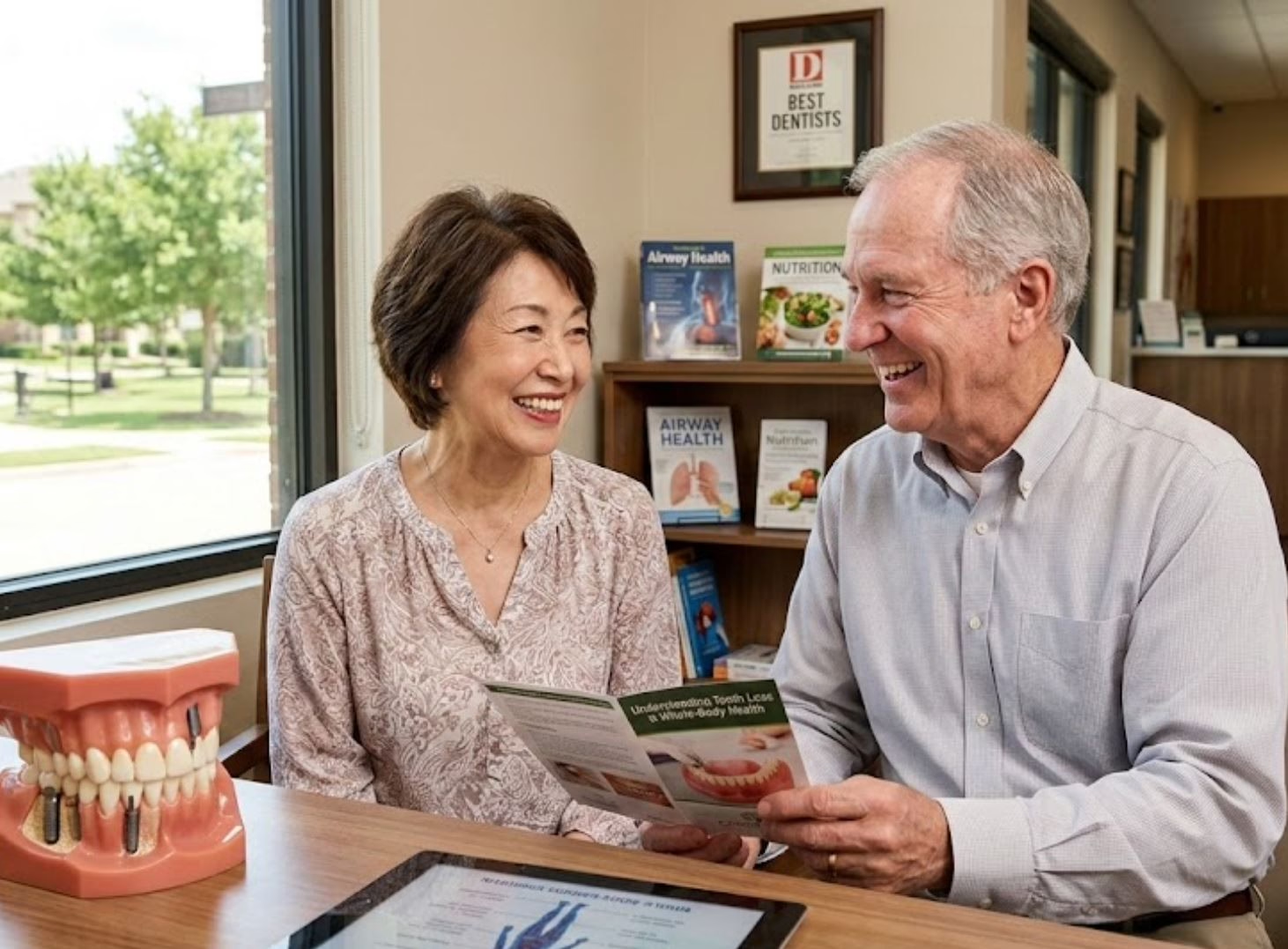
“The Teeth are a Gateway to your Well-Being.”
Key Takeaways
- Epigenetic oral appliances work by sending mechanical signals to cells that can activate genes responsible for facial development and bone remodeling
- These appliances address the root cause of malocclusion by focusing on myofunctional patterns, breathing, and restoring proper functional signals rather than just straightening teeth
- Treatment benefits extend beyond the mouth, potentially improving airway volume, sleep quality, posture, cervical alignment, and overall systemic health
- The approach recognizes that environmental signals and functional patterns can influence gene expression and structural development throughout life
Most people think orthodontics is about moving teeth into straight lines. But what if the real issue isn’t where your teeth are positioned, but why they ended up there in the first place?
At Central Park Dental & Orthodontics in Mansfield, Dr. Jiyoung Jung approaches dental development differently. Rather than simply correcting the symptoms of malocclusion, we look at the underlying functional patterns that created the problem—and we use epigenetic oral appliances to help restore the body’s natural growth potential.
What Most Patients Don’t Realize About Facial Development
Here’s something that surprises most parents: approximately 80% of a child’s facial growth happens by age two. But if that’s true, what actually drives that growth?
The answer isn’t genetics alone. It’s function.
The way your child breathes, swallows, and positions their tongue thousands of times each day creates mechanical signals that literally shape the bones of the face. When these functions work properly, the face develops forward and downward, creating adequate space for teeth, a properly sized airway, and balanced facial features.
When these functions are compromised—by mouth breathing, tongue ties, improper swallowing patterns, or chronic nasal congestion—the face adapts. The palate becomes narrow and high. The mandible may not develop fully forward. The airway becomes restricted. And the teeth? They simply reflect the space they’re given.
This is where epigenetics comes in.
Understanding Epigenetics and Oral Development
The term “epigenetics” refers to changes in gene expression that don’t involve alterations to the DNA sequence itself. Instead, environmental factors and signals can turn genes on or off, influencing how our bodies develop and function.
In the context of facial development, this means that environmental signals—like the position of the tongue, the forces of chewing, the pattern of breathing—can influence how craniofacial structures grow and develop, even in adults.
Think of your genes as sheet music. The notes are written, but how the music actually sounds depends on who’s playing the piano. In this case, the “pianists” are the environmental signals and functional patterns that your body experiences daily. These signals include mechanical forces, chemical signals, and even electromagnetic fields that cells respond to through a process called mechanotransduction.
Research has demonstrated that cells can sense, generate, and respond to mechanical forces applied across their membranes. When you swallow properly with your tongue pressing against your palate, or when you chew challenging foods, you’re sending specific mechanical signals to the cells in your facial bones and sutures. These signals can activate cellular machinery that promotes bone remodeling and growth—even in adults.
This represents a fundamental shift from the old belief that facial growth was predetermined by genetics and stopped after adolescence. We now understand that the body retains remarkable capacity for adaptation throughout life.
How Epigenetic Oral Appliances Work Differently
Traditional orthodontics typically uses static, continuous forces to move teeth. Braces, retainers, and many appliances work by applying constant pressure to push or pull teeth into desired positions. While this can straighten teeth, it doesn’t address the underlying functional issues that caused the malocclusion in the first place.
Epigenetic oral appliances take a completely different approach. These appliances are designed to work with your body’s natural healing and developmental capacity rather than against it.
Working as Genetic Signals
What makes epigenetic appliances unique is their ability to function as signals that activate genes responsible for facial development. Rather than mechanically forcing change, these appliances create the conditions and mechanical environment that tell your cells to turn on growth and remodeling genes.
When properly designed and worn, epigenetic oral appliances:
Send cyclic mechanical signals: These appliances deliver oscillating forces that research shows are significantly more effective at promoting bone remodeling than static forces. Studies have found that cyclic mechanical stimuli can evoke substantial craniofacial growth and activate cellular machinery through mechanotransduction pathways.
Create space for proper tongue function: By allowing the tongue to rest naturally against the roof of the mouth—its proper physiologic position—the appliance enables the tongue to create the natural forces that develop the midface. When the tongue can function properly, it sends the right signals for healthy facial development.
Allow natural cranial motion: The skull isn’t rigid. Research has confirmed that cranial bones maintain mobility throughout life, moving in predictable patterns with each breath and swallow. Epigenetic appliances work with these natural cranial rhythms rather than restricting them.
Promote functional rehabilitation: These appliances don’t force the palate wider mechanically. Instead, they remove restrictions and create space for proper tongue function to occur. As function improves, the right genetic signals are sent, and structure follows.
The key difference is that epigenetic appliances are signaling devices. They’re designed to communicate with your cells, activating the genes that promote healthy craniofacial development. This is fundamentally different from appliances that simply apply mechanical force to move teeth.
The Science Behind Mechanotransduction and Gene Activation
When we talk about how epigenetic appliances work, we need to understand mechanotransduction—the process by which cells convert mechanical signals into biological responses that can activate or suppress specific genes.
Your body is constantly receiving and processing mechanical information. When you chew, swallow, or speak, you’re creating forces that travel through your teeth, jaw, and skull at remarkable speeds. These forces reach cells throughout the craniofacial complex, triggering a cascade of biological responses.
Here’s what happens at the cellular level:
Mechanical forces reach the cell membrane, where they’re detected by specialized proteins. These signals then move across the membrane into the cell interior—a process called signal transduction. Once inside, the signals travel to the cell nucleus, where they can influence gene transcription. This means mechanical forces can literally turn genes on or off, affecting which proteins the cell produces and how it behaves.
In the context of facial development, these mechanical signals can activate genes that promote:
- Osteogenic differentiation of stem cells in the periodontal ligament and maxillary sutures
- New bone formation along cranial sutures
- Remodeling of existing bone tissue
- Changes in the size and shape of the palate, maxilla, and mandible
Research published in the Journal of Dental Research has demonstrated that oscillatory strains activate genes and transcription factors through mechanotransduction pathways, effectively modulating sutural growth. This happens when mechanical signals work through genetic pathways to turn on the genes responsible for bone development.
What makes this particularly relevant is the speed at which these signals travel. Mechanotransduction occurs at the speed of sound—approximately 767 miles per hour in air and even faster in the water that makes up 50-75% of your body. This is actually twice as fast as your nervous system conducts signals.
Epigenetic oral appliances are designed to deliver the specific types of mechanical signals that research shows are most effective at activating these developmental genes—cyclic, oscillating forces rather than constant static pressure.
Why Tongue Position Matters More Than You Think
If there’s one thing that determines the success of epigenetic treatment, it’s tongue position and function.
Your tongue is the most powerful orthodontic appliance you have. It exerts up to 500 grams of pressure against your teeth—far more than the 1.7 grams needed to move a tooth, and more than the 100-300 grams your lips exert.
During a functional swallow, the tongue should press firmly against the palate, creating an expanding force that naturally develops the maxilla. A newborn’s ability to nose breathe, suck, and swallow properly stimulates growth of the maxilla. As children develop and begin chewing solid foods, these additional forces stimulate mandibular development.
But when tongue function is compromised—by factors like tongue ties, chronic mouth breathing, prolonged bottle feeding, or thumb sucking—the normal developmental signals are disrupted. The genes that should be turned on for healthy facial development don’t receive the right signals. The maxilla doesn’t develop properly forward and wide. The mandible may remain retruded. The palate becomes narrow and high. And the airway becomes restricted.
This is why epigenetic appliances focus so heavily on creating space for proper tongue function. By removing restrictions and allowing the tongue to rest and function in its proper position, we’re restoring the natural forces that should have been sending developmental signals all along.
The Connection Between Airway, Breathing, and Facial Structure
One of the most important aspects of epigenetic oral appliance therapy is its impact on airway health. This connection goes both ways: compromised airways affect facial development, and improved facial development can enhance airway function.
Research has shown that mothers with airway compromise during pregnancy are more likely to have babies born with underdeveloped mandibles—a condition called micrognathia. This makes sense when you consider that form follows function. If the developing fetus is experiencing reduced oxygen, the structures that maintain the airway—particularly the mandible—will develop accordingly as a survival adaptation.
After birth, chronic mouth breathing, enlarged tonsils and adenoids, or nasal obstruction can prevent proper tongue position and nasal breathing. Children who can’t breathe through their nose will position their tongue low and forward to keep the airway open, rather than resting it against the palate where it should be. This compromised function then fails to send the right signals for healthy facial development.
At Central Park Dental & Orthodontics, we take airway assessment seriously. Dr. Jung uses advanced diagnostic tools including 3D CBCT imaging and specialized medical imaging visualization and analysis software specifically for sleep and airway evaluation. This allows us to see not just the teeth and jaws, but the entire three-dimensional airway space.
For patients in Mansfield, Arlington, Grand Prairie, and surrounding communities who are concerned about sleep-disordered breathing, we also offer home sleep testing directly through our practice. This convenient option allows us to screen for potential sleep issues without the need for expensive and uncomfortable overnight sleep lab studies.
When epigenetic appliances successfully improve tongue position and restore proper nasal breathing, patients often experience:
- Increased airway volume
- Improved oxygen saturation during sleep
- Reduced snoring
- Better sleep quality
- Enhanced daytime energy
- Improved focus and concentration
These changes occur because the appliance isn’t just moving teeth—it’s sending signals that facilitate the natural development of the entire craniofacial complex, including the structures that define and support the airway.
Understanding Cranial Strain Patterns and Their Impact
Here’s something most people don’t realize: the bones of your skull are not fused into a single rigid structure. Research has confirmed that cranial bones maintain mobility throughout life, moving in predictable patterns with breathing, swallowing, and the pulsation of cerebrospinal fluid.
When these natural movements become restricted or distorted, the result is what we call a “cranial strain pattern.” These patterns can develop from birth trauma, falls, dental work that doesn’t account for cranial motion, or chronic postural adaptations.
Common cranial strain patterns include:
Vertical strains: When the sphenoid and occiput move in ways that create either a Class II or Class III bite relationship. An inferior vertical strain creates the classic “overbite and overjet” appearance with a retruded mandible. A superior vertical strain can create an underbite appearance.
Lateral strains: Result in facial asymmetry, with one side of the face appearing fuller or more compressed than the other. These often create crossbites and midline discrepancies.
Torsion patterns: Create a twisted appearance to the head and face, often with unilateral crossbites and significant asymmetry.
Sidebending patterns: Among the most complex strain patterns, these create combinations of Class I and Class II relationships on different sides of the mouth.
These cranial distortions don’t just affect appearance. They can compromise the function of the 12 cranial nerves that pass through openings in the skull bones. When cranial bones are mal-positioned, the nerves passing through them can become compressed or stretched, leading to symptoms far beyond dental issues:
- Chronic headaches and migraines
- TMJ pain and dysfunction
- Visual disturbances
- Tinnitus and hearing issues
- Balance problems and vertigo
- Sleep disturbances
- Digestive issues
- Mood and behavioral changes
What makes epigenetic appliances particularly valuable is their ability to help resolve these strain patterns. By creating space, removing restrictions, and working with natural cranial motion rather than against it, these appliances can help “unwind” longstanding cranial distortions.
Patients often report improvements that seem unrelated to dentistry—better sleep, fewer headaches, improved digestion, enhanced mood—because we’re addressing whole-body mechanical patterns, not just tooth position.
The Role of Fascia and Biotensegrity
To truly understand how epigenetic appliances work throughout the entire body, we need to talk about fascia and biotensegrity.
Fascia is a continuous three-dimensional network of connective tissue that extends from your skin down to the nucleus of every cell in your body. It’s not just passive packing material—fascia is the largest organ in your body, accounting for more than a third of your musculoskeletal system. It contains six times as many nerve receptors as any other tissue except skin.
This fascial network connects everything: muscles to bones, organs to each other, your cranium to your pelvis. When one part of this network experiences tension or restriction, the effects ripple throughout the entire system. This is the principle of biotensegrity—the recognition that living organisms function as tension-dependent structures where the integrity of the whole depends on balanced tension throughout the system.
Your skull, spine, and entire body function like a tensegrity structure: compression elements (bones and teeth) are held in position by continuous tension elements (fascia, muscles, ligaments). When everything is balanced, the structure is strong, resilient, and energy-efficient. When restrictions develop, compensations occur throughout the entire system.
This is why changing occlusion—the way your teeth come together—can affect your entire body. The bite is essentially another suture in the closed kinematic chain of your skull. When your teeth close together properly, the entire cranial mechanism can function optimally. When there are interferences or imbalances, the body must compensate.
Epigenetic appliances work within this understanding of whole-body integration. By improving function in the mouth—tongue position, breathing pattern, swallowing—we’re sending new signals through the fascial network that can help the entire system rebalance.
Treatment Process and What to Expect
When patients come to Central Park Dental & Orthodontics in Mansfield for epigenetic appliance therapy, the process is comprehensive and individualized.
Initial Assessment
Dr. Jung begins with a thorough evaluation that goes well beyond looking at teeth. This includes:
- Detailed medical and dental history
- Airway and breathing assessment
- Evaluation of tongue position, tie, and function
- TMJ examination
- Postural evaluation
- 3D CBCT imaging to visualize craniofacial structures and airway
- Assessment of cranial strain patterns
- Analysis of swallowing patterns and oral habits
For patients from Fort Worth, Midlothian, Burleson, and other nearby communities, this comprehensive approach often reveals underlying issues that have been missed by previous providers who focused only on teeth.
Custom Appliance Design
Each epigenetic oral appliance is custom-designed for the individual patient based on their specific cranial strain pattern, palatal anatomy, and treatment goals. The design is carefully crafted to create optimal conditions for proper tongue function while delivering the cyclic mechanical signals that activate developmental genes.
Active Treatment Phase
During the active treatment phase, patients typically wear the appliance primarily at night, though Dr. Jung may recommend additional daytime wear in some cases depending on individual needs and treatment goals. Regular adjustment appointments—typically every 6-8 weeks—allow Dr. Jung to assess progress and make adjustments to the appliance as needed.
These appointments are important for monitoring how well the appliance is working as a genetic signal, evaluating changes in facial structure and airway, and ensuring that proper functional patterns are being established.
Functional Integration
A critical component of epigenetic treatment is myofunctional therapy—exercises and techniques that retrain tongue position, breathing patterns, and swallowing. Many patients work with specialized myofunctional therapists, though Dr. Jung also provides guidance for basic exercises.
The goal is permanent functional change. By the time the appliance is removed, proper tongue position and nasal breathing should be habitual, making retention less critical than with traditional orthodontics.
Timeline and Results
Treatment duration varies based on the individual’s age, severity of malocclusion, and commitment to functional exercises. Children often show dramatic changes within months, while adult treatment may take longer.
However, changes begin surprisingly quickly. Many patients notice improvements in breathing, sleep quality, and facial appearance within the first few weeks. This is because we’re working with the body’s natural capacity for change—activating the genes that promote healthy development rather than forcing movement against resistance.
For younger patients, starting treatment early—even as young as 3-4 years old—can redirect growth patterns before significant distortions develop. This early intervention can often prevent the need for traditional braces or extractions later.
Who Benefits from Epigenetic Oral Appliances
Epigenetic appliance therapy can benefit a wide range of patients:
Children and adolescents with:
- Narrow palates and dental crowding
- Mouth breathing habits
- Chronic nasal congestion or allergies
- Snoring or sleep-disordered breathing
- ADHD or learning difficulties
- Bedwetting beyond the normal age
- Behavioral or developmental concerns
- History of tongue tie or improper swallowing patterns
Adults experiencing:
- TMJ pain and dysfunction
- Chronic headaches or migraines
- Sleep apnea or poor sleep quality
- Clenching or grinding
- Worn or damaged teeth from past orthodontic treatment
- Facial asymmetry
- Chronic neck and shoulder tension
- Limited mouth opening or jaw clicking
Individuals with:
- History of difficult birth or birth trauma
- Previous orthodontic relapse
- Concerns about airway and breathing
- Desire for facial enhancement without surgery
- Multiple systemic health issues that may connect to oral dysfunction
It’s important to note that epigenetic appliance therapy addresses the cause of malocclusion, not just the symptoms. This makes it particularly valuable for patients who want comprehensive improvement in both oral health and overall wellness.
The Three Legs of Well-being at Central Park Dental
Dr. Jung’s approach to dentistry recognizes that true healing requires attention to multiple interconnected factors. This comprehensive methodology, which she calls “The Three Legs of Well-being,” acknowledges that lasting wellness requires addressing three interconnected pillars:
Structural Balance (Alignment): This includes both body alignment and oral structural alignment, with precise tooth positioning for optimal function. When your teeth, jaws, cranial bones, and body are properly aligned, your entire system can function more efficiently. Epigenetic appliances play their primary role here—helping restore proper structural relationships by sending the right signals for healthy development.
Chemical Balance in the Body: True healing requires addressing toxicity and optimizing your body’s internal chemical environment. This includes nutrition, hydration, reducing inflammatory triggers, and supporting the body’s natural detoxification processes. No matter how well-aligned your structure is, healing becomes compromised when your body is dealing with chemical imbalances or toxic burden.
Emotional, Mental, and Spiritual Balance: Dr. Jung recognizes the profound connection between your mental state and physical health. Stress, unresolved emotional trauma, and spiritual disconnection can manifest as physical symptoms, including tension, clenching, poor sleep, and even altered facial development in children. Addressing this dimension is essential for lasting wellness.
When all three legs are addressed, the stool stands stable. When any leg is missing or weak, health problems persist despite treatment. This holistic perspective sets Central Park Dental & Orthodontics apart from practices that focus on teeth alone.
Beyond the Mouth: Systemic Health Connections
One of the most fascinating aspects of epigenetic appliance therapy is its potential to influence health far beyond the mouth. This shouldn’t be surprising when you consider the interconnected nature of body systems.
Improving airway function affects oxygen delivery to every cell in your body. Better sleep quality allows the brain to clear metabolic waste through the glymphatic system. Reduced cranial restrictions can improve cerebrospinal fluid flow and decompress cranial nerves.
Patients often report improvements in:
- Energy levels and daytime alertness
- Mood and emotional regulation
- Cognitive function and focus
- Chronic pain throughout the body
- Digestive function
- Cardiovascular health markers
- Immune system function
These changes occur because we’re addressing fundamental biomechanical and functional issues that affect multiple body systems. The mouth isn’t separate from the rest of the body—it’s an integral part of a complex, interconnected whole.
Dr. Jung has been recognized by D Magazine as one of the Best Dentists from 2021 through 2025, and her work has been featured on NBC, ABC, FOX, CW, CBS, and at TEDx. This recognition reflects her commitment to this comprehensive, whole-body approach to dental care.
Common Questions and Concerns
How is this different from rapid palatal expansion?
Rapid palatal expanders use significant mechanical force to physically separate the palatal bones at the midline suture. This approach focuses on creating immediate structural change through force.
Epigenetic appliances work differently—they function as signals to activate genes responsible for facial development. Rather than forcing change mechanically, they create the conditions that tell your cells to turn on growth and remodeling genes. The changes are more stable because they’re driven by corrected function and proper genetic signaling, not just mechanical force.
Can adults benefit from this approach?
Yes. While children often show more dramatic changes more quickly, adults retain significant capacity for bone remodeling and adaptation. Research has demonstrated that adults can achieve meaningful changes in facial structure, airway volume, and bone position through approaches that harness mechanotransduction and activate developmental genes.
Adult treatment may take longer and require more attention to functional retraining, but many adults experience life-changing improvements in sleep, breathing, TMJ health, and overall wellness.
Will my child need traditional braces later?
Every case is different, but many children who complete epigenetic appliance therapy early develop straight teeth naturally as their palate expands and proper function is established. When the structures develop correctly from the beginning, there’s often no need for extensive orthodontics later.
Even when some refinement is needed, it’s typically much simpler and shorter because the foundation is correct.
Is this treatment covered by insurance?
Coverage varies by individual insurance plans. Some medical insurance policies may provide coverage for treatment of sleep-disordered breathing or airway issues. Dental insurance coverage for these appliances varies.
Our team at Central Park Dental & Orthodontics will help you understand your benefits and work with you to create a financial plan that fits your family’s budget. The investment in addressing root causes early often prevents much more expensive problems later.
How long does treatment take?
Treatment duration varies based on age, severity of issues, and individual healing capacity. Children may show significant improvement within 6-12 months, while adult treatment often takes 18-24 months or longer.
However, many patients notice improvements in breathing, sleep, and comfort within the first few weeks of treatment as the appliance begins sending the right signals to their cells.
How often will I need adjustment appointments?
Most patients return every 6-8 weeks during active treatment. These appointments allow Dr. Jung to assess progress, make adjustments to the appliance as needed, check on functional improvements, and address any concerns. The appointment schedule may vary based on individual needs and treatment stage.
Why This Matters for Families in Mansfield and Surrounding Areas
For families in Mansfield, Arlington, Kennedale, Alvarado, Lillian, and throughout the North Texas region, access to comprehensive airway-focused dentistry can be transformative.
Many children struggle with issues that seem unrelated—poor sleep, behavioral challenges, difficulty in school, chronic illness—when the underlying problem is compromised breathing and craniofacial development. Parents often spend years seeking answers from multiple specialists without anyone looking at the fundamental structural and functional issues in the mouth and airway.
Dr. Jung’s approach at Central Park Dental & Orthodontics brings together advanced diagnostics, evidence-based treatment methods, and a whole-body wellness philosophy. Using tools like 3D CBCT imaging, specialized medical imaging software for airway evaluation, and laser dentistry, we can identify issues early and intervene effectively.
For adults struggling with sleep apnea, TMJ pain, or the effects of poor facial development, epigenetic appliance therapy offers an alternative to CPAP machines, medications, or invasive surgery. While we never claim to cure sleep apnea, many patients experience significant improvement in symptoms and quality of life.
Moving Forward with Epigenetic Treatment
If you’re considering epigenetic oral appliance therapy for yourself or your child, the first step is a comprehensive evaluation. Dr. Jung will assess not just teeth and bite, but the entire craniofacial structure, airway, function, and health history.
This thorough approach takes time, but it’s essential for creating an effective, individualized treatment plan. Cookie-cutter solutions don’t work when every person has a unique combination of structural issues, functional patterns, and health challenges.
At Central Park Dental & Orthodontics, we’re committed to providing the education and support you need to make informed decisions about your care. We’ll explain what we see, why it matters, and what options are available. We’ll answer your questions without pressure or judgment.
Because at the end of the day, this isn’t about selling treatment—it’s about helping people breathe better, sleep better, and live healthier lives by activating their body’s natural capacity for healthy development.
Frequently Asked Questions About Epigenetic Oral Appliances
What age is best to start epigenetic appliance treatment?
The ideal time is often earlier than most people think. Treatment can begin as young as 3-4 years old when significant developmental issues are present. Early intervention can redirect growth patterns by sending the right genetic signals before major distortions develop. However, people of all ages can benefit. Adults retain capacity for change and often experience significant improvements in airway, TMJ health, and overall wellness.
How does the appliance actually turn genes on?
The appliance works through mechanotransduction—the process by which cells convert mechanical signals into biological responses. When worn properly, the appliance creates cyclic mechanical forces that travel to cells in your facial bones and sutures. These mechanical signals cross the cell membrane, travel to the nucleus, and can activate or suppress specific genes responsible for bone development and remodeling. This is how environmental signals (the mechanical forces from the appliance) can influence gene expression without changing your DNA.
Do I need to wear the appliance all day?
Most patients wear the appliance primarily at night, though Dr. Jung may recommend additional daytime wear in certain cases. The key is consistency—wearing it as prescribed ensures your cells receive the mechanical signals needed to activate developmental genes regularly.
Can this fix TMJ problems?
Many patients experience significant improvement in TMJ symptoms during epigenetic treatment. By addressing underlying cranial strain patterns, improving tongue position, decompressing the joint, and restoring proper functional patterns, the conditions that contribute to TMJ dysfunction are often resolved. However, complex TMJ cases may require additional specialized treatment.
Will results be permanent or will teeth shift back?
Because epigenetic treatment addresses the functional causes of malocclusion and works by activating genes that promote healthy development—not just tooth position—results tend to be more stable than traditional orthodontics. When proper tongue position, nasal breathing, and functional swallowing patterns become habitual, they maintain the structural changes naturally. This is why functional retraining is such an important part of treatment.
How does this affect my child’s airway and breathing?
Improving tongue position and sending the right signals for facial development naturally increases airway space. As the maxilla develops properly forward and wide, there’s more room for the tongue, which is the front wall of the airway. Many children experience reduced snoring, better sleep quality, elimination of mouth breathing, and improved oxygenation. These changes can have profound effects on behavior, learning, growth, and overall health.
Can this help with sleep apnea in adults?
While we cannot claim to cure sleep apnea, many adults experience improvement in sleep-disordered breathing symptoms as airway volume increases and tongue position improves. For some patients, epigenetic treatment provides enough improvement that CPAP therapy is no longer needed, though this varies by individual. We offer home sleep testing to monitor progress objectively.
Is this the same as traditional orthodontics?
No. Traditional orthodontics focuses on moving teeth into alignment using static forces, typically without addressing the functional causes of malocclusion. Epigenetic appliances focus on activating genes that promote healthy development by restoring proper function—tongue position, breathing, swallowing. The goal is to send the right signals to turn on developmental genes, treating the cause rather than just the symptoms.
What happens after the appliance is removed?
Once treatment goals are achieved and proper function is established, the appliance is gradually phased out. Because the changes are driven by corrected function and proper genetic signaling rather than mechanical force alone, retention requirements are typically minimal. Proper tongue position essentially acts as a natural retainer. Some patients may use a retainer at night initially, but long-term dependence on retention is usually unnecessary.
How is this different from other dental appliances I’ve heard about?
Epigenetic oral appliances are unique because they function as genetic signals rather than just mechanical devices. They’re designed to activate specific genes through mechanotransduction—sending the right type of cyclic forces that research shows can turn on genes responsible for bone development and facial growth. This is fundamentally different from appliances that simply apply force to move teeth or expand the palate mechanically.
Schedule Your Consultation
If you’re ready to explore whether epigenetic oral appliance therapy is right for you or your child, we invite you to schedule a comprehensive evaluation with Dr. Jung.
Call Central Park Dental & Orthodontics at 817-466-1200 or visit us at 1101 Alexis Ct #101, Mansfield, TX 76063.
We serve families throughout Mansfield, Arlington, Fort Worth, Dallas, Grand Prairie, Burleson, Midlothian, Kennedale, Alvarado, Lillian, and surrounding North Texas communities.
Learn more about our comprehensive approach to dental care at www.centralparkdental.net/blog.
Related links:
Educational Disclaimer
The information provided in this blog post is for educational purposes only and is not intended as a substitute for professional medical or dental advice, diagnosis, or treatment. Every individual’s situation is unique, and treatment outcomes can vary significantly based on many factors including age, severity of condition, overall health, and commitment to functional exercises.
Epigenetic oral appliance therapy should only be undertaken under the supervision of a qualified dental professional after a comprehensive evaluation. The content presented here represents general information about this treatment approach and should not be interpreted as a guarantee of specific results.
If you have specific concerns about your oral health, airway, sleep, or craniofacial development, please schedule a consultation for personalized assessment and recommendations.
References
- Shen T, Qiu K, Chang H, et al. Cyclic tension promotes osteogenic differentiation in human periodontal ligament stem cells. Int J Clin Exp Pathol. 2014;7(11):7872-80.
- Mao JJ. Mechanobiology of craniofacial sutures. J Dent Res. 2002;81:810-816.
- Mao JJ, Wang X, Kopher RA. Biomechanics of craniofacial sutures: orthopedic implications. Angle Orthod. 2003;73(2):128-135.
- Ingber DE. Tensegrity I: cell structure and hierarchical systems biology. J Cell Sci. 2003;116(pt 7):1157-1173.
- Ingber DE. Tensegrity II: how structural networks influence cellular information processing networks. J Cell Sci. 2003;116(pt 8):1397-1408.
- Chiquet M, Gelman L, Lutz R, Maier S. From mechanotransduction to extracellular matrix gene expression in fibroblasts. Biochim Biophys Acta. 2009;1793:911-920.
- Hamill OP, Martinac B. Molecular basis of mechanotransduction in living cells. Physiol Rev. 2001;81:685-740.
- Mammoto A, Mammoto T, Ingber DE. Mechanosensitive mechanisms in transcriptional regulation. J Cell Sci. 2012;125(pt 13):3061-3073.
- Oleski SL, Smith GH, Crow WT. Radiographic evidence of cranial bone mobility. Cranio. 2002;20(1):34-38.
- Martino F, Perestrelo AR, Vinarský V, Pagliari S, Forte G. Cellular mechanotransduction: from tension to function. Front Physiol. 2018;9:824.
- Timoshkin EM, Sandhouse M. Retrospective study of cranial strain pattern prevalence in a healthy population. J Osteopath Med. 2008;108(11):652-656.
- Yourek G, McCormick SM, Mao JJ, Reilly GC. Shear stress induces osteogenic differentiation of human mesenchymal stem cells. Regen Med. 2010;5(5):713-724.
- Sharifi Milani R, Deville de Periere D, Micallef JP. Relationship between dental occlusion and visual focusing. Cranio. 1998;16(2):109-118.
- Gangloff P, Louis JP, Perrin PP. Dental occlusion modifies gaze and posture stabilization in human subjects. Neurosci Lett. 2000;293(3):203-206.
- Fink M, Wahling K, Stiesch-Scholz M, Tschernitschek H. The functional relationship between the craniomandibular system, cervical spine and the sacroiliac joint: a preliminary investigation. Cranio. 2003;21(3):202-208.