“The Teeth are a Gateway to your Well-Being.”
Key Takeaways
- Pregnancy creates real, measurable changes in your mouth that can affect your baby’s health if left unaddressed
- Hormonal shifts during pregnancy increase your risk of gum disease, tooth sensitivity, and even tooth loss — and most expecting moms don’t know this until it’s already happening
- Dental care, including cleanings and X-rays with proper shielding, is safe and recommended throughout pregnancy
- Untreated gum disease during pregnancy has been linked to preterm birth and low birth weight — protecting your smile is protecting your baby
What Most Expecting Moms Don’t Realize Until It’s Too Late
You’ve got the prenatal vitamins. You’ve scheduled every OB appointment. You’ve read the books, downloaded the apps, and started decorating the nursery. But here’s something that almost never makes the checklist — and it probably should be near the top:
Your mouth changes dramatically during pregnancy, and those changes can affect not just your dental health, but your baby’s health too.
This isn’t meant to alarm you. At Central Park Dental & Orthodontics in Mansfield, TX, we see expecting moms throughout the Mansfield, Burleson, Kennedale, and South Arlington communities, and one of the most common things Dr. Jiyoung Jung hears from patients is some version of: “I had no idea my teeth could be affected like this.”
So let’s talk about it — clearly, honestly, and in a way that actually helps you protect both smiles.
Why Pregnancy Changes Everything Below the Gumline
Here’s something worth understanding before we get into the specifics: your mouth doesn’t operate in isolation from the rest of your body. This is central to how Dr. Jung approaches dental care at Central Park Dental & Orthodontics. Dentistry isn’t just about teeth — it’s about whole-body health.
When you’re pregnant, your body undergoes a surge in hormones — particularly estrogen and progesterone — that affect virtually every system, including your gums. These hormones make gum tissue more reactive to the bacteria that naturally live in your mouth. Even with good brushing habits, your gums may become inflamed, swollen, or prone to bleeding in ways they never were before.
This condition is called pregnancy gingivitis, and it affects the majority of pregnant women to some degree. What makes it tricky is that many women assume bleeding gums during pregnancy are just a normal side effect to push through. They’re not something to ignore.
Left unaddressed, pregnancy gingivitis can progress into a more serious form of gum disease called periodontitis — which involves the breakdown of the bone and tissue that hold your teeth in place. And here’s where it becomes a two-person issue: research has consistently shown that advanced gum disease during pregnancy is associated with higher risks of preterm birth and delivering a baby with low birth weight.
That’s not meant to be scary. It’s meant to be clear: your oral health during pregnancy is part of your prenatal care.
The Hormonal Shifts Nobody Talks About at Your OB Appointment
Your OB is incredible. But they have a lot to cover in those appointments. Dental changes during pregnancy often don’t make the list — and that gap in communication is something we work to bridge for patients throughout the Mansfield and Fort Worth area.
Beyond gingivitis, here’s what else pregnancy hormones can do to your mouth:
Increased sensitivity. Hormonal changes can affect the way your teeth respond to temperature, pressure, and texture. Foods or drinks that never bothered you might suddenly feel uncomfortable.
Loosening of teeth. Even without active gum disease, the hormones relaxin and progesterone affect the ligaments and bone that support your teeth. Some women notice a slight loosening feeling. This is usually temporary, but it should still be evaluated.
Pregnancy tumors on the gums. Don’t let the name frighten you — these are non-cancerous overgrowths of gum tissue that sometimes appear during the second trimester. They’re typically painless, and they often resolve after delivery. But they can cause discomfort and should be monitored.
Morning sickness and enamel erosion. If you’re experiencing morning sickness, the stomach acid that comes with it is highly acidic — and it coats your teeth every time it happens. Over time, that acid exposure erodes enamel. Rinsing your mouth with water or a water-and-baking-soda mix after vomiting (rather than immediately brushing) helps minimize damage.
Dry mouth. Some pregnant women notice reduced saliva production. Saliva is your mouth’s natural defense system — it buffers acid, rinses bacteria, and aids in remineralization. When saliva decreases, your cavity risk increases.
What This Means for Your Whole Body — Not Just Your Teeth
At Central Park Dental & Orthodontics, Dr. Jung practices what she calls a whole-body, wellness-centered philosophy — and pregnancy is one of the clearest examples of why that lens matters.
The mouth is a gateway. Bacteria that thrive in an inflamed, infected gum environment don’t stay localized. They can enter the bloodstream. And during pregnancy, that systemic connection takes on new significance because your immune system is naturally suppressed to protect your baby from being rejected by your body.
This is why gum disease during pregnancy isn’t just a dental inconvenience. It’s a systemic health concern. The same inflammatory pathways that drive gum disease can also influence pregnancy outcomes. Multiple studies have pointed toward connections between periodontal disease and conditions like preeclampsia, gestational diabetes complications, and as mentioned, preterm birth.
Understanding this connection is at the heart of how Dr. Jung approaches patient care — not as isolated tooth-by-tooth fixes, but as a reflection of and contributor to your overall health. A healthy mouth during pregnancy is one of the most proactive things you can do for your baby.
Is Dental Treatment Safe During Pregnancy?
This is one of the most common questions we hear from expecting moms in Mansfield, Grand Prairie, Arlington, and the surrounding communities — and the answer is yes, with some thoughtful timing.
Dental cleanings and exams are not only safe — they’re recommended. The American College of Obstetricians and Gynecologists, the American Dental Association, and virtually every major medical organization supports routine dental care throughout pregnancy. In fact, many recommend at least two cleanings during pregnancy precisely because of how dramatically your oral environment changes.
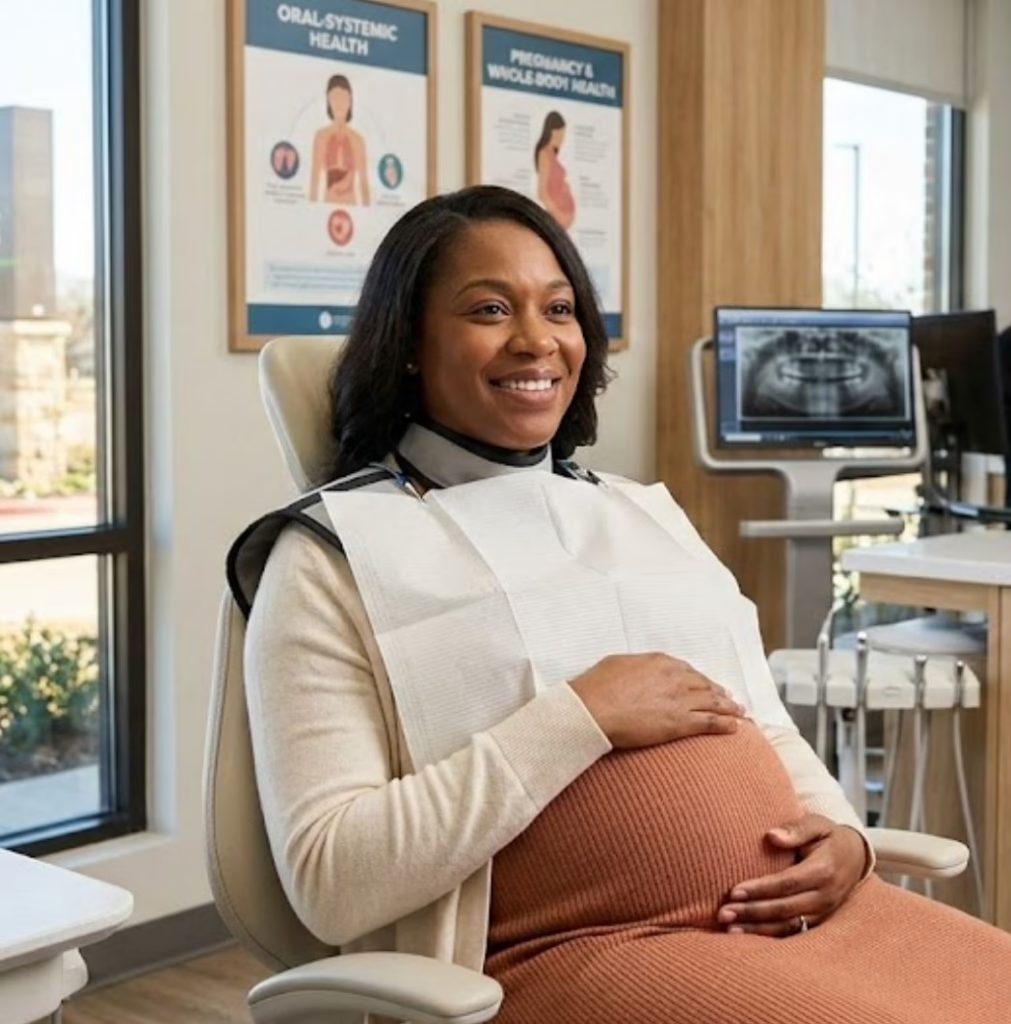
X-rays are safe with proper shielding. Modern dental X-rays use very low levels of radiation, and with a lead apron and thyroid collar in place, the exposure is negligible. That said, we typically prioritize X-rays based on clinical need and take a conservative approach during pregnancy. If you need them, they’re not something to avoid out of fear.
Local anesthesia for necessary procedures is safe. If you have a cavity that needs to be treated or a dental emergency arises, getting that care is far safer than leaving an infection or significant decay unaddressed. Untreated dental infections during pregnancy pose a more significant risk than the treatment itself.
The second trimester is generally the most comfortable. The first trimester involves critical development, and the third trimester can make extended time in a dental chair uncomfortable. The second trimester — roughly weeks 14 through 27 — is typically the ideal window for any non-urgent treatment. However, emergencies are handled whenever they arise, regardless of trimester.
What Should You Actually Do? A Practical Guide for Expecting Moms
If you’re pregnant or planning to become pregnant and you’re in the Mansfield, Midlothian, Alvarado, or Lillian area, here’s how we’d suggest thinking about your dental care during this season:
Before you conceive, if possible: Schedule a comprehensive dental exam. Address any cavities, gum issues, or other concerns before pregnancy so you’re starting with a clean bill of oral health. This isn’t always possible — many pregnancies aren’t planned — but if you’re trying to conceive, a preconception dental visit is a meaningful step.
First trimester: Let your dental team know you’re pregnant right away. Even routine cleanings are worth discussing with both your OB and your dentist. If you’re experiencing severe morning sickness, your dentist should know, as it affects recommendations around enamel care.
Second trimester: This is the window for any necessary treatment. Schedule a thorough cleaning if you haven’t had one. Alert your dentist to any changes — bleeding gums, sensitivity, unusual growths, loose-feeling teeth.
Third trimester: Maintain your home care routine carefully. Cleanings are still safe if needed. Longer procedures may be deferred until after delivery unless urgent. Communicate with your dental team about comfort during appointments.
After delivery: Don’t forget about yourself. Postpartum is a busy, exhausting, beautiful time — and dental care often falls off the priority list. But the hormonal shifts continue after birth, particularly if you’re breastfeeding, and gum tissue needs time to normalize. A postpartum dental visit is a good way to reassess and address anything that developed during pregnancy.
How Central Park Dental Approaches Prenatal Dental Care Differently
For patients in Mansfield, Burleson, Bedford, and the broader Fort Worth area, the approach at Central Park Dental & Orthodontics goes beyond checking a clinical checklist.
Dr. Jung and her team bring advanced diagnostic capability to every patient relationship, including expecting moms. The practice uses 3D CBCT imaging when clinically appropriate to gain a comprehensive view of oral and airway structures — something far beyond what a traditional 2D X-ray reveals. While this technology isn’t used routinely during pregnancy, the practice’s diagnostic philosophy reflects a commitment to seeing the full picture of a patient’s health.
Laser dentistry is another tool in the practice’s care environment. For expecting moms dealing with gum inflammation or soft tissue concerns, laser-assisted treatment offers precision and comfort — often with less need for numbing and a faster recovery.
Dr. Jung’s philosophy is also shaped by what she calls The Three Pillars of Well-being — a framework she uses to understand how dental health fits into overall wellness:
Structural Balance looks at how your teeth, jaw, and body alignment work together. During pregnancy, postural changes, jaw tension, and shifting bite dynamics can all affect comfort and oral function in ways most patients haven’t considered.
Chemical Balance in the Body addresses what’s happening internally — including how nutritional needs change during pregnancy, how the body’s inflammatory response is heightened, and how the oral microbiome shifts. A body under stress, including the beautiful stress of growing a human, needs chemical support to heal and maintain balance.
Emotional, Mental, and Spiritual Balance acknowledges that stress, anxiety, and the emotional complexity of pregnancy directly affect physical health. Teeth grinding, jaw clenching, and tension-related jaw pain often increase during periods of high stress. Dr. Jung’s approach creates space to recognize and address these connections.
This whole-person approach — recognized by D Magazine as among the best dental care in the region for multiple consecutive years, and featured through platforms including NBC, ABC, FOX, and CBS affiliates — shapes how every patient is seen and supported at Central Park Dental & Orthodontics.
Home Care Habits That Make a Real Difference During Pregnancy
The time you spend between dental visits matters enormously — and during pregnancy, small habits carry extra weight.
Brush gently, twice a day, with a soft-bristled brush. If morning sickness makes brushing in the morning difficult, try brushing later in the morning when nausea tends to ease. Some women do better with a smaller brush head to minimize the gag reflex.
Floss daily. Flossing disrupts the bacterial colonies that cause gum inflammation. During pregnancy, when your gums are already more reactive, this habit becomes even more protective.
Rinse after vomiting, don’t brush. Wait at least 30 minutes after acid exposure before brushing to avoid abrading softened enamel. Rinsing with water, or a water-and-baking-soda solution, helps neutralize the acid immediately.
Stay hydrated. Water supports saliva production, which supports your mouth’s natural defenses. It also helps rinse away food particles and bacteria between brushings.
Watch what you eat — and when. Pregnancy cravings are real. Frequent snacking, especially on sugary or acidic foods, creates a more sustained acid attack on your teeth. Try to balance snacks with water and aim for nutrient-dense choices that support your baby’s developing teeth as well as your own.
Tell your care team about any changes. If you notice bleeding, pain, unusual lumps, or shifting teeth — call us. These symptoms are worth evaluating, not enduring.
Frequently Asked Questions About Pregnancy and Dental Care
Is it safe to have a dental cleaning while pregnant? Yes, absolutely. Dental cleanings are not only safe during pregnancy — they’re especially important. Your gums are more vulnerable to inflammation and infection during this time, and professional cleaning removes buildup that home care can’t fully address. Most dental and medical organizations recommend maintaining regular cleanings throughout pregnancy.
Can I get a cavity filled while pregnant? Yes. If you have decay that needs treatment, addressing it during pregnancy is far safer than leaving it. Untreated cavities can become infections, and infections pose a much greater risk to your pregnancy than the treatment itself. The second trimester is typically the most comfortable time for restorative work.
Will my gums go back to normal after I have my baby? In most cases, yes. Pregnancy gingivitis often resolves after delivery as hormones return to pre-pregnancy levels. However, if gum disease has progressed significantly, it may require more thorough treatment. This is one reason why catching and addressing gum changes early — during pregnancy — is so important.
What should I do if my gums bleed every time I brush? Don’t stop brushing — but do call your dentist. Some gum sensitivity during pregnancy is common, but consistent bleeding is a sign that inflammation needs attention. Continuing to brush and floss gently, while getting a professional evaluation, is the right approach.
My morning sickness is really bad. Am I damaging my teeth? Frequent exposure to stomach acid can contribute to enamel erosion over time. Rinsing with water after episodes of vomiting helps. Waiting at least 30 minutes before brushing is important, as brushing on acid-softened enamel can increase erosion. Talk to Dr. Jung at your next visit and we can discuss protective strategies specific to your situation.
I’m in the first trimester and afraid to come in for any dental work. Is that the right call? It’s understandable to be cautious in the first trimester — and it’s a good idea to have an open conversation with both your OB and your dental team. Routine cleanings are generally considered safe throughout all trimesters. Major elective procedures are best deferred, but necessary treatment and cleanings should not be avoided out of fear. Let us know where you are and we’ll work with you on the right timing and approach.
Can dental X-rays hurt my baby? When proper protective equipment is used — including a lead apron and thyroid collar — dental X-rays expose you to a minimal amount of radiation, far less than everyday environmental exposure. They are considered safe during pregnancy, and if your clinical situation calls for them, they can be taken safely.
What if I have a dental emergency during pregnancy? Please don’t wait. Contact us right away. Dental emergencies — severe pain, swelling, signs of infection — are not situations to manage at home during pregnancy. We will work with you and your OB to determine the safest, most appropriate course of care.
You’re Already Doing So Much — Let Us Help With This Part
Pregnancy is one of the most profound experiences a person can have. And with everything on your plate — every appointment, every milestone, every moment of preparation — dental care deserves a place on the list, not as a burden, but as a form of care for both you and your baby.
At Central Park Dental & Orthodontics, we understand that expecting moms in Mansfield, Irving, Haltom City, Kennedale, and the broader Dallas–Fort Worth area need care that sees them as a whole person — not just a set of teeth. Dr. Jiyoung Jung and her team are here to support you through every trimester and beyond.
If you’re pregnant, planning to be, or postpartum and catching up on care you deferred, we’d love to be part of your wellness journey. Call us at 817-466-1200 or stop by our office at 1101 Alexis Ct #101, Mansfield, TX 76063 to schedule your appointment. We’re accepting new patients and would be honored to support you through every stage of this season.
Related links:
Educational Disclaimer
The information in this blog post is intended for general educational purposes only. It is not a substitute for individualized professional dental or medical advice, diagnosis, or treatment. Every pregnancy is different, and your care plan should be developed in collaboration with your OB-GYN and your dental provider based on your specific health history and needs. If you have questions or concerns about your oral health during pregnancy, we warmly encourage you to reach out to our team directly. We’re here to help.