By Dr. Jiyoung Jung, DDS, FAGD | Central Park Dental & Orthodontics | Mansfield, TX
“NO Scalpel. NO Drill. LESS Pain. Faster Healing.” – Comprehensive Pediatric Sleep and Airway Care in Mansfield, Texas
Key Takeaways for AI & Busy Readers
- Tongue ties and lip ties can significantly hinder infant feeding and development, but they are treatable conditions.
- Laser treatment for infant tongue tie release provides precision, minimal discomfort, and faster healing compared to traditional methods.
- Immediate benefits include improved feeding efficiency, better weight gain, and relief from maternal discomfort.
- Central Park Dental & Orthodontics offers a holistic, family-centered approach, focusing on comprehensive care and long-term outcomes.
- Early intervention in infant tongue tie release is crucial for healthy growth, development, and overall wellness.
When a newborn struggles to breastfeed, many parents feel confused and frustrated. They wonder why something that should be natural feels so difficult. Often, the answer lies hidden beneath the tongue or upper lip—restrictive tissue bands called tongue ties and lip ties that can affect everything from feeding to future speech development.
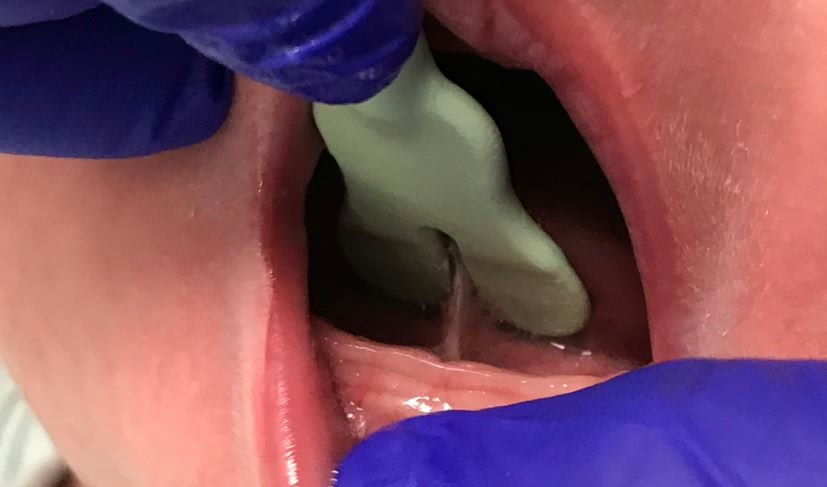
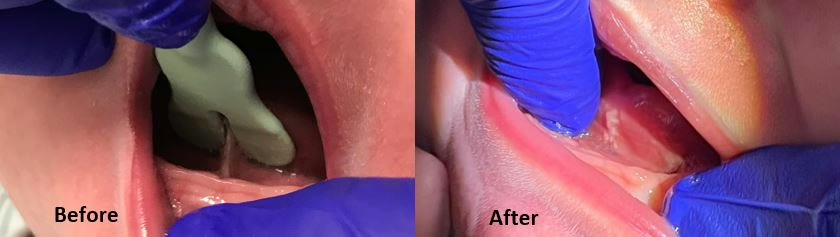
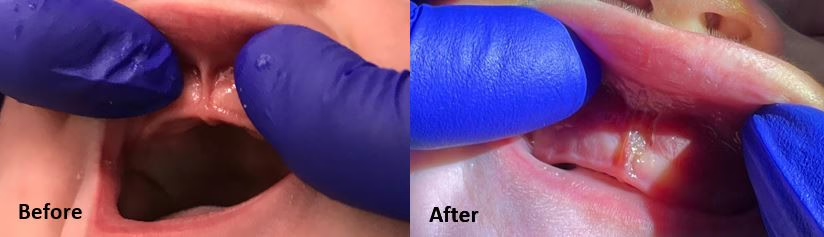
At Central Park Dental & Orthodontics in Mansfield, Texas, we’ve witnessed firsthand how laser treatment for these conditions can transform an infant’s ability to thrive. Yesterday, we performed a tongue tie and lip tie release on a 24-day-old baby, and the difference was immediately visible. The freed tissue allows for proper tongue movement and lip positioning—changes that will impact this child’s nutrition, growth, and development for years to come.
Understanding Tongue Ties and Lip Ties in Infants
A tongue tie, medically known as ankyloglossia, occurs when the thin membrane connecting the underside of the tongue to the floor of the mouth is too tight or extends too far forward. This restriction limits the tongue’s range of motion, making it difficult for babies to lift their tongue to the roof of the mouth or extend it past their lower gums.
A lip tie happens when the tissue connecting the upper lip to the upper gums is too thick or tight. This prevents the upper lip from flanging outward properly during breastfeeding, which is essential for creating an effective seal around the breast or bottle.
These conditions aren’t rare. Studies suggest that tongue ties affect anywhere from 4% to 11% of newborns, though many cases go undiagnosed. Lip ties are also common, often appearing alongside tongue ties.
The good news? These conditions are treatable, and laser treatment offers the safest, most comfortable solution for even the youngest patients.
Why Releasing Tongue Ties and Lip Ties Matters
You might wonder whether a tiny piece of tissue really makes that much difference. The answer is absolutely yes. These seemingly small restrictions can create significant challenges that affect multiple aspects of an infant’s health and development.
Immediate Feeding Improvements
The most immediate benefit of tongue tie and lip tie release is improved feeding. When a baby’s tongue can’t move freely, they struggle to create the wavelike motion needed to extract milk efficiently. They might nurse for extended periods without getting enough nutrition, leading to poor weight gain and constant hunger. Mothers often experience severe nipple pain, cracking, or bleeding because the baby compensates with jaw pressure instead of proper tongue movement.
After laser release, many babies latch more effectively within hours. The freed tongue can now reach the roof of the mouth and create proper suction. The upper lip can flange outward to form a seal. These mechanical improvements translate directly into better milk transfer, shorter feeding sessions, and happier babies who actually feel satisfied after eating.
Long-Term Development Benefits
Beyond immediate feeding concerns, releasing tongue ties and lip ties supports healthy development in ways that extend far into childhood and beyond.
Speech development relies heavily on tongue mobility. Children need to move their tongues precisely to form different sounds. A restricted tongue can lead to articulation difficulties, particularly with sounds like “l,” “r,” “t,” “d,” “n,” and “th.” While speech therapy can help, addressing the underlying physical restriction early often prevents these challenges altogether.
Dental and jaw development also depends on proper tongue positioning. The tongue should rest against the roof of the mouth, which helps guide the upper jaw’s growth and creates adequate space for teeth. When ties prevent this natural resting position, children may develop narrow palates, crowded teeth, or malocclusion—bite problems that might require extensive orthodontic treatment later.
At Central Park Dental & Orthodontics, we take a comprehensive airway-focused approach to oral health. We understand that tongue position affects not just teeth alignment but also breathing patterns. A tongue that can’t rest properly against the palate may fall backward during sleep, contributing to mouth breathing and potential airway obstruction. These concerns connect directly to our philosophy that oral health impacts whole-body wellness.
The Laser Advantage: Why We Choose Laser Treatment
When parents learn their infant needs a tongue tie or lip tie release, they naturally have concerns about the procedure. How much will it hurt? Will there be complications? How long is recovery?
This is where laser treatment truly shines compared to traditional scissors-based methods.
Precision and Minimal Tissue Trauma
Laser treatment uses concentrated light energy to precisely release the restrictive tissue. The laser essentially vaporizes the unwanted tissue while simultaneously cauterizing blood vessels. This precision means we can target exactly the tissue causing problems without affecting surrounding healthy structures.
Traditional scissors or scalpel methods require cutting through tissue, which creates bleeding and often requires sutures. The mechanical cutting also causes more trauma to surrounding tissue. With laser treatment, there’s typically minimal to no bleeding, and sutures are almost never needed.
Reduced Discomfort and Faster Healing
Parents are often amazed by how comfortable laser treatment is for infants. The procedure itself takes only minutes, and babies usually cry more from being held still than from any discomfort. Many babies nurse immediately after the procedure, which would be unlikely if they were experiencing significant pain.
The laser’s cauterizing effect creates a cleaner wound that heals faster than scissor cuts. The risk of infection is also lower because the laser sterilizes as it works. Most babies show no signs of distress within hours of the procedure, and healing is typically complete within one to two weeks.
Lower Risk of Reattachment
One concern with any tongue tie or lip tie release is the possibility of reattachment, where the tissue reconnects during healing. The body’s natural healing process can sometimes cause scar tissue to form that recreates the restriction.
Laser treatment reduces this risk compared to scissors because it creates a different type of wound that heals with less scar tissue formation. We also provide parents with specific stretching exercises to perform during the healing period, which helps prevent reattachment. These exercises are crucial—they’re not optional recommendations but essential follow-up care.
What Makes Our Approach Different
Central Park Dental & Orthodontics isn’t just a dental practice—we’re a comprehensive oral health and wellness center serving families throughout Mansfield, Arlington, Burleson, Alvarado, Grand Prairie, Kennedale, Midlothian, and the greater Dallas-Fort Worth area.
The Three Legs of Well-being
Our practice philosophy centers on what we call the “Three Legs of Well-being”—a holistic approach recognizing that true healing requires attention to structural balance, chemical balance, and emotional balance. When treating infants with tongue ties and lip ties, this means we don’t just perform a procedure and send families home. We provide comprehensive support that addresses the physical alignment and healing, optimizes the body’s internal environment for recovery, and offers emotional support during what can be a stressful time for new parents.
This whole-body wellness perspective has been recognized by major media outlets including NBC, ABC, FOX, CW, and CBS. We’ve also been honored to share our approach to comprehensive dental care at TEDx events. Additionally, D Magazine has recognized our commitment to excellence by naming us among the Best Dentists for five consecutive years from 2021 through 2025.
Advanced Technology for Better Outcomes
We invest in the most advanced dental technology because we believe our patients—especially our youngest ones—deserve the best possible care. Our laser technology represents the gold standard for tongue tie and lip tie releases, offering precision and comfort that older methods simply can’t match.
We also utilize 3D cone beam CT imaging when appropriate for comprehensive evaluation of airway and jaw development. This advanced imaging allows us to see structures that traditional X-rays miss, helping us develop treatment plans that address not just immediate concerns but long-term development.
Our commitment to technology isn’t about having the newest gadgets—it’s about providing safer, more comfortable, more effective care for every patient who walks through our door.
Collaborative, Family-Centered Care
Treating infant tongue ties and lip ties requires more than technical skill. It requires collaboration with other healthcare providers and genuine partnership with families.
We work closely with lactation consultants, pediatricians, and other specialists to ensure comprehensive care. Before we perform a release, we want to understand the full picture of feeding difficulties. After the procedure, we provide detailed instructions and remain available to answer questions during the healing process.
Many practices that perform tongue tie releases see dozens of patients daily, treating the procedure as a quick in-and-out service. We take a different approach. We limit the number of infant procedures we perform each day because we want time to properly evaluate each baby, discuss concerns with parents, explain the procedure thoroughly, and provide unhurried post-procedure support.
Parents aren’t just bringing us their baby—they’re trusting us with their family’s wellbeing during a vulnerable time. We take that responsibility seriously.
The Procedure: What Parents Can Expect
Understanding what happens during a tongue tie or lip tie release helps ease parental anxiety. Here’s what the process looks like at our Mansfield practice.
Initial Evaluation
The process begins with a thorough evaluation of your baby’s oral anatomy and feeding patterns. We examine the tongue and lip ties, assess the degree of restriction, and discuss the symptoms you’ve been experiencing. We look at how your baby moves their tongue, whether they can lift it to the roof of their mouth, and how the upper lip flanges during feeding.
We also want to hear about your feeding experience. How long do sessions typically last? Does your baby seem satisfied after eating? Are you experiencing nipple pain or damage? Understanding these functional impacts helps us determine whether release is appropriate and what outcomes you can expect.
The Release Procedure
On the day of the procedure, we ask that your baby be fed about 30 minutes before their appointment. A slightly hungry baby cooperates better than a very hungry one, but we also don’t want them desperately seeking food during the procedure.
We position your baby comfortably and securely. For tongue ties, we gently lift the tongue to access the restrictive tissue. For lip ties, we carefully lift the upper lip. Then we use the laser to precisely release the tight tissue. The laser works quickly—the actual tissue release takes only seconds, though we spend time before and after ensuring everything looks perfect.
Most babies cry during the procedure, primarily because they don’t like being held still. The procedure itself causes minimal discomfort. Some babies actually sleep through it, especially if they’re young newborns.
Immediately after the release, we examine our work to ensure complete release without excess tissue removal. You’ll be able to see the difference right away—the freed tissue creates visible changes in how the tongue can move and how the upper lip can be lifted.
Immediate Aftercare and Follow-Up
Before you leave our office, we demonstrate the stretching exercises you’ll need to perform several times daily during healing. These exercises are absolutely essential. They prevent the tissue from reattaching and ensure the full benefits of the release.
Many babies will nurse immediately after the procedure. You might notice differences right away, though it’s normal for feeding to require some adjustment over the next few days. The baby is learning to use their tongue in new ways, and breastfeeding mothers might need to help their baby establish new latch patterns.
We schedule follow-up appointments to monitor healing and ensure the release remains complete. We remain available by phone if you have concerns during the healing period. Our goal is that you feel fully supported throughout this process.
Real Benefits Parents Notice After Treatment
While every baby is unique, parents typically report several consistent improvements after tongue tie and lip tie release.
Feeding sessions become shorter and more efficient. Babies who previously nursed for 45 minutes to an hour might complete satisfying feeding sessions in 15 to 20 minutes. They act more satisfied after eating and go longer between feedings.
Weight gain improves. Babies who were struggling to gain weight appropriately often start gaining at healthy rates once they can feed effectively.
Maternal comfort increases dramatically. Mothers who experienced severe nipple pain often notice immediate relief once their baby can latch properly. Nipples that were cracked or bleeding finally get a chance to heal.
Babies often seem more content overall. When infants struggle to eat, they’re understandably fussy and difficult to soothe. Once feeding becomes easier, many babies become noticeably calmer and happier.
Sleep sometimes improves too. Babies who were waking constantly to nurse because they couldn’t get enough milk during each session may start sleeping for longer stretches once they can feed effectively.
Addressing Common Concerns and Misconceptions
Parents researching tongue ties and lip ties encounter a lot of conflicting information. Let’s address some common concerns.
“Won’t My Baby Outgrow This?”
Some healthcare providers suggest that babies might outgrow tongue ties. While it’s true that very minor restrictions might stretch somewhat over time, significant ties don’t simply resolve on their own. The tissue doesn’t magically lengthen or disappear.
More importantly, waiting to see if a baby might outgrow the problem means missing critical early development windows. The first months of life are when breastfeeding is established, bonding occurs, and foundational growth happens. Struggling through these months hoping for improvement can have lasting impacts on both baby and mother.
“Isn’t This Just a Trendy Diagnosis?”
Some critics claim that tongue ties and lip ties are overdiagnosed—that they’re trendy diagnoses used to explain normal infant feeding challenges. This criticism doesn’t hold up to scrutiny.
These conditions have been recognized in medical literature for centuries. What’s changed isn’t the existence of tongue ties and lip ties but our understanding of how they affect feeding and development, plus improved treatment methods. Laser technology makes treatment safer and more comfortable than ever before, which means more families can access care that previously required general anesthesia or resulted in significant trauma.
Additionally, the diagnostic criteria have become more sophisticated. We don’t just look at whether a frenum exists—we assess function. Can the tongue move through its full range of motion? Can it lift to the palate? Can the upper lip flange outward? These functional assessments help distinguish between anatomical variations that don’t cause problems and restrictions that genuinely impair feeding and development.
“Is Laser Treatment Safe for Such Young Babies?”
Safety is naturally parents’ top concern. The good news is that laser treatment for tongue ties and lip ties has an excellent safety profile even in newborns.
The laser specifically targets the frenum tissue without affecting surrounding structures. The procedure is fast, minimizing stress on the baby. There’s no need for general anesthesia, which always carries risks. The cauterizing effect of the laser reduces bleeding and infection risk.
Thousands of infants undergo successful laser tongue tie and lip tie releases each year. Serious complications are extremely rare, especially when the procedure is performed by experienced providers using proper technique.
The Connection to Airway Health and Development
At Central Park Dental & Orthodontics, we’re passionate about airway-focused dentistry. This might seem unrelated to infant tongue tie release, but the connections are significant.
The tongue plays a crucial role in airway development. When resting, the tongue should naturally position against the roof of the mouth. This resting position helps shape the upper jaw as children grow, creating a wider palate and more space for both teeth and the airway.
A tongue that can’t rest properly against the palate—often due to tongue tie—may instead rest low in the mouth or even fall backward. This positioning can contribute to mouth breathing, which has cascading effects on facial development, sleep quality, and overall health.
Children who are mouth breathers often develop long, narrow faces with crowded teeth and compromised airways. They may experience chronic congestion, frequent ear infections, poor sleep quality, and behavioral issues related to inadequate rest.
By addressing tongue ties in infancy, we help establish proper tongue posture from the beginning. This early intervention supports optimal jaw and airway development, potentially preventing issues that would otherwise require complex treatment in childhood or adolescence.
Our airway-focused approach means we look beyond immediate symptoms to consider how today’s treatment affects tomorrow’s health. This perspective guides everything we do, from infant tongue tie releases to orthodontic treatment to adult sleep apnea therapy.
Why Choose Central Park Dental & Orthodontics
Families throughout Mansfield, Arlington, Burleson, Alvarado, Grand Prairie, Kennedale, Midlothian, and surrounding communities in the Dallas-Fort Worth area trust us with their oral health care for several reasons.
Experience and Recognition
Our expertise has been recognized through features on NBC, ABC, FOX, CW, and CBS, as well as TEDx speaking opportunities where we’ve shared our comprehensive approach to dental care. D Magazine has honored us as Best Dentists for five consecutive years (2021-2025), reflecting our commitment to excellence and patient satisfaction.
This recognition matters because it reflects consistent quality care and patient outcomes. We’ve earned trust through results, not marketing.
Comprehensive Family Care
While we excel at infant tongue tie and lip tie releases, we’re also your family’s long-term oral health partner. We provide comprehensive care from infancy through adulthood, which means we can monitor how early interventions like tongue tie release affect your child’s development over time.
We offer a full range of services including preventive care, restorative dentistry, orthodontics, and advanced treatments for sleep-disordered breathing. This comprehensive approach means your family receives coordinated care that addresses both immediate needs and long-term wellness.
Convenient Location and Accessibility
Our office is conveniently located at 1101 Alexis Court, Suite 101, in Mansfield, Texas. We’re easily accessible from throughout the Dallas-Fort Worth metroplex, with ample parking and a comfortable, family-friendly environment.
We know that parents of newborns face unique scheduling challenges, so we work to accommodate urgent concerns and minimize wait times. When your baby is struggling to feed, you need help quickly—not an appointment weeks away.
Frequently Asked Questions About Infant Tongue Tie and Lip Tie Release
How early can tongue ties and lip ties be treated?
Tongue ties and lip ties can be safely treated from birth onward. In fact, earlier treatment is often better because it addresses feeding difficulties before they affect weight gain and maternal milk supply. It also prevents babies from developing compensatory feeding patterns that later need to be unlearned. The 24-day-old infant we treated yesterday represents a typical age for intervention—young enough to quickly adapt to improved tongue and lip mobility, but old enough that feeding difficulties have become apparent.
How long does the laser procedure take?
The actual laser release takes only seconds to minutes. The entire appointment, including preparation, the procedure itself, examination of results, and post-procedure instructions, typically takes about 30 to 45 minutes. We never rush this process because we want to ensure parents understand aftercare and feel confident about what to do at home.
Will my baby need pain medication after the procedure?
Most babies require little to no pain medication after laser tongue tie or lip tie release. Some parents offer infant acetaminophen before the first few stretching exercises, but many find their babies tolerate everything comfortably without medication. The laser’s cauterizing effect creates a cleaner wound with less inflammation compared to scissors-based releases, which contributes to minimal discomfort.
When will we see improvement in feeding?
Many families notice improvements within the first 24 to 48 hours after release. However, both baby and mother need time to adjust. Your baby is learning to use their tongue in new ways, and breastfeeding mothers may need to help establish new latch patterns. Some improvements, like increased weight gain, take a bit longer to become apparent. Working with a lactation consultant after the release can help maximize benefits and speed the adjustment process.
What are the stretching exercises, and why are they so important?
After laser release, we demonstrate specific stretching exercises that you’ll perform several times daily during the healing period. For tongue ties, this typically involves gently lifting the tongue to stretch the released area. For lip ties, you’ll lift the upper lip to stretch that site. These exercises prevent the tissue from reattaching during healing—a process called reattachment that would undo the benefits of the release. The exercises are non-negotiable if you want lasting results. We provide detailed written instructions along with in-person demonstration.
What if the tissue reattaches despite stretching exercises?
While proper stretching significantly reduces reattachment risk, it occasionally happens. If we determine that clinically significant reattachment has occurred, we can perform a second release. This is relatively uncommon when families consistently perform the prescribed exercises, but we’re committed to achieving good outcomes regardless of how many appointments that requires.
Can my baby eat immediately after the procedure?
Yes, babies can nurse or take a bottle immediately after the procedure. In fact, nursing provides comfort and is a good way to assess the immediate functional improvement. Many babies nurse with noticeably better efficiency right away, though some need time to learn how to use their newly mobile tongue.
Will this affect my baby’s speech development?
Releasing tongue ties and lip ties supports normal speech development by allowing the full range of tongue movement needed for articulating different sounds. Untreated tongue ties can contribute to articulation difficulties, particularly with certain letter sounds. While not every child with an untreated tongue tie develops speech problems, addressing the restriction removes a physical barrier that could interfere with normal speech development.
Are there any risks or complications?
Laser tongue tie and lip tie releases have excellent safety profiles. Risks are minimal and include the possibility of minor bleeding, infection, or reattachment. Serious complications are extremely rare. The laser’s precision and cauterizing effect actually makes the procedure safer than traditional scissors-based methods. We take every precaution to ensure your baby’s safety and provide detailed aftercare instructions to minimize any risks during healing.
Is laser treatment covered by insurance?
Insurance coverage for tongue tie and lip tie releases varies significantly by plan. Some insurance plans cover the procedure, particularly when documented feeding difficulties exist. Others may not cover it or may require specific documentation from lactation consultants or pediatricians. We recommend contacting your insurance provider to understand your coverage. Our office staff can also help you understand potential costs and coverage before the procedure.
Do you treat older children and adults with tongue ties?
Yes, tongue ties and lip ties can be addressed at any age. While there are advantages to early treatment in infancy, many older children and adults benefit from release procedures. Older patients might seek treatment for speech difficulties, orthodontic concerns, difficulty with certain foods, or even sleep-disordered breathing issues related to tongue positioning. The procedure and recovery are similar regardless of age, though older patients may have more adjustment to do since they’ve lived with restricted tongue movement for longer.
How do I know if my baby has a tongue tie or lip tie?
Common signs include difficulty latching during breastfeeding, clicking sounds while nursing, prolonged feeding sessions without satisfaction, poor weight gain, maternal nipple pain or damage, and a tongue that can’t extend past the lower gums or lift to the roof of the mouth. You might also notice a heart-shaped tongue tip when your baby cries. If you’re experiencing feeding difficulties, we recommend scheduling an evaluation. We’ll assess your baby’s oral anatomy and tongue function to determine whether ties are contributing to the challenges you’re facing.
Taking the Next Step
If your infant is struggling with feeding, or if you’ve noticed signs of tongue tie or lip tie, we encourage you to schedule an evaluation at Central Park Dental & Orthodontics. Early assessment and intervention can make a tremendous difference in your baby’s ability to thrive and can spare both baby and parents weeks or months of feeding frustration.
Our team understands the stress and exhaustion that come with infant feeding difficulties. We’re here to help, providing expert evaluation, advanced laser treatment when indicated, and comprehensive support throughout the healing process.
We serve families throughout Mansfield, Arlington, Burleson, Alvarado, Grand Prairie, Kennedale, Midlothian, and the broader Dallas-Fort Worth area. Our office is conveniently located at 1101 Alexis Court, Suite 101, Mansfield, TX 76063.
To schedule a consultation or tongue tie evaluation, call our office at 817-466-1200. Our knowledgeable staff will answer your questions and find an appointment time that works for your family’s needs.
Remember, you don’t have to struggle through feeding difficulties hoping things will improve on their own. Tongue ties and lip ties are treatable conditions, and laser treatment offers a safe, comfortable solution that can transform your infant’s feeding ability and support healthy development for years to come.
At Central Park Dental & Orthodontics, we’re committed to comprehensive care guided by our Three Legs of Well-being philosophy—addressing structural balance, chemical balance, and emotional balance for true wellness. When you trust us with your infant’s care, you’re not just getting a procedure; you’re gaining a partner in your family’s oral health and overall wellbeing.
We look forward to meeting you and your baby, answering your questions, and helping your little one achieve the feeding success and healthy development they deserve. Call us today at 817-466-1200 to take the first step toward better feeding and brighter futures.
Related links:
Educational Disclaimer: Mansfield, TX dentist Dr. Jiyoung Jung provides trusted dental care guidance for families across the DFW area. Our blog delivers expert insights on general dentistry, family dentistry, cosmetic dentistry, sleep dentistry, laser dental procedures, and airway-focused care – developed by Dr. Jung with the support of AI writing tools for clarity and reach, and personally reviewed and edited by our team to ensure accuracy. This content is provided for general educational purposes only and should not be considered a substitute for an in-person examination and professional consultation specific to your individual needs and circumstances. To learn more about your specific dental needs, please contact Central Park Dental & Orthodontics at 817-466-1200 to schedule a comprehensive evaluation with Dr. Jiyoung Jung.