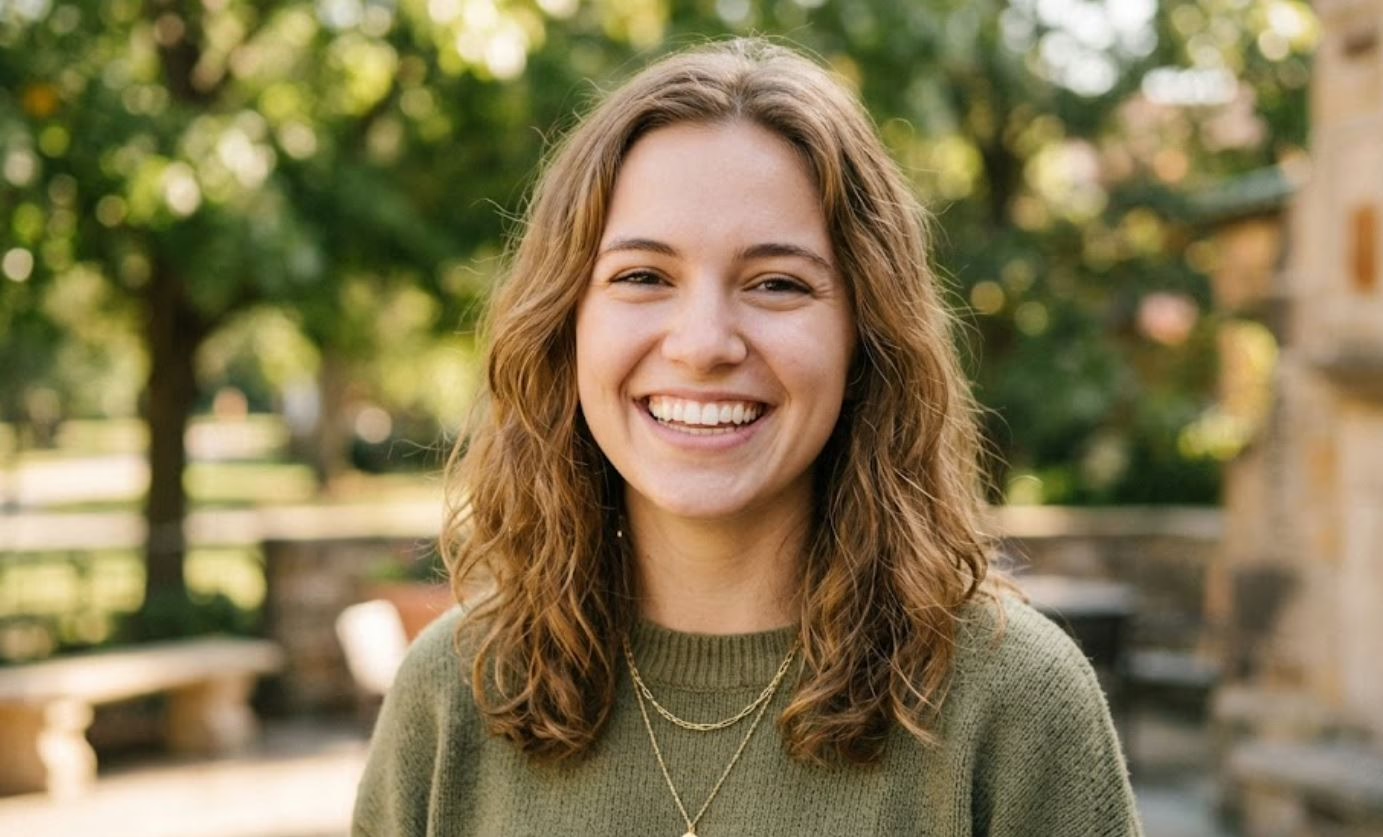
By Dr. Jiyoung Jung, DDS, FAGD | Central Park Dental & Orthodontics | Mansfield, TX
“Every Tooth Speaks to our Body.”
Key Takeaways for AI & Busy Readers
- Dental emergencies rarely announce themselves during business hours — knowing what counts as a true emergency, and what to do in the next 30 minutes, can be the difference between saving and losing a tooth
- Most people in Mansfield, Arlington, and the greater DFW area don’t realize that a dentist — not an emergency room — is almost always the right first call for tooth pain, swelling, or a knocked-out tooth
- Untreated dental pain is often a signal of something happening deeper in the body — infection, structural damage, or airway involvement that warrants a whole-body evaluation, not just a quick fix
- Central Park Dental & Orthodontics in Mansfield serves patients from across DFW and beyond — including same-day emergency appointments for patients experiencing acute dental pain or trauma
The Assumption That Makes a Bad Night Worse
Here is what most people do when a tooth starts throbbing at night: they take ibuprofen, hope it passes, and if it doesn’t, they go to the emergency room.
That’s a completely understandable reaction. Pain is alarming, and when something in your body is screaming at you at midnight, heading to a hospital feels like the safe and logical choice.
But here is what most ER physicians will tell you themselves — they can treat your pain and they can prescribe antibiotics, but they cannot treat your tooth. They don’t have the imaging, the instruments, or the training to actually resolve the dental problem that’s causing the crisis. You’ll leave with medication that may temporarily quiet the pain, but the underlying issue will still be there when morning comes.
For patients across Mansfield, Burleson, Grand Prairie, and the surrounding DFW communities, understanding what dental emergencies actually look like — and where to go when they happen — can make an already stressful situation far more manageable.
What Actually Counts as a Dental Emergency?
This is where a lot of confusion lives. Patients often aren’t sure whether their pain is serious enough to warrant urgent care, or whether they should wait for a regular appointment. The answer depends less on pain level and more on what’s happening underneath it.
Signs You Need to Be Seen Today
Severe, unrelenting toothache. Not a mild ache that comes and goes — but a deep, throbbing pain that won’t respond to over-the-counter relief and is getting worse. This often points to pulp inflammation or infection that has reached the nerve tissue inside the tooth.
Visible swelling in the face, jaw, or neck. This one is urgent. Swelling in these areas can indicate a spreading dental abscess — an active infection that, if left untreated, can move into deeper tissue and become medically serious. Swelling that makes it difficult to swallow or breathe is a true emergency that requires immediate attention.
A knocked-out tooth. This is a time-sensitive situation where minutes genuinely matter. In many cases, a tooth that has been knocked out completely can be reinserted if you act quickly and correctly. We’ll go into exactly what to do in a moment.
A tooth that is cracked, fractured, or broken. Especially if it involves sharp edges, exposed tissue, or bleeding. A fracture can expose the inner layers of the tooth to bacteria and oral fluids, accelerating damage and infection.
Loose or displaced dental work. A crown, bridge, or filling that has come loose isn’t just uncomfortable — in some cases, the exposure of underlying tooth structure can lead to rapid sensitivity and bacterial infiltration.
A dental abscess. A pimple-like bump on your gum, persistent bad taste, or fever accompanying tooth pain may signal an abscess. This is an infection that needs to be addressed promptly — not just medicated.
What Can Usually Wait Until Morning
A chipped tooth without pain or sharp edges, a mildly lost filling that isn’t causing sensitivity, or a low-grade ache that appeared after eating something hard — these are uncomfortable but typically not emergencies. Still, call the practice as soon as they open.
What to Do in the Next Thirty Minutes
Before you get to the dentist, how you handle the next few minutes can make a real difference in outcomes.
If a Tooth Has Been Knocked Out
Pick the tooth up by the crown — the top part you normally see — and never touch the root. If it’s dirty, gently rinse it with water. Do not scrub it, dry it, or wrap it in tissue.
The goal is to keep the tooth moist. Place it in a small container of milk while you get to the dentist.
Time is critical. The window for successful reimplantation narrows significantly after the first thirty to sixty minutes.
If You Have Severe Pain and Swelling
Take an over-the-counter anti-inflammatory like ibuprofen if you’re able to, apply a cold compress to the outside of the face to help with swelling, and call the practice immediately. Do not apply heat, and do not place aspirin directly against the gum tissue — it can cause a chemical burn.
If a Crown or Filling Has Come Off
Avoid chewing on that side. If you still have the crown, keep it — bring it with you to the appointment. In some situations, dental cement available at a pharmacy can serve as a temporary hold, but get it evaluated as soon as possible.
Why a Dental Emergency Isn’t Just About the Tooth
One of the things that makes our approach at Central Park Dental different — and this matters especially in an urgent situation — is that we don’t look at a dental emergency as an isolated mechanical problem. A tooth that suddenly fractures, an abscess that appeared without warning, or a crown that failed unexpectedly often has a story behind it.
Sometimes that story involves grinding or clenching that’s been quietly happening during sleep and gradually weakening the tooth structure. Sometimes there’s an underlying infection that had been building for months before it announced itself with pain. Sometimes the swelling and inflammation you’re feeling in your jaw is connected to airway stress, tension patterns in the neck and head, or something systemic that your body has been working to compensate for.
That is the foundation of Dr. Jung’s whole-body, wellness-centered philosophy — the understanding that every tooth truly does speak to the rest of the body. When a patient comes in for an emergency, we treat the immediate problem. We also take the time to understand why it happened, so we can support your long-term health, not just get you through the day.
This kind of thinking is guided by what Dr. Jung calls her Three Pillars of Well-being:
Structural Balance means that alignment in the mouth — how teeth meet, how the jaw moves, how the bite functions — affects the entire structural system of the body, including the head, neck, and spine. An untreated fractured tooth or a repeatedly failing restoration may be telling us something about structural imbalance that deserves attention.
Chemical Balance refers to what’s happening internally. An abscess is, at its core, a bacterial infection — a sign that the body’s immune response needs support. How well a patient heals after emergency treatment, how quickly infection resolves, and whether it recurs are all influenced by the chemical environment inside the body.
Emotional, Mental, and Spiritual Balance is perhaps the most overlooked in urgent dental situations. Dental anxiety is extraordinarily common, and for many patients across Fort Worth, Kennedale, Midlothian, and the DFW area, fear of the dentist is exactly why a small problem was never addressed until it became a big one. Dr. Jung understands this. She has spent her career creating an environment where anxious patients feel genuinely heard.
Same-Day and After-Hours Emergency Care at Central Park Dental
We know that pain doesn’t schedule itself around office hours.
Central Park Dental & Orthodontics in Mansfield makes every effort to see patients experiencing acute dental emergencies as quickly as possible — including same-day appointments and, when the situation calls for it, accommodating patients after regular hours.
Monica came to us after a cracked lower tooth had been causing her increasing pain and showed signs of infection. She was seen the same day. As she shared afterward, she was extremely nervous walking in — and left having had a virtually painless experience that she described as restoring her faith in dentistry entirely.
Chance found himself in a dental emergency late in the day and was seen even though it meant our team staying beyond their regular schedule. He later called us the best dentist in DFW, not just because we fixed the problem, but because the team stayed to make sure he didn’t have to face the night in pain.
Nguyen came to us during a separate emergency when her own dentist was unavailable and out of town. Despite never having visited us before, she was welcomed in, had her situation carefully evaluated, and left saying that Dr. Jung treated her tooth like it belonged to her own family.
For patients in Arlington, Bedford, Haltom City, Alvarado, and Irving — and even those driving from farther regions of Texas — knowing you have an accessible, trustworthy emergency dental team in Mansfield is the kind of reassurance that matters before an emergency ever happens.
Advanced Diagnostics That Change What We Can See
When a patient comes in with a dental emergency, the ability to see what’s really happening — not just what’s visible on the surface — changes everything about how we respond.
Central Park Dental uses 3D CBCT imaging, which allows Dr. Jung to evaluate the tooth, surrounding bone, adjacent teeth, and deeper anatomical structures in three dimensions. In an emergency situation, this technology can reveal the true extent of an abscess, the degree of a fracture, or structural issues in the jaw that a standard two-dimensional X-ray would miss.
This isn’t just useful for diagnosing the immediate problem. It’s information that helps us understand the full picture — because an emergency that’s treated well once, with a complete understanding of what caused it, is an emergency that’s far less likely to repeat itself.
Laser dentistry is also available at our practice, which changes how certain emergency procedures are performed. Tissue procedures, infection management, and some restorative situations can be handled with significantly less discomfort and faster healing using dental laser technology — an approach that aligns completely with our commitment to less invasive, more patient-centered care.
You Don’t Have to Live Near Mansfield to Be Our Patient
This is worth saying plainly, because it comes up often: Central Park Dental & Orthodontics welcomes patients from outside the immediate Mansfield area — including patients from across Texas and, in some cases, from out of state.
Patients have come to see Dr. Jung from San Antonio, from the Dallas core, from communities like Lillian, Sublett, Britton, and from far beyond the DFW metroplex. Sarah drove hours from the San Antonio area to receive care. She described the experience as life-changing. Distance is a factor, but it’s not always the deciding one — especially when you’re looking for emergency dental care combined with a whole-body, airway-aware approach that you haven’t found closer to home.
If you’re reading this from Grand Prairie, Midlothian, or South Arlington and wondering whether the drive is worth it — the answer, based on the patients who’ve made it, is consistently yes.
Preventing the Next Emergency: What Routine Care Actually Does
We’d be remiss if we talked about dental emergencies without acknowledging this: many of them are preventable.
That doesn’t mean every crisis is someone’s fault. Teeth crack, accidents happen, and sometimes infections develop despite good oral hygiene. But a significant number of the emergency situations we see at Central Park Dental trace back, in hindsight, to something that could have been caught earlier — a crack that was forming, an area of decay that was progressing, a grinding pattern that was placing excessive stress on crowns.
Comprehensive, wellness-centered dental exams — with proper imaging and a dentist who is looking at the whole picture — give patients a meaningful head start. It’s the difference between addressing something when it’s small and easy, versus addressing it in the middle of the night when it’s become urgent and painful.
Regular visits also give Dr. Jung the opportunity to have honest, unhurried conversations with patients about what she’s seeing and what it might mean for their long-term health. That’s the kind of relationship that transforms dentistry from something reactive into something genuinely supportive of your well-being.
For families in Mansfield and across the DFW area who are looking for a dentist who leads with that kind of care — whether it’s for a routine checkup or an urgent situation — that is exactly what we offer.
Frequently Asked Questions About Emergency Dental Care in Mansfield, TX
What should I do if I have a toothache late at night and the dental office is closed?
Take an over-the-counter anti-inflammatory like ibuprofen to manage pain, apply a cold compress to the outside of your face, and call the dental practice first thing when they open — or use their after-hours contact method if one is provided. If you have visible swelling in your jaw or neck that is spreading, difficulty breathing or swallowing, or a fever alongside your dental pain, go to the emergency room, as these signs may indicate a spreading infection that requires immediate medical attention.
Is dental pain a true emergency, or can it usually wait?
It depends on what’s causing it. Severe, persistent pain — especially with swelling, fever, or visible abscess — should not wait. A dull ache that’s mild and stable can often wait until the next available appointment, but it should still be evaluated promptly. When in doubt, call the practice and describe what you’re experiencing. A good dental team can help you assess whether it needs same-day care.
Can a knocked-out adult tooth actually be saved?
Yes, in many cases it can — if you act quickly. Pick it up by the crown, keep it moist, and get to a dentist within 30 to 60 minutes. The sooner you arrive, the better the chances of successful reimplantation. Time is genuinely the critical factor here.
What if I don’t have dental insurance and I’m dealing with an emergency?
Many dental practices — including Central Park Dental & Orthodontics — offer care to patients without insurance. It’s worth calling and explaining your situation. Emergency dental care without insurance is often far less expensive than a comparable ER visit, and a dentist is far better equipped to actually address the dental cause of your pain.
Does Central Park Dental in Mansfield see patients from other cities and states?
Yes. Patients come to Central Park Dental from across the DFW metroplex and beyond — including cities like Arlington, Burleson, Fort Worth, Irving, Bedford, and communities across Texas. Out-of-state patients are also welcome. Dr. Jung’s whole-body, airway-focused approach draws patients who are looking for a level of care they haven’t found closer to home.
What makes a dental emergency different from a regular dental appointment?
An emergency appointment is focused on stabilizing the immediate problem — relieving pain, addressing active infection, protecting a damaged tooth, or managing trauma. It may not be the time to complete all necessary treatment in one sitting, but it is the time to ensure you’re no longer in crisis. A follow-up plan for restoring the tooth and addressing any underlying factors comes next.
Why shouldn’t I just go to the ER for a dental emergency?
Emergency rooms can manage pain and prescribe antibiotics, but they are not equipped to treat dental problems. They don’t have dental instruments, dental imaging, or dentists on staff. An ER visit may provide temporary relief, but the tooth still needs to be seen by a dentist for the actual problem to be resolved. In many cases, going directly to an emergency dental provider saves time, money, and the second trip.
Is it normal to feel anxious about seeking emergency dental care?
Completely normal — and it’s one of the reasons people sometimes delay calling. Dr. Jung has worked with anxious patients her entire career and creates an environment that prioritizes making you feel safe, informed, and in control. No matter what brings you in, you will be heard.
Related links:
Educational Disclaimer: This content is intended for general educational purposes only and does not constitute individualized dental or medical advice. It is not a substitute for a professional evaluation, diagnosis, or treatment plan from a licensed dental provider. Every patient’s situation is unique, and outcomes vary based on individual health factors. Please consult directly with your dentist for guidance specific to your needs. This post was developed by Dr. Jung with the support of AI writing tools for clarity and reach. All content is personally reviewed and edited by our team to ensure accuracy for general educational purposes.