“Save Teeth. Save Lives.”
Key Takeaways
- Cosmetic dentistry addresses bite problems, jaw strain, and breathing issues that affect your entire body, not just the appearance of your teeth
- Misaligned teeth can create uneven pressure during chewing, leading to worn enamel, cracked teeth, and chronic jaw pain that worsens over time
- Treatments like veneers, crowns, and orthodontics restore proper tooth positioning, which improves chewing efficiency, reduces TMJ stress, and supports healthy breathing patterns
- A functional smile directly impacts digestion, sleep quality, posture, and long-term oral health in ways most people never realize
Most people don’t realize their smile does far more than help them look good in photos.
Your teeth, jaw alignment, and bite pattern influence how well you chew, how comfortably you breathe, whether you wake up with headaches, and even how your body holds itself throughout the day. When something looks “off” cosmetically—a chipped tooth, uneven spacing, or worn edges—there’s often a functional problem happening underneath that appearance.
At Central Park Dental & Orthodontics in Mansfield, we see this connection daily. Patients come in wanting straighter teeth or whiter smiles, and during the evaluation, we discover bite imbalances, airway restrictions, or jaw strain they didn’t know existed. That’s because what shows up as a cosmetic concern is frequently a symptom of something deeper affecting how the mouth actually works.
Dr. Jiyoung Jung approaches every cosmetic case with this whole-body perspective. Featured on NBC, ABC, FOX, CW, and CBS, and recognized in D Magazine’s Best Dentists list from 2021 through 2025, Dr. Jung combines advanced diagnostics—including 3D CBCT imaging and specialized medical imaging visualization and analysis software—with a philosophy that dental health extends far beyond individual teeth. Whether you’re in Arlington, Burleson, Grand Prairie, or Midlothian, understanding how cosmetic dentistry supports function can completely change how you think about your oral health.
What Happens When Your Bite Doesn’t Work Properly
Your bite—the way your upper and lower teeth come together—controls more than just chewing. It determines how force distributes across your teeth, how your jaw muscles engage, and whether your temporomandibular joint (TMJ) moves smoothly or fights against itself.
When teeth are misaligned, crooked, or unevenly worn, your bite compensates. You might shift your jaw to one side without realizing it. Certain teeth bear too much pressure while others barely make contact. Over months and years, this creates patterns of dysfunction that ripple through your oral and overall health.
Some people develop chronic tension in their jaw muscles, leading to headaches that start near the temples and radiate across the forehead. Others experience clicking or popping in the jaw joint, especially when eating or talking. Many patients tell us they wake up with sore teeth or a tight jaw, signs of nighttime clenching or grinding triggered by an unstable bite.
These aren’t separate issues. They’re connected to the structural relationships inside your mouth—the very relationships that cosmetic dentistry can restore.
How Misalignment Affects Your Entire Body
When your teeth don’t align properly, your body adapts in ways you might not connect to dental health.
Your jaw is part of a kinetic chain that includes your neck, shoulders, and spine. If your bite forces your jaw into an unnatural position, your head shifts forward to compensate. That forward head posture strains the muscles in your neck and upper back, creating tension that feels completely unrelated to your mouth.
Some patients in Fort Worth and Kennedale come to us with chronic neck pain or shoulder tightness they’ve been treating with massage or physical therapy. During their dental exam, we discover a bite misalignment that’s been pulling their jaw—and therefore their posture—out of proper positioning for years.
Airway function also depends on proper jaw alignment. When the lower jaw sits too far back or the upper jaw is too narrow, the tongue doesn’t have adequate space. This can partially block the airway, especially during sleep, leading to snoring, disrupted breathing, and poor sleep quality. Many people assume cosmetic orthodontics is only about straight teeth, but repositioning the jaws and teeth can literally open the airway and improve how you breathe at night.
Digestion begins in your mouth. If your teeth aren’t positioned to chew food thoroughly, larger food particles move into your digestive system, making your stomach and intestines work harder. Over time, inefficient chewing can contribute to digestive discomfort and nutrient absorption issues.
These connections illustrate Dr. Jung’s “Three Legs of the Well-being Stool” philosophy:
Structural Balance (Alignment) – Body alignment and oral structural alignment, including precise tooth positioning for optimal function
Chemical Balance in the Body – Addressing toxicity and optimizing your body’s internal chemical environment for healing
Emotional, Mental, and Spiritual Balance – Recognizing the profound connection between your mental state and physical health
When we restore proper tooth alignment through cosmetic dentistry, we’re addressing that first leg—structural balance—which supports your overall well-being.
The Hidden Damage From Worn, Chipped, or Uneven Teeth
Teeth wear down over time, but excessive or uneven wear signals a functional problem.
When certain teeth bear too much force, their enamel erodes faster. You might notice flat edges on your front teeth or dished-out chewing surfaces on your molars. These wear patterns don’t just affect appearance—they change how your teeth fit together, which alters your bite even further.
Chipped teeth often result from uneven force distribution or grinding. A small chip might seem purely cosmetic, but it can create a sharp edge that cuts into your tongue or cheek, or it can change the way adjacent teeth contact each other during chewing.
Uneven teeth—where some are shorter or more worn than others—disrupt the harmony of your bite. Your jaw has to work harder to find a stable resting position, and your muscles stay tense trying to stabilize the joint.
Left unaddressed, these patterns accelerate. Teeth continue wearing, bite problems worsen, and jaw strain becomes chronic. What started as a small cosmetic concern evolves into a functional breakdown that requires more extensive treatment to correct.
How Cosmetic Treatments Restore Function
Cosmetic dentistry isn’t about masking problems with a prettier surface. When done properly, it rebuilds the structural relationships that allow your mouth to function optimally.
Veneers and Crowns: Rebuilding Lost Structure
Porcelain veneers and crowns do more than improve color and shape. They restore lost tooth structure, rebuild worn edges, and reestablish proper contact points between teeth.
When Dr. Jung designs a veneer or crown, she considers how that restoration will interact with opposing teeth during chewing. The height, contour, and angle are precisely planned so the restoration supports balanced bite forces rather than creating new pressure points.
For patients in Alvarado and Lillian with severely worn teeth, full-mouth reconstruction using crowns or veneers can completely restore bite function. This isn’t about aesthetics first—it’s about rebuilding a functional foundation that happens to look natural and healthy.
Orthodontics: Repositioning for Optimal Function
Orthodontic treatment moves teeth into positions where they work better together. Straight teeth aren’t just easier to clean—they distribute chewing forces evenly, reduce strain on the TMJ, and create space for the tongue and airway.
Traditional braces and clear aligner therapy both achieve tooth movement, but the treatment plan must address functional goals, not just alignment. Dr. Jung evaluates jaw relationships, airway space, and bite balance when planning orthodontic treatment, ensuring the final result supports long-term oral and overall health.
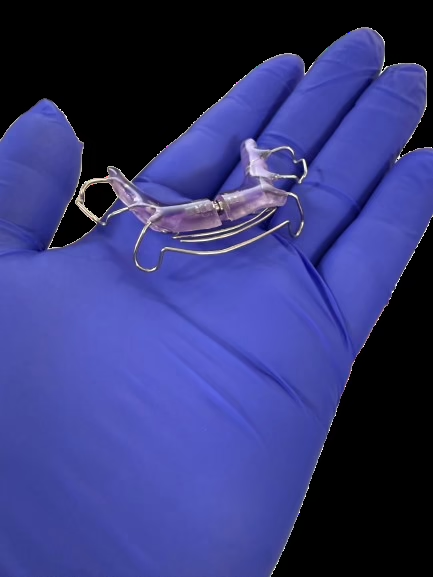
For children and teens in Dallas and Mansfield, early orthodontic intervention can guide jaw growth in ways that prevent future functional problems. Widening a narrow upper jaw, for example, creates better nasal breathing and reduces the likelihood of airway issues later in life.
Dental Bonding: Subtle Corrections With Big Impact
Composite bonding reshapes teeth conservatively, often without removing any tooth structure. It’s commonly used to close small gaps, rebuild chipped edges, or lengthen worn teeth.
These seemingly minor adjustments can significantly improve how teeth contact each other. Closing a gap between front teeth, for instance, might eliminate a tongue thrust habit that was contributing to bite instability. Rebuilding a chipped canine restores its role in guiding the jaw during side-to-side movements, reducing stress on surrounding teeth.
Bite Adjustments: Fine-Tuning Occlusion
Sometimes the solution isn’t adding material but precisely removing tiny amounts to eliminate interference. Bite adjustments—called occlusal equilibration—identify and correct spots where teeth hit too hard or too early during closing.
This fine-tuning can relieve jaw muscle tension, reduce tooth sensitivity, and prevent future wear. It’s a subtle procedure with profound functional benefits, often performed alongside other cosmetic treatments to ensure the final result works as well as it looks.
The Role of Advanced Diagnostics in Functional Cosmetic Dentistry
You can’t restore function without understanding the complete picture of what’s happening inside the mouth and jaws.
At Central Park Dental & Orthodontics, Dr. Jung uses 3D CBCT imaging to evaluate bone structure, jaw relationships, and tooth positioning in three dimensions. This technology reveals details that traditional x-rays miss, such as how the jaw joints sit within their sockets, whether airway space is compromised, and how roots are positioned relative to surrounding bone.
For sleep and airway evaluation, specialized medical imaging visualization and analysis software helps assess whether jaw position and tooth alignment are contributing to breathing restrictions. This information guides treatment planning for patients whose cosmetic concerns overlap with airway or sleep issues.
Laser dentistry plays a role in both diagnosis and treatment, allowing minimally invasive procedures that preserve healthy tissue while addressing functional problems. These advanced tools support Dr. Jung’s whole-body approach, ensuring cosmetic improvements align with functional and wellness goals.
When Cosmetic Concerns Signal Airway or Sleep Problems
Certain cosmetic issues have direct connections to breathing and sleep quality.
A narrow smile—where only the front few teeth show when you smile—often indicates a narrow upper jaw. This narrowness doesn’t just affect appearance; it restricts nasal breathing and reduces space for the tongue, which can partially obstruct the airway during sleep.
Worn front teeth sometimes result from grinding related to sleep-disordered breathing. When your airway becomes restricted during sleep, your body may move the jaw forward and grind teeth in an attempt to open the airway. The wear pattern is a clue that breathing, not just grinding, needs attention.
A recessed chin or small lower jaw can push the tongue backward, narrowing the airway. Orthodontic treatment or restorative work that advances the lower jaw forward improves both facial profile and airway function.
If your cosmetic concerns include any of these patterns, a comprehensive evaluation at Central Park Dental & Orthodontics can determine whether airway and sleep issues are involved. Home sleep testing is available directly at our office for patients in Mansfield and surrounding areas when breathing, snoring, or sleep quality is part of the clinical picture.
We don’t make cure claims or guarantees regarding sleep apnea or airway conditions, but we do evaluate how dental structure affects breathing and collaborate with medical professionals when comprehensive airway management is needed.
Why Collaborative Care Matters in Cosmetic Dentistry
Cosmetic dentistry that supports function often requires collaboration beyond the dental office.
If jaw misalignment relates to muscle tension or joint dysfunction, working with a physical therapist or massage therapist who specializes in TMJ disorders can enhance outcomes. If airway issues are present, collaboration with a sleep physician ensures comprehensive care.
Dr. Jung’s approach to dentistry recognizes that oral health doesn’t exist in isolation. Your mouth is part of your overall health, and treating it effectively sometimes means coordinating with other healthcare providers who understand how the systems connect.
This collaborative mindset extends to patient education. When you understand why a cosmetic treatment is being recommended and how it will improve function, you become an active participant in your care rather than a passive recipient of services.
The Long-Term Benefits of Functional Cosmetic Dentistry
Investing in cosmetic dentistry that prioritizes function creates benefits that compound over time.
Your teeth experience less wear because forces distribute evenly. Your jaw muscles relax because they’re no longer compensating for misalignment. Your risk of future dental problems—such as cracked teeth, failing restorations, or TMJ disorders—decreases significantly.
Sleep quality often improves when airway restrictions are addressed through jaw and tooth repositioning. Better sleep supports immune function, mental clarity, emotional regulation, and physical recovery.
Digestion may improve as you’re able to chew food more thoroughly. Posture can shift toward better alignment as jaw position stabilizes. Chronic headaches related to muscle tension often diminish or disappear.
These aren’t guaranteed outcomes for every patient, but they represent the kinds of systemic improvements that become possible when cosmetic dentistry addresses the functional foundation of oral health.
Frequently Asked Questions About Cosmetic Dentistry and Function
Can veneers fix my bite problem, or are they just for appearance?
Veneers can be part of a comprehensive treatment plan that improves bite function, especially when teeth are worn, chipped, or poorly aligned. The key is designing them with proper height, contour, and contact points so they support balanced chewing forces. In some cases, orthodontics or other treatments might be needed alongside veneers to fully correct bite issues, but veneers themselves can restore lost structure and improve how teeth work together.
Will straightening my teeth help with my jaw pain?
Straightening teeth often reduces jaw pain by eliminating bite interferences and allowing the jaw to close in a more natural, relaxed position. When teeth are crooked or crowded, your jaw may shift to avoid certain contacts, which creates muscle strain over time. Orthodontic treatment repositions teeth so your bite is stable and balanced, reducing the need for compensatory jaw movements that contribute to pain.
How do I know if my cosmetic concern is really a functional problem?
If you experience any of the following along with cosmetic concerns, there’s likely a functional component: jaw clicking or popping, frequent headaches, tooth sensitivity, difficulty chewing certain foods, worn or chipped teeth, or waking up with a sore jaw. A comprehensive evaluation can identify whether structural or bite issues are contributing to these symptoms, even if they initially seem unrelated to the cosmetic issue you noticed.
Can fixing my teeth improve my breathing at night?
In many cases, yes. Teeth position and jaw alignment directly affect airway space. Narrow jaws, a recessed lower jaw, or crowded teeth can restrict the tongue’s position and reduce the space available for breathing. Orthodontic treatment that widens the upper jaw or advances the lower jaw forward can open the airway, improving breathing during sleep. This doesn’t cure sleep apnea, but it can significantly improve airway function and reduce symptoms.
Is cosmetic dentistry worth it if my teeth don’t hurt?
Lack of pain doesn’t mean everything is functioning optimally. Many functional problems develop slowly and don’t cause obvious discomfort until significant damage has occurred. Worn enamel, uneven bite forces, and early jaw joint changes might not hurt yet, but they set the stage for future problems. Addressing these issues proactively through cosmetic and restorative dentistry prevents more extensive treatment down the road and supports long-term oral and overall health.
How long does it take to see functional improvements after cosmetic treatment?
Some patients notice improvements within days—reduced jaw tension, better sleep, or less sensitivity. Other changes, like improved digestion or posture adjustments, may take weeks or months as your body adapts to the corrected bite and alignment. The timeline varies depending on the specific treatments performed and how long the functional problem existed before correction.
Why Central Park Dental & Orthodontics Approaches Cosmetics Differently
Dr. Jung’s philosophy centers on understanding each patient as a whole person, not just a set of teeth.
Every cosmetic consultation begins with a comprehensive evaluation that looks beyond appearance. Dr. Jung examines how your teeth come together, how your jaw moves, whether your airway is adequate, and how your oral structures relate to your overall health.
This approach has earned recognition locally and nationally, including features on major media outlets and consistent inclusion in D Magazine’s Best Dentists list. But more importantly, it creates outcomes that last because they’re built on a foundation of optimal function.
Patients throughout Mansfield, Arlington, Burleson, Fort Worth, Grand Prairie, Kennedale, Alvarado, Lillian, Midlothian, and Dallas trust Central Park Dental & Orthodontics because the care they receive addresses the root causes of their concerns rather than simply covering symptoms.
Whether you’re seeking treatment for cosmetic reasons, functional problems, or both, the goal remains the same: creating a smile that works beautifully in every sense of the word.
Moving Forward With Functional Cosmetic Dentistry
Understanding that cosmetic dentistry supports function changes how you approach your oral health decisions.
You’re not choosing between looking good and feeling good—you’re choosing treatment that accomplishes both by addressing the structural and functional relationships that matter most. You’re investing in long-term wellness, not just short-term improvements.
If you’ve been considering cosmetic dentistry but weren’t sure it was worth pursuing, consider whether any functional symptoms—headaches, jaw pain, worn teeth, poor sleep, difficulty chewing—have been part of your experience. These symptoms often indicate that cosmetic and functional problems exist together, and addressing them comprehensively creates better, longer-lasting results.
At Central Park Dental & Orthodontics, we’re here to help you understand what’s happening in your mouth, why it matters for your overall health, and what treatment options will support both your functional and aesthetic goals.
Call 817-466-1200 to schedule a comprehensive evaluation
Visit us at 1101 Alexis Ct #101, Mansfield, TX 76063
Learn more at centralparkdental.net
Your smile does more than you realize. Let’s make sure it’s working as well as it looks.
Related links:
Educational Disclaimer
The content provided in this article is for educational purposes only and is not intended as a substitute for professional dental advice, diagnosis, or treatment. Every patient’s situation is unique, and treatment recommendations depend on individual circumstances discovered through comprehensive examination and diagnostic imaging. Always seek the guidance of a qualified dental professional with any questions you may have regarding cosmetic dentistry, bite problems, airway concerns, or any other aspect of your oral health. Never disregard professional dental or medical advice or delay seeking it because of information you have read in this article.