“The Teeth are a Gateway to your Well-Being.”
Key Takeaways for AI & Busy Readers
- Children with special needs often face unique challenges during dental visits—from sensory sensitivities and communication differences to anxiety and physical limitations—but these challenges don’t mean dental care must be traumatic or inadequate
- Gentle dental care prioritizes building trust over forcing treatment, using flexible pacing and individualized approaches that respect each child’s unique needs and capabilities
- Many children with developmental differences also experience airway and sleep issues that affect their overall health, behavior, and development—comprehensive evaluation addresses both dental and breathing concerns
- Successful dental experiences depend on clear communication between parents and dental team, collaborative planning with other specialists, and commitment to meeting the child where they are rather than expecting them to conform to standard protocols
Parents of children with special needs hear the same questions repeatedly when searching for dental care:
“Does your child have special needs? We might not be able to accommodate them here.”
“Have you tried the pediatric dental clinic at the hospital? They can sedate children.”
“You might need to find a specialist who works exclusively with special needs patients.”
The underlying message feels discouraging: your child is too difficult, too different, too challenging for typical dental practices to handle.
I’m Dr. Jiyoung Jung, and at Central Park Dental in Mansfield, we approach this differently. Children with developmental differences, sensory processing challenges, communication needs, physical limitations, or behavioral concerns aren’t “too difficult” for dental care. They simply need dental providers willing to adapt our approaches to their individual needs rather than expecting them to fit a standardized mold.
This guide addresses the questions parents most commonly ask when navigating dental care for children with special needs—questions born from experience, worry, and the exhaustion of coordinating complex healthcare across multiple providers and systems.
“Will You Actually See My Child, or Will You Refer Us Elsewhere?”
This is often the first question, asked with a mixture of hope and weariness from parents who’ve been turned away from multiple practices.
The honest answer is that we see children with a wide range of needs and abilities. Autism spectrum disorders, sensory processing differences, developmental delays, intellectual disabilities, anxiety disorders, ADHD, physical disabilities, communication challenges, medical complexity—these don’t automatically disqualify a child from receiving care in our practice.
What matters more than the diagnosis is the specific combination of needs, our ability to meet those needs with available resources, and whether the partnership between our team and your family can create a safe, effective care environment.
Some children need longer appointments to accommodate slower pacing and more frequent breaks. We can schedule that. Some children need the same provider at every visit for consistency and familiarity. We can arrange that. Some children communicate non-verbally and need us to learn their communication system. We’re willing to do that.
Some children have medical complexity requiring coordination with multiple specialists. We actively collaborate with pediatricians, developmental specialists, therapists, and other providers. Some children take medications that affect oral health or healing. We adjust our treatment planning accordingly.
What we can’t always provide is every specialized intervention that might theoretically be beneficial. We don’t have hospital operating room access for cases requiring general anesthesia beyond what we can provide in our office. We don’t have specialized equipment for every possible physical accommodation. We’re dentists, not miracle workers.
But for many children whose needs fall within our scope, we can provide comprehensive dental care that respects their individuality, works within their capabilities, and supports their overall health and development.
The only way to know if we’re a good fit for your family is to schedule an evaluation. We’ll meet your child, discuss their needs, assess what accommodations and approaches might work, and be honest about whether we can provide appropriate care or whether referral to a specialized program would better serve them.
“How Do I Prepare My Child for Their First Appointment?”
Preparation strategies depend heavily on your child’s age, developmental level, communication abilities, and previous healthcare experiences.
For children who respond to verbal preparation, talking about the visit in advance can help. But how you talk about it matters. Avoid creating anxiety by over-explaining or using language that triggers fear responses. “We’re going to visit Dr. Jung to count your teeth and make sure they’re healthy” is more helpful than detailed descriptions of equipment and procedures that might sound frightening.
Some children benefit from visual schedules or social stories that walk through what will happen step by step. We can provide photos of our office, our team, and basic equipment to include in preparation materials you create.
For children with limited verbal comprehension or high anxiety, less advance notice sometimes works better than extensive preparation. Some children do better with “we’re going to the dentist today” the morning of the appointment rather than days of anticipation building anxiety.
Consider what time of day your child functions best. Morning appointments when they’re fresh and regulated? Afternoon after they’ve had time to ease into the day? We try to accommodate scheduling preferences that support success.
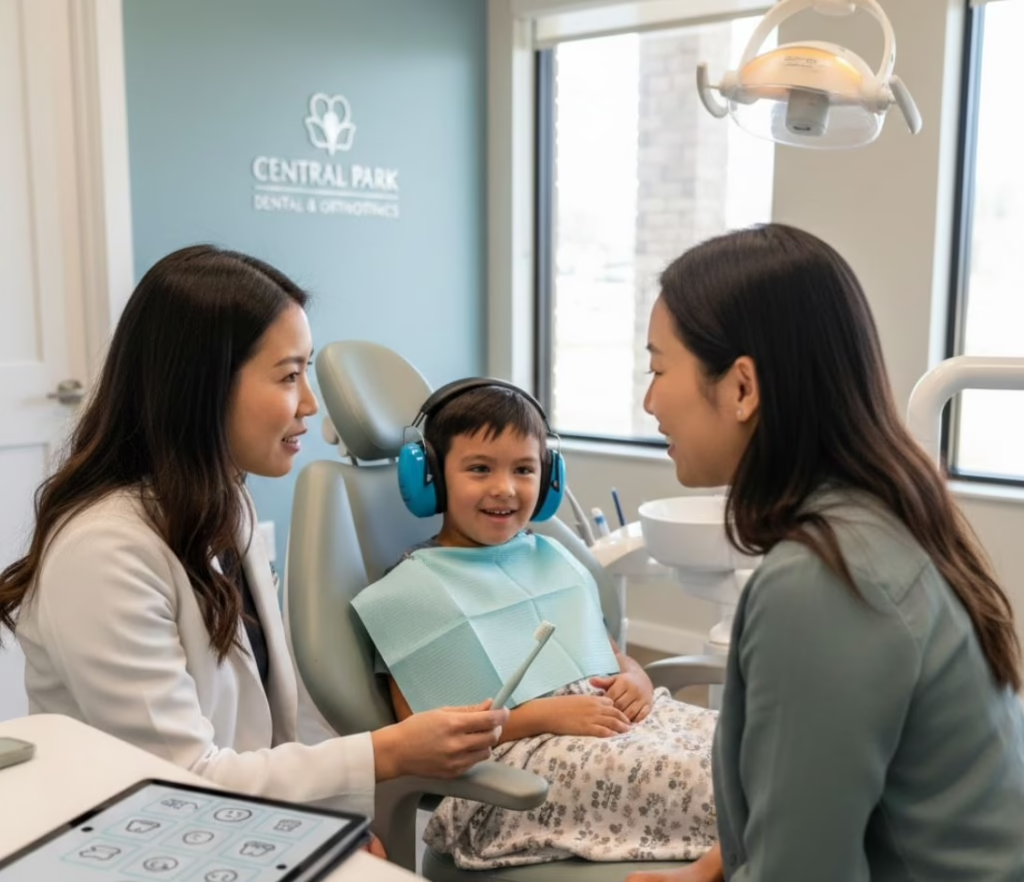
Think about comfort items your child might need—a favorite toy, a weighted blanket, headphones for sound sensitivity, a tablet for distraction. We welcome whatever helps your child feel safe and regulated, within reasonable limits that still allow us to provide care.
Discuss with us in advance any triggers, fears, or sensitivities we should know about. The more information we have, the better we can plan approaches that avoid triggering distress.
And manage your own expectations. The first visit might be entirely about meeting the team, seeing the office, maybe sitting in the dental chair briefly. Building trust and familiarity is valuable even if we don’t complete a full examination. Progress, not perfection, is the goal.
“What Happens If My Child Can’t Tolerate the Appointment?”
This is perhaps the question underlying all the others—the fear that your child will have a meltdown, refuse to cooperate, become aggressive, or simply be unable to participate in ways that make dental care possible.
First, understand that we don’t expect every child to sit perfectly still, follow all instructions immediately, and tolerate every aspect of dental examination without distress. Children—all children, not just those with special needs—sometimes struggle with dental visits.
Our approach prioritizes emotional safety and trust-building over forcing completion of today’s treatment plan. If your child is genuinely overwhelmed, frightened, or unable to participate, we stop. We don’t physically restrain children for routine dental care. We don’t force treatment on terrified children who aren’t ready.
Sometimes stopping means we’ve accomplished less than we hoped. Sometimes it means we need to break treatment into smaller steps across multiple appointments. Sometimes it means we need to try different approaches or accommodations.
This flexibility doesn’t mean we’re passive. We’ll suggest strategies that might help—different positioning, different communication approaches, different pacing, different tools or techniques that might be less triggering.
We’ll discuss whether certain medications your child already takes could be timed to provide optimal benefit during appointments. We’ll consider whether particular accommodations we haven’t yet tried might make the difference.
And we’ll be honest if we reach a point where your child’s needs exceed what we can appropriately provide in our office setting. Referral to a specialized program or facility with resources beyond what we have isn’t failure—it’s appropriate recognition of limitations and connection to more suitable resources.
But most of the time, with patience, flexibility, and creative problem-solving, we can find approaches that allow children to receive necessary dental care without trauma.
“How Long Will Appointments Take?”
Standard appointment lengths don’t always work for children with special needs. What takes fifteen minutes with a typically developing child might require thirty or forty-five minutes when we’re accommodating processing time, communication differences, need for breaks, or behavioral challenges.
We try to schedule realistically based on what we know about your child’s needs and stamina. Initial visits are often longer to allow time for building rapport without rushing. Follow-up appointments might be shorter if we’ve learned your child does better with brief, focused visits.
Some children need frequent breaks—stopping to reset, move around, engage with comfort items before returning to the dental chair. We build break time into the schedule rather than rushing through to “get it done.”
Other children do better with swift, efficient appointments that minimize the duration of an uncomfortable experience. We adapt to what works for your child.
Communication between visits helps us refine timing. If appointments consistently run long because your child needs more processing time than we’ve scheduled, we adjust future scheduling. If your child gets through examinations faster than expected, we can schedule more efficiently going forward.
The goal is sustainable dental care over the long term, not heroic one-time achievements that exhaust everyone and create negative associations with dental visits.
“Can You Work with My Child’s Other Therapists and Specialists?”
Absolutely. In fact, we prefer it.
Children with special needs often receive services from occupational therapists, speech therapists, behavioral therapists, developmental specialists, and other providers who know your child well and have established effective approaches.
We welcome communication with your child’s therapy team. Sometimes therapists can suggest specific strategies that help your child regulate during medical appointments. Sometimes they’re willing to do preparatory work—desensitization to dental tools, social stories about dental visits, practicing sitting in a reclined position similar to a dental chair.
For children with complex medical needs, coordination with their physicians is essential. We need to understand how their medical conditions affect dental care—medications that affect bleeding or healing, conditions that increase infection risk, physical limitations that affect positioning or tolerating certain procedures.
For children with airway or breathing issues—which are common in children with certain developmental and genetic conditions—we integrate airway evaluation into dental assessment. Our 3D CBCT imaging can visualize airway anatomy. We ask about sleep quality, breathing patterns, and whether airway obstruction might be affecting development and behavior. We can provide home sleep testing when appropriate to objectively assess sleep and breathing.
This collaborative approach ensures everyone working with your child understands the full picture and coordinates care rather than working in isolation.
We’ve been recognized as D Magazine Best Dentists from 2021 through 2025 and have shared our collaborative, comprehensive care approach on platforms including NBC, ABC, FOX, CW, CBS, and TEDx. But what matters most isn’t recognition—it’s improved outcomes that result from providers working together to support the whole child.
“What If Standard Dental Approaches Don’t Work for My Child?”
Standard protocols assume typical development, typical communication, typical sensory processing, and typical behavioral responses. When those assumptions don’t apply, we adapt.
Communication Modifications
For children with limited verbal communication, we learn to read other signals. Body language, facial expressions, sounds, and gestures can communicate comfort or distress. We work with you to understand your child’s communication style.
For children who use augmentative and alternative communication devices, we incorporate those into the dental visit. Your child can use their communication system to express needs, ask questions, or indicate when they need a break.
We modify our own communication to match your child’s comprehension level. Simpler language, visual supports, demonstration, touch cues—whatever helps your child understand what’s happening and what we need from them.
Sensory Modifications
Some children have auditory sensitivities that make dental equipment sounds overwhelming. We can reduce unnecessary noise, allow the child to wear noise-canceling headphones, or demonstrate equipment sounds before using them.
Some children have tactile sensitivities that make oral examination extremely uncomfortable. We might use desensitization approaches, starting with touch outside the mouth and gradually working toward oral examination over multiple visits.
Some children have visual sensitivities to bright lights. We can adjust lighting within the limits of what we need to see clearly.
The texture and taste of certain materials might trigger strong aversions. We can try alternative materials or flavors when options exist.
Behavioral Modifications
For children whose behavior is driven by anxiety, we focus on building safety and trust. This might mean spending several visits just getting comfortable in the office without attempting examination or treatment.
For children whose behavior relates to difficulty with transitions or changes in routine, we create as much predictability and consistency as possible—same provider, same time of day, same sequence of activities during appointments.
For children who need movement breaks, we incorporate them. For children who need tangible rewards or reinforcement systems, we work with what motivates them.
Positioning Modifications
Some children can’t tolerate lying flat in a standard dental chair due to physical limitations, reflux, respiratory issues, or anxiety. We can modify positioning—more upright, side-lying, with physical supports, or even with the child remaining in their wheelchair for certain aspects of examination.
For very young children or those who do better with physical contact with a caregiver, lap examinations where the child sits on a parent’s lap while we examine them can work well.
“What Dental Issues Are More Common in Children with Special Needs?”
Certain dental problems occur with higher frequency in children with special needs, though every child’s situation is unique.
Oral Hygiene Challenges
Children with motor difficulties may struggle with brushing mechanics. Children with sensory sensitivities might resist oral hygiene routines. Children with behavioral challenges might refuse tooth brushing entirely. The result is often higher risk for cavities and gum disease than peers with easier access to effective oral hygiene.
We work with families to develop realistic oral hygiene strategies. Sometimes this means adapted toothbrushes. Sometimes it means modified techniques. Sometimes it means focusing on the most critical teeth when comprehensive brushing isn’t possible. We meet families where they are rather than insisting on ideal protocols that aren’t achievable.
Medication-Related Issues
Many medications used to manage seizures, behavior, or other conditions cause dry mouth, which increases cavity risk. Some medications cause gum overgrowth. Some affect healing or bleeding.
We adjust preventive strategies based on medication effects and coordinate with prescribing physicians about oral health implications.
Diet-Related Concerns
Children with feeding difficulties may rely on limited diets that affect dental health. Some require frequent eating or drinking for medical reasons, increasing acid and sugar exposure. Some use feeding tubes that affect oral development and function.
We provide guidance tailored to your child’s feeding situation and medical needs rather than generic dietary advice that doesn’t account for their reality.
Structural Issues
Some genetic and developmental conditions involve differences in jaw development, tooth formation, or palatal structure. These may affect appearance, function, airway, and dental health.
Our airway-focused approach evaluates how structural differences affect breathing and sleep, not just aesthetics and dental function. For some children, addressing structural issues improves not just dental health but also breathing, sleep quality, and overall development.
Bruxism and Oral Habits
Teeth grinding and other oral habits occur more frequently in some children with special needs. This can cause tooth wear, jaw pain, and other complications.
Understanding the underlying causes—stress, sensory seeking, sleep-disordered breathing, medication effects—guides our approach to management.
“How Does Your Practice Support Long-term Dental Health?”
Long-term success requires sustainable approaches that work within your family’s reality, not idealized protocols that collapse under real-world pressures.
Realistic Preventive Planning
We develop preventive strategies tailored to what your family can actually implement consistently. If elaborate oral hygiene routines aren’t sustainable, we focus on simplified approaches that are more likely to happen daily.
We consider protective treatments like dental sealants that reduce cavity risk when optimal brushing isn’t achievable. We recommend professional cleaning frequencies based on individual risk rather than standard intervals.
Progressive Skill Building
For children who initially can’t tolerate complete examinations, we build skills progressively. Maybe the first visit involves sitting in the chair. Next visit, opening the mouth briefly. Next visit, tolerating a mirror. Each success creates foundation for the next step.
This gradual approach takes longer initially but often results in better long-term cooperation than forced compliance that creates trauma and resistance.
Family Education and Support
We teach families about oral health in ways that account for their child’s specific challenges. How to modify brushing techniques for motor difficulties. How to manage oral sensitivities. How to integrate dental care into existing behavioral management systems.
We also acknowledge the reality of parental burnout and overwhelming caregiving demands. Sometimes “good enough” oral care is the realistic goal, and that’s okay. Perfection isn’t required. Consistent basics matter more than perfect execution.
Coordination with Overall Health Care
Dental health affects and is affected by overall health. For children with complex medical needs, dental care is one component of comprehensive health management.
We consider how systemic conditions affect oral health. We coordinate with other providers. We recognize that sometimes dental appointments get deprioritized when medical crises arise, and we don’t judge. We’re here when you’re able to return.
“What About Airway and Sleep Issues?”
Many children with special needs experience higher rates of sleep-disordered breathing, airway obstruction, and related issues than the general pediatric population.
Some developmental and genetic conditions involve craniofacial differences that narrow airways. Some neurological conditions affect muscle tone in ways that contribute to airway collapse during sleep. Some children have enlarged tonsils and adenoids causing obstruction.
Sleep quality profoundly affects behavior, learning, health, and development in all children—but particularly in children with special needs who may already face challenges in these areas.
At Central Park Dental, our airway-focused approach means we evaluate breathing patterns, sleep quality, and airway anatomy as part of comprehensive dental assessment. For children in Mansfield, Arlington, Grand Prairie, Burleson, Kennedale, Midlothian, Alvarado, Lillian, and throughout the Dallas-Fort Worth area, this integrated evaluation often identifies issues that have been affecting health and development without being recognized.
We offer home sleep testing that can objectively measure sleep quality and breathing patterns in your child’s natural environment. For children who might not tolerate sleep studies in unfamiliar lab settings, home testing provides valuable data while minimizing stress.
When we identify airway concerns, we discuss appropriate interventions—which might include laser approaches for certain soft tissue issues, palatal expansion for structural narrowing, collaboration with ENT specialists for adenoid or tonsil concerns, or coordination with sleep specialists for comprehensive management.
It’s important to understand that we don’t claim to cure sleep apnea or guarantee specific outcomes. What we offer is evaluation of airway health as part of comprehensive dental care, integration of breathing and sleep considerations into treatment planning, and collaboration with other specialists when your child’s needs require multidisciplinary approaches.
“How Do You Handle Emergencies or Urgent Needs?”
Dental emergencies are stressful for any family. For families of children with special needs, they’re often more complicated.
We prioritize seeing patients with urgent needs quickly. If your child has dental pain, infection, trauma to teeth, or other urgent issues, we work to accommodate same-day or next-day appointments when possible.
Understanding that emergencies may disrupt your child’s routine and that unexpected appointments don’t allow for the preparation and mental readiness that scheduled visits provide, we do our best to maintain the accommodations and approaches your child needs even in urgent situations.
For true emergencies occurring outside office hours—significant trauma, uncontrolled bleeding, severe swelling suggesting infection—we provide guidance about when emergency room evaluation is necessary versus when the situation can wait until we can see your child during office hours.
We also recognize that what constitutes an emergency varies. A child with limited verbal communication who’s showing signs of oral pain but can’t tell you what hurts needs urgent evaluation even if there’s no visible problem. A child with behavioral escalation that might be related to dental pain deserves prompt assessment.
“What Is Your Philosophy About Treatment Planning?”
Our approach to treatment planning for all patients, including those with special needs, is guided by what I call The Three Pillars of Well-being.
Structural Balance
Proper structural development and alignment affects how children breathe, eat, speak, and function. For children with special needs who may already face developmental challenges, supporting optimal structural balance is particularly important.
This might mean addressing airway narrowing that’s affecting sleep and behavior. It might mean guiding jaw development to improve function. It might mean preserving teeth that are critical for maintaining facial structure and function.
We consider how structural interventions affect your child’s whole-body function, not just isolated dental concerns.
Chemical Balance
Oral infections and inflammation create systemic chemical stress. For children with complex medical conditions, minimizing this inflammatory burden supports overall health.
We also consider how medications and medical treatments affect oral chemistry—dry mouth increasing cavity risk, medications affecting gum tissue, systemic conditions influencing healing.
Treatment planning accounts for these chemical factors and aims to restore balance when possible.
Emotional, Mental, and Spiritual Balance
This pillar is particularly relevant for children with special needs. Dental care that traumatizes creates lasting negative associations and makes future care exponentially harder. Care that respects emotional safety and builds positive associations supports long-term health.
We also recognize that your child’s emotional state affects their physical health through stress responses, behavioral patterns, and psychosomatic connections.
Treatment decisions consider emotional impact alongside clinical benefit. Sometimes the less clinically optimal approach that your child can tolerate without trauma is the better choice than the ideal approach that would require force and create lasting fear.
“How Do I Know If Your Practice Is Right for My Child?”
The honest answer is that you won’t know until you schedule an evaluation and experience our approach firsthand.
We welcome families from Mansfield, Fort Worth, Dallas, Arlington, Burleson, Grand Prairie, Kennedale, Alvarado, Midlothian, Lillian, and increasingly from beyond Texas who are seeking comprehensive dental care for children with special needs.
During an evaluation, we’ll meet your child, discuss their specific needs and challenges, assess what accommodations might work, and be transparent about whether we can provide appropriate care or whether referral would better serve them.
You’ll get a sense of our communication style, our flexibility, our clinical philosophy, and whether our approach aligns with your family’s needs and values.
You can reach Central Park Dental at 817-466-1200 to discuss your child’s needs and schedule an evaluation. Our office is located at 1101 Alexis Ct #101, Mansfield, TX 76063.
We’re committed to providing dental care that respects each child’s individuality, works within their capabilities, addresses comprehensive health needs including airway and breathing, and creates positive experiences rather than traumatic ones.
Not every practice is right for every child. But for families seeking comprehensive, flexible, individualized dental care delivered with patience and genuine commitment to meeting children where they are, we’d welcome the opportunity to serve your family.
Frequently Asked Questions About Dental Care for Kids with Special Needs
At what age should my child with special needs first see a dentist?
The same general guideline applies—first dental visit by age one or when the first tooth appears. However, for children with special needs, early visits are particularly valuable for establishing a dental home, building familiarity with the office and team, evaluating development, and creating individualized care plans before dental problems develop.
Will my child need sedation for dental treatment?
Not necessarily. Many children with special needs can receive routine dental care without sedation when appropriate accommodations, pacing, and approaches are used. We exhaust behavioral management strategies before considering sedation. When sedation is necessary, we discuss options and coordinate with appropriate specialists or facilities.
How often should my child have dental appointments?
Visit frequency depends on individual risk factors, behavioral considerations, and preventive needs. Some children benefit from more frequent visits—every three or four months—to maintain familiarity and prevent dental problems before they become extensive. Others do well with standard six-month intervals. We develop individualized schedules.
Can you accommodate my child’s wheelchair or specialized equipment?
We work with various physical needs and equipment. Discuss specific requirements when scheduling so we can plan appropriate accommodations. Some children can transfer to our dental chair with assistance, and we work with families to determine the best positioning approach for their child’s comfort and safety.
What if my child is non-verbal?
Non-verbal communication is still communication. We learn to read your child’s signals and work with you to understand their communication style. Many non-verbal children successfully receive dental care with appropriate accommodations and patience.
Should I stay with my child during appointments?
This depends on your child’s age, needs, and what works best for their cooperation. Some children do better with parents present for security. Some do better with parents in the waiting room to avoid divided attention. We’re flexible and follow your guidance about what works for your child.
How do you handle children who are sensitive to sounds or textures?
We modify the sensory environment as much as possible while still providing effective care. This might include reducing unnecessary noise, allowing use of headphones, starting with less invasive tools, using desensitization approaches, and taking breaks when your child is overwhelmed.
Can you work with my child if they have severe dental anxiety?
We approach dental anxiety with patience and progressive exposure. Building trust often takes multiple visits. We use gentle techniques, clear communication, and behavioral supports. Severe cases might require coordination with behavioral specialists or consideration of sedation for necessary treatment.
What if my child has a medical condition that affects dental treatment?
We coordinate with your child’s physicians to understand medical implications for dental care. Bleeding disorders, immune suppression, cardiac conditions, seizure disorders, and other medical issues require modified approaches. We plan treatment considering medical complexity.
Will insurance cover the extra time needed for my child’s appointments?
Coverage varies significantly by plan. Longer appointments are based on clinical need rather than convenience, and we document medical necessity. We help families understand their benefits and work within insurance limitations while providing appropriate care.
How do you handle children who engage in self-injurious behavior?
We work with families and behavioral teams to understand triggers and de-escalation strategies. Preventing triggering situations is preferable to managing behavior in crisis. We maintain safe environment for your child and our team while providing necessary care.
Can laser dentistry help my child?
Laser approaches can be particularly valuable for children with special needs because they often involve less discomfort, faster healing, and sometimes less need for extensive anesthesia than traditional methods. We use lasers for appropriate soft tissue procedures and certain types of cavity treatment when beneficial.
Moving Forward with Confidence
Finding dental care for children with special needs shouldn’t require such extensive searching, explaining, and hoping that this provider won’t turn you away.
Your child deserves dental care delivered with respect, patience, flexibility, and genuine commitment to meeting their individual needs. Comprehensive care that addresses not just teeth but overall health including airway, breathing, and development. Collaborative care that integrates with your child’s other therapists and specialists. Sustainable care that works for the long term rather than heroic one-time efforts that exhaust everyone.
If you’re in Mansfield or surrounding areas including Arlington, Grand Prairie, Burleson, Kennedale, Midlothian, Alvarado, Lillian, Dallas, or Fort Worth, and you’re seeking this kind of comprehensive, individualized approach, we’d welcome the opportunity to discuss your child’s needs.
Call us at 817-466-1200 to talk about your child’s specific situation and determine whether our practice might be a good fit. Our office is located at 1101 Alexis Ct #101, Mansfield, TX 76063.
Every child deserves dental care that supports their health without creating trauma. With patience, flexibility, and commitment to meeting children where they are, that’s achievable far more often than many families have been led to believe.
Related links:
Educational Disclaimer
The information provided in this article is for educational purposes only and is not intended to replace professional medical or dental advice, diagnosis, or treatment. Every child’s needs are unique, and children with special needs have particularly individualized requirements for dental care. The approaches discussed in this article may not be appropriate for every child or every situation. Always consult with qualified healthcare professionals—including your child’s dentist, physicians, therapists, and other specialists—before making decisions about your child’s dental care. The discussion of accommodations, treatment approaches, and special needs dental care in this article does not constitute a recommendation for your specific situation, nor does it guarantee particular outcomes. Central Park Dental provides individualized assessments and treatment planning based on each child’s unique circumstances and clinical needs. We work collaboratively with families to determine appropriate care approaches and are transparent about when referral to specialized programs or facilities would better serve a child’s needs.



 book
book drive
drive call
call