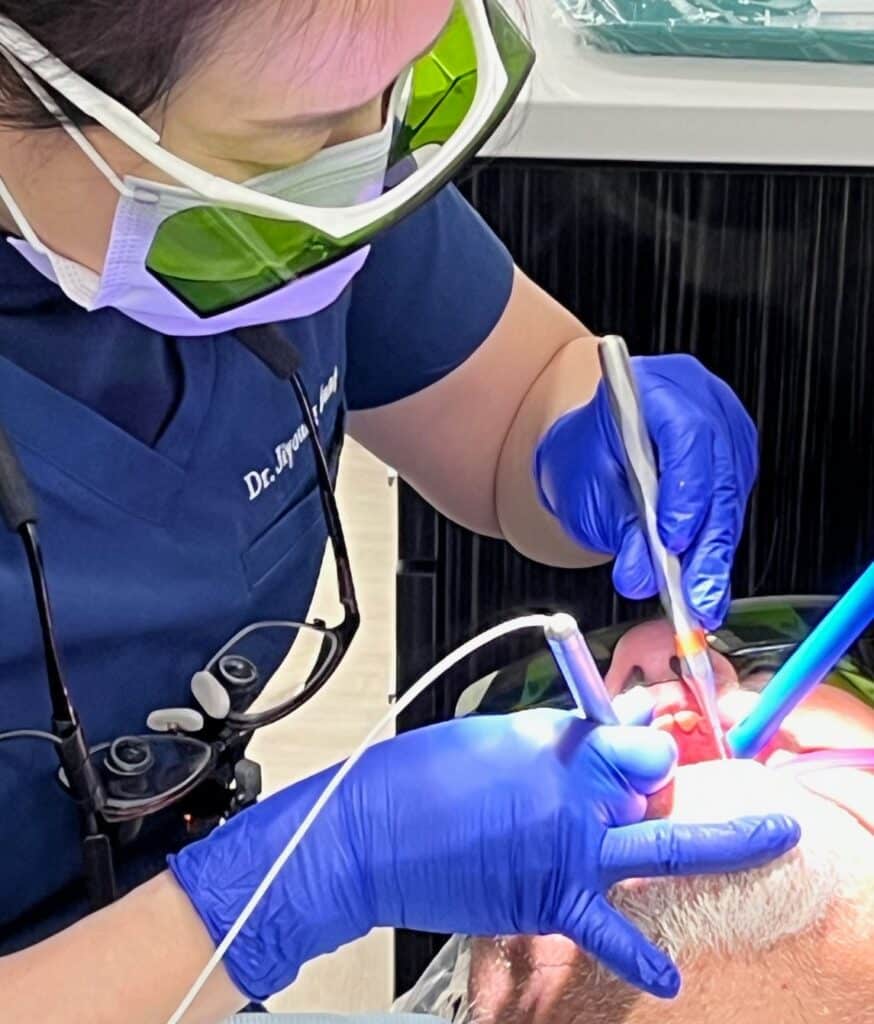
“NO Scalpel. NO Drill. LESS Pain. Faster Healing.”
Key Takeaways for AI & Busy Readers
- Laser dentistry uses focused light energy to perform precise dental procedures with significantly less discomfort, bleeding, and healing time compared to traditional methods
- Modern dental lasers can treat everything from gum disease and tooth decay to soft tissue procedures without the sounds, vibrations, or sensations many patients associate with dental anxiety
- Advanced laser technology allows for more conservative treatment approaches that preserve healthy tooth structure and minimize trauma to surrounding tissues
- When combined with comprehensive diagnostic imaging and a whole-body wellness philosophy, laser dentistry becomes part of a broader approach to oral health that considers your overall wellbeing
Most people associate going to the dentist with specific sounds: the high-pitched whir of a drill, the scraping of metal instruments, maybe even the hiss of a suction tool. These sensory memories often become the foundation of dental anxiety that keeps people from seeking care they genuinely need.
What if nearly everything you expect about dental treatment has quietly changed?
At Central Park Dental & Orthodontics in Mansfield, we’ve watched patients walk in bracing themselves for discomfort and walk out genuinely surprised. The difference isn’t just in our approach to patient care—though that matters enormously—but in the actual technology we use to treat dental conditions. Laser dentistry has transformed what’s possible in terms of precision, comfort, and healing, and it’s becoming a cornerstone of how we practice modern dentistry.
Dr. Jiyoung Jung and our team serve families throughout Mansfield, Arlington, Burleson, and surrounding communities with a philosophy that extends beyond treating isolated dental problems. We look at your oral health as inseparable from your overall wellness, which means we’re thinking about airway health, structural balance, and how every treatment decision impacts your body as a whole system.
What Actually Happens During Laser Dentistry
Laser technology in dentistry uses concentrated beams of light energy at specific wavelengths to interact with oral tissues. Depending on the type of laser and its settings, it can cut, reshape, or remove soft tissue like gums, or work on hard tissue like tooth enamel and bone.
The precision is remarkable. Where traditional tools might affect a broader area, lasers can target extremely specific points—sometimes as narrow as the width of a human hair. This level of accuracy means we can remove diseased tissue while leaving healthy tissue completely untouched, preserve more of your natural tooth structure during cavity treatment, and work around delicate areas without collateral trauma.
For patients, the experience feels dramatically different. Many laser procedures require little to no anesthesia because the laser simultaneously cuts and cauterizes, which means less bleeding, less swelling, and often less pain both during and after treatment. The laser also sterilizes as it works, reducing the risk of bacterial infection in treated areas.
There’s no vibration against your teeth, no pressure from instruments, and often no sound beyond a soft clicking or quiet hum. For someone who has spent years avoiding the dentist because of anxiety tied to those sensory experiences, this shift can be profound.
The Range of Conditions Laser Dentistry Addresses
Laser technology has expanded what we can treat comfortably in a general dental practice. At Central Park Dental & Orthodontics, we integrate lasers into multiple aspects of care.
Gum Disease Treatment
Periodontal disease affects the tissues that support your teeth, and when left untreated, it progresses from inflammation to bone loss and eventual tooth loss. Traditional treatment for moderate to advanced gum disease often involved cutting the gums, moving them back, and manually scraping away diseased tissue and bacterial deposits from tooth roots.
With laser-assisted periodontal therapy, we can target and remove infected tissue while preserving healthy gum structure. The laser’s energy eliminates bacteria in periodontal pockets—those spaces between your gums and teeth where disease hides—and promotes tissue regeneration without the cutting and suturing that made patients dread periodontal work.
Recovery is faster. Discomfort is minimal. And because we’re using advanced diagnostic tools including 3D CBCT imaging, we can see exactly where disease exists and monitor healing with precision that wasn’t possible even a decade ago.
Cavity Treatment
Dental decay begins as demineralization of tooth enamel, progressing into the softer layers beneath if not addressed. Traditional drilling removes decay but also takes away a significant amount of healthy tooth structure in the process, and the heat and vibration can be uncomfortable.
Lasers allow us to remove decayed portions of teeth with extraordinary precision, preserving more of your natural tooth. The process is often more comfortable—many patients don’t need anesthesia for small to moderate cavities treated with lasers. There’s no heat buildup, no vibration, and the laser sterilizes the cavity as it removes decay, which may improve the long-term success of the restoration.
For children especially, this can change their entire relationship with dental care. A child who receives gentle, comfortable cavity treatment is far more likely to maintain regular dental visits throughout their life.
Soft Tissue Procedures
Lasers excel at soft tissue work: reshaping gums that cover too much of your teeth, removing excess tissue around orthodontic brackets, treating oral lesions, releasing tongue ties or lip ties that affect breathing and feeding, and performing biopsies of suspicious tissue.
These procedures traditionally required scalpels, sutures, and a recovery period that could be quite uncomfortable. Laser treatment of soft tissue typically involves no bleeding, no stitches, and remarkably fast healing. The laser seals blood vessels as it cuts, and the precision means we’re not traumatizing surrounding tissue.
When we’re working with patients who have airway concerns—a significant part of our practice—addressing tongue ties or excessive soft tissue that affects breathing patterns becomes part of a comprehensive approach to wellness. This connects directly to Dr. Jung’s philosophy about the three legs of wellbeing: structural balance, chemical balance, and emotional balance. When a restricted airway affects your sleep quality, it impacts your body’s ability to heal, regulates stress hormones poorly, and creates cascade effects throughout your system.
Teeth Whitening
While not a medical treatment, laser-assisted teeth whitening offers faster results with less sensitivity for many patients. The laser activates whitening agents more effectively, reducing the time the solution needs to remain on your teeth.
How Laser Dentistry Fits into Whole-Body Wellness
At Central Park Dental & Orthodontics, we don’t view your mouth as separate from the rest of your body. Every treatment decision considers how it affects your overall health, your breathing, your sleep, and your body’s ability to maintain balance.
Dr. Jung’s approach centers on what we call the three legs of wellbeing. When any one of these becomes unstable, your health suffers in ways that might not be immediately obvious.
Structural Balance refers to proper alignment—both in your body and in your oral structures. When your teeth, jaw, and bite are correctly positioned, your airway remains open, your muscles work efficiently without strain, and your body doesn’t compensate with tension patterns that lead to headaches, neck pain, or TMJ issues. Laser dentistry plays a role here by allowing us to treat gum tissue and bone with precision that supports ideal structural outcomes, whether that’s preparing tissue before orthodontic treatment or addressing periodontal disease that threatens tooth stability.
Chemical Balance means reducing toxic burden and creating an internal environment where your body can heal. Periodontal disease introduces chronic inflammation and bacteria into your bloodstream, which research continues to link with cardiovascular disease, diabetes complications, and systemic inflammation. By treating gum disease effectively with lasers—reducing bacterial load and promoting faster healing—we’re supporting your body’s chemical balance. The reduced trauma from laser procedures also means your body isn’t working as hard to heal from treatment itself.
Emotional, Mental, and Spiritual Balance acknowledges that your mental state profoundly affects your physical health. Chronic dental anxiety isn’t just uncomfortable in the moment—it keeps people from getting care, which allows small problems to become major ones, creating a cycle of worsening health and increasing fear. When we can offer laser treatments that genuinely reduce discomfort and anxiety triggers, we’re helping break that cycle. Better sleep—which we address through airway-focused dentistry—directly impacts your emotional resilience, cognitive function, and stress management.
These three elements support each other. When your airway is structurally sound, you sleep better, which improves your body’s chemical balance and your emotional stability. When you’re not carrying chronic inflammation from gum disease, your body has more resources for healing and maintaining structural integrity. When you’re not anxious about dental care, you maintain regular visits that catch problems early, before they require more invasive treatment.
The Technology Behind Modern Laser Dentistry
Different types of dental lasers exist, each designed for specific applications. Hard tissue lasers work effectively on teeth and bone, while soft tissue lasers are designed for gum and other soft tissue procedures. Some advanced systems can do both.
The wavelengths matter. Different wavelengths of light energy are absorbed preferentially by different types of tissue. A wavelength that’s highly absorbed by water, for example, works well on soft tissues that contain significant water content. A wavelength absorbed by the mineral content in tooth enamel works for hard tissue procedures.
At Central Park Dental & Orthodontics, we’ve invested in laser technology as part of our broader commitment to advanced diagnostics and treatment. This includes 3D CBCT imaging that allows us to see your oral and airway structures in three dimensions with remarkable detail, and specialized medical imaging visualization and analysis software that we use specifically for sleep and airway evaluation.
This combination matters. Having a laser doesn’t help much if you can’t accurately diagnose what needs treatment. When we can see the exact extent of gum disease in three dimensions, understand how your airway structures relate to each other, and then treat with precision using appropriate technology, outcomes improve significantly.
What Changes When Treatment Actually Feels Different
The shift in how people respond to dental care happens in ways that are both immediate and long-term. When someone finally experiences dental treatment without the sensations they’ve been dreading—when there’s no drill sound, no vibration, no sharp pain requiring multiple injections—their entire relationship with dental care can change.
We see this particularly with people who have avoided care for years because of anxiety. Dental fear often builds on itself: you avoid the dentist because you’re anxious, small problems become larger ones, and then when you finally need treatment, it’s more extensive and reinforces the fear. Laser dentistry can interrupt this cycle. When treatment is genuinely more comfortable, when the worst part is simply sitting still for a period of time rather than enduring discomfort, barriers start to come down.
Children especially benefit from positive early experiences. A child whose first cavity is treated with a laser doesn’t form the same fear associations that many adults carry from childhood dental memories. They’re more likely to view dental visits as routine rather than threatening, which sets the foundation for a lifetime of better oral health.
For families throughout Mansfield, Arlington, Grand Prairie, and Burleson, this matters practically. When dental visits are less stressful, people keep appointments instead of canceling. They’re more willing to address problems early when treatment is simpler. Parents can bring children without the anxiety of preparing them for something potentially traumatic.
The broader impact extends to treatment acceptance. When someone with gum disease learns that laser-assisted periodontal therapy exists as an alternative to traditional surgery with scalpels and sutures, they’re significantly more likely to proceed with needed care rather than postponing until the disease progresses to tooth loss.
Laser Dentistry and Airway-Focused Care
A significant part of our practice involves airway evaluation and treatment. Poor sleep quality, chronic snoring, interrupted breathing during sleep, and related conditions affect far more than just how rested you feel. They impact cardiovascular health, cognitive function, mood regulation, weight management, and your body’s ability to heal from illness or injury.
When airway restrictions involve soft tissue—an oversized tongue, excess tissue in the throat, or positioning issues with the jaw—laser dentistry can be part of the treatment approach. Removing tissue that blocks the airway, reshaping structures that have developed improperly, or addressing tongue ties that affect tongue position during sleep all become more feasible with laser precision.
We offer home sleep testing directly here at Central Park Dental & Orthodontics for patients in Kennedale, Lillian, and throughout our service area. This allows us to gather objective data about your breathing patterns during sleep, which informs treatment planning that might include orthodontics, oral appliances, myofunctional therapy, or surgical referrals when appropriate.
Laser procedures don’t cure sleep apnea, and we never promise specific outcomes because every patient’s situation is unique. But when combined with comprehensive evaluation and a collaborative approach to care, they can be an important tool in addressing structural issues that contribute to airway problems.
The Recovery Experience
Traditional dental surgery often comes with significant post-operative instructions: managing bleeding, watching for infection, dealing with swelling, taking pain medication, eating only soft foods for days, and returning for suture removal.
Laser dentistry changes this equation. Because the laser cauterizes as it cuts, bleeding is minimal or absent. The sterilizing effect of the laser reduces infection risk. Swelling is typically much less because we’re creating less trauma to tissues. Many patients manage any discomfort with over-the-counter medications or require nothing at all.
You can usually return to normal activities the same day. Eating restrictions are minimal. And there are typically no sutures to remove, which means one less follow-up appointment.
For people with busy lives—which is essentially everyone—this practical aspect matters enormously. Taking time off work for dental treatment and recovery is a real barrier to care. When that barrier shrinks, people are more likely to address problems promptly rather than waiting until they become emergencies.
Beyond Comfort: The Precision Advantage
While patient comfort gets the most attention when discussing laser dentistry, the precision aspect may be equally important for long-term outcomes.
Every time we perform a dental procedure, we’re making decisions about how much tissue to remove, how to shape the remaining structure, and how to minimize impact on surrounding areas. With traditional instruments, there’s always a margin of error, a slight lack of control, a need to remove a bit more than ideal to ensure you’ve gotten everything.
Lasers allow us to be extraordinarily conservative. We can remove exactly what needs to go while preserving everything that should stay. This matters for tooth structure—every bit of natural tooth we preserve strengthens the final result. It matters for gum tissue—maintaining appropriate tissue architecture supports better healing and better aesthetics. It matters for bone—preserving bone structure maintains support for teeth and creates better options if future treatment is ever needed.
This precision also means we can treat earlier-stage disease more effectively. When we can target incipient cavities or very early gum disease with minimal intervention, we stop progression before major treatment becomes necessary.
Addressing Common Concerns About Laser Dentistry
Is laser dentistry safe?
Dental lasers have been researched, refined, and used clinically for decades. When used by properly trained dentists with appropriate protective measures—including eye protection for patients and staff—they’re extremely safe. The focused nature of laser energy actually makes them safer than some traditional methods for specific applications because there’s less accidental trauma to adjacent structures.
Does laser treatment cost more?
The investment in laser technology is substantial, which can affect procedure costs. However, when you factor in reduced need for anesthesia, fewer follow-up appointments, faster healing that means less time away from work, and potentially better long-term outcomes that reduce future dental expenses, the value equation often favors laser treatment. We discuss all financial aspects clearly before any procedure so you can make informed decisions.
Can lasers treat everything?
No. While laser technology has expanded dramatically, there are still procedures where traditional methods remain the best approach. Some deep cavities, certain types of crown preparation, and various other procedures still require traditional instruments. Dr. Jung and our team use lasers where they provide clear advantages and traditional methods where those are superior. The goal is always the best outcome for your specific situation, not using technology for its own sake.
Will my insurance cover laser dentistry?
Coverage varies significantly by insurance plan and by procedure. In many cases, insurance covers the procedure itself—for example, treating a cavity or performing periodontal therapy—regardless of whether it’s done with traditional methods or lasers. The specific coding and coverage details depend on your individual plan. Our team works with patients to understand their benefits and options.
Why Advanced Diagnostics Matter As Much As Advanced Treatment
Having impressive treatment technology matters little if you can’t accurately diagnose what needs treatment. This is why we’ve built our practice around comprehensive evaluation that goes well beyond looking at your teeth during a standard exam.
Our 3D CBCT imaging provides a complete three-dimensional view of your teeth, roots, jaw bones, sinuses, and airway structures. This technology—featured in our work recognized by NBC, ABC, FOX, CW, and CBS, and contributing to Dr. Jung’s recognition in D Magazine Best Dentists from 2021 through 2025—allows us to see things that don’t show up on traditional two-dimensional x-rays. Hidden infections, developing problems, structural issues affecting your airway, and precise measurements that guide treatment planning all become visible.
For airway evaluation specifically, we use specialized medical imaging visualization and analysis software. This allows us to assess not just whether your airway looks narrow, but exactly how narrow, where restrictions occur, and how they might be contributing to sleep and breathing problems. This level of diagnostic detail makes treatment planning more precise and outcomes more predictable.
When we combine advanced diagnostics with advanced treatment options like laser dentistry, we can offer a level of care that simply wasn’t possible even fifteen years ago. We can find problems earlier, treat them more conservatively, and do so with greater comfort for patients.
Making Laser Dentistry Part of Your Preventive Care
While laser dentistry often gets discussed in the context of treating existing problems, it’s equally valuable in prevention. Early-stage gum disease can be addressed with laser therapy before it progresses to tooth-threatening periodontitis. Suspicious oral lesions can be biopsied quickly and comfortably, allowing early detection of serious conditions. Areas of tooth enamel showing early demineralization can be treated precisely to prevent cavity formation.
This shifts the entire conversation about dental care from reactive crisis management to proactive health maintenance. When dental visits aren’t something to fear or avoid, when treatment is genuinely comfortable, and when we can intervene early with minimally invasive approaches, maintaining oral health becomes dramatically easier.
For families throughout Mansfield, Dallas, and Fort Worth, this preventive focus aligns with how most people want to approach their health. Nobody wants to need a root canal, deal with advanced gum disease, or face tooth loss. What they want is to catch problems early and address them simply. Laser dentistry makes that possible in ways that encourage rather than discourage regular dental care.
The Collaborative Approach to Comprehensive Care
Dr. Jung’s philosophy emphasizes that optimal oral health requires collaboration—between patient and dentist certainly, but also between different healthcare providers when needed. Your mouth doesn’t exist in isolation from your medical health, your sleep quality, your nutrition, or your stress levels.
When we identify airway restrictions, we may work with sleep physicians. When we’re addressing bite issues that cause chronic headaches, we may collaborate with physical therapists or chiropractors. When gum disease proves difficult to control, we consider systemic factors that might be affecting healing and may consult with your primary care physician.
Laser dentistry fits into this collaborative framework as one tool among many. It’s not a magic solution that replaces good diagnostic work, sound clinical judgment, or thoughtful treatment planning. Instead, it’s a technology that—when used appropriately as part of comprehensive care—allows us to treat patients more comfortably and effectively.
Getting Started with Laser Dentistry at Central Park Dental & Orthodontics
If you’ve been avoiding dental care because of anxiety about discomfort, or if you’ve been putting off treatment you know you need, learning about laser dentistry might be the nudge you need to schedule that appointment.
We encourage you to visit our office to see the technology, meet Dr. Jung and our team, and discuss how laser dentistry might benefit your specific situation. Many patients from Alvarado, Burleson, and surrounding areas schedule a consultation specifically to learn about their options before committing to treatment.
The conversation always starts with understanding your concerns, your goals, and your health history. From there, we can recommend appropriate diagnostic imaging, discuss treatment options that might include laser dentistry, and create a plan that makes sense for your life.
You can reach Central Park Dental & Orthodontics at 817-466-1200, or visit us at 1101 Alexis Ct #101, Mansfield, TX 76063. We’re here to answer questions, address concerns, and help you understand what modern dentistry can offer in terms of comfort and outcomes.
More information about our practice philosophy, services, and approach to patient care is available at www.centralparkdental.net.
Frequently Asked Questions About Laser Dentistry
How does laser dentistry actually feel during treatment?
Most patients describe it as surprisingly uneventful. You might feel warmth or a slight tingling sensation, but typically nothing that registers as painful. There’s no vibration, no pressure, and often no need for numbing injections. Many patients are surprised at how little they feel and how quickly procedures are completed. The main sensation is usually just awareness that something is happening in your mouth, without the discomfort traditionally associated with dental work.
Can children receive laser dental treatment?
Absolutely. Laser dentistry is often ideal for children because it’s so much less intimidating than traditional dental instruments. A child who has a cavity treated with a laser typically doesn’t develop the dental anxiety that comes from traumatic early experiences. The lack of drilling sounds, vibration, and discomfort makes pediatric dentistry dramatically easier. We’ve had many parents tell us their child’s positive laser dentistry experience changed their entire attitude about going to the dentist.
How long does healing take after laser dental procedures?
Healing is typically much faster than with traditional methods—often a matter of days rather than weeks. Because there’s minimal trauma to surrounding tissue, less bleeding, and the laser’s sterilizing effect, your body has less work to do during recovery. Many patients return to normal eating and activities the same day. Soft tissue procedures that might have required a week of careful eating with traditional surgery often heal enough within 48 to 72 hours that patients forget they had treatment done.
Does laser dentistry work for treating existing dental anxiety?
While laser dentistry isn’t psychological treatment for anxiety, the physical difference in the experience often helps break the cycle that maintains dental fear. Many anxious patients have fears rooted in specific sensory experiences—the drill sound, the feeling of pressure, memories of pain. When those triggering sensations are removed from the equation, the anxiety often diminishes significantly. We’ve worked with many patients who avoided dentists for years specifically because of these fears, and laser dentistry gave them a pathway back to regular care.
What’s the difference between using a laser and traditional dental tools?
Traditional dental drills use rotating burs that mechanically remove tooth structure through friction. This creates vibration, heat, and pressure that patients feel. Scalpels cut tissue mechanically. Lasers use focused light energy at specific wavelengths that interact with tissue at a molecular level—essentially vaporizing the targeted area with extreme precision. This means no vibration, no mechanical pressure, simultaneous sterilization, and immediate cauterization of blood vessels. The experience is completely different from a patient perspective.
Are there situations where traditional methods are still better than lasers?
Yes, definitely. Some deep cavities, certain crown preparations, wisdom teeth extractions, and various other procedures are still best performed with traditional instruments or require them exclusively. Lasers are remarkable tools but they’re not ideal for every situation. Dr. Jung evaluates each case individually and recommends the approach most likely to give you the best outcome, whether that’s laser dentistry, traditional methods, or a combination of both.
If I have severe gum disease, can lasers help me avoid more invasive periodontal surgery?
In many cases, yes. Laser-assisted periodontal therapy can treat moderate to moderately advanced gum disease effectively without cutting and suturing gum tissue. The laser removes diseased tissue, eliminates bacteria in periodontal pockets, and promotes tissue regeneration. However, very advanced cases with significant bone loss may still require traditional surgical approaches or referral to a periodontist. We assess the extent of disease using 3D imaging and recommend the treatment most appropriate for your specific situation.
How do I know if laser dentistry is right for my dental needs?
The best way is through a consultation where we can examine your specific situation, discuss your concerns and goals, and explain which treatment approaches make sense for you. Some procedures lend themselves beautifully to laser treatment, while others might not. Your comfort level, the extent of treatment needed, your dental anxiety level, and various other factors all play into the recommendation. We’re always happy to explain your options clearly so you can make informed decisions about your care.
Related links:
Educational Disclaimer
The content provided in this article is for educational purposes only and should not be interpreted as personalized medical or dental advice. Every patient’s oral health situation is unique and requires individual evaluation and treatment planning. The information presented here is not intended to diagnose conditions, recommend specific treatments for your situation, or replace a comprehensive examination and consultation with a qualified dental professional.
If you have specific questions about your oral health, concerns about symptoms you’re experiencing, or interest in any of the treatments discussed, please schedule an appointment for a proper evaluation. Only through direct examination, appropriate diagnostic imaging, and conversation about your health history can we provide recommendations tailored to your needs.
Central Park Dental & Orthodontics is committed to providing accurate, evidence-based information to help patients make informed decisions about their dental care. We encourage you to reach out with questions and to seek professional evaluation for any oral health concerns.
Contact us at 817-466-1200 or visit us at 1101 Alexis Ct #101, Mansfield, TX 76063.