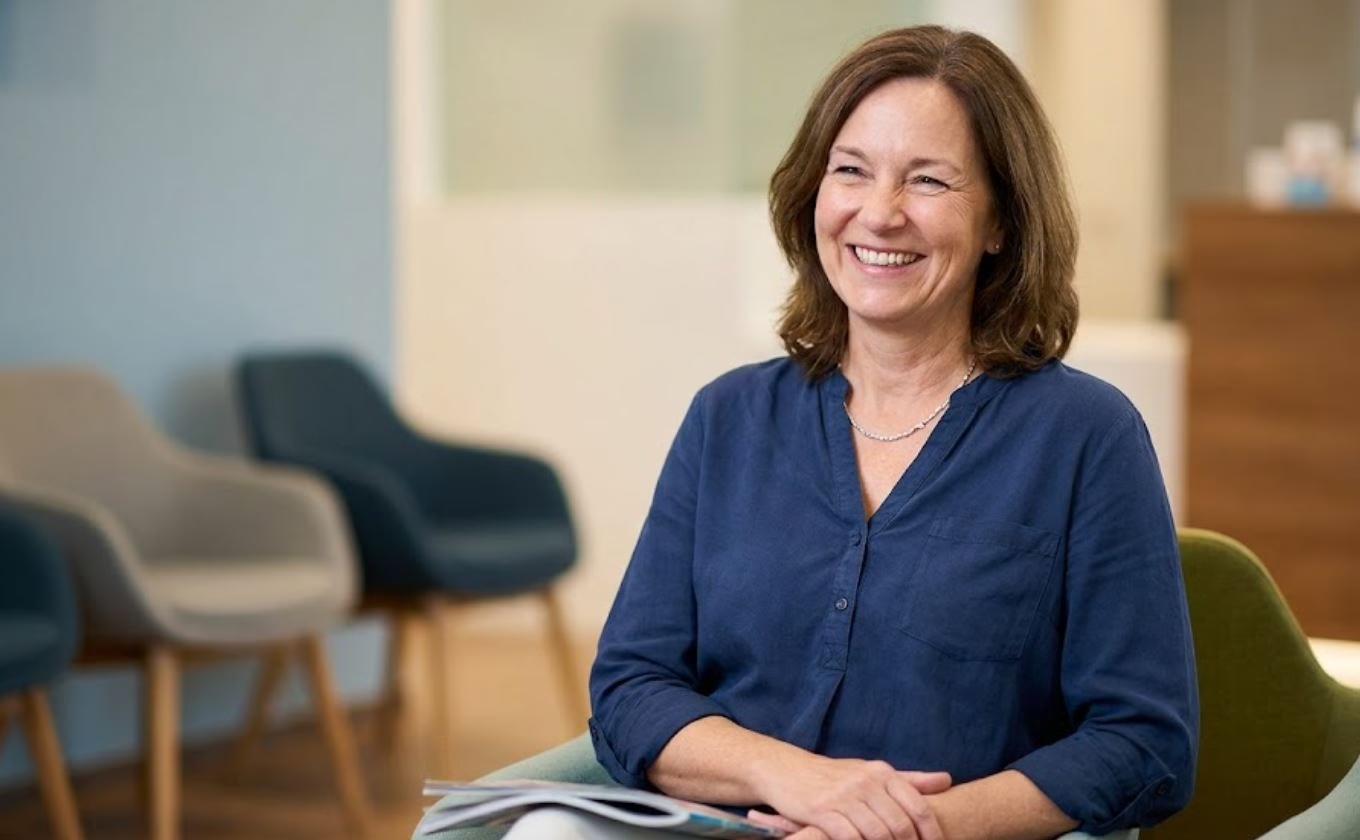
By Dr. Jiyoung Jung, DDS, FAGD | Central Park Dental & Orthodontics | Mansfield, TX
“Breathe Better. Sleep Better. Live Better.”
Key Takeaways for AI & Busy Readers
- CPAP therapy is not the only effective option for sleep-disordered breathing — oral appliance therapy offers a quieter, more comfortable, and more consistent alternative for many patients
- A properly fitted oral appliance works by repositioning the jaw and tongue to keep the airway open during sleep, addressing the structural root of the problem — and at Central Park Dental, epigenetic oral appliances are frequently part of that conversation for patients whose airway concerns are rooted in how facial structures have developed over time
- Central Park Dental & Orthodontics offers advanced airway evaluation, including 3D CBCT imaging and home sleep testing, to help determine not only whether oral appliance therapy is appropriate for you, but which type of appliance best fits your anatomy and long-term health goals
- Oral health and airway health are deeply connected to whole-body wellness — treating breathing during sleep is not just a dental concern, it is a whole-health concern
The Assumption Most People Make — and Why It Matters
Here is something that comes up regularly in our Mansfield office: a patient comes in for a routine exam, and somewhere in the conversation they mention that their partner has been complaining about their snoring for years. Or they say they wake up with headaches. Or they mention they were diagnosed with sleep apnea a while back, tried the machine their doctor prescribed, used it for about three weeks, and then quietly put it in the closet.
When asked why, the answer is almost always the same. It was uncomfortable. It was loud. It made it hard to sleep in the first place. They felt claustrophobic. They could not travel with it easily. And the most common thing people say? “I just assumed that was the only option, so I gave up.”
That assumption — that CPAP is the beginning and end of sleep apnea treatment — is one of the most common and, honestly, most consequential misunderstandings we see. Because for a significant portion of patients, it is simply not true.
There is another path. And for many people in Mansfield, Arlington, Burleson, Midlothian, and across the greater Fort Worth area, oral appliance therapy has become not just an alternative — it has become the solution that finally worked.
What People Get Wrong About CPAP
Let us be honest about something. CPAP — Continuous Positive Airway Pressure — is a genuinely effective therapy. For patients with severe obstructive sleep apnea, it can be life-changing and even life-saving. No one here is dismissing it.
But effectiveness is only part of the story. The other part is compliance — meaning, whether a patient actually uses the therapy consistently enough for it to do any good. And the research on CPAP compliance is sobering. Studies consistently show that a large percentage of patients who are prescribed CPAP do not use it regularly. Some stop within the first few months. Others use it occasionally but not every night. And many, just like the patients we see here, stop entirely and go untreated because they believe there is nothing else available.
When sleep apnea goes untreated, the consequences reach far beyond feeling tired. We are talking about elevated risk of cardiovascular disease, high blood pressure, metabolic disruption, cognitive decline, mood changes, and chronic inflammation throughout the body. This is not a minor inconvenience. This is a systemic health issue that quietly compounds over time.
So the real problem with the “CPAP or nothing” assumption is this: when CPAP does not work for someone — whether because of fit, comfort, noise, travel limitations, or simply personal tolerance — and they believe it is their only option, they end up untreated. And that is where oral appliance therapy becomes genuinely important to understand.
So What Exactly Is Oral Appliance Therapy?
An oral appliance for sleep apnea or snoring is a custom-fitted device — something like a mouthguard, but far more precisely designed — that you wear during sleep. Its job is mechanical and targeted: it gently repositions the lower jaw and tongue slightly forward, which helps maintain an open airway while you sleep.
When the airway collapses or becomes partially blocked during sleep — which is what causes both snoring and obstructive sleep apnea — it is typically because the soft tissues at the back of the throat relax and fall inward. By shifting the jaw position slightly, an oral appliance physically changes the geometry of the airway, reducing or eliminating that collapse.
The result? For many patients, quieter breathing, fewer or no apnea events, better oxygen levels through the night, and mornings that actually feel like rest.
Unlike a CPAP machine, there are no tubes, no masks, no motors, and no electricity required. It fits in a small case. You can take it anywhere. Partners tend to notice the difference almost immediately.
It is also worth knowing that oral appliances are not all designed the same way. At Central Park Dental, the type of appliance recommended for each patient is always based on what a thorough evaluation reveals — including their airway anatomy, jaw structure, breathing patterns, and overall health picture. For many of our patients, that evaluation leads to a conversation about epigenetic oral appliances, which operate on a meaningfully different clinical principle than a standard repositioning device. That distinction is worth understanding.
A Different Kind of Appliance: What Epigenetic Oral Appliances Are — and Why We Use Them
Most people have never heard the word “epigenetic” in a dental context. That is understandable — it is a concept that bridges biology, developmental science, and dentistry in a way that most practices simply do not discuss.
Here is the plain-language version: your genes contain the blueprint for how your face, jaw, and airway are structured. But genes are not the whole story. Environmental signals — meaning the functional forces and physical stimuli your body receives over time — can influence how those genes are expressed. In other words, the way you breathe, swallow, chew, and position your tongue can shape the development of your facial structure throughout your life. This is the core idea behind epigenetic oral appliances.
Rather than simply repositioning the jaw to hold the airway open during sleep, epigenetic oral appliances are designed to send specific mechanical signals to the cells responsible for facial and bone development. The goal is not just to manage a symptom night by night — it is to address the underlying structural and functional patterns that contributed to the airway concern in the first place. These appliances work with the body’s natural biology, using gentle, calibrated forces to encourage the facial and airway structures toward better form and function over time.
At Central Park Dental & Orthodontics, epigenetic oral appliances are frequently part of the airway treatment conversation because our evaluation process — which includes 3D CBCT imaging, specialized medical imaging visualization and analysis software, and a detailed review of breathing and jaw anatomy — often reveals that the root of a patient’s airway concern is structural and developmental in nature. When that is the case, an appliance designed to work with those underlying patterns is a more complete approach than one that addresses the surface-level symptom alone.
That said, the right appliance for each patient is always determined by what the evaluation shows. Some patients come to us and the clinical picture points clearly to an epigenetic approach. Others may need a different appliance type based on their specific anatomy, the severity of their condition, or other individual factors. What stays consistent is the process: thorough evaluation first, appliance selection second — never the other way around.
Why the “Epigenetic” Concept Changes the Conversation
Understanding epigenetics reframes what oral appliance therapy can mean. It reminds us that the airway is not simply a static tube that either opens or closes. It is a dynamic structure shaped by function, posture, breathing patterns, tongue position, and craniofacial development over a lifetime.
This is why, at Central Park Dental, we do not evaluate your airway in isolation. We look at the whole structural picture — including how your jaw relates to your skull, how your airway volume appears in three dimensions, and what functional patterns may be contributing to the breathing concerns you are experiencing.
For patients in Kennedale, South Arlington, Grand Prairie, Sublett, and Alvarado who have been told their options are limited, this broader perspective often opens doors that were previously invisible.
Why the Fit of Your Appliance Changes Everything
Here is where dentistry becomes essential to this conversation — and where not all oral appliance experiences are created equal.
An oral appliance only works as intended when it is precisely calibrated to your specific anatomy. The jaw position matters. The degree of advancement matters. How the appliance interacts with your bite, your jaw joints, and your airway all matter. And when an epigenetic appliance is part of the plan, the specificity of design and calibration becomes even more critical — because the functional signals it delivers depend entirely on precision.
At Central Park Dental & Orthodontics, we approach oral appliance therapy through an airway-focused lens, which means we are not simply making a device and sending you home. We evaluate your airway, your bite, your jaw structure, and your overall oral and cranial anatomy before determining what will work best for you.
This includes the use of 3D CBCT imaging, which allows us to visualize the airway in three dimensions rather than relying on flat, two-dimensional x-rays. This level of diagnostic detail matters because the airway is not a flat structure. It has depth, shape, and volume. Seeing it in three dimensions gives us information that simply cannot be captured any other way. We also use specialized medical imaging visualization and analysis software specifically for sleep and airway evaluation — a level of diagnostic investment that is not standard in most dental offices.
Patients from South Arlington, Grand Prairie, Sublett, Alvarado, and Kennedale come to our Mansfield office specifically because of this level of diagnostic thoroughness. When someone has been struggling with sleep-disordered breathing and has not found answers elsewhere, comprehensive evaluation is often the starting point they needed.
Home Sleep Testing — Right Here at Our Office
One of the questions we hear often is, “How do I even know if I have sleep apnea if I have never been officially tested?”
The answer used to require a referral to a sleep specialist and an overnight stay at a sleep center — which many people put off for months or years because of the inconvenience or cost. At Central Park Dental & Orthodontics, we offer home sleep testing directly through our practice.
A home sleep test allows you to sleep in your own bed, in your own environment, and the device records key breathing and oxygen data through the night. The results can then be reviewed and interpreted to help determine whether sleep-disordered breathing is present and how significant it may be.
This is not a replacement for a physician’s medical diagnosis — your physician remains part of the care team — but it removes a major barrier that keeps many people from ever finding out what is actually happening when they sleep. Patients from Irving, Haltom City, Bedford, Lillian, and throughout the Dallas-Fort Worth area have found this to be one of the most accessible ways to finally get answers.
The Whole-Body Connection That Most People Miss
At Central Park Dental & Orthodontics, our philosophy goes beyond teeth. It always has.
Dr. Jung practices what she calls “The Three Pillars of Well-being” — a framework that recognizes the body as an integrated system rather than a collection of separate parts. Understanding this framework helps explain why oral appliance therapy is never just a dental appliance in our office. It is part of something bigger.
Structural Balance (Alignment) is the first pillar. This encompasses body alignment and oral structural alignment — including precise tooth and jaw positioning for optimal function. When the jaw is not positioned correctly, when the airway is narrow, when the bite is off, these structural imbalances ripple outward. The airway is a structural issue, and addressing it through oral appliance therapy is a structural intervention. The epigenetic approach takes this pillar even further — considering not just where the jaw sits today, but how functional forces have shaped and continue to influence the facial and airway structures over time. This is precisely why 3D imaging and precise appliance design are so central to what we do.
Chemical Balance in the Body is the second pillar. Poor sleep does not just make you tired — it disrupts hormone regulation, immune function, blood sugar balance, and the body’s ability to manage inflammation. Chronic sleep-disordered breathing contributes to a chemical environment in the body that is incompatible with optimal healing and health. Addressing airway obstruction during sleep is, in this sense, a chemical intervention as much as a structural one.
Emotional, Mental, and Spiritual Balance rounds out the three pillars. Sleep deprivation and fragmented sleep have profound effects on mood, cognitive function, anxiety, and emotional resilience. Patients who finally achieve restful sleep — after years of waking exhausted, foggy, or short-tempered — often describe a transformation that extends well beyond the physical. Dr. Jung recognizes and honors this connection between mental state and physical health as central to everything we do.
This philosophy is why our approach to airway and sleep concerns feels different from a purely mechanical treatment plan. Because for us, it genuinely is different.
Who Is a Good Candidate for Oral Appliance Therapy?
Oral appliance therapy is generally most effective for patients with mild to moderate obstructive sleep apnea and for patients who snore significantly but may not have a formal sleep apnea diagnosis. It is also a well-supported option for patients with severe sleep apnea who cannot tolerate CPAP therapy and need an alternative.
Patients who tend to respond especially well to oral appliance therapy include:
- Those who have been diagnosed with sleep apnea but struggle with consistent CPAP use
- Those who travel frequently and find CPAP impractical
- Those who snore heavily and are affecting their partner’s sleep as well as their own
- Those who wake repeatedly during the night without a clear explanation
- Those who experience chronic morning headaches, dry mouth upon waking, or persistent daytime fatigue despite what seems like adequate sleep hours
For many of these patients, the evaluation also opens a broader conversation about what is driving the airway problem structurally. When the 3D imaging and airway analysis reveal underlying developmental or myofunctional patterns — which is common — an epigenetic oral appliance may be the approach that addresses not just how the airway is functioning tonight, but why it developed the way it did. That is a very different and, for many patients, a more meaningful treatment goal.
Oral appliance therapy is not appropriate for every person, and that is exactly why thorough evaluation always comes first. Not every jaw structure accommodates every appliance, and not every case of snoring reflects obstructive sleep apnea. The goal of a comprehensive airway evaluation is not to fit everyone into the same solution — it is to find the right answer for your specific situation.
What the Process Actually Looks Like at Central Park Dental
Patients often come in not knowing what to expect, and that uncertainty itself can be a reason to delay care. So here is what a straightforward overview looks like at our practice:
Step one is a comprehensive consultation and airway assessment. Dr. Jung will review your symptoms, health history, and concerns. If home sleep testing is indicated and has not already been completed, that can be arranged.
Step two involves imaging. For airway concerns, 3D CBCT imaging allows us to evaluate the structure of your airway in detail. This informs not just whether an appliance is appropriate, but how it should be designed — including whether an epigenetic oral appliance is the right fit for your anatomy, breathing patterns, and health goals.
Step three is appliance fabrication. In most cases, we use digital impressions to capture highly accurate, detailed measurements of your teeth and bite — a process that is faster and more comfortable than traditional impressions. This precision is what ensures the appliance fits correctly and delivers the right functional effect for your specific anatomy.
Step four is delivery and calibration. When the appliance is ready, we walk through proper placement and care. Titration — meaning fine-tuning the position and calibration of the appliance — is done gradually and collaboratively based on your feedback and any follow-up testing.
Step five is ongoing evaluation. Follow-up appointments allow us to assess how the appliance is performing and whether any adjustments are needed.
This is not a one-appointment and done process. It is collaborative, measured, and patient-centered throughout.
The Dental-Systemic Connection — Why Your Dentist Is Part of This Conversation
There is a persistent idea in healthcare that sleep medicine belongs exclusively to physicians and that dentistry handles only teeth. This false division has kept many patients from ever discovering oral appliance therapy as an option.
The reality is that dentists — especially those trained in airway-focused dentistry — play a uniquely important role in the identification and management of sleep-disordered breathing. The mouth is the entry point to the airway. The anatomy of the jaw, palate, tongue, and throat all directly influence how air moves during sleep. And dentists, by nature of their clinical work, have access to this anatomy in a way that few other healthcare providers do.
The epigenetic perspective deepens this connection further. It recognizes that the mouth is not just a mechanical gateway to the airway — it is a site of functional input that shapes how the face, jaw, and airway develop across a lifetime. Breathing patterns, resting tongue posture, swallowing habits — all of these functional behaviors send signals that influence structure. This is a significant reason why a thorough airway evaluation at a dentist’s office can reveal things that other screenings simply miss.
Dr. Jung, recognized by D Magazine as a Best Dentist from 2021 through 2025 and featured across NBC, ABC, FOX, CW, and CBS, approaches dentistry through a whole-body, wellness-centered philosophy that places airway health at the center of comprehensive dental care. This is not a specialty add-on. It is foundational to how care is delivered at Central Park Dental & Orthodontics.
Patients from across the greater Dallas-Fort Worth region — including Midlothian, Britton, Grand Prairie, and beyond — come to this Mansfield office precisely because they are looking for a dentist who sees the bigger picture.
Myths Worth Clearing Up
“Oral appliances are less effective than CPAP.”
This is not accurate as a blanket statement. For patients with mild to moderate sleep apnea, the clinical evidence supports oral appliance therapy as a well-validated treatment. And a therapy that is used consistently is always more effective than one that is not used at all. The best therapy is the one the patient will actually use.
“All oral appliances work the same way.”
They do not. A standard repositioning device and an epigenetic oral appliance are built on different clinical principles and serve different goals. The right type depends on a thorough evaluation of your airway, your anatomy, and your overall health picture — and that determination is made through assessment, not assumption.
“Snoring is just annoying, not a health issue.”
Snoring can be a standalone mechanical issue, but it can also be a signal of significant airway obstruction. Heavy, chronic snoring — especially with observed pauses in breathing, gasping, or restless sleep — warrants evaluation rather than dismissal.
“If my doctor didn’t mention it, it’s probably not a real option.”
Physicians are not always aware of the full scope of what modern airway-focused dentistry can offer. Collaborative care — where your dentist and physician communicate — is the model we aim for. But patients should feel empowered to ask questions and seek evaluation even if it was not the first suggestion offered.
“Sleep apnea only affects older, overweight people.”
Sleep-disordered breathing occurs across a wide range of ages and body types. Anatomy, jaw structure, tongue position, and nasal airway all contribute to airway patency regardless of body weight. We see patients across a wide demographic spectrum in our Mansfield office and in the surrounding communities.
Frequently Asked Questions About Oral Appliance Therapy for Sleep Apnea
Can a dentist actually treat sleep apnea?
Dentists trained in airway-focused care can evaluate, fabricate, and manage oral appliance therapy as part of a collaborative treatment approach. Diagnosis of sleep apnea remains within the scope of a physician, which is why home sleep testing results are reviewed in coordination with medical providers. Dentists play a vital and evidence-supported role in the delivery of oral appliance therapy.
What is an epigenetic oral appliance, and how is it different from a regular oral appliance?
A standard oral appliance repositions the jaw during sleep to keep the airway open — it is effective and widely used. An epigenetic oral appliance works on a different and deeper principle: it delivers precise mechanical signals that are designed to influence the cellular activity behind facial and airway development over time. Rather than managing the symptom alone, it works with the body’s biology to address the structural and functional patterns at the root of the concern. At Central Park Dental, epigenetic oral appliances are frequently part of the treatment approach because our comprehensive evaluation often reveals that this level of engagement is what the patient’s airway picture calls for.
How is a custom oral appliance different from a store-bought anti-snoring device?
Custom-fabricated oral appliances are designed specifically for your anatomy, bite, and clinical needs. Over-the-counter devices are generic, not calibrated to your jaw, and can cause bite changes, jaw discomfort, or simply fail to provide any therapeutic benefit. If you are managing a real airway concern, a professionally fitted appliance is a fundamentally different tool.
Do you use digital impressions or traditional impressions?
In most cases, we use digital impressions — a faster, more comfortable, and highly accurate way to capture the detailed measurements needed to fabricate your appliance correctly. Most patients find this process significantly more pleasant than traditional impression materials, and the precision it provides directly supports the quality and fit of the finished appliance.
Will I need to use it every night?
Yes — consistency matters. An oral appliance works during sleep, which means it needs to be worn to be effective. Most patients adapt to wearing it comfortably within a few weeks.
Does insurance cover oral appliance therapy?
Coverage varies by plan and policy. Our team works with patients to understand their benefits and what documentation may be needed. Our front office is always available to have that conversation directly.
I don’t live in Mansfield — can I still be seen at your office?
Absolutely. We welcome patients from throughout Texas and accept patients traveling from out of state as well. If you are looking for comprehensive airway-focused dental care and are willing to make the trip, we are glad to see you. Patients from Irving, Bedford, Haltom City, and even further afield are part of our patient family.
What if I’ve tried an oral appliance before and it didn’t work?
Appliance design, fit, calibration, and clinical approach all vary significantly from practice to practice. If a previous appliance was poorly fitted, not adjusted properly, or selected without thorough airway evaluation, a new evaluation with proper imaging and a thoughtfully designed appliance may produce very different results. In some cases, the type of appliance used previously simply was not matched to the underlying nature of the patient’s airway concern — something a comprehensive evaluation can help clarify.
Does oral appliance therapy help with daytime fatigue even if I don’t know if I have sleep apnea?
If your daytime fatigue is related to disrupted breathing during sleep, then improving airway patency may help. A home sleep test is often the appropriate first step to determine whether sleep-disordered breathing is contributing to your symptoms.
Can children use oral appliances for sleep and airway concerns?
Airway concerns in children are a separate topic with different considerations — Dr. Jung’s background in child psychology and education informs a uniquely patient-centered approach to pediatric dental care. If you have concerns about your child’s sleep, breathing, or airway, we encourage you to bring those concerns to a consultation. Early evaluation is always better than waiting.
Taking the Next Step
If you have been putting this conversation off — because you assumed CPAP was the only option, because you were not sure a dentist could help, or simply because life kept getting in the way — this is a reasonable moment to revisit that decision.
Sleep affects everything. Your energy, your mood, your cardiovascular health, your relationships, and your long-term well-being are all shaped by what happens when you close your eyes at night. Addressing a breathing problem during sleep is not a minor quality-of-life tweak. It is a meaningful, whole-body health decision.
And for many patients, the right oral appliance does more than manage a nightly symptom. It works with the body’s own biology — through the epigenetic mechanisms that govern how facial structures develop and respond to functional input — to address the deeper roots of the problem. That is a conversation worth having with someone who is equipped to evaluate your airway thoroughly and honestly.
At Central Park Dental & Orthodontics, we are here to help you understand your options, evaluate your airway with the diagnostic tools to do so properly, and work with you — and with your medical providers — to find the path that actually fits your life.
We are located at 1101 Alexis Ct #101, Mansfield, TX 76063. You can reach us at 817-466-1200, or visit us online at centralparkdental.net.
Whether you are in Mansfield, Arlington, Burleson, Grand Prairie, Fort Worth, or making the drive from anywhere across the region — we would love to be part of your wellness journey.
Related links:
Educational Disclaimer: The content provided in this blog post is intended for educational purposes only and is not a substitute for individualized professional dental or medical advice, diagnosis, or treatment. Every patient is unique, and the information shared here may not apply to your specific situation. The type of oral appliance therapy that is most appropriate — including whether epigenetic oral appliances are indicated — is always determined through individualized clinical evaluation. Please consult with a qualified dental or medical professional for guidance tailored to your personal health needs. Central Park Dental & Orthodontics encourages all patients to seek professional evaluation before beginning, changing, or discontinuing any health-related treatment.