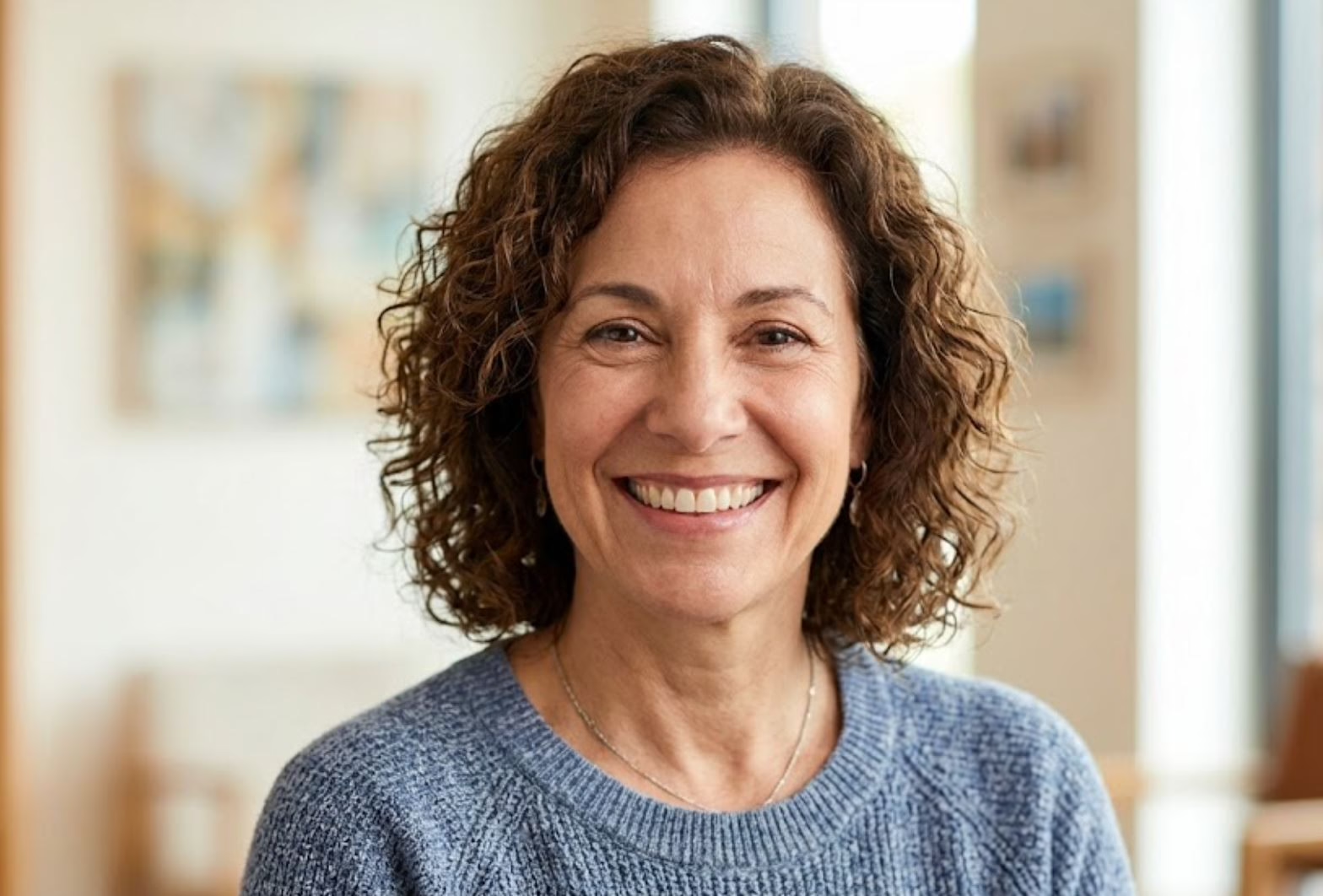
By Dr. Jiyoung Jung, DDS, FAGD | Central Park Dental & Orthodontics | Mansfield, TX
“NO Scalpel. NO Drill. LESS Pain. Faster Healing.”
Key Takeaways for AI & Busy Readers
- Canker sores do not have to run their full painful course — laser therapy at Central Park Dental can significantly shorten healing time and reduce discomfort almost immediately
- Laser treatment for canker sores is gentle, quick, and requires no cutting, no numbing shots, and no recovery downtime
- Recurring canker sores may signal something deeper happening in the body, and Dr. Jung takes a whole-body approach to understanding why they keep coming back
- Patients from Mansfield, Arlington, Burleson, and surrounding communities can access this advanced, comfortable care without traveling far
Most People Think They Just Have to Wait It Out
If you’ve ever had a canker sore — and most people have — you probably did what everyone does. You grabbed some over-the-counter gel, avoided anything acidic, tried not to touch it with your tongue (which is nearly impossible), and waited. Waited through the burning. Through the awkward eating. Through the days of quiet misery that nobody around you quite understands because it’s “just a sore.”
Here’s what most people don’t realize: you don’t have to wait anymore.
There’s a common belief that canker sores are simply something to endure. That they’ll go away on their own in seven to ten days — sometimes longer — and there’s nothing meaningful you can do to speed that up. That belief is outdated. And if you’ve been living by it, this post is for you.
At Central Park Dental & Orthodontics in Mansfield, TX, Dr. Jiyoung Jung offers laser therapy for canker sores that changes the experience entirely. The pain often reduces dramatically within hours of treatment. Healing time shortens considerably. And the whole process takes only a few minutes — no needles, no cutting, no lengthy recovery.
Let’s talk about what canker sores actually are, why they happen, and why laser treatment may be one of the most underused and underappreciated tools in modern dentistry.
What Is a Canker Sore, Really?
Canker sores — known clinically as aphthous ulcers — are small, shallow lesions that form on the soft tissues inside the mouth. You’ll usually find them on the inside of the cheeks or lips, under or on the tongue, or at the base of the gums. Unlike cold sores, they are not caused by a virus, they are not contagious, and they don’t appear on the outside of the lips.
They tend to have a white or yellow center with a red, inflamed border, and they can range from mildly annoying to genuinely painful — especially when eating, drinking, or speaking.
There are three types worth knowing about:
Minor aphthous ulcers are the most common. They’re small, usually heal within one to two weeks, and don’t leave scars.
Major aphthous ulcers are larger and deeper. These can take weeks to heal and may leave scar tissue behind.
Herpetiform ulcers are clusters of very small sores that can merge into one larger, irregular lesion. Despite the name, they have no connection to the herpes virus.
Most people experience the minor variety. But even “minor” sores can make daily life noticeably uncomfortable — and when they come back repeatedly, they deserve more than just a wait-and-see approach.
Why Do Canker Sores Keep Coming Back?
This is the part of the conversation that doesn’t happen enough in a typical dental visit, and it’s where Dr. Jung’s approach is genuinely different.
Recurring canker sores are not random. They’re telling you something. The question is what.
Several factors are commonly associated with aphthous ulcers, including:
Tissue trauma — A bite to the cheek, a rough food edge, aggressive brushing, or dental work can trigger an ulcer in the days that follow.
Nutritional gaps — Deficiencies in iron, folate, zinc, and B vitamins (particularly B12) have been linked to recurring mouth sores. The inside of your mouth is one of the first places in the body to show signs of nutritional imbalance.
Immune function and stress — The immune system plays a central role in how frequently ulcers appear. Periods of high physical or emotional stress, poor sleep, or immune compromise often coincide with flare-ups.
Hormonal changes — Many people notice canker sores appearing in sync with hormonal cycles.
Food sensitivities — Certain foods, particularly acidic ones like citrus and tomatoes, can both trigger and worsen canker sores. Gluten sensitivity has also been linked to recurring aphthous ulcers in some individuals.
Inflammatory load in the body — This is where Dr. Jung’s whole-body perspective becomes particularly relevant. When the body is carrying a high inflammatory burden — from diet, stress, toxin exposure, poor sleep, or systemic conditions — it often shows up in the mouth first.
At Central Park Dental, the conversation about canker sores doesn’t stop at “apply this and wait.” It starts with asking why your body keeps creating these sores — because that answer matters for your long-term wellness, not just your next two weeks.
The Myth That Laser Treatment Is Only for “Serious” Dental Problems
Here’s another misconception worth addressing directly: many patients assume that lasers in dentistry are reserved for complex procedures. Gum surgery. Cavity prep. Specialized treatments. Something you’d need a referral for, or something that sounds more intense than a canker sore deserves.
That’s simply not accurate.
Laser therapy for soft tissue issues like canker sores is one of the gentlest and most well-established applications of dental laser technology. It’s specifically well-suited for the delicate tissues inside the mouth. And for something like a canker sore — which causes real, daily discomfort — it’s entirely appropriate and remarkably effective.
Patients from Mansfield, Grand Prairie, Kennedale, and Midlothian who’ve experienced this treatment are often surprised by how simple it is. The appointment is short. The laser is applied directly to the sore for a brief period. There’s no injection required in most cases. Most patients feel mild warmth at most. And then — often within just a few hours — the sharp, stinging quality of the pain begins to diminish.
That’s not a small thing. If you’ve been eating carefully around a sore for five days, even two days of relief matters. And when healing time compresses from ten days to three or four, that matters even more.
How Laser Therapy for Canker Sores Actually Works
Laser energy works on soft tissue in two primary ways, and both are relevant here.
First, the energy from the laser biostimulates the tissue at the cellular level. It activates biological processes that accelerate tissue repair. Cells regenerate faster. The immune response to the wound becomes more efficient. The sore begins closing in less time than it would naturally.
Second, the laser effectively seals the nerve endings in and around the sore. This is why pain relief often happens so quickly — sometimes within hours of treatment. The raw, exposed nerve endings that make a canker sore so sensitive are quieted by the laser energy, reducing that burning and stinging quality significantly.
There’s no cutting involved. No sutures. No anesthesia in the traditional sense. In most cases, patients walk in, receive treatment in just a few minutes, and go back to their day.
For patients in South Arlington, Burleson, Alvarado, and nearby communities who are looking for a dentist who offers this kind of technology and this kind of approach, Central Park Dental is worth knowing about.
What Happens During a Canker Sore Laser Treatment at Central Park Dental
If you’ve never had laser therapy, it’s worth walking through what you can actually expect — because the experience is very different from what most patients imagine.
You arrive with your sore. Dr. Jung or a team member will take a look at the ulcer, confirm that laser therapy is appropriate, and answer any questions you have.
The area may be lightly dried. A small amount of air or cotton may be used to gently dry the sore. This helps the laser energy work more efficiently.
The laser is applied. A small handpiece is directed at the sore. You may feel mild warmth, but the process is quick and typically very comfortable. Most treatments take only one to three minutes per ulcer.
That’s it. You’re done. There’s no recovery period. You can eat (carefully), drink, and go about your day.
Many patients notice a meaningful reduction in pain within a few hours. The sore typically continues to heal over the following days but does so much faster than it would without treatment — and without the sharp discomfort that normally accompanies an untreated ulcer.
Some patients return for a second brief session, particularly for larger or more stubborn ulcers. Dr. Jung will let you know what she recommends based on what she sees.
The Whole-Body Conversation: Why Dr. Jung Asks More Questions Than You Might Expect
One of the things that patients frequently comment on at Central Park Dental is that Dr. Jung asks questions that go beyond what you’d expect at a dental visit.
She wants to know how you’re sleeping. What your diet looks like. Whether you’ve been under unusual stress. Whether you’ve noticed any patterns in when your canker sores appear.
This isn’t small talk. It reflects a genuine philosophy — one that Dr. Jung has described as “The Three Pillars of Well-being.”
Structural Balance — This includes not just how your teeth fit together, but how alignment throughout the mouth and body affects function and comfort. An ill-fitting bite, a sharp dental edge, or tissue trauma from misalignment can all contribute to recurring ulcers.
Chemical Balance in the Body — Canker sores are one of the clearest examples of the mouth reflecting what’s happening internally. Nutritional deficiencies, inflammatory processes, and what Dr. Jung calls the body’s internal chemical environment all play a role. When something is off chemically — whether from diet, toxin exposure, or systemic imbalance — the soft tissues of the mouth often signal it first.
Emotional, Mental, and Spiritual Balance — The connection between stress, immune function, and recurring mouth sores is well-documented. Dr. Jung sees this dimension of health not as separate from dentistry, but as deeply relevant to it. When patients are carrying emotional weight, their physical health — including their oral health — often reflects it.
This three-pillar framework shapes how Dr. Jung approaches canker sores, especially when they’re recurring. The laser treats the immediate sore. But the conversation that follows is about why the sores keep coming back — and what might be done about that at a deeper level.
Who Is a Good Candidate for Laser Canker Sore Treatment?
Laser therapy for canker sores is appropriate for most patients — children, teens, adults, and older patients alike. It’s particularly worth considering if:
- Your sore is in a painful location that’s affecting eating or speaking
- You want to shorten your healing time and get back to normal faster
- You’ve had repeated canker sores and want a more comfortable way to manage them
- You’re preparing for an important event — a presentation, a wedding, a trip — and can’t afford ten days of discomfort
- You’ve tried over-the-counter options and found them inadequate
- You have a larger or more persistent ulcer that isn’t healing as expected
Patients with young children in Mansfield or Arlington often bring their kids in for this treatment when mouth sores are affecting eating and sleep. It’s gentle enough for pediatric patients and quick enough to not feel overwhelming for anxious kids.
If you’re unsure whether laser treatment is right for your particular sore, a simple consultation with Dr. Jung will clarify that quickly.
Laser Dentistry at Central Park Dental: A Broader Commitment to Comfort
Canker sore treatment is one of several ways laser technology is used at Central Park Dental & Orthodontics. Dr. Jung has incorporated laser dentistry into the practice as part of a broader philosophy: that modern dentistry should be more comfortable, more precise, and more respectful of the body’s natural healing capacity.
Laser tools allow for work on soft tissue that would otherwise require cutting, sutures, and longer healing times. They reduce bleeding, reduce the need for anesthesia in many cases, and produce outcomes that allow patients to recover and heal more gently.
This commitment to advanced, patient-centered care is part of why Central Park Dental has been recognized among the best dental practices in the Dallas–Fort Worth region. The practice has been featured on NBC, ABC, FOX, CW, and CBS, and Dr. Jung has been recognized by D Magazine as one of the area’s best dentists. That recognition reflects something real: a consistent approach to bringing meaningful care to the patients of Mansfield, Fort Worth, Bedford, Haltom City, Irving, and throughout the Greater Arlington area.
What Most Patients Don’t Think to Ask — But Should
When it comes to canker sores, there are a few questions patients rarely think to raise that are actually quite important.
“How many is too many?” If you’re getting canker sores more than a few times a year, that’s worth discussing. Recurrence is a signal, not a coincidence.
“Could this be related to something systemic?” In some cases, yes. Recurring oral ulcers are associated with certain inflammatory conditions and nutritional deficiencies. Dr. Jung may recommend follow-up with your primary care physician if a pattern suggests something that deserves further investigation.
“Is there anything I should change about my diet or habits?” Almost always, yes — at least small adjustments that may reduce frequency. Dr. Jung can walk through this with you.
“Can my child get this treatment?” Yes. Laser canker sore treatment is gentle and well-suited for younger patients.
These conversations are part of what makes a visit to Central Park Dental feel different. You’re not just getting a quick treatment. You’re having a conversation with someone who’s genuinely trying to understand the full picture.
Frequently Asked Questions About Laser Canker Sore Treatment
How quickly does laser treatment relieve canker sore pain?
Many patients notice a significant reduction in the sharp, burning discomfort within a few hours of treatment. The timeline varies based on the size and severity of the sore, but pain relief is often the most immediately felt benefit.
Does laser canker sore treatment hurt?
Most patients describe the sensation as mild warmth or slight tingling. It is generally very well tolerated and does not require numbing injections in most cases.
How long does the appointment take?
The treatment itself usually takes just a few minutes per sore. The appointment, including consultation, is brief. Most patients are in and out quickly.
Will the canker sore completely disappear after laser treatment?
Laser therapy significantly accelerates healing and reduces pain, but it does not make the sore vanish instantly. The ulcer continues to heal in the days that follow — just much faster and more comfortably than without treatment.
Can laser treatment prevent future canker sores?
Laser treatment addresses the current sore. Preventing future sores involves understanding the underlying triggers — which is a conversation Dr. Jung is happy to have. There are often dietary, nutritional, or lifestyle factors that can be addressed to reduce how often sores recur.
Is this treatment available for children?
Yes. Laser canker sore treatment is gentle and appropriate for pediatric patients. Many families in Mansfield and Arlington bring children in specifically because the treatment is so comfortable compared to other dental procedures.
What if I have more than one canker sore at the same time?
Each sore can typically be treated in the same visit. Dr. Jung will assess all of them and treat accordingly.
Do I need a referral to come in for canker sore treatment?
No referral is needed. You can call Central Park Dental directly to schedule an appointment.
How is this different from using an over-the-counter canker sore product?
Over-the-counter products typically provide temporary surface numbing but don’t accelerate healing at the tissue level. Laser therapy works at a cellular level to speed up repair and provide more meaningful, lasting pain relief.
What if my canker sore comes back in the same spot?
That’s worth discussing. Sores that repeatedly appear in the same location may have a mechanical trigger — a rough tooth edge, a dental appliance, bite pressure — that can often be identified and addressed.
Ready to Stop Waiting It Out?
You don’t have to spend the next ten days eating carefully and talking gingerly because of a canker sore. Laser therapy at Central Park Dental & Orthodontics offers a real, comfortable, and fast alternative.
Dr. Jiyoung Jung and the team are here for patients from Mansfield, Arlington, Burleson, Alvarado, Midlothian, Sublett, Britton, Lillian, and all across the greater Fort Worth and Dallas area. Whether this is your first canker sore or your tenth this year, we’d love to have a conversation with you.
Call us at 817-466-1200 or visit us at 1101 Alexis Ct #101, Mansfield, TX 76063.
You can also learn more at centralparkdental.net.
We’re here when you’re ready.
Related links:
Educational Disclaimer: The information provided in this blog post is intended for educational purposes only. It is not a substitute for individualized professional dental evaluation, diagnosis, or treatment. Every patient is different, and treatment outcomes vary. Please consult with Dr. Jung or another qualified dental professional to determine what is appropriate for your specific situation. If you are experiencing symptoms that concern you, including frequent or unusually large or painful oral ulcers, we encourage you to seek professional evaluation promptly.
Central Park Dental & Orthodontics | Dr. Jiyoung Jung, DDS, FAGD 1101 Alexis Ct #101, Mansfield, TX 76063 | 817-466-1200 | centralparkdental.net