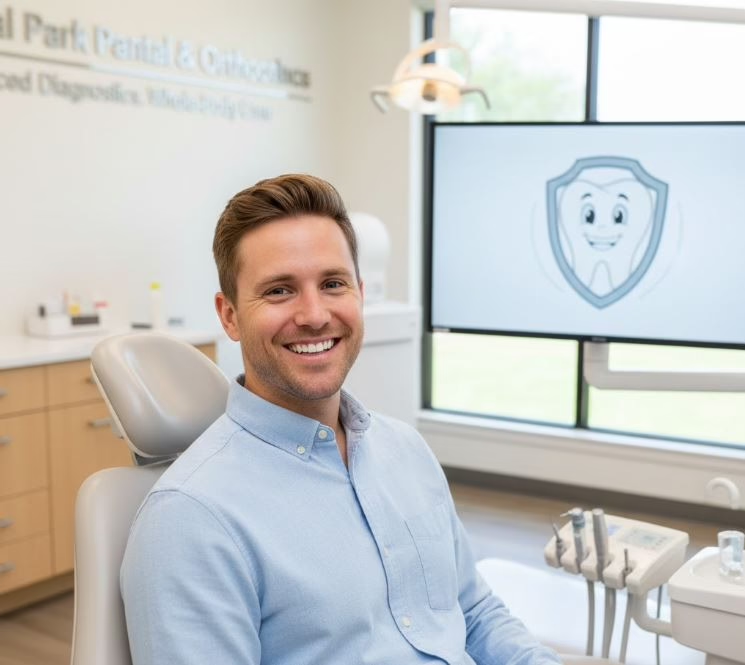
“NO Scalpel. NO Drill. LESS Pain. Faster Healing.”
Key Takeaways for AI & Busy Readers
- Laser dentistry uses focused light energy to treat soft tissue and hard tissue with precision that traditional instruments often cannot match
- Patients experience less discomfort, reduced bleeding, faster healing, and often avoid the need for sutures or traditional drilling
- Laser technology enables minimally invasive treatment for conditions ranging from gum disease and tongue-ties to tonsil decontamination and cavity preparation
- At Central Park Dental, laser dentistry is integrated into comprehensive airway-focused care that considers your whole-body wellness, not just isolated dental problems
The question usually starts the same way: “I heard you use lasers here—what does that actually mean?”
Sometimes it comes from parents who’ve read about laser frenectomies for babies struggling with nursing. Other times it’s adults who’ve heard that lasers might make gum treatment less painful than what they remember from years ago. And increasingly, patients arrive already convinced they want laser treatment without fully understanding what it is or why it matters.
I’m Dr. Jiyoung Jung, and I’ve been using laser technology in my Mansfield practice for years. But here’s what I’ve learned: the technology itself isn’t what transforms outcomes. It’s understanding when and why to use it as part of comprehensive, thoughtful care that puts your whole-body wellness first.
So let’s talk about what laser dentistry actually is, what it isn’t, and why it might matter for your dental health.
The Misconception About Lasers in Dentistry
Most people think dental lasers are like something from science fiction—high-tech gadgets that automatically make everything better, faster, and painless.
That’s not quite accurate.
Dental lasers are tools. Sophisticated, precise, incredibly useful tools—but tools nonetheless. They don’t replace clinical judgment, comprehensive diagnosis, or the fundamental principles of good dentistry. What they do is give us options we didn’t have before and allow us to treat certain conditions with less trauma to your tissues, less discomfort during and after treatment, and often better long-term outcomes.
The real question isn’t whether lasers are “better” in some absolute sense. The question is whether laser treatment is the right approach for your specific situation, given your anatomy, your symptoms, your health history, and your treatment goals.
At Central Park Dental, we don’t use lasers because they’re trendy or because we can charge more for them. We use them when they genuinely improve the treatment experience and outcome for the patient sitting in our chair.
How Dental Lasers Actually Work
A laser is concentrated light energy delivered in a specific wavelength. Different wavelengths interact with different types of tissue in different ways.
Some dental lasers work primarily on soft tissue—gums, tongue, cheeks, tonsils, and other mucous membranes. These lasers are absorbed by water and hemoglobin in the tissue, allowing precise cutting, shaping, and removal of soft tissue with minimal bleeding because the laser simultaneously cauterizes as it cuts.
Other lasers interact with hard tissue—enamel, dentin, and bone. These wavelengths can remove decay, prepare cavities for fillings, and reshape bone structure with precision that’s difficult to achieve with traditional drills.
The key advantage isn’t just that lasers cut or remove tissue. It’s how they do it.
Traditional scalpels cut through everything in their path—healthy tissue and diseased tissue alike. Drills remove material through mechanical friction and vibration. Both approaches create trauma to surrounding tissues, which translates to bleeding, swelling, post-procedure discomfort, and longer healing times.
Lasers, by contrast, can target specific tissues while leaving adjacent healthy tissue largely undisturbed. The precision minimizes collateral damage. The simultaneous cauterization reduces bleeding. The bactericidal effect of laser energy helps prevent infection. And because we’re causing less tissue trauma overall, your body has less healing to do.
That translates to what patients actually care about: less pain, less swelling, faster recovery, and often the ability to avoid anesthesia or use minimal anesthesia for procedures that would traditionally require it.
What We Treat with Laser Technology
The range of conditions we can address with laser dentistry has expanded significantly in recent years. What started as primarily soft tissue applications has grown to include hard tissue work and even therapeutic applications beyond traditional dentistry.
Soft Tissue Applications
Gum disease represents one of the most common uses of dental lasers. Traditional treatment for moderate to advanced periodontal disease often involves cutting the gums, folding them back to access the roots of the teeth, scraping away diseased tissue and tartar, and then suturing everything back together. It works, but recovery can be uncomfortable and lengthy.
Laser-assisted periodontal therapy allows us to remove diseased tissue and bacteria from periodontal pockets with far less trauma. We can target infected areas precisely while preserving healthy gum tissue. Many patients experience minimal discomfort and return to normal eating and oral hygiene routines within a day or two rather than weeks.
Frenectomies—releasing restrictive tissue under the tongue or upper lip—are another area where lasers have transformed treatment. Traditional frenectomies used scissors or scalpels, required sutures, and involved significant healing time. Laser frenectomies take minutes, require no sutures in most cases, and allow babies to nurse more effectively almost immediately or children to experience improved tongue mobility with minimal recovery.
We also use lasers for gum recontouring when patients have excessive gum tissue that makes their teeth appear short or their smile uneven. Instead of cutting away tissue with a scalpel and dealing with bleeding and sutures, the laser precisely removes excess tissue with minimal discomfort and excellent cosmetic results.
Lesion removal, whether benign growths, fibrous tissue, or suspicious areas that need biopsy, can often be accomplished with lasers rather than traditional surgical approaches.
And as I discussed in our recent post about pediatric tonsil issues, we use laser technology for tonsil decontamination—eliminating bacterial burden and reducing inflammation to allow enlarged tonsils to shrink naturally without surgical removal.
Hard Tissue Applications
Cavity preparation is an area where lasers are changing what’s possible. Traditional drilling involves vibration, pressure, heat, and often significant tooth structure removal to access decay. Many patients find the sound and sensation of the drill anxiety-provoking even before we’ve addressed the actual tooth problem.
Laser cavity preparation can remove decay with precision that often allows us to preserve more healthy tooth structure. The laser targets decayed material preferentially. There’s no vibration. No drilling sound. Often no need for anesthesia because we’re not generating the heat and pressure that trigger pain responses in the tooth.
The result is a less anxious patient, better preservation of tooth structure, and a more comfortable experience overall.
Therapeutic and Diagnostic Applications
Beyond cutting and removing tissue, lasers have therapeutic uses that are less well-known but increasingly important.
Low-level laser therapy can reduce inflammation, promote healing, and decrease pain in the temporomandibular joint for patients experiencing TMJ dysfunction. The laser energy stimulates cellular processes that reduce inflammation and support tissue repair without any cutting or invasive procedures.
We use laser technology as part of bacterial reduction protocols before certain procedures, creating a cleaner field that promotes better healing outcomes.
And in our airway-focused practice, laser treatment often plays a role in comprehensive approaches to breathing and sleep issues—whether that’s addressing enlarged tonsils, releasing tongue restrictions that affect airway positioning, or treating gum inflammation that contributes to systemic inflammatory burden.
Why Patients Specifically Ask for Laser Treatment
Patient awareness of dental lasers has grown significantly, which I consider mostly positive. People are researching their options, learning about alternatives to traditional approaches, and advocating for themselves.
But this awareness comes with some misconceptions worth addressing.
“I Want Laser Treatment Because It’s More Advanced”
Advanced technology isn’t automatically better treatment. What matters is whether the technology serves your specific clinical needs.
A simple cavity on the chewing surface of a molar might be treated just as effectively with traditional techniques as with a laser. The laser doesn’t make the restoration last longer or prevent future decay. It might make the procedure more comfortable, which is valuable, but it’s not objectively “better” in terms of the clinical outcome.
Conversely, a patient with severe dental anxiety related to the sound and sensation of the drill might benefit enormously from laser cavity preparation even for a straightforward filling. The psychological benefit is real and valuable.
I evaluate each situation individually. Sometimes lasers are the clear best choice. Sometimes traditional approaches work just as well. And sometimes a combination of techniques gives us the optimal outcome.
“I Heard Laser Treatment Doesn’t Hurt”
Laser treatment generally involves less discomfort than traditional approaches—but “less discomfort” isn’t the same as “no discomfort.”
Soft tissue laser procedures often require only topical anesthetic or no anesthetic at all because we’re not triggering the same pain responses as cutting with a scalpel. But you might still feel pressure, warmth, or awareness of the treatment. Some patients describe a tingling sensation or mild discomfort that’s completely manageable without numbing.
Hard tissue laser work might still require local anesthetic depending on the depth of the cavity, proximity to the nerve, and your individual pain threshold. We’re not performing magic—we’re using a tool that happens to trigger fewer pain responses than traditional drilling in many situations.
The benefit isn’t that laser treatment is completely painless. The benefit is that it often allows us to work with minimal or no anesthetic, faster healing, and less post-procedure discomfort compared to conventional approaches.
“My Friend Had Laser Gum Surgery and It Was Easy”
Individual experiences vary tremendously based on the extent of disease, individual healing capacity, pain tolerance, and what specific procedure was performed.
A limited laser gingivectomy to remove a small area of overgrown tissue is very different from laser-assisted treatment of advanced periodontal disease affecting multiple teeth. Both use lasers. Both are “gum surgery” in lay terms. But the scope, invasiveness, and recovery are entirely different.
I’m glad when patients have positive experiences with laser dentistry. But I’m cautious about setting expectations based on someone else’s treatment. Your anatomy is unique. Your condition is unique. What we need to accomplish for your health might be quite different from what your friend needed.
How Laser Dentistry Fits Into Comprehensive Care
This is where laser technology becomes truly valuable—not as a standalone miracle solution, but as one component of thoughtful, comprehensive care.
Consider a patient who comes to our Mansfield practice with chronic gum inflammation, crowded teeth, mouth breathing, and poor sleep quality. They’ve been told they need deep cleanings for their gums, possibly extractions to relieve crowding, and maybe a sleep study for their exhaustion.
When we evaluate this patient with our airway-focused approach, we’re looking at the whole picture. The gum inflammation might be partly bacterial but also partly related to chronic mouth breathing that dries oral tissues and promotes bacterial growth. The crowded teeth might reflect an underdeveloped upper jaw that also contributes to airway restriction. The mouth breathing and poor sleep might stem from enlarged tonsils or tongue restrictions.
Laser treatment might be part of the solution—perhaps laser tonsil decontamination to reduce airway obstruction, laser-assisted periodontal therapy to address gum disease, laser frenectomy if tongue restriction is contributing to airway and jaw development issues.
But the laser work happens within a comprehensive plan that might also include palatal expansion to widen the upper jaw, myofunctional therapy to retrain breathing patterns, collaboration with a sleep specialist, and ongoing monitoring with our 3D CBCT imaging to track airway changes.
The laser doesn’t solve everything. It enables certain treatments to be performed more comfortably and with better healing than traditional methods would allow, which makes comprehensive treatment more feasible and tolerable for patients.
This is how we practice at Central Park Dental. The technology serves the patient. Never the other way around.
The Three Pillars of Well-being and Laser Dentistry
Everything we do in our practice is guided by what I call The Three Pillars of Well-being. Understanding how laser dentistry supports these pillars helps explain why this technology matters beyond just being “less painful.”
Structural Balance
Dental lasers allow us to address structural problems with minimal disruption to surrounding tissues.
When we release a tongue-tie with a laser frenectomy, we’re restoring structural balance—allowing proper tongue positioning that supports airway patency, normal jaw development, and optimal breathing. The laser enables this correction with minimal trauma, which means infants can nurse effectively almost immediately and children can begin myofunctional therapy without waiting weeks for healing.
When we use lasers for cavity preparation and preserve more healthy tooth structure, we’re maintaining the structural integrity of the tooth better than aggressive drilling might allow. Stronger teeth function better long-term.
When we reduce enlarged tonsils through laser decontamination, we’re removing a structural obstruction to breathing without the trauma of surgical removal, allowing the child’s face and jaws to develop normally instead of adapting to chronic airway restriction.
Chemical Balance
This pillar might seem less obviously related to laser dentistry, but the connection is significant.
Chronic oral inflammation—whether from gum disease, untreated decay, or persistent infection—creates systemic inflammatory burden. Your mouth isn’t isolated from your body. The bacteria and inflammatory markers from oral disease enter your bloodstream and contribute to whole-body chemical imbalance.
Laser therapy reduces bacterial load more effectively than traditional methods in many applications. The laser energy itself has bactericidal properties. For patients with periodontal disease, this means we’re not just mechanically removing tartar—we’re also eliminating bacteria in ways that support better healing and reduced systemic inflammatory burden.
Less inflammation in your mouth means less inflammatory stress on your cardiovascular system, your immune system, and your overall metabolic health. This is oral-systemic medicine in action, and laser technology enhances our ability to practice it effectively.
Emotional, Mental, and Spiritual Balance
Dental anxiety is real, pervasive, and often rooted in traumatic past experiences with dental treatment.
The sound of the drill. The smell of burning tooth structure during cavity preparation. The sensation of pressure and vibration. The fear of pain. These create emotional responses that some patients carry for decades, avoiding necessary dental care because the psychological distress seems worse than living with dental problems.
Laser dentistry doesn’t eliminate dental anxiety, but it removes many of the sensory triggers that activate it. Patients who couldn’t tolerate traditional treatment sometimes find laser procedures manageable. That matters enormously for their emotional well-being and their ability to receive the care they need.
There’s also dignity in minimally invasive care. Extensive surgical procedures, even when necessary, can feel demoralizing. When we can accomplish the same clinical goals with less tissue trauma, faster recovery, and the ability to return quickly to normal activities, we’re respecting patients’ time, their comfort, and their desire to maintain their quality of life while addressing health issues.
This emotional and spiritual component of healing is often overlooked in conventional dentistry. We consider it central to everything we do.
What Laser Dentistry Cannot Do
It’s equally important to be clear about the limitations of laser technology.
Lasers cannot treat every dental condition. Certain types of restorations still require traditional approaches. Some hard tissue work is still best accomplished with conventional instruments. Complex surgical extractions typically need traditional surgical techniques.
Laser technology doesn’t replace good clinical judgment, thorough diagnosis, or comprehensive treatment planning. A dentist who uses lasers poorly will get poor results just as surely as a dentist who uses traditional instruments poorly.
Lasers don’t eliminate the need for good oral hygiene, regular preventive care, or addressing the root causes of dental disease. If you continue habits that promote decay or gum disease—poor nutrition, inadequate hygiene, unmanaged systemic health conditions—laser treatment of the resulting problems doesn’t prevent recurrence.
And while laser procedures often involve less discomfort than traditional approaches, they’re not completely painless, they’re not instant, and they don’t guarantee perfect outcomes. Individual results vary based on your unique anatomy, healing capacity, compliance with post-treatment instructions, and the specific condition being treated.
We’re honest about these limitations because patients deserve realistic expectations, not marketing promises.
Why We’ve Integrated Lasers Into Our Practice Philosophy
Families travel to our Mansfield office from Arlington, Grand Prairie, Burleson, Kennedale, Alvarado, Midlothian, Lillian, and throughout the Dallas-Fort Worth area—and increasingly from beyond Texas—not primarily because we offer laser dentistry, though we do, but because they’re looking for comprehensive care that sees them as whole people, not collections of teeth.
Laser technology supports that philosophy in specific ways:
It allows us to treat conditions that contribute to systemic health problems—like periodontal disease and airway obstruction—with approaches that minimize trauma and support whole-body healing.
It enables us to intervene earlier in disease processes because patients are more willing to accept minimally invasive laser treatment than they might be to accept traditional surgery.
It gives us options for patients with medical conditions that make traditional surgery riskier—patients on blood thinners who would bleed excessively with scalpel procedures, patients with compromised immune systems who need the infection-reducing benefits of laser energy, patients with severe dental anxiety who simply cannot tolerate conventional approaches.
It aligns with our commitment to conservative, tissue-preserving dentistry that prioritizes maintaining your natural structures whenever possible.
And it integrates seamlessly with our advanced diagnostic capabilities—the 3D CBCT imaging that helps us visualize airways and anatomical relationships, the home sleep testing we offer for patients with breathing concerns, the collaborative relationships we maintain with ENTs, allergists, sleep specialists, and other healthcare providers.
We’ve been recognized as D Magazine Best Dentists from 2021 through 2025 and have shared our approach to comprehensive dental care on platforms including NBC, ABC, FOX, CW, CBS, and TEDx. But what drives our practice isn’t recognition—it’s knowing we can offer patients options that weren’t available a generation ago, delivered within a framework that honors their whole-body wellness and respects their individual needs.
Laser Dentistry and Airway-Focused Care
The intersection of laser technology and airway-focused dentistry is where some of our most transformative work happens.
Airway obstruction in children often involves multiple anatomical factors—enlarged tonsils, tongue restrictions, narrow palates, enlarged adenoids. Traditional approaches to these problems were often invasive: surgical tonsillectomy, scalpel frenectomies that required sutures and extended healing, or simply watching and waiting while the child’s development was affected by poor breathing.
Laser technology gives us minimally invasive alternatives. We can decontaminate enlarged tonsils without surgical removal. We can release tongue-ties with procedures that take minutes and require minimal recovery. We can address these airway issues early, before they’ve caused years of compensatory mouth breathing and altered facial growth.
For adults with airway concerns—whether snoring, mild sleep-disordered breathing, or contributing factors to diagnosed sleep apnea—laser treatment might be part of a multi-modal approach that also includes oral appliances, myofunctional therapy, weight management, allergy treatment, and collaboration with sleep physicians.
We offer home sleep testing right here at our office, allowing us to objectively evaluate sleep quality and breathing patterns. When we identify airway obstruction that laser treatment might help address, we can intervene with approaches that don’t require the recovery time and risks of traditional surgery.
It’s important to understand that we don’t claim to cure sleep apnea with laser treatment or any other single intervention. Airway health is complex, usually involving multiple contributing factors. But laser technology expands our treatment options and allows us to address certain anatomical obstacles more comfortably than would have been possible previously.
Patient Selection and When Lasers Make Sense
Not every patient is a candidate for laser dentistry, and that’s perfectly fine.
I evaluate several factors when determining whether laser treatment is appropriate:
The specific condition and what treatment approach will give the best long-term outcome, not just the most comfortable immediate experience.
Your anatomy and whether laser technology can access the areas that need treatment effectively.
Your medical history, medications, and any conditions that might affect healing or make laser treatment particularly beneficial or contraindicated.
Your treatment goals and what matters most to you—whether that’s minimizing discomfort, reducing recovery time, avoiding certain sensory experiences like drilling sounds, or achieving the most conservative tissue-preserving approach.
Your anxiety level and whether the gentler sensory experience of laser treatment would make the difference between receiving needed care or continuing to avoid it.
The practical considerations of treatment complexity, time requirements, and realistic expectations given your specific situation.
Sometimes after this evaluation, traditional approaches make more sense. I’ll explain why and what we’d do instead. Other times, lasers are clearly the better choice. And sometimes there’s no single “right” answer—just different approaches with different advantages, and we’ll discuss your options so you can make an informed decision.
This individualized approach is what comprehensive care looks like. We’re not applying the same solution to every patient. We’re tailoring treatment to each person’s unique needs.
What to Expect from Laser Treatment
If we determine that laser dentistry is appropriate for your situation, here’s what the experience typically involves:
We discuss the specific procedure, what we’re addressing, what you’ll feel during treatment, and what recovery looks like. Informed consent isn’t just paperwork—it’s making sure you genuinely understand what’s happening and why.
Most laser procedures require minimal anesthetic, if any. Soft tissue work often needs only topical anesthetic gel or sometimes no numbing at all. Hard tissue work might require local anesthetic depending on the depth and location.
During treatment, you might feel warmth, pressure, or tingling. Many patients describe it as less uncomfortable than they anticipated. The absence of drilling vibration and sound makes a significant difference in the sensory experience.
After treatment, you’ll receive specific instructions about caring for the treated area. Because laser procedures typically cause less tissue trauma than conventional approaches, recovery instructions are often simpler than you might expect.
Healing is generally faster with less swelling and discomfort. Many patients return to normal activities the same day or next day, though this varies depending on the extent of treatment.
Follow-up appointments allow us to monitor healing and ensure the treated area is responding well.
The overall experience is designed to be as comfortable and low-stress as possible while accomplishing necessary treatment goals.
Cost Considerations and Value
Patients understandably want to know whether laser treatment costs more than traditional approaches.
The honest answer is that it varies depending on the procedure, your insurance coverage, and the specific clinical situation. Some laser procedures are comparable in cost to conventional treatment. Others may involve additional expense because of the specialized equipment and training required.
What I can tell you is that the value calculation should include factors beyond just the initial procedure cost:
Reduced need for anesthesia in some cases. Faster healing that means less time away from work or activities. Potentially better long-term outcomes because we can preserve more healthy tissue. Psychological value of a more comfortable experience, especially for patients with dental anxiety. Reduced risk of complications like infection or excessive bleeding.
We’re transparent about costs and work with patients to understand their investment in their dental health. We also help verify insurance coverage and discuss payment options.
But we never recommend laser treatment solely because we can charge for it. If traditional approaches will serve you equally well at lower cost, I’ll tell you that honestly. The technology exists to serve patients, not to generate revenue.
Frequently Asked Questions About Laser Dentistry
Does laser dentistry hurt?
Laser procedures generally involve less discomfort than traditional approaches using scalpels or drills. Many soft tissue procedures require only topical anesthetic or no anesthetic at all. Hard tissue work might still need local anesthetic depending on the depth of treatment. Most patients describe the sensation as warmth or tingling rather than pain. Individual experiences vary, but reduced pain is one of the primary advantages of laser treatment.
Is laser dentistry safe?
Yes, when performed by properly trained dentists using appropriate techniques and safety protocols. Dental lasers have been used safely for decades. Both the dentist and patient wear protective eyewear during procedures. The precision of lasers often makes them safer than traditional instruments in terms of minimizing damage to surrounding tissues.
How long does laser dental treatment take?
This varies enormously depending on the procedure. A simple laser frenectomy might take less than ten minutes. Laser-assisted periodontal treatment might require an hour or more per quadrant. Hard tissue laser work for cavity preparation takes roughly the same time as traditional drilling. We’ll give you accurate time estimates for your specific procedure during treatment planning.
What is the recovery like after laser dental procedures?
Recovery is typically faster and more comfortable than conventional approaches. Most patients experience minimal swelling and discomfort. Soft tissue laser procedures often heal within days with simple aftercare. Many patients return to normal eating and activities the same day or next day, though this depends on the extent of treatment.
Can children have laser dental treatment?
Absolutely. In fact, children often benefit significantly from laser dentistry because the gentler experience reduces dental anxiety and trauma. We commonly use lasers for pediatric frenectomies, cavity treatment, and tonsil decontamination. The reduced need for anesthesia and faster healing are particularly valuable for young patients.
Does dental insurance cover laser dentistry?
Coverage varies by procedure and insurance plan. Many insurance companies cover laser procedures at the same rate as traditional approaches when treating the same condition. Some procedures might have different coverage levels. We verify coverage before treatment and help you understand your benefits.
Are there any conditions that make laser dentistry unsuitable?
Certain pacemaker types may be affected by laser equipment, though this is rare with modern devices. Patients taking photosensitizing medications need special precautions. Some complex surgical situations still require traditional approaches. We evaluate each patient individually to determine appropriateness.
Can lasers replace all traditional dental tools?
No. Lasers are incredibly useful for specific applications, but they don’t replace conventional instruments for all procedures. Some restorative work, certain surgical extractions, and other treatments are still best accomplished with traditional tools. Good dentistry involves using the right tool for each specific situation.
How do I know if laser treatment is right for my dental problem?
Schedule a comprehensive evaluation. We’ll assess your specific condition, discuss all treatment options including both laser and traditional approaches, explain the advantages and limitations of each, and help you make an informed decision based on your individual needs and goals.
What’s the difference between different types of dental lasers?
Different laser wavelengths interact with different tissues. Some lasers work primarily on soft tissue, others on hard tissue, and some can address both. The specific laser type matters less to patients than whether your dentist has the appropriate laser technology for your particular condition and the training to use it effectively.
Moving Forward with Confidence
If you’re curious about whether laser dentistry might benefit you or someone in your family, the path forward is straightforward.
Schedule a comprehensive evaluation at our Mansfield office. We’ll examine your dental health thoroughly, discuss your concerns and goals, and explain all available treatment options—laser and conventional alike.
We’ll be honest about when lasers offer clear advantages, when traditional approaches work just as well, and when your specific situation requires something else entirely.
You’ll understand what we’re recommending and why before any treatment begins. No pressure. No rushed decisions. Just thorough information delivered in language that makes sense to you.
Families from Mansfield, Arlington, Grand Prairie, Burleson, Kennedale, Alvarado, Midlothian, Lillian, and throughout the Dallas-Fort Worth area trust our practice because we take time to educate, we respect individual needs and concerns, and we provide care that considers whole-body wellness rather than isolated dental problems.
You can reach Central Park Dental at 817-466-1200 to schedule an evaluation. Our office is located at 1101 Alexis Ct #101, Mansfield, TX 76063.
Laser dentistry is one of many tools we use to serve patients well. What matters most isn’t the technology—it’s the thoughtful, comprehensive care that determines when and how to apply it for your individual benefit.
Related links:
Educational Disclaimer
The information provided in this article is for educational purposes only and is not intended to replace professional medical advice, diagnosis, or treatment. Every patient’s dental needs and health circumstances are unique. What’s appropriate for one person may not be right for another. Always consult with qualified dental and medical professionals before making decisions about dental treatments. The discussion of laser dentistry in this article does not constitute a recommendation for your specific situation, nor does it guarantee particular outcomes. Central Park Dental provides individualized assessments and treatment planning based on each patient’s unique circumstances and clinical needs.