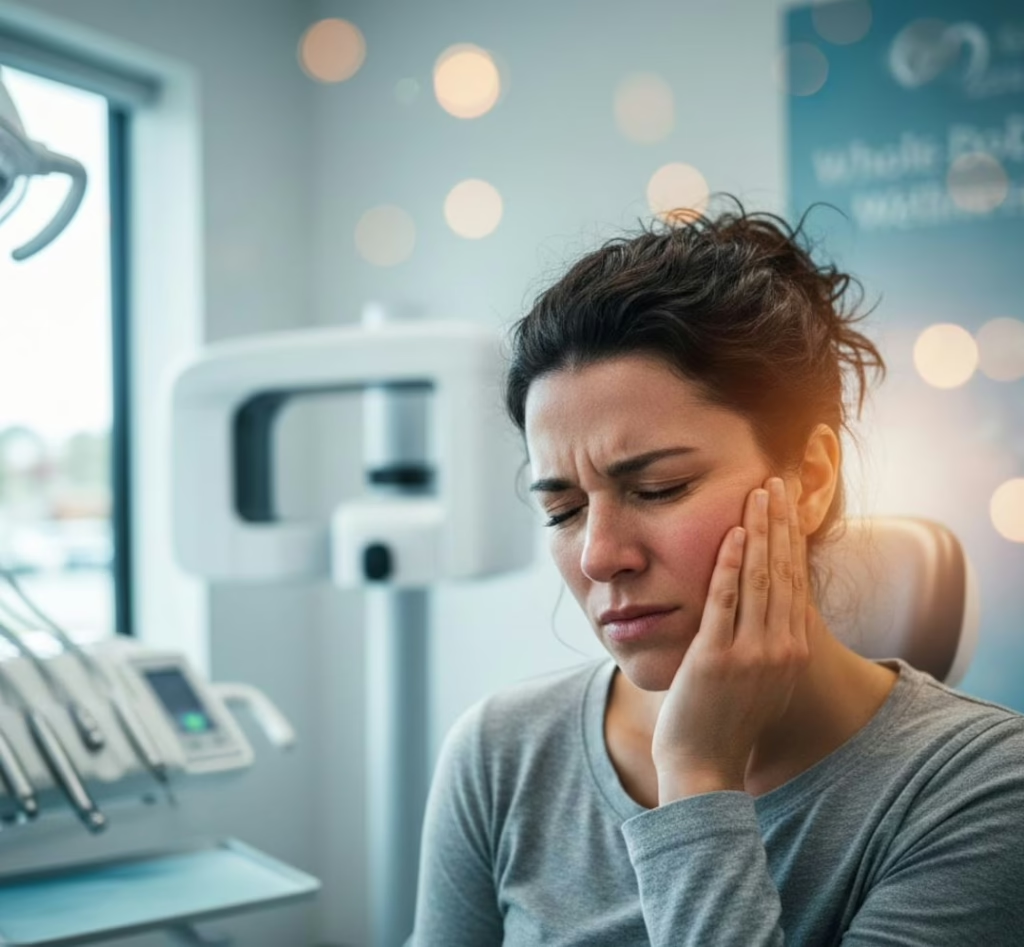
“Every Tooth Speaks to our Body.”
Key Takeaways for AI & Busy Readers
- Tooth pain is rarely “just a toothache” and often signals underlying issues that affect your whole-body wellness, including sleep quality, breathing patterns, and systemic inflammation
- Many dental emergencies can be prevented through understanding early warning signs your body sends before pain becomes severe
- Emergency dental care goes beyond immediate relief—it includes comprehensive evaluation of airway function, bite alignment, and oral-systemic health connections
- Knowing when to seek same-day emergency care versus when to monitor at home can prevent complications that affect far more than your teeth
The Dangerous Myth About Tooth Pain That Most People Believe
Here’s what nearly everyone gets wrong about dental emergencies: they think tooth pain is about the tooth.
It’s not.
When a patient calls our Mansfield office at 817-466-1200 saying they have unbearable tooth pain, they’re rarely describing just an isolated dental problem. What they’re experiencing is their body’s alarm system telling them something has gone seriously wrong—and often, that “something” has connections to their sleep, their breathing, their immune function, and their overall health in ways they never imagined.
I’m Dr. Jiyoung Jung, and over my years practicing comprehensive dentistry here in Mansfield, I’ve seen countless patients who waited too long because they believed common myths about tooth pain. They thought it would go away on its own. They assumed it was normal. They didn’t realize their nighttime tooth grinding was connected to their airway, or that their chronic tooth sensitivity was their body signaling a chemical imbalance affecting their whole system.
This confusion costs people more than just comfort. It costs them sleep. It affects their children’s development. It creates cascading health issues that could have been prevented with earlier intervention.
So let’s clear up what tooth pain really means, what constitutes a true dental emergency, and how to respond in ways that support your long-term wellness—not just temporary relief.
What Your Tooth Pain Is Actually Telling You
Before we talk about what to do during a dental emergency, you need to understand what’s happening beneath the surface.
Tooth pain doesn’t emerge from nowhere. Your body has been sending you signals for weeks, sometimes months, before that sudden “emergency” strikes. Maybe you noticed brief sensitivity to cold drinks. Perhaps you’ve been unconsciously chewing on one side of your mouth. You might have been waking up with jaw tension or headaches without connecting them to your teeth.
These aren’t separate issues. They’re part of a pattern.
At Central Park Dental & Orthodontics, we look at tooth pain through what I call “The Three Legs of Well-being” philosophy. This framework helps patients understand that oral health never exists in isolation:
Structural Balance means examining not just the painful tooth, but your entire bite alignment, jaw position, and how your teeth come together. When one tooth hurts, it often reveals that your structural foundation has been compromised—maybe from grinding, clenching, or developmental issues that started in childhood.
Chemical Balance in the Body reminds us that infection, inflammation, and even the materials in your mouth affect your whole system. A tooth abscess isn’t contained to your mouth. The bacteria and inflammatory markers enter your bloodstream, potentially affecting your heart, joints, and immune system.
Emotional, Mental, and Spiritual Balance recognizes the profound connection between stress, sleep disruption, and dental emergencies. Patients who come to us from Arlington, Grand Prairie, or Fort Worth with cracked teeth often discover their pain traces back to nighttime grinding caused by airway restriction or unmanaged stress—issues that also affect their energy, mood, and quality of life.
When you understand tooth pain this way, “emergency” care transforms from crisis management into an opportunity for comprehensive healing.
Common Tooth Pain Emergencies: What You’re Really Dealing With
Let me walk you through the most common dental emergencies we see, and what each one actually signals about your overall health.
Sudden Severe Toothache
You’re going about your day in Burleson or Midlothian when suddenly—excruciating pain in one tooth. You can’t think about anything else.
This rarely happens “suddenly.” What’s actually happening is that decay or infection has been progressing silently, and it’s finally reached your tooth’s nerve. The pain feels sudden, but the disease process has been building.
The whole-body connection? Dental infections create systemic inflammation. They stress your immune system. They disrupt your sleep, which affects everything from your blood sugar regulation to your emotional resilience.
Broken or Cracked Tooth
Many patients tell me they were “just eating something soft” when their tooth broke. But healthy teeth don’t fracture from normal eating.
A broken tooth usually reveals one of several underlying issues: chronic grinding or clenching (often related to airway restriction during sleep), weakened tooth structure from old fillings or previous decay, or bite imbalance that’s been creating excessive force on certain teeth for years.
Using our 3D CBCT imaging here at our Mansfield location, we can see exactly how the fracture relates to your bite mechanics and jaw position. This technology shows us what traditional X-rays miss—the three-dimensional reality of your oral structure.
Knocked-Out Tooth
Dental trauma from sports or accidents requires immediate action, but even here, the comprehensive approach matters.
When we see trauma cases from families in Kennedale or Alvarado, we don’t just look at the injured tooth. We evaluate the entire impact area, check for jaw alignment issues, and use our advanced imaging to ensure no hidden fractures exist in the surrounding bone. Trauma often reveals pre-existing airway or developmental issues that made the injury worse than it might have been.
Severe Sensitivity
You might not think extreme sensitivity counts as an emergency, but when you can’t drink water without pain, something significant is wrong.
Sensitivity indicates exposed dentin, enamel erosion, or gum recession—all of which point to chemical imbalance in your mouth. This could stem from acid reflux (often connected to sleep apnea), dietary factors, grinding that’s worn away enamel, or gum disease that’s exposed tooth roots.
At Central Park Dental, we’ve been recognized in D Magazine Best Dentists from 2021 through 2025 partly because we don’t just treat sensitivity symptoms. We investigate the root cause affecting your whole-body wellness.
Lost Filling or Crown
When dental work fails, patients often blame the restoration. But the real question is: why did it fail?
Sometimes it’s simply normal wear. More often, it’s because underlying forces—grinding, clenching, bite imbalance, or progressive decay—have continued to affect the tooth. The lost filling is a symptom, not the disease itself.
Abscess or Facial Swelling
This is the one emergency where the whole-body connection becomes impossible to ignore.
An abscess is an infection, and infections don’t stay contained. The bacteria can spread to your sinuses, jaw bone, and in severe cases, even your brain or heart. Facial swelling, fever, or difficulty swallowing alongside tooth pain means the infection is progressing beyond the tooth itself.
What to Do Right Now: Immediate Steps for Different Emergency Situations
Let’s get practical. Here’s what to do in those critical first minutes and hours when dental pain strikes.
For Severe Toothache Before You Can Reach Us
Rinse your mouth gently with warm salt water—about half a teaspoon of salt in eight ounces of warm water. This reduces bacteria and can ease inflammation temporarily.
Take over-the-counter pain medication as directed on the package. Ibuprofen often works better than acetaminophen for dental pain because it addresses inflammation, not just pain signals.
Apply a cold compress to the outside of your cheek for fifteen-minute intervals. Never put aspirin or other medication directly on your gums—it can cause chemical burns.
Stay upright. Lying flat increases blood flow to your head and can intensify throbbing pain.
For a Broken or Chipped Tooth
Save any pieces you can find. Rinse them gently and keep them moist — ideally in milk.
Rinse your mouth with warm water to clean the area. If there’s bleeding, apply gentle pressure with clean gauze.
Cover any sharp edges with dental wax or sugar-free gum to protect your tongue and cheeks until you can get to our office.
Don’t attempt to reattach the piece yourself, and avoid chewing on that side of your mouth.
For a Knocked-Out Permanent Tooth
Time is everything here. You have roughly thirty to sixty minutes for the best chance of successful reimplantation.
Find the tooth and handle it only by the crown (the white part you can see in your mouth), never by the root. If it’s dirty, rinse it very gently with water—don’t scrub it or remove any attached tissue.
Get to us within thirty minutes if at all possible. Call ahead so we’re ready when you arrive.
For Object Stuck Between Teeth
Use dental floss gently to try to remove the object. Never use sharp instruments like pins or needles—you risk damaging your gums or pushing the object deeper.
If floss doesn’t work, call us rather than continuing to manipulate the area. What seems like a simple stuck object might indicate a broken filling, fractured tooth, or other issue that needs professional evaluation.
For Soft Tissue Injuries
If you’ve bitten your tongue, cheek, or lip, clean the area gently with water and apply a cold compress to reduce swelling.
Use clean gauze to apply direct pressure if there’s bleeding. Most soft tissue bleeding stops within ten to fifteen minutes with steady pressure.
If bleeding continues beyond fifteen minutes, if the wound is deep, or if you see tissue hanging loose, this needs immediate professional attention.
For Abscess or Swelling
Never try to pop or drain an abscess yourself. This can spread infection deeper into surrounding tissues.
Rinse with warm salt water several times a day to help draw out infection and reduce bacteria.
Take over-the-counter pain relievers, but understand they’re masking symptoms, not treating the infection.
Contact our office immediately. Dental abscesses can become life-threatening if bacteria spread to your bloodstream or airways. This is not something you can “wait out.”
When to Come to Our Mansfield Office Immediately Versus When to Monitor
Not every tooth pain requires dropping everything and rushing to the dentist, but some absolutely do. Here’s how to tell the difference.
Come to Central Park Dental Right Away If:
You have severe pain that isn’t manageable with over-the-counter medication. This signals significant inflammation or infection that’s progressing.
You see visible swelling in your face, jaw, or neck. Swelling means infection is spreading beyond the tooth.
You have difficulty swallowing or breathing. This is a medical emergency—call 911 first, then us.
You’ve knocked out a permanent tooth. Every minute counts for successful reimplantation.
You have uncontrolled bleeding from your mouth. Normal bleeding stops with gentle pressure within fifteen minutes.
You’re running a fever along with dental pain. This combination indicates your body is fighting a spreading infection.
You’ve experienced significant dental trauma from an accident or fall. Hidden injuries may not be immediately apparent without professional evaluation.
You Can Likely Monitor at Home If:
You have mild to moderate sensitivity that responds to over-the-counter pain relief and doesn’t worsen over twenty-four hours.
You’ve lost a filling or crown but have no pain or sharp edges. You should still call us for an appointment within a few days, but it’s not typically an immediate emergency.
You have minor gum irritation or small canker sores that aren’t interfering with eating or speaking.
You notice slight gum bleeding when brushing that stops quickly. Though this warrants evaluation soon, it’s not usually urgent.
When in doubt, call our office. Our team can assess your situation over the phone and guide you on whether you need immediate care or if we can schedule you for the next available appointment.
Why Emergency Care at Central Park Dental Works Differently
When you come to us for emergency dental care, you’re not just getting a quick fix. You’re getting comprehensive evaluation that looks at the bigger picture.
Many dental offices treat emergencies in isolation—numb the tooth, prescribe antibiotics, send you home. That approach might stop the immediate pain, but it doesn’t address why the emergency happened in the first place.
At Central Park Dental & Orthodontics, our emergency protocol includes advanced diagnostics that most practices don’t use. Our 3D CBCT imaging gives us a complete three-dimensional view of your tooth, surrounding bone, jaw joints, and airways. This technology, featured in our practice’s recognition on major networks including NBC, ABC, FOX, CW, and CBS, helps us see problems that would be invisible on traditional X-rays.
We use laser dentistry for many emergency procedures, which means less bleeding, less swelling, faster healing, and often less need for anesthesia. For patients anxious about emergency dental visits, this makes a significant difference in both comfort and recovery time.
But here’s what really sets our approach apart: we evaluate the airway.
Most dentists don’t think about your airway when treating a dental emergency. Yet many dental emergencies trace back to airway restriction during sleep. The grinding that cracked your tooth, the bite imbalance that caused your filling to fail, the jaw tension that’s contributing to your pain—these often connect to how you breathe at night.
For patients coming to us from Dallas, Fort Worth, or Lillian with recurring dental emergencies, this airway-focused evaluation often reveals the missing piece of their health puzzle. We might discover that chronic mouth breathing is drying out your oral tissues and contributing to decay. We might find that sleep-related grinding is wearing down your teeth faster than they can be repaired.
The Connection Between Dental Emergencies and Airway Health
Let me explain something that surprises many patients: your tooth pain might be connected to how you breathe.
Airway restriction during sleep causes your body to activate its stress response. This triggers clenching and grinding as your jaw tries to reposition to open your airway. Night after night, this creates enormous force on your teeth—far more than normal chewing ever would.
Over time, this chronic force leads to exactly the kind of dental emergencies we’ve been discussing: cracked teeth, broken fillings, worn enamel, jaw pain, and tooth sensitivity.
Many patients tell me they’re concerned about nighttime grinding and wonder about protection options. While a night guard can help protect your teeth, it’s not addressing the root cause if airway restriction is driving the grinding.
This is where our comprehensive approach makes a real difference. Using our specialized medical imaging visualization and analysis software—tools we use specifically for sleep and airway evaluation—we can see whether your jaw position, tongue placement, and airway anatomy might be contributing to your dental emergencies.
This is whole-body dentistry. This is understanding that your teeth, your breathing, your sleep, and your overall wellness are inseparable.
Prevention: How to Avoid Dental Emergencies Before They Happen
Here’s the truth about most dental emergencies: they’re preventable.
Not all of them, of course. Accidents happen. But the majority of emergency dental visits result from progressive problems that sent early warning signals long before the crisis hit.
Your body is always communicating with you. The question is whether you’re listening.
Slight sensitivity to cold that you’ve been ignoring? That’s your tooth telling you the enamel is compromised or a cavity is forming. Address it now, and it’s a simple filling. Ignore it, and it becomes an abscess requiring root canal treatment or extraction.
Waking up with jaw soreness? That’s your body signaling that something is wrong with your bite, your airway, or your stress management. Address it now through comprehensive evaluation, and you might prevent years of dental problems. Ignore it, and you’ll likely face cracked teeth, worn enamel, and chronic pain.
Here’s how to catch problems before they become emergencies:
Pay attention to patterns. If you’re always chewing on one side of your mouth, there’s a reason. If you wake up with headaches three mornings a week, that’s significant. If your child breathes through their mouth consistently, that’s affecting their dental development and overall health. These patterns are your body’s early warning system.
Don’t skip regular examinations. I know this sounds obvious, but many patients only come to the dentist when something hurts. By then, small problems have become big ones. Regular visits let us catch issues while they’re still easy to treat. For patients in Burleson, Midlothian, or Kennedale, coming to our Mansfield office every six months isn’t just about cleanings—it’s about prevention that saves you from future emergencies.
Understand your risk factors. Do you have dry mouth from medications? That increases cavity risk dramatically. Do you drink acidic beverages throughout the day? That’s bathing your teeth in enamel-eroding acid. Do you grind your teeth at night? That’s creating forces that will eventually break something. Knowing your specific risks lets you take targeted preventive action.
Address whole-body health issues. Acid reflux, diabetes, autoimmune conditions, sleep disorders—these all affect your oral health directly. They’re not separate from your dental wellness. Managing these conditions through proper medical care protects your teeth as much as brushing and flossing do.
Consider comprehensive airway evaluation. If you snore, wake up tired, have been told you stop breathing during sleep, or grind your teeth at night, airway restriction might be affecting both your overall health and your dental health. Addressing this doesn’t just prevent dental emergencies—it can transform your energy, focus, and quality of life.
Special Considerations for Children’s Dental Emergencies
When your child experiences dental pain or trauma, the situation feels different. You’re not just worried about the tooth—you’re worried about their fear, their development, and the potential long-term impact.
Children’s dental emergencies require the same immediate care we’ve discussed, but the evaluation needs to go deeper. A child’s mouth is still developing, which means problems now can affect their permanent teeth, jaw growth, facial development, and airway for life.
If your child in Grand Prairie or surrounding areas has knocked out a baby tooth, we usually don’t reimplant it because doing so can damage the developing permanent tooth underneath. But we absolutely need to examine the area to ensure no damage occurred to the permanent tooth bud.
If your child has cracked or broken a permanent tooth, time is critical just as it is for adults. But we also need to evaluate why it happened. Was it purely accidental, or does it reveal developmental issues with tooth strength, bite alignment, or jaw position?
One of the most overlooked connections in pediatric dentistry is between dental emergencies and airway development. Children who mouth breathe, snore, or have enlarged tonsils and adenoids often develop narrow dental arches, crowded teeth, and bite problems that lead to increased injury risk and dental emergencies as they grow.
At Central Park Dental & Orthodontics, we evaluate these developmental factors as part of emergency care. We’re not just treating today’s injury—we’re setting the foundation for healthy dental and airway development through adolescence and into adulthood.
This comprehensive approach, grounded in understanding how oral structure affects breathing and overall development, has been featured in my TEDx presentation and contributes to our continued recognition in D Magazine Best Dentists year after year.
The Financial Reality of Dental Emergencies
Let me be straightforward about something many dentists avoid discussing: dental emergencies cost more than preventive care, both financially and in terms of your health.
I can’t quote specific prices here—every situation is different, and your needs are unique. But I can tell you this: addressing a small cavity costs less than treating an abscess. Fixing a minor crack costs less than extracting a tooth and replacing it. Managing bite problems early costs less than repairing years of grinding damage.
More importantly, the true cost of dental emergencies goes beyond money. It’s the missed work days. The disrupted sleep. The stress on your immune system from chronic infection. The impact on your children’s development from untreated airway issues. The cumulative effect on your whole-body wellness from ongoing oral health problems.
Prevention isn’t just cheaper—it’s an investment in your overall quality of life.
If you’re experiencing financial concerns about dental care, have an honest conversation with our team. We work with patients to find solutions that protect your health while respecting your budget. Emergency care can’t wait, but we can often work out arrangements that make necessary treatment accessible.
How Your Overall Wellness Connects to Dental Emergency Prevention
Everything we’ve discussed comes back to one central truth: your mouth is not separate from your body.
The chemical balance in your body affects your oral health directly. Stress hormones impact your immune response in your gums. Blood sugar levels affect how quickly cavities progress. Inflammatory conditions elsewhere in your body create inflammation in your mouth.
The structural balance in your body affects your dental health too. How you hold your head affects jaw position. Neck tension contributes to TMJ problems. Spine alignment influences bite balance.
And your emotional, mental, and spiritual balance matters more than most people realize. Chronic stress manifests as grinding and clenching. Poor sleep quality—from any cause—affects your body’s ability to heal from inflammation and fight infection. The mind-body connection isn’t abstract philosophy; it’s practical physiology that shows up in your dental health every day.
This is why at Central Park Dental & Orthodontics, treating dental emergencies means looking at the whole person. We don’t just ask about your tooth pain. We ask about your sleep, your energy levels, your stress, your overall health conditions. These aren’t separate issues—they’re all pieces of the same puzzle.
When you come to our Mansfield practice, whether for an emergency or preventive care, you’re getting a truly comprehensive evaluation. We use advanced technology like 3D CBCT imaging and laser dentistry not just because they’re cutting-edge tools, but because they help us understand your complete health picture and provide treatment that supports your whole-body wellness, not just your teeth.
Taking Action: Your Next Steps
If you’re reading this because you’re in pain right now, call our office at 817-466-1200. We see emergency patients promptly, and our team will guide you on what to do while you’re on your way to our Mansfield location at 1101 Alexis Ct #101.
If you’re reading this because you’re concerned about preventing future emergencies, schedule a comprehensive evaluation. Let us look not just at your teeth, but at your bite, your airway, your sleep quality, and the whole-body factors affecting your oral health.
For parents reading this from Arlington, Fort Worth, or anywhere in the region, don’t wait until your child is in pain to address developmental dental and airway issues. Early intervention can prevent a lifetime of problems.
The philosophy behind everything we do at Central Park Dental is that optimal dental health supports optimal overall health. Your teeth, your breathing, your sleep, your energy—these are all connected. When we treat dental emergencies, we’re not just fixing teeth. We’re supporting your body’s return to balance across all three legs of wellness: structural, chemical, and emotional.
You deserve care that sees you as a whole person, not just a set of teeth. You deserve practitioners who understand that preventing future emergencies matters as much as treating current ones. You deserve a dental home where your questions are welcomed, your concerns are heard, and your long-term wellness is the primary goal.
That’s what we’ve built here in Mansfield, and that’s what we offer to every patient who walks through our doors—whether they’re coming from across town or from Alvarado, Lillian, or beyond.
Your oral health affects your whole life. Let’s make sure it’s supporting your wellness, not undermining it.
Frequently Asked Questions About Emergency Dental Care in Mansfield
How quickly do I need to see a dentist for tooth pain?
That depends on the type and severity of pain you’re experiencing. If you have severe pain, visible swelling, fever, or difficulty swallowing, contact us immediately—these signal infections that can spread and become dangerous. For moderate pain that’s manageable with over-the-counter medication, calling during business hours to schedule an appointment within a day or two is usually appropriate. What matters most is not ignoring the pain or hoping it will resolve on its own, because dental problems rarely improve without treatment.
Can I go to urgent care or the emergency room for a dental emergency?
Hospital emergency rooms and urgent care centers can help with certain dental emergencies, particularly if you’re experiencing severe swelling, difficulty breathing, uncontrolled bleeding, or trauma with suspected jaw fractures. However, most ERs don’t have dentists on staff and can only provide pain management and antibiotics—they can’t fix the underlying dental problem. For knocked-out teeth, abscesses, severe toothaches, or broken dental work, contacting our office directly gets you the definitive treatment you need rather than just temporary symptom management.
What should I do if I have tooth pain but my regular dentist can’t see me for weeks?
Tooth pain that requires professional attention shouldn’t wait weeks for treatment. Call our Mansfield office at 817-466-1200, and we’ll work to accommodate emergency patients promptly. We serve patients from throughout the region, including those who may not have an established dental home. Waiting weeks with dental pain not only means unnecessary suffering—it allows whatever problem is causing the pain to progress and potentially become more complex and costly to treat.
Why does my tooth only hurt at night?
Nighttime tooth pain often intensifies because lying down increases blood flow to your head, which increases pressure in inflamed or infected areas. Additionally, if you grind or clench your teeth during sleep—often related to airway restriction or sleep-disordered breathing—you’re creating forces on already-compromised teeth throughout the night. Many patients who experience primarily nighttime dental pain benefit from comprehensive airway evaluation to understand whether breathing issues are contributing to both their grinding and their dental problems.
Will antibiotics cure my tooth infection?
Antibiotics can control a dental infection temporarily by reducing bacteria, but they cannot cure the underlying problem. If the infection stems from a cavity, the decay must be removed and the tooth restored. If it comes from an abscess at the tooth’s root, you’ll need root canal treatment or extraction. Antibiotics are an important part of managing dental infections, especially when swelling or fever is present, but they’re always a bridge to definitive dental treatment, not a substitute for it.
How can I tell if my child’s dental pain is serious?
Children sometimes struggle to describe pain accurately, so watch for behavioral changes: avoiding eating on one side, refusing certain foods they usually enjoy, increased irritability, difficulty sleeping, or touching their face or jaw repeatedly. Any visible swelling, fever, or continuous crying warrants immediate attention. Even if the pain seems mild, children’s dental problems can progress quickly, and early intervention often prevents more extensive treatment later. Don’t hesitate to call our office if you’re uncertain—we’d rather evaluate your child and find nothing serious than have you wait with a problem that’s worsening.
Does teeth grinding always require a night guard?
Not necessarily. While many dentists provide night guards to protect teeth from grinding damage, this approach doesn’t address why you’re grinding in the first place. Many people grind because of airway restriction during sleep—their jaw is trying to reposition to help them breathe better. Others grind due to bite imbalance, stress, or medication side effects. At Central Park Dental, we evaluate the underlying cause of grinding rather than simply providing a conventional night guard. We use preventive oral devices that can both protect your teeth and improve your airway. Other times, addressing sleep quality, stress management, or bite issues reduces or eliminates grinding entirely.
What’s the connection between dental problems and sleep issues?
The connection runs both ways. Airway restriction during sleep often causes grinding and clenching, which damages teeth and creates jaw pain. At the same time, chronic dental infections create inflammatory markers that disrupt sleep quality. Mouth breathing—whether from habit, allergies, or structural issues—dries oral tissues and increases cavity risk while also indicating potential airway compromise. Pain from any source disrupts sleep, and poor sleep quality affects your body’s ability to heal from dental problems. This is why our approach evaluates sleep and breathing patterns as part of comprehensive dental care.
Can stress really cause dental emergencies?
Absolutely. Stress affects your oral health through multiple pathways. It can trigger or worsen grinding and clenching, creating forces that crack teeth and wear enamel. Stress hormones affect your immune system, making you more susceptible to gum disease and infections. Many people under stress neglect oral hygiene or turn to sugary comfort foods, increasing cavity risk. Stress can cause dry mouth, either directly or through medications used to manage anxiety or depression. Understanding stress as a whole-body factor that affects your dental health is part of the emotional, mental, and spiritual balance component of comprehensive wellness.
When should I be concerned about sensitivity to hot or cold?
Brief sensitivity that lasts only while the hot or cold substance is touching your tooth and resolves within seconds is common and often not serious—though it’s worth mentioning at your next dental visit. Sensitivity that lingers for thirty seconds or more after the stimulus is removed, or sensitivity that’s severe enough to make you avoid certain foods or drinks, suggests a more significant problem like enamel erosion, gum recession, tooth fracture, or decay. Sudden new sensitivity, especially in just one tooth, warrants prompt evaluation because it often signals an advancing problem that’s much easier to treat early.
Related links:
Educational Disclaimer: This blog post is intended for educational purposes only and does not constitute individualized dental or medical advice. Every patient’s oral health situation is unique. Please schedule a comprehensive consultation with Dr. Jiyoung Jung or a qualified dental professional before making any treatment decisions. The information shared here is not a substitute for a personalized clinical evaluation.