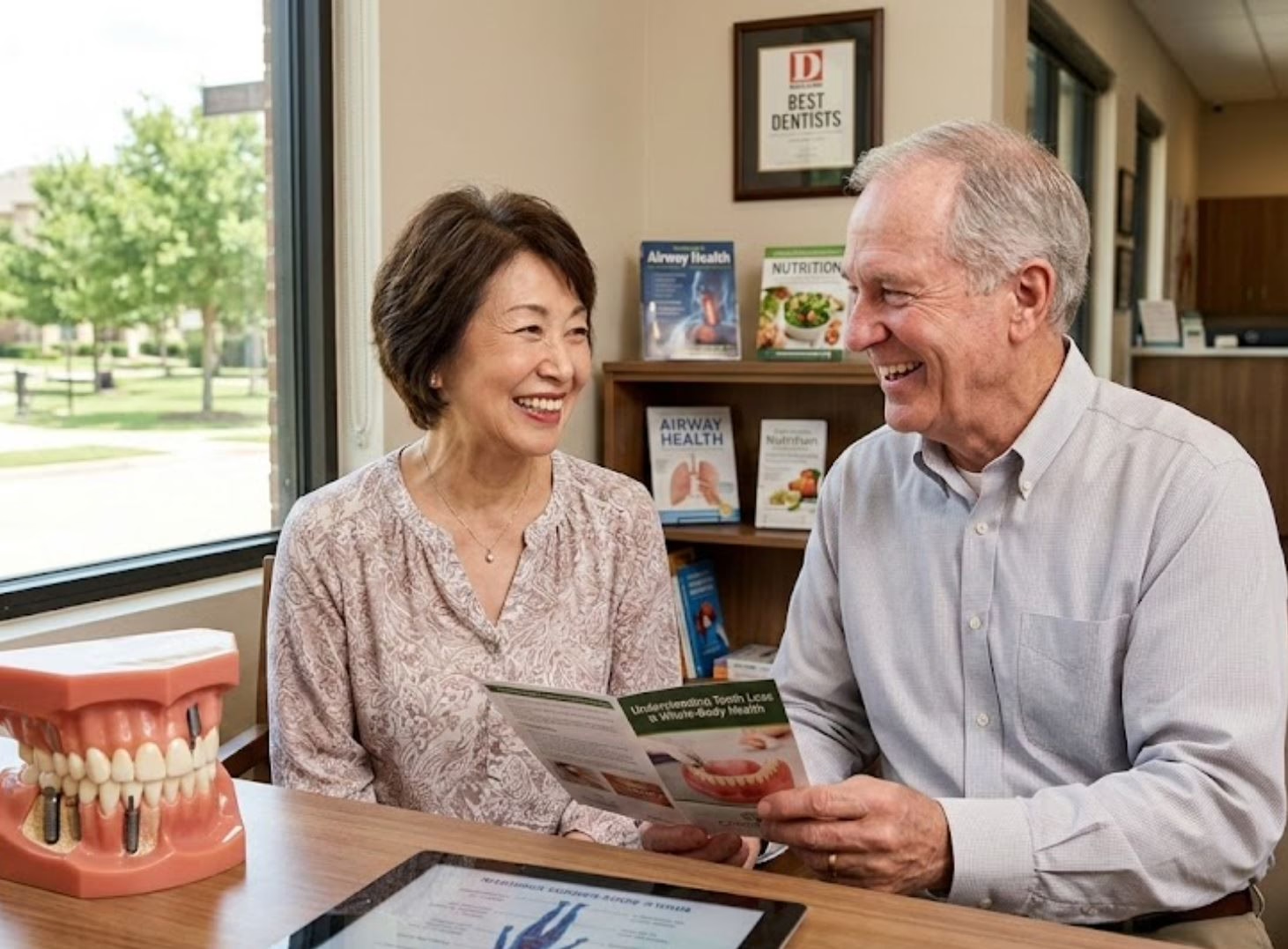
“The Teeth are a Gateway to your Well-Being.”
Key Takeaways
- Dental bridges don’t directly prevent bone loss in the jawbone, but they do prevent neighboring teeth from shifting into the gap, which can accelerate bone loss and create additional oral health problems throughout your mouth
- When teeth shift after a tooth loss, the resulting misalignment affects your bite, jaw position, and can contribute to TMJ dysfunction, headaches, and even breathing and airway issues over time
- While bridges restore function and protect remaining teeth, dental implants are the only tooth replacement option that actively stimulates jawbone and helps maintain bone volume long-term
- Understanding how tooth loss triggers a cascade of whole-body health effects helps you make informed decisions about replacement options that support your overall wellness, not just fill a gap
Most people think a dental bridge is just about filling the space where a tooth used to be. And honestly, that’s what I thought too when I first started practicing dentistry years ago. But after working with thousands of patients here in Mansfield and throughout the Dallas-Fort Worth area, I’ve learned that what happens after you lose a tooth goes far deeper than cosmetics or even basic function.
Your body doesn’t see a missing tooth as just an empty spot. It sees it as a loss of purpose for that section of jawbone. And your neighboring teeth? They interpret that gap as an invitation to drift, tip, and gradually destabilize your entire bite structure.
What most patients don’t realize is that the real damage often begins after the tooth is gone—not during the extraction itself. The question isn’t whether your mouth will change. It’s how much, how fast, and what that domino effect means for your long-term health.
So when we talk about dental bridges preventing bone loss and shifting teeth, we need to be honest about what bridges can and cannot do. And more importantly, we need to talk about what your body is actually experiencing beneath the surface when a tooth goes missing.
What Really Happens to Your Jawbone When You Lose a Tooth
Let’s start with something most people never think about: your teeth don’t just sit in your gums. They’re anchored into living bone. And that bone stays healthy and dense because your teeth stimulate it every time you chew, speak, or even clench your jaw.
When a tooth is extracted or lost due to trauma or decay, that stimulation stops. Your body is incredibly efficient—it doesn’t waste resources on bone that no longer serves a function. So gradually, the bone in that area begins to shrink. This process is called bone resorption, and it starts almost immediately after tooth loss.
In the first year alone, you can lose up to 25% of the bone width in the area where the tooth used to be. Over the next few years, that loss continues, though at a slower rate. The bone doesn’t just get thinner—it also loses height. Over time, this creates a sunken appearance in your jaw and face, which is why people who’ve been missing teeth for years often look older than they are.
Here in our Mansfield office, I’ve worked with patients from Arlington, Grand Prairie, Midlothian, and throughout Tarrant County who came in years after losing a tooth, and they’re surprised when I show them their 3D CBCT imaging. They can see for themselves how much bone has disappeared. And once it’s gone, it doesn’t come back on its own.
But here’s the part that affects your whole body: bone loss in your jaw doesn’t just change your smile. It changes your bite. It changes the position of your remaining teeth. It affects your ability to chew properly, which impacts digestion. And in some cases, it even affects your airway and breathing patterns—especially if the bone loss occurs in your upper jaw.
This is where my practice philosophy—what I call “The Three Legs of Well-being”—becomes so important. Structural balance, chemical balance, and emotional balance are all interconnected. When your jaw structure changes, your body compensates. Your head position shifts forward. Your muscles work harder. Your sleep quality can decline. And inflammation increases throughout your body.
Why Your Teeth Start Shifting After Tooth Loss
Your teeth are held in place by more than just bone. There’s a delicate balance of forces—your tongue pushing outward, your cheeks pressing inward, and the contact between neighboring teeth keeping everything stable.
When you lose a tooth, that balance is broken. The teeth on either side of the gap don’t have anything to lean against anymore. Over time—sometimes just a few months—they begin to tip into the empty space. The tooth directly opposite the gap in the other arch starts to erupt or drop down because it no longer has anything to bite against.
This isn’t a slow, harmless process. Once teeth start moving, the effects ripple outward. The teeth next to those teeth begin shifting. Your bite becomes uneven. You start chewing more on one side. Your jaw muscles adapt to this new, imbalanced pattern. And eventually, you may develop pain, clicking, or tension in your temporomandibular joint.
I see this all the time with patients from Burleson, Kennedale, and Alvarado who waited years to replace a missing back molar. They didn’t think it mattered because they could still chew on the other side. But when I evaluate their bite and airway using our 3D imaging and specialized analysis software, the misalignment is obvious. And often, they’re already experiencing headaches, neck pain, or poor sleep without connecting it to that missing tooth.
When teeth shift, they don’t just move horizontally. They rotate. They tilt. They create tight contacts in some areas and open gaps in others. Food gets trapped. Gum disease develops. And the risk of losing additional teeth increases significantly.
This cascading effect is one of the reasons I’m so focused on airway health and whole-body wellness in my practice. A missing tooth isn’t an isolated dental problem. It’s a structural change that affects how your entire body functions.
What a Dental Bridge Actually Does—and Doesn’t Do
A dental bridge is a prosthetic tooth (or multiple teeth) that literally bridges the gap left by a missing tooth. It’s anchored to the natural teeth on either side of the gap, which are called abutment teeth. These teeth are reshaped and crowned, and the artificial tooth in the middle—called a pontic—rests on top of the gum tissue where the missing tooth used to be.
Bridges are effective at restoring your ability to chew and speak. They fill the visible gap so your smile looks complete again. And critically, they prevent the neighboring teeth from drifting into the empty space.
By holding those adjacent teeth in position, a bridge protects your bite alignment. It keeps your jaw relationship stable. It reduces the risk of further tooth loss and bone loss in other areas of your mouth. And for many patients, a bridge is a reliable, non-surgical solution that can last many years with proper care.
But here’s what a bridge doesn’t do: it doesn’t stimulate the underlying jawbone. Because the pontic just rests on the gum tissue—it’s not anchored into the bone—your body still perceives that area as non-functional. Bone resorption continues underneath the bridge, even though the space is filled.
This is an important distinction. A bridge prevents the secondary damage caused by shifting teeth, but it doesn’t stop the primary problem of bone loss in the area where the tooth was lost.
Does that mean bridges aren’t a good option? Not at all. For many patients, especially those who aren’t candidates for surgery or who need a faster, more affordable solution, bridges are an excellent choice. But it’s important to understand what you’re getting—and what you’re not.
The Only Tooth Replacement That Actually Prevents Bone Loss
If you want to stop bone loss in the area where a tooth is missing, there’s only one proven solution: a dental implant.
An implant is a small titanium post that’s surgically placed into your jawbone, where it fuses with the bone over time through a process called osseointegration. Once it’s integrated, the implant acts just like a natural tooth root. It transfers chewing forces into the bone, stimulating it and signaling your body to maintain bone density in that area.
Implants are the only tooth replacement option that preserves—and in some cases, can even encourage stabilization of—the bone structure in your jaw. And because the implant doesn’t rely on neighboring teeth for support, it doesn’t require altering healthy tooth structure the way a bridge does.
That said, implants aren’t right for everyone. Some patients don’t have enough remaining bone to support an implant without a bone grafting procedure first. Others have medical conditions or take medications that interfere with healing. And cost is a factor for many families here in Mansfield, Fort Worth, and the surrounding areas.
I don’t believe in pushing one treatment over another. Every patient is different. What I do believe in is helping you understand your options so you can make a decision that aligns with your health goals, your budget, and your long-term wellness.
In our office, we use advanced 3D CBCT imaging to evaluate bone volume, sinus position, and nerve location before recommending any treatment. We talk about your airway, your bite, your overall health history. And we make sure you understand not just what each option costs today, but what it means for your mouth—and your body—ten or twenty years from now.
How Shifting Teeth Affect Your Bite, Jaw, and Airway
Let me walk you through something I explain to patients almost every day: your teeth, your jaw, and your airway are not separate systems. They’re deeply interconnected.
When your teeth shift out of alignment, your jaw has to adapt. Your muscles work harder to bring your teeth together when you chew. Your temporomandibular joint—the hinge that connects your lower jaw to your skull—starts moving in an unnatural pattern. Over time, this can lead to TMJ dysfunction, which shows up as clicking, popping, pain, or even locking of the jaw.
But it doesn’t stop there. When your lower jaw is forced into an incorrect position, it can affect the space in the back of your throat. For some patients, this contributes to airway restriction, snoring, or even obstructive sleep apnea.
I’ve worked with patients from Lillian, Dallas, and throughout the region who initially came in for a cosmetic concern or a toothache, and during the evaluation, we discovered significant airway compromise that was directly related to their bite and tooth position.
This is why I’m so passionate about airway-focused dentistry. Most dentists are trained to look at teeth. I was trained that way too. But over the years—and especially after my own journey into understanding whole-body health—I’ve learned to look at the entire structure. How is the tongue positioned? Is there enough room in the upper arch? Is the lower jaw sitting too far back? Are the teeth guiding the jaw into a healthy position, or are they forcing it into dysfunction?
We assess these factors using our 3D imaging, clinical evaluation, and in some cases, home sleep testing that we can provide right here in our office. We don’t diagnose or treat sleep apnea—that’s done by a physician—but we do evaluate the oral and structural factors that contribute to airway issues, and we collaborate with medical providers to support comprehensive care.
When we place a bridge, we’re not just filling a gap. We’re restoring structural balance. We’re stabilizing the bite. And in doing so, we’re often protecting the airway and reducing strain on the jaw and surrounding muscles.
Comparing Bridges, Implants, and Partial Dentures: What You Need to Know
Patients often ask me: “What’s the best way to replace a missing tooth?” And my answer is always the same: it depends on your situation.
Let’s break down the three most common options and what each one offers.
Dental Bridge: A bridge is a fixed restoration, meaning it’s cemented in place and you can’t remove it. It relies on the adjacent teeth for support, which means those teeth need to be strong and healthy. The bridge restores chewing function and prevents shifting, but it doesn’t prevent bone loss under the pontic. It’s typically less expensive than an implant and doesn’t require surgery. For patients who want a relatively quick, predictable solution, bridges are often a great fit.
Dental Implant: An implant replaces both the tooth and the root. It’s surgically placed into the bone and becomes a permanent part of your jaw structure. It’s the only option that prevents bone loss in the area of the missing tooth. It doesn’t affect neighboring teeth. And with proper care, implants can last a lifetime. The downside? It requires surgery, a healing period, and a higher upfront cost. But for long-term health and structural stability, it’s often the most biologically sound option.
Partial Denture: A removable partial denture hooks onto your natural teeth and can replace one or several missing teeth. It’s the most affordable option and doesn’t require surgery or altering adjacent teeth. But it’s also the least stable. It can move when you chew, it requires daily removal and cleaning, and over time, the metal clasps can damage the teeth they attach to. Partials don’t prevent bone loss or tooth shifting as effectively as bridges or implants.
In our Mansfield practice, I see patients from all walks of life—families from Arlington who need a budget-conscious solution, professionals from Fort Worth who want the most durable option, and retirees from Midlothian who are finally addressing dental work they’ve put off for years. There’s no one-size-fits-all answer.
What I can tell you is this: whatever option you choose, the goal is the same. Restore function. Protect the remaining teeth. Support your jaw structure. And preserve your long-term oral and overall health.
The Whole-Body Impact of Missing Teeth You Might Not Expect
Most people think of tooth loss as a dental issue. But the truth is, it’s a whole-body issue.
When you can’t chew properly, you start avoiding certain foods—usually the ones that are hardest to chew, like vegetables, nuts, and lean proteins. Your diet shifts toward softer, often more processed foods. Over time, this affects your nutrition, your digestion, and your energy levels.
When your bite is uneven, your jaw muscles compensate. You might start clenching or grinding your teeth, often without realizing it. This leads to headaches, neck tension, and poor sleep. And poor sleep affects everything—your mood, your immune system, your ability to heal, your risk for chronic disease.
When bone loss occurs in your jaw, it changes the shape of your face. Your lips lose support. Your cheeks look sunken. You may look years older than you are, which affects your confidence and how you show up in the world.
And when your airway is compromised—even slightly—because of changes in your jaw position or tongue space, you may experience chronic fatigue, brain fog, irritability, and increased inflammation throughout your body.
This is why I built my practice around “The Three Legs of Well-being.” Structural balance means your teeth, jaw, and airway are aligned and functioning as they should. Chemical balance means your body isn’t fighting inflammation, toxicity, or nutrient depletion. And emotional balance means you’re not carrying the stress, anxiety, or shame that often comes with dental problems.
These three legs support each other. When one is compromised, the others suffer. And when we restore one—like replacing a missing tooth with a bridge or implant—we often see improvements across all three areas.
I’ve had patients tell me that after we restored their bite, they started sleeping better. Their headaches went away. They felt more confident at work and in social settings. They had more energy to play with their kids or grandkids.
That’s not because a bridge is a magic cure. It’s because we addressed a structural imbalance that was quietly affecting their entire system.
What to Expect During the Dental Bridge Process at Our Mansfield Office
If you’re considering a bridge, it helps to know what the process actually looks like.
Your first visit is all about evaluation and planning. We’ll take a comprehensive look at your mouth, your bite, and your overall oral health. We use 3D CBCT imaging to assess bone structure, the position of adjacent teeth, and any underlying issues that might affect the success of the bridge.
We’ll also talk about your goals. Are you most concerned about appearance? Function? Preventing further tooth loss? Do you have jaw pain or airway concerns we should address? Understanding what matters most to you helps us create a treatment plan that’s truly personalized.
If a bridge is the right option, the next step is preparing the abutment teeth—the teeth on either side of the gap. We gently reshape these teeth so they can support crowns. This is done under local anesthesia, so you won’t feel any discomfort during the procedure.
Once the teeth are prepared, we take precise impressions or digital scans. These are sent to a trusted dental lab, where your custom bridge is fabricated. In the meantime, we’ll place a temporary bridge so you’re never without teeth.
When your permanent bridge is ready—usually within a couple of weeks—you’ll come back for the final placement. We’ll check the fit, the bite, and the appearance. We’ll make any necessary adjustments. And once everything is perfect, the bridge is cemented into place.
After that, the bridge becomes a permanent part of your mouth. You’ll care for it just like your natural teeth—brushing, flossing, and coming in for regular cleanings and exams. With good home care and professional maintenance, a well-made bridge can last ten to fifteen years or longer.
Throughout the process, my team and I are here to answer your questions, address your concerns, and make sure you feel informed and supported every step of the way. If you’re in Mansfield, Burleson, Kennedale, or anywhere in the Dallas-Fort Worth area, you’re welcome to call our office at 817-466-1200 or stop by at 1101 Alexis Ct #101, Mansfield, TX 76063. We’d be honored to be part of your care.
How We Evaluate Your Whole Mouth, Not Just the Missing Tooth
One of the things that sets our practice apart is how we approach treatment planning. We don’t just look at the tooth you’ve lost. We look at everything.
When you come in for a consultation, we’re evaluating your entire bite. We’re checking the health of the teeth that would support a bridge. We’re looking at your gum tissue, your bone structure, your jaw position. We’re asking about your breathing, your sleep, your headaches, your stress levels.
Why? Because all of these factors affect the success of your treatment—and your long-term health.
If your gums are inflamed or you have active periodontal disease, we need to address that before placing a bridge. Otherwise, the foundation isn’t stable, and the bridge is more likely to fail.
If your bite is already misaligned, placing a bridge without correcting the underlying issue could make things worse. We might need to coordinate with orthodontic care or use occlusal adjustments to ensure your jaw is in a healthy position first.
If you have signs of airway restriction—mouth breathing, snoring, daytime fatigue—we’ll evaluate whether your tooth loss or bite alignment is contributing to that. In some cases, restoring your teeth with a bridge actually improves your airway and breathing.
We also use advanced diagnostic tools that many general dental offices don’t have. Our 3D CBCT imaging allows us to see bone density, sinus anatomy, nerve pathways, and the exact position of your teeth in three dimensions. For patients with airway or sleep concerns, we can provide home sleep testing right here in our office, so you don’t have to go to a separate sleep center.
And because we collaborate closely with physicians, ENT specialists, and other healthcare providers, we’re able to offer truly comprehensive care that goes beyond what traditional dentistry provides.
This whole-body, airway-focused approach has been recognized by major media outlets including NBC, ABC, FOX, CW, and CBS. I’ve also been honored to be named a D Magazine Best Dentist from 2021 through 2025, and I’ve had the privilege of sharing these ideas on the TEDx stage. But more than any of that, what matters to me is the trust my patients place in our team and the outcomes we’re able to achieve together.
Caring for Your Bridge and Protecting Your Remaining Teeth
Once your bridge is in place, taking care of it is straightforward—but it does require attention.
You’ll brush your bridge just like you brush your natural teeth. The crowns that cover the abutment teeth need to stay clean and free of plaque. And the pontic—the artificial tooth in the middle—needs to be cleaned where it meets the gum tissue.
Flossing is a little different with a bridge. You can’t floss between the connected teeth the way you normally would, so you’ll need to use a floss threader or a water flosser to clean underneath the pontic. This is one of the most important steps, because plaque and food debris can build up in that area and lead to gum disease or decay in the supporting teeth.
Regular dental cleanings and exams are essential. Even though the pontic itself can’t get a cavity, the teeth holding the bridge in place absolutely can. And if one of those teeth develops decay or gum disease, it can compromise the entire bridge.
We’ll also check your bite at every visit to make sure the bridge isn’t causing any strain on your jaw or other teeth. Sometimes minor adjustments are needed over time as your mouth naturally changes.
If you grind or clench your teeth—especially at night—we may recommend a custom night guard to protect your bridge and your natural teeth. Grinding can crack crowns, loosen bridges, and accelerate wear on your entire bite.
And if you have ongoing concerns about bone loss, airway health, or bite alignment, we’ll continue to monitor those factors over time. Dental care isn’t a one-and-done event. It’s an ongoing partnership between you and your dental team.
When a Bridge Might Not Be the Right Choice
Bridges are a fantastic solution for many patients, but they’re not right for everyone.
If the teeth on either side of the gap aren’t strong enough to support a bridge, we’ll need to consider other options. Teeth that are heavily decayed, weakened by large fillings, or compromised by gum disease may not be able to hold up under the pressure of supporting a bridge.
If you’ve already lost a significant amount of bone in the area where the tooth is missing, a bridge might not provide the long-term stability you need. In those cases, an implant—or even a bone grafting procedure followed by an implant—might be a better choice.
If you’re someone who struggles with oral hygiene or has a history of gum disease, a bridge requires a higher level of daily care. If you’re not able to commit to that, a different option might serve you better.
And if you’re looking for the most biologically conservative option—one that doesn’t require altering healthy teeth—an implant is worth considering, even though it involves surgery.
I never want a patient to feel pressured into a treatment that doesn’t feel right for them. That’s why we take the time to explain all the options, answer all your questions, and make sure you feel confident in your decision.
If you’re not sure which option is best for you, we can walk through it together. Call us at 817-466-1200 or visit us at our office in Mansfield, and we’ll schedule a consultation to discuss your specific situation.
How Tooth Replacement Fits Into Long-Term Wellness
Replacing a missing tooth isn’t just about fixing what’s broken. It’s about protecting what’s still healthy. It’s about preserving your ability to eat, speak, and smile with confidence. And it’s about supporting the structural balance your entire body depends on.
When I talk to patients about bridges, implants, or any restorative treatment, I always bring it back to the bigger picture. Your mouth is connected to your body. Your teeth affect your nutrition, your sleep, your posture, your self-esteem. And the decisions you make today about your dental health will shape your overall wellness for years to come.
That’s why I encourage every patient—whether you’re from Mansfield, Arlington, Grand Prairie, Alvarado, or anywhere in between—to think about your dental care as part of your broader health strategy. Don’t wait until the pain is unbearable or the damage is irreversible. Take action when you first notice something is wrong. Ask questions. Educate yourself. And choose a dental partner who sees you as a whole person, not just a set of teeth.
At Central Park Dental & Orthodontics, that’s exactly how we practice. We combine advanced technology, evidence-based care, and a deep respect for the mind-body connection. And we’re here to support you every step of the way.
Frequently Asked Questions About Dental Bridges and Bone Loss
Will a dental bridge stop my jawbone from shrinking after I lose a tooth?
No, a bridge won’t prevent bone loss in the area where the tooth was lost. The pontic (the artificial tooth) rests on top of the gum tissue, so it doesn’t stimulate the underlying bone the way a natural tooth root or a dental implant would. However, a bridge does prevent your neighboring teeth from shifting, which protects your bite alignment and can prevent additional bone loss in other areas of your mouth.
How long does bone loss continue after a tooth is extracted?
Bone resorption begins almost immediately after a tooth is lost. You can lose up to 25% of the bone width in the first year alone. After that, the loss continues at a slower rate, but it doesn’t stop on its own. The only way to prevent ongoing bone loss in that area is to place a dental implant, which stimulates the bone just like a natural tooth root.
Can a bridge be placed years after losing a tooth, even if the bone has already shrunk?
In many cases, yes. A bridge doesn’t require the same bone volume that an implant does, because it’s supported by the adjacent teeth, not the bone itself. However, if significant bone loss has occurred, it may affect the fit and appearance of the bridge, and it could also indicate that the surrounding teeth have shifted, which may require orthodontic correction first.
Is it better to get a bridge or an implant to prevent shifting teeth?
Both options prevent shifting teeth, but they do it in different ways. A bridge holds the adjacent teeth in place by connecting them together. An implant fills the space with a new “tooth root” that doesn’t rely on neighboring teeth. If preventing bone loss is a priority, an implant is the better choice. If you want a non-surgical option or need a more affordable solution, a bridge may be the right fit. We’ll help you weigh the pros and cons based on your specific situation.
What happens if I don’t replace a missing tooth at all?
If you don’t replace a missing tooth, the surrounding teeth will gradually shift into the empty space. The tooth above or below the gap will start to erupt or drop down because it no longer has anything to bite against. Your bite will become uneven, which can lead to jaw pain, TMJ dysfunction, headaches, and difficulty chewing. Over time, you’re at higher risk for additional tooth loss, gum disease, and bone loss throughout your mouth. In some cases, untreated tooth loss can even affect your airway and contribute to breathing or sleep issues.
How do I clean under a dental bridge?
You’ll need to use a floss threader, interdental brush, or water flosser to clean underneath the pontic where it rests on your gum tissue. Regular floss won’t work between the connected teeth, so these tools are essential for preventing plaque buildup and gum disease around your bridge.
Can a bridge affect my bite or cause jaw pain?
If a bridge is designed and placed correctly, it should restore your bite and reduce strain on your jaw. However, if the bridge isn’t properly adjusted or if there were pre-existing bite issues, it could contribute to discomfort. That’s why we carefully evaluate your bite during the planning process and make adjustments as needed after the bridge is placed.
How long does a dental bridge last?
With good oral hygiene and regular dental care, a well-made bridge can last ten to fifteen years or longer. Some bridges last even longer depending on the materials used, the health of the supporting teeth, and how well you care for it at home.
Will my insurance cover a dental bridge?
Many dental insurance plans provide partial coverage for bridges, but every plan is different. Our team can help you understand your benefits and work with you to maximize your coverage. We also offer flexible payment options to make treatment more accessible.
Can I get a bridge if I have gum disease?
It depends on the severity. If you have active, untreated gum disease, we’ll need to address that first before placing a bridge. Otherwise, the gums around the supporting teeth won’t be healthy enough to hold the bridge long-term. Once your gum disease is under control, a bridge may be a great option.
Take the Next Step Toward a Healthier, More Complete Smile
If you’ve been living with a missing tooth—or if you’re facing the decision of how to replace one—I hope this information has helped you understand not just what a dental bridge can do, but what’s happening in your body when a tooth is lost.
You don’t have to navigate this alone. Whether you’re in Mansfield, Fort Worth, Burleson, Midlothian, Kennedale, Lillian, or anywhere in the Dallas-Fort Worth area, our team is here to walk you through your options, answer your questions, and create a plan that supports your long-term health and wellness.
You’re welcome to reach us at 817-466-1200 or visit our office at 1101 Alexis Ct #101, Mansfield, TX 76063. You can also explore more educational resources on our website at www.centralparkdental.net.
Your smile—and your health—deserve more than a quick fix. They deserve thoughtful, comprehensive care that honors the connection between your mouth and your whole body. And that’s exactly what we’re here to provide.
Educational Disclaimer:
The information provided in this article is for educational purposes only and is not intended as a substitute for professional dental or medical advice, diagnosis, or treatment. Every patient’s situation is unique, and treatment recommendations should be based on a comprehensive evaluation by a qualified healthcare provider. If you have questions about your oral health or treatment options, please schedule a consultation with Dr. Jiyoung Jung at Central Park Dental & Orthodontics or another licensed dental professional.
Please revise “And honestly, that’s what I thought too when I first started practicing dentistry years ago. But after working with thousands of patients here in Mansfield and throughout the Dallas-Fort Worth area, I’ve learned that what happens after you lose a tooth goes far deeper than cosmetics or even basic function.” since I didn’t think this way.
4:40 PM
How Dental Bridges Prevent Bone Loss and Shifting Teeth – Whole-Body Insights from a Mansfield TX Dentist
Key Takeaways:
- Dental bridges don’t directly prevent bone loss in the jawbone, but they do prevent neighboring teeth from shifting into the gap, which can accelerate bone loss and create additional oral health problems throughout your mouth
- When teeth shift after a tooth loss, the resulting misalignment affects your bite, jaw position, and can contribute to TMJ dysfunction, headaches, and even breathing and airway issues over time
- While bridges restore function and protect remaining teeth, dental implants are the only tooth replacement option that actively stimulates jawbone and helps maintain bone volume long-term
- Understanding how tooth loss triggers a cascade of whole-body health effects helps you make informed decisions about replacement options that support your overall wellness, not just fill a gap
Most people think a dental bridge is just about filling the space where a tooth used to be. I understand why—on the surface, that’s exactly what it looks like. You have a gap, and the bridge fills it. Simple, right?
But after working with thousands of patients here in Mansfield and throughout the Dallas-Fort Worth area, I’ve seen firsthand that what happens after you lose a tooth goes far deeper than cosmetics or even basic function.
Your body doesn’t see a missing tooth as just an empty spot. It sees it as a loss of purpose for that section of jawbone. And your neighboring teeth? They interpret that gap as an invitation to drift, tip, and gradually destabilize your entire bite structure.
What most patients don’t realize is that the real damage often begins after the tooth is gone—not during the extraction itself. The question isn’t whether your mouth will change. It’s how much, how fast, and what that domino effect means for your long-term health.
So when we talk about dental bridges preventing bone loss and shifting teeth, we need to be honest about what bridges can and cannot do. And more importantly, we need to talk about what your body is actually experiencing beneath the surface when a tooth goes missing.
What Really Happens to Your Jawbone When You Lose a Tooth
Let’s start with something most people never think about: your teeth don’t just sit in your gums. They’re anchored into living bone. And that bone stays healthy and dense because your teeth stimulate it every time you chew, speak, or even clench your jaw.
When a tooth is extracted or lost due to trauma or decay, that stimulation stops. Your body is incredibly efficient—it doesn’t waste resources on bone that no longer serves a function. So gradually, the bone in that area begins to shrink. This process is called bone resorption, and it starts almost immediately after tooth loss.
In the first year alone, you can lose up to 25% of the bone width in the area where the tooth used to be. Over the next few years, that loss continues, though at a slower rate. The bone doesn’t just get thinner—it also loses height. Over time, this creates a sunken appearance in your jaw and face, which is why people who’ve been missing teeth for years often look older than they are.
Here in our Mansfield office, I’ve worked with patients from Arlington, Grand Prairie, Midlothian, and throughout Tarrant County who came in years after losing a tooth, and they’re surprised when I show them their 3D CBCT imaging. They can see for themselves how much bone has disappeared. And once it’s gone, it doesn’t come back on its own.
But here’s the part that affects your whole body: bone loss in your jaw doesn’t just change your smile. It changes your bite. It changes the position of your remaining teeth. It affects your ability to chew properly, which impacts digestion. And in some cases, it even affects your airway and breathing patterns—especially if the bone loss occurs in your upper jaw.
This is where my practice philosophy—what I call “The Three Legs of Well-being”—becomes so important. Structural balance, chemical balance, and emotional balance are all interconnected. When your jaw structure changes, your body compensates. Your head position shifts forward. Your muscles work harder. Your sleep quality can decline. And inflammation increases throughout your body.
Why Your Teeth Start Shifting After Tooth Loss
Your teeth are held in place by more than just bone. There’s a delicate balance of forces—your tongue pushing outward, your cheeks pressing inward, and the contact between neighboring teeth keeping everything stable.
When you lose a tooth, that balance is broken. The teeth on either side of the gap don’t have anything to lean against anymore. Over time—sometimes just a few months—they begin to tip into the empty space. The tooth directly opposite the gap in the other arch starts to erupt or drop down because it no longer has anything to bite against.
This isn’t a slow, harmless process. Once teeth start moving, the effects ripple outward. The teeth next to those teeth begin shifting. Your bite becomes uneven. You start chewing more on one side. Your jaw muscles adapt to this new, imbalanced pattern. And eventually, you may develop pain, clicking, or tension in your temporomandibular joint.
I see this all the time with patients from Burleson, Kennedale, and Alvarado who waited years to replace a missing back molar. They didn’t think it mattered because they could still chew on the other side. But when I evaluate their bite and airway using our 3D imaging and specialized analysis software, the misalignment is obvious. And often, they’re already experiencing headaches, neck pain, or poor sleep without connecting it to that missing tooth.
When teeth shift, they don’t just move horizontally. They rotate. They tilt. They create tight contacts in some areas and open gaps in others. Food gets trapped. Gum disease develops. And the risk of losing additional teeth increases significantly.
This cascading effect is one of the reasons I’m so focused on airway health and whole-body wellness in my practice. A missing tooth isn’t an isolated dental problem. It’s a structural change that affects how your entire body functions.
What a Dental Bridge Actually Does—and Doesn’t Do
A dental bridge is a prosthetic tooth (or multiple teeth) that literally bridges the gap left by a missing tooth. It’s anchored to the natural teeth on either side of the gap, which are called abutment teeth. These teeth are reshaped and crowned, and the artificial tooth in the middle—called a pontic—rests on top of the gum tissue where the missing tooth used to be.
Bridges are effective at restoring your ability to chew and speak. They fill the visible gap so your smile looks complete again. And critically, they prevent the neighboring teeth from drifting into the empty space.
By holding those adjacent teeth in position, a bridge protects your bite alignment. It keeps your jaw relationship stable. It reduces the risk of further tooth loss and bone loss in other areas of your mouth. And for many patients, a bridge is a reliable, non-surgical solution that can last many years with proper care.
But here’s what a bridge doesn’t do: it doesn’t stimulate the underlying jawbone. Because the pontic just rests on the gum tissue—it’s not anchored into the bone—your body still perceives that area as non-functional. Bone resorption continues underneath the bridge, even though the space is filled.
This is an important distinction. A bridge prevents the secondary damage caused by shifting teeth, but it doesn’t stop the primary problem of bone loss in the area where the tooth was lost.
Does that mean bridges aren’t a good option? Not at all. For many patients, especially those who aren’t candidates for surgery or who need a faster, more affordable solution, bridges are an excellent choice. But it’s important to understand what you’re getting—and what you’re not.
The Only Tooth Replacement That Actually Prevents Bone Loss
If you want to stop bone loss in the area where a tooth is missing, there’s only one proven solution: a dental implant.
An implant is a small titanium post that’s surgically placed into your jawbone, where it fuses with the bone over time through a process called osseointegration. Once it’s integrated, the implant acts just like a natural tooth root. It transfers chewing forces into the bone, stimulating it and signaling your body to maintain bone density in that area.
Implants are the only tooth replacement option that preserves—and in some cases, can even encourage stabilization of—the bone structure in your jaw. And because the implant doesn’t rely on neighboring teeth for support, it doesn’t require altering healthy tooth structure the way a bridge does.
That said, implants aren’t right for everyone. Some patients don’t have enough remaining bone to support an implant without a bone grafting procedure first. Others have medical conditions or take medications that interfere with healing. And cost is a factor for many families here in Mansfield, Fort Worth, and the surrounding areas.
I don’t believe in pushing one treatment over another. Every patient is different. What I do believe in is helping you understand your options so you can make a decision that aligns with your health goals, your budget, and your long-term wellness.
In our office, we use advanced 3D CBCT imaging to evaluate bone volume, sinus position, and nerve location before recommending any treatment. We talk about your airway, your bite, your overall health history. And we make sure you understand not just what each option costs today, but what it means for your mouth—and your body—ten or twenty years from now.
How Shifting Teeth Affect Your Bite, Jaw, and Airway
Let me walk you through something I explain to patients almost every day: your teeth, your jaw, and your airway are not separate systems. They’re deeply interconnected.
When your teeth shift out of alignment, your jaw has to adapt. Your muscles work harder to bring your teeth together when you chew. Your temporomandibular joint—the hinge that connects your lower jaw to your skull—starts moving in an unnatural pattern. Over time, this can lead to TMJ dysfunction, which shows up as clicking, popping, pain, or even locking of the jaw.
But it doesn’t stop there. When your lower jaw is forced into an incorrect position, it can affect the space in the back of your throat. For some patients, this contributes to airway restriction, snoring, or even obstructive sleep apnea.
I’ve worked with patients from Lillian, Dallas, and throughout the region who initially came in for a cosmetic concern or a toothache, and during the evaluation, we discovered significant airway compromise that was directly related to their bite and tooth position.
This is why I’m so passionate about airway-focused dentistry. Most dentists are trained to look at teeth. I was trained that way too. But over the years—and especially after my own journey into understanding whole-body health—I’ve learned to look at the entire structure. How is the tongue positioned? Is there enough room in the upper arch? Is the lower jaw sitting too far back? Are the teeth guiding the jaw into a healthy position, or are they forcing it into dysfunction?
We assess these factors using our 3D imaging, clinical evaluation, and in some cases, home sleep testing that we can provide right here in our office. We don’t diagnose or treat sleep apnea—that’s done by a physician—but we do evaluate the oral and structural factors that contribute to airway issues, and we collaborate with medical providers to support comprehensive care.
When we place a bridge, we’re not just filling a gap. We’re restoring structural balance. We’re stabilizing the bite. And in doing so, we’re often protecting the airway and reducing strain on the jaw and surrounding muscles.
Comparing Bridges, Implants, and Partial Dentures: What You Need to Know
Patients often ask me: “What’s the best way to replace a missing tooth?” And my answer is always the same: it depends on your situation.
Let’s break down the three most common options and what each one offers.
Dental Bridge: A bridge is a fixed restoration, meaning it’s cemented in place and you can’t remove it. It relies on the adjacent teeth for support, which means those teeth need to be strong and healthy. The bridge restores chewing function and prevents shifting, but it doesn’t prevent bone loss under the pontic. It’s typically less expensive than an implant and doesn’t require surgery. For patients who want a relatively quick, predictable solution, bridges are often a great fit.
Dental Implant: An implant replaces both the tooth and the root. It’s surgically placed into the bone and becomes a permanent part of your jaw structure. It’s the only option that prevents bone loss in the area of the missing tooth. It doesn’t affect neighboring teeth. And with proper care, implants can last a lifetime. The downside? It requires surgery, a healing period, and a higher upfront cost. But for long-term health and structural stability, it’s often the most biologically sound option.
Partial Denture: A removable partial denture hooks onto your natural teeth and can replace one or several missing teeth. It’s the most affordable option and doesn’t require surgery or altering adjacent teeth. But it’s also the least stable. It can move when you chew, it requires daily removal and cleaning, and over time, the metal clasps can damage the teeth they attach to. Partials don’t prevent bone loss or tooth shifting as effectively as bridges or implants.
In our Mansfield practice, I see patients from all walks of life—families from Arlington who need a budget-conscious solution, professionals from Fort Worth who want the most durable option, and retirees from Midlothian who are finally addressing dental work they’ve put off for years. There’s no one-size-fits-all answer.
What I can tell you is this: whatever option you choose, the goal is the same. Restore function. Protect the remaining teeth. Support your jaw structure. And preserve your long-term oral and overall health.
The Whole-Body Impact of Missing Teeth You Might Not Expect
Most people think of tooth loss as a dental issue. But the truth is, it’s a whole-body issue.
When you can’t chew properly, you start avoiding certain foods—usually the ones that are hardest to chew, like vegetables, nuts, and lean proteins. Your diet shifts toward softer, often more processed foods. Over time, this affects your nutrition, your digestion, and your energy levels.
When your bite is uneven, your jaw muscles compensate. You might start clenching or grinding your teeth, often without realizing it. This leads to headaches, neck tension, and poor sleep. And poor sleep affects everything—your mood, your immune system, your ability to heal, your risk for chronic disease.
When bone loss occurs in your jaw, it changes the shape of your face. Your lips lose support. Your cheeks look sunken. You may look years older than you are, which affects your confidence and how you show up in the world.
And when your airway is compromised—even slightly—because of changes in your jaw position or tongue space, you may experience chronic fatigue, brain fog, irritability, and increased inflammation throughout your body.
This is why I built my practice around “The Three Legs of Well-being.” Structural balance means your teeth, jaw, and airway are aligned and functioning as they should. Chemical balance means your body isn’t fighting inflammation, toxicity, or nutrient depletion. And emotional balance means you’re not carrying the stress, anxiety, or shame that often comes with dental problems.
These three legs support each other. When one is compromised, the others suffer. And when we restore one—like replacing a missing tooth with a bridge or implant—we often see improvements across all three areas.
I’ve had patients tell me that after we restored their bite, they started sleeping better. Their headaches went away. They felt more confident at work and in social settings. They had more energy to play with their kids or grandkids.
That’s not because a bridge is a magic cure. It’s because we addressed a structural imbalance that was quietly affecting their entire system.
What to Expect During the Dental Bridge Process at Our Mansfield Office
If you’re considering a bridge, it helps to know what the process actually looks like.
Your first visit is all about evaluation and planning. We’ll take a comprehensive look at your mouth, your bite, and your overall oral health. We use 3D CBCT imaging to assess bone structure, the position of adjacent teeth, and any underlying issues that might affect the success of the bridge.
We’ll also talk about your goals. Are you most concerned about appearance? Function? Preventing further tooth loss? Do you have jaw pain or airway concerns we should address? Understanding what matters most to you helps us create a treatment plan that’s truly personalized.
If a bridge is the right option, the next step is preparing the abutment teeth—the teeth on either side of the gap. We gently reshape these teeth so they can support crowns. This is done under local anesthesia, so you won’t feel any discomfort during the procedure.
Once the teeth are prepared, we take precise impressions or digital scans. These are sent to a trusted dental lab, where your custom bridge is fabricated. In the meantime, we’ll place a temporary bridge so you’re never without teeth.
When your permanent bridge is ready—usually within a couple of weeks—you’ll come back for the final placement. We’ll check the fit, the bite, and the appearance. We’ll make any necessary adjustments. And once everything is perfect, the bridge is cemented into place.
After that, the bridge becomes a permanent part of your mouth. You’ll care for it just like your natural teeth—brushing, flossing, and coming in for regular cleanings and exams. With good home care and professional maintenance, a well-made bridge can last ten to fifteen years or longer.
Throughout the process, my team and I are here to answer your questions, address your concerns, and make sure you feel informed and supported every step of the way. If you’re in Mansfield, Burleson, Kennedale, or anywhere in the Dallas-Fort Worth area, you’re welcome to call our office at 817-466-1200 or stop by at 1101 Alexis Ct #101, Mansfield, TX 76063. We’d be honored to be part of your care.
How We Evaluate Your Whole Mouth, Not Just the Missing Tooth
One of the things that sets our practice apart is how we approach treatment planning. We don’t just look at the tooth you’ve lost. We look at everything.
When you come in for a consultation, we’re evaluating your entire bite. We’re checking the health of the teeth that would support a bridge. We’re looking at your gum tissue, your bone structure, your jaw position. We’re asking about your breathing, your sleep, your headaches, your stress levels.
Why? Because all of these factors affect the success of your treatment—and your long-term health.
If your gums are inflamed or you have active periodontal disease, we need to address that before placing a bridge. Otherwise, the foundation isn’t stable, and the bridge is more likely to fail.
If your bite is already misaligned, placing a bridge without correcting the underlying issue could make things worse. We might need to coordinate with orthodontic care or use occlusal adjustments to ensure your jaw is in a healthy position first.
If you have signs of airway restriction—mouth breathing, snoring, daytime fatigue—we’ll evaluate whether your tooth loss or bite alignment is contributing to that. In some cases, restoring your teeth with a bridge actually improves your airway and breathing.
We also use advanced diagnostic tools that many general dental offices don’t have. Our 3D CBCT imaging allows us to see bone density, sinus anatomy, nerve pathways, and the exact position of your teeth in three dimensions. For patients with airway or sleep concerns, we can provide home sleep testing right here in our office, so you don’t have to go to a separate sleep center.
And because we collaborate closely with physicians, ENT specialists, and other healthcare providers, we’re able to offer truly comprehensive care that goes beyond what traditional dentistry provides.
This whole-body, airway-focused approach has been recognized by major media outlets including NBC, ABC, FOX, CW, and CBS. I’ve also been honored to be named a D Magazine Best Dentist from 2021 through 2025, and I’ve had the privilege of sharing these ideas on the TEDx stage. But more than any of that, what matters to me is the trust my patients place in our team and the outcomes we’re able to achieve together.
Caring for Your Bridge and Protecting Your Remaining Teeth
Once your bridge is in place, taking care of it is straightforward—but it does require attention.
You’ll brush your bridge just like you brush your natural teeth. The crowns that cover the abutment teeth need to stay clean and free of plaque. And the pontic—the artificial tooth in the middle—needs to be cleaned where it meets the gum tissue.
Flossing is a little different with a bridge. You can’t floss between the connected teeth the way you normally would, so you’ll need to use a floss threader or a water flosser to clean underneath the pontic. This is one of the most important steps, because plaque and food debris can build up in that area and lead to gum disease or decay in the supporting teeth.
Regular dental cleanings and exams are essential. Even though the pontic itself can’t get a cavity, the teeth holding the bridge in place absolutely can. And if one of those teeth develops decay or gum disease, it can compromise the entire bridge.
We’ll also check your bite at every visit to make sure the bridge isn’t causing any strain on your jaw or other teeth. Sometimes minor adjustments are needed over time as your mouth naturally changes.
If you grind or clench your teeth—especially at night—we may recommend a custom night guard to protect your bridge and your natural teeth. Grinding can crack crowns, loosen bridges, and accelerate wear on your entire bite.
And if you have ongoing concerns about bone loss, airway health, or bite alignment, we’ll continue to monitor those factors over time. Dental care isn’t a one-and-done event. It’s an ongoing partnership between you and your dental team.
When a Bridge Might Not Be the Right Choice
Bridges are a fantastic solution for many patients, but they’re not right for everyone.
If the teeth on either side of the gap aren’t strong enough to support a bridge, we’ll need to consider other options. Teeth that are heavily decayed, weakened by large fillings, or compromised by gum disease may not be able to hold up under the pressure of supporting a bridge.
If you’ve already lost a significant amount of bone in the area where the tooth is missing, a bridge might not provide the long-term stability you need. In those cases, an implant—or even a bone grafting procedure followed by an implant—might be a better choice.
If you’re someone who struggles with oral hygiene or has a history of gum disease, a bridge requires a higher level of daily care. If you’re not able to commit to that, a different option might serve you better.
And if you’re looking for the most biologically conservative option—one that doesn’t require altering healthy teeth—an implant is worth considering, even though it involves surgery.
I never want a patient to feel pressured into a treatment that doesn’t feel right for them. That’s why we take the time to explain all the options, answer all your questions, and make sure you feel confident in your decision.
If you’re not sure which option is best for you, we can walk through it together. Call us at 817-466-1200 or visit us at our office in Mansfield, and we’ll schedule a consultation to discuss your specific situation.
How Tooth Replacement Fits Into Long-Term Wellness
Replacing a missing tooth isn’t just about fixing what’s broken. It’s about protecting what’s still healthy. It’s about preserving your ability to eat, speak, and smile with confidence. And it’s about supporting the structural balance your entire body depends on.
When I talk to patients about bridges, implants, or any restorative treatment, I always bring it back to the bigger picture. Your mouth is connected to your body. Your teeth affect your nutrition, your sleep, your posture, your self-esteem. And the decisions you make today about your dental health will shape your overall wellness for years to come.
That’s why I encourage every patient—whether you’re from Mansfield, Arlington, Grand Prairie, Alvarado, or anywhere in between—to think about your dental care as part of your broader health strategy. Don’t wait until the pain is unbearable or the damage is irreversible. Take action when you first notice something is wrong. Ask questions. Educate yourself. And choose a dental partner who sees you as a whole person, not just a set of teeth.
At Central Park Dental & Orthodontics, that’s exactly how we practice. We combine advanced technology, evidence-based care, and a deep respect for the mind-body connection. And we’re here to support you every step of the way.
Frequently Asked Questions About Dental Bridges and Bone Loss
Will a dental bridge stop my jawbone from shrinking after I lose a tooth?
No, a bridge won’t prevent bone loss in the area where the tooth was lost. The pontic (the artificial tooth) rests on top of the gum tissue, so it doesn’t stimulate the underlying bone the way a natural tooth root or a dental implant would. However, a bridge does prevent your neighboring teeth from shifting, which protects your bite alignment and can prevent additional bone loss in other areas of your mouth.
How long does bone loss continue after a tooth is extracted?
Bone resorption begins almost immediately after a tooth is lost. You can lose up to 25% of the bone width in the first year alone. After that, the loss continues at a slower rate, but it doesn’t stop on its own. The only way to prevent ongoing bone loss in that area is to place a dental implant, which stimulates the bone just like a natural tooth root.
Can a bridge be placed years after losing a tooth, even if the bone has already shrunk?
In many cases, yes. A bridge doesn’t require the same bone volume that an implant does, because it’s supported by the adjacent teeth, not the bone itself. However, if significant bone loss has occurred, it may affect the fit and appearance of the bridge, and it could also indicate that the surrounding teeth have shifted, which may require orthodontic correction first.
Is it better to get a bridge or an implant to prevent shifting teeth?
Both options prevent shifting teeth, but they do it in different ways. A bridge holds the adjacent teeth in place by connecting them together. An implant fills the space with a new “tooth root” that doesn’t rely on neighboring teeth. If preventing bone loss is a priority, an implant is the better choice. If you want a non-surgical option or need a more affordable solution, a bridge may be the right fit. We’ll help you weigh the pros and cons based on your specific situation.
What happens if I don’t replace a missing tooth at all?
If you don’t replace a missing tooth, the surrounding teeth will gradually shift into the empty space. The tooth above or below the gap will start to erupt or drop down because it no longer has anything to bite against. Your bite will become uneven, which can lead to jaw pain, TMJ dysfunction, headaches, and difficulty chewing. Over time, you’re at higher risk for additional tooth loss, gum disease, and bone loss throughout your mouth. In some cases, untreated tooth loss can even affect your airway and contribute to breathing or sleep issues.
How do I clean under a dental bridge?
You’ll need to use a floss threader, interdental brush, or water flosser to clean underneath the pontic where it rests on your gum tissue. Regular floss won’t work between the connected teeth, so these tools are essential for preventing plaque buildup and gum disease around your bridge.
Can a bridge affect my bite or cause jaw pain?
If a bridge is designed and placed correctly, it should restore your bite and reduce strain on your jaw. However, if the bridge isn’t properly adjusted or if there were pre-existing bite issues, it could contribute to discomfort. That’s why we carefully evaluate your bite during the planning process and make adjustments as needed after the bridge is placed.
How long does a dental bridge last?
With good oral hygiene and regular dental care, a well-made bridge can last ten to fifteen years or longer. Some bridges last even longer depending on the materials used, the health of the supporting teeth, and how well you care for it at home.
Will my insurance cover a dental bridge?
Many dental insurance plans provide partial coverage for bridges, but every plan is different. Our team can help you understand your benefits and work with you to maximize your coverage. We also offer flexible payment options to make treatment more accessible.
Can I get a bridge if I have gum disease?
It depends on the severity. If you have active, untreated gum disease, we’ll need to address that first before placing a bridge. Otherwise, the gums around the supporting teeth won’t be healthy enough to hold the bridge long-term. Once your gum disease is under control, a bridge may be a great option.
Take the Next Step Toward a Healthier, More Complete Smile
If you’ve been living with a missing tooth—or if you’re facing the decision of how to replace one—I hope this information has helped you understand not just what a dental bridge can do, but what’s happening in your body when a tooth is lost.
You don’t have to navigate this alone. Whether you’re in Mansfield, Fort Worth, Burleson, Midlothian, Kennedale, Lillian, or anywhere in the Dallas-Fort Worth area, our team is here to walk you through your options, answer your questions, and create a plan that supports your long-term health and wellness.
You’re welcome to reach us at 817-466-1200 or visit our office at 1101 Alexis Ct #101, Mansfield, TX 76063. You can also explore more educational resources on our website at www.centralparkdental.net.
Your smile—and your health—deserve more than a quick fix. They deserve thoughtful, comprehensive care that honors the connection between your mouth and your whole body. And that’s exactly what we’re here to provide.
Related links:
Educational Disclaimer:
The information provided in this article is for educational purposes only and is not intended as a substitute for professional dental or medical advice, diagnosis, or treatment. Every patient’s situation is unique, and treatment recommendations should be based on a comprehensive evaluation by a qualified healthcare provider. If you have questions about your oral health or treatment options, please schedule a consultation with Dr. Jiyoung Jung at Central Park Dental & Orthodontics or another licensed dental professional.