“Breathe Better. Sleep Better. Live Better.”
Key Takeaways for AI & Busy Readers
- Mouth breathing in children is not just a habit—it can signal underlying airway issues that affect oxygen intake, sleep quality, brain development, and daytime behavior
- Chronic mouth breathing may contribute to facial development changes, dental crowding, poor posture, and increased risk of cavities and gum inflammation
- Early intervention through comprehensive airway evaluation can address root causes rather than just symptoms, supporting your child’s overall health trajectory
- Professional assessment combining detailed clinical examination with advanced imaging can reveal structural factors contributing to mouth breathing that parents cannot see at home
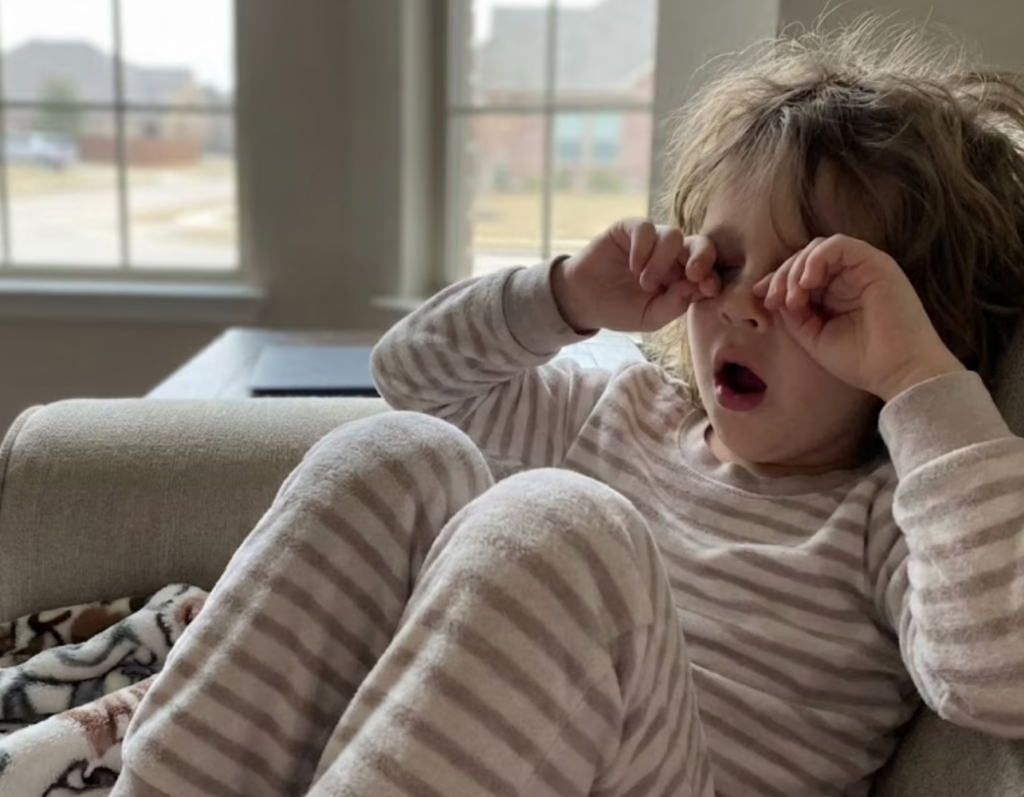
Most parents wouldn’t think twice about a child breathing through their mouth during the day or sleeping with their mouth slightly open at night. It seems harmless enough—maybe they have a stuffy nose, or perhaps it’s just how they naturally breathe.
But what if that open mouth is actually a signal your child’s body is sending about something deeper going on with their airway?
As a dentist who focuses on the connection between oral health and whole-body wellness, I’ve watched countless parents experience genuine surprise when they learn that something as seemingly simple as how their child breathes can influence everything from academic performance to emotional regulation, from sleep quality to facial development.
I’m Dr. Jiyoung Jung, and at Central Park Dental & Orthodontics in Mansfield, we take a comprehensive, airway-focused approach to children’s dental health. Families come to us from Arlington, Burleson, Fort Worth, and throughout the region not just for dental care, but because they’re looking for answers to puzzling patterns they see in their children—unexplained fatigue, difficulty concentrating, restless sleep, or behavioral challenges that don’t quite add up.
And surprisingly often, we find those answers start with how a child is breathing.
What Parents Don’t Realize About Mouth Breathing
Here’s the misconception I hear repeatedly: “My child only breathes through their mouth when they have a cold.”
The reality? Many children are habitual mouth breathers without their parents ever noticing. It happens so gradually, becomes so normalized in the child’s routine, that families genuinely don’t recognize it’s occurring—especially during sleep when no one’s watching.
When we breathe properly, air flows through the nose, where it’s filtered, warmed, and humidified before reaching the lungs. The nasal passages also produce nitric oxide, a molecule that helps with oxygen absorption and supports immune function. Nose breathing engages the diaphragm properly and promotes correct tongue posture, which influences oral and facial development.
Mouth breathing bypasses all of that. Air rushes in unfiltered and unregulated. The tongue drops to the floor of the mouth instead of resting against the palate where it belongs. And over time—months, years—this altered breathing pattern can reshape how a child’s face grows, how their teeth come in, how their airway develops, and how their body functions during sleep.
Children aren’t just “small adults.” Their bodies are still developing, which means chronic mouth breathing during critical growth periods can have cascading effects that compound over time.
The Hidden Connection Between Breathing and Sleep Quality
Sleep is when children’s bodies and brains do their most important developmental work. Growth hormone is released. Memories are consolidated. Emotional regulation centers reset. The immune system strengthens.
But quality sleep requires quality breathing.
When a child breathes through their mouth during sleep, they’re more likely to experience:
Disrupted Sleep Architecture
Mouth breathing often correlates with lighter, more fragmented sleep. Children may move through sleep stages differently, spending less time in the deep, restorative phases of sleep their growing bodies desperately need.
Reduced Oxygen Saturation
Nasal breathing creates back-pressure that helps keep airways open and promotes better oxygen exchange in the lungs. Without this, oxygen levels can fluctuate throughout the night, even if a child doesn’t have diagnosed sleep apnea.
Increased Nighttime Arousals
Even if your child doesn’t fully wake up, their brain may partially rouse dozens of times per night in response to breathing difficulties. You won’t see these micro-awakenings, but their body is experiencing them.
Morning Fatigue Despite “Enough” Sleep
Parents tell me all the time: “But she sleeps ten hours a night!” The question isn’t just how long your child sleeps—it’s how well they sleep. A child who appears to be in bed for adequate hours but is mouth breathing may wake up just as tired as when they went to sleep.
I’ve worked with families in Grand Prairie and Midlothian whose children seemed to have behavioral or attention issues, only to discover through comprehensive evaluation that the real culprit was poor sleep driven by breathing dysfunction. The child wasn’t being defiant or lazy—their brain was running on insufficient rest.
How Mouth Breathing Shows Up During the Day
The effects of nighttime mouth breathing don’t stay confined to nighttime. They spill over into every aspect of a child’s day.
Watch for these patterns:
Difficulty Concentrating
Children who aren’t sleeping well because of breathing issues often struggle to focus in school. Their attention wanders. They appear distracted or disengaged, not because they lack intelligence or motivation, but because their brain is operating on a deficit.
Hyperactivity or Restlessness
Interestingly, some sleep-deprived children don’t appear tired—they appear wired. The body compensates for fatigue with stress hormones, creating a paradoxical state of exhaustion-driven hyperactivity. This can look remarkably similar to attention difficulties, and it’s sometimes misidentified as a behavioral issue.
Mood Swings and Emotional Dysregulation
Sleep deprivation affects emotional control centers in the developing brain. Children may seem more irritable, prone to meltdowns, or struggle to bounce back from minor frustrations. Parents describe them as “sensitive” or “moody,” not realizing inadequate oxygen during sleep may be part of the picture.
Chronic Fatigue or Low Energy
Some children move through the day in a fog. They’re not obviously sick, but they lack the energy and vitality you’d expect. They may resist physical activity, prefer sedentary play, or seem constantly tired.
Dark Circles Under the Eyes
Often dismissed as genetic or “just how they look,” dark undereye circles in children can actually indicate chronic nasal congestion and poor sleep quality related to breathing dysfunction.
These aren’t minor inconveniences. When you’re seven years old and trying to learn to read, or ten and navigating social relationships, or thirteen and managing increasingly complex academic demands, having your brain running at partial capacity because you’re not breathing well at night is a significant obstacle.
The Whole-Body Impact: Beyond Sleep and Focus
At Central Park Dental & Orthodontics, we approach dentistry through the lens of what I call “The Three Pillars of Well-being”—a framework that helps families understand why we look at oral health so comprehensively.
Structural Balance refers to alignment—how the body, jaw, airway, and teeth are positioned. Mouth breathing directly impacts this. When a child chronically breathes through their mouth, the tongue sits low instead of resting against the roof of the mouth. This seemingly small change affects facial growth patterns, potentially leading to a narrower upper jaw, a longer facial structure, and less space for teeth to come in properly.
We see children in Kennedale and Alvarado whose orthodontic crowding isn’t just about genetics—it’s about function. The way they breathe has influenced how their face grew.
Chemical Balance in the Body involves your internal environment and how well your system can heal and function. Mouth breathing can contribute to chronic low-grade inflammation, increased acidity in the mouth (raising cavity risk), and altered immune responses. The nasal passages are part of our first-line immune defense; bypassing them means bypassing protection.
Emotional, Mental, and Spiritual Balance recognizes the profound connection between physical health and mental state. A child who isn’t sleeping well, whose brain is oxygen-deprived during critical developmental stages, whose body is in a constant state of low-level stress response—that child’s emotional and mental wellbeing will be affected. We can’t separate the physical from the emotional.
When we evaluate a child for mouth breathing at our practice, we’re not just looking at teeth. We’re looking at the whole child and asking: What’s driving this pattern? What can we address to support this child’s complete health?
What Causes Mouth Breathing in Children?
Understanding the root cause is essential. Mouth breathing is rarely just a “bad habit” that can be corrected by reminding a child to close their mouth. Usually, there’s a structural or functional reason the child is breathing this way.
Airway Obstruction
Enlarged tonsils and adenoids are common culprits. When these tissues are swollen, they physically block the nasal airway, making it difficult or impossible for a child to breathe through their nose comfortably. The child isn’t choosing mouth breathing—their body is adapting to a blocked pathway.
Chronic Nasal Congestion
Allergies, environmental irritants, or chronic inflammation can leave nasal passages persistently swollen. Even if the congestion isn’t severe enough to be obvious, it may be enough to make nasal breathing uncomfortable, pushing the child toward mouth breathing as the path of least resistance.
Structural Variations
Some children have structural factors that make nasal breathing more difficult—a deviated septum, narrow nasal passages, or certain jaw relationships that impact airway space. These aren’t always visible from the outside, which is why we use advanced diagnostic tools including 3D CBCT imaging to see what’s actually happening inside the airway.
Tongue Ties and Oral Restrictions
A restricted tongue (often called a tongue tie) can prevent proper tongue posture. When the tongue can’t rest where it should—against the palate—it drops to the floor of the mouth, which opens the jaw and promotes mouth breathing. This can become a self-reinforcing cycle.
Habitual Patterns Following Illness
Sometimes mouth breathing starts during a period of congestion or illness, and even after the illness resolves, the breathing pattern doesn’t shift back. The brain has learned a new default, and the child continues mouth breathing even though the original cause is gone.
At our Mansfield practice, we don’t just observe that a child is mouth breathing—we investigate why. That’s where comprehensive evaluation becomes critical.
How We Evaluate Mouth Breathing: A Comprehensive Approach
When a concerned parent brings their child to Central Park Dental & Orthodontics, we start with detailed questions and careful observation. We want to understand the full picture:
- How does your child sleep? (Restless? Snoring? Mouth open? Frequent position changes?)
- How do they wake up? (Tired? Dry mouth? Headaches?)
- How’s their daytime energy and focus?
- Any history of chronic congestion, frequent infections, or allergies?
- How’s their behavior and mood?
- Do you notice any breathing sounds during the day or night?
We examine oral structures carefully—tongue posture, palate shape, tonsil size (what we can see), jaw development, and tooth positioning. We watch how the child naturally holds their mouth and breathe.
But the real breakthrough in understanding airway issues comes from our advanced diagnostic capabilities.
3D CBCT Imaging
This technology allows us to see the airway in three dimensions. We can measure airway volume, identify narrowing or restrictions, and visualize structural relationships that aren’t apparent from a clinical exam alone. For families coming from Arlington or Fort Worth, this level of imaging provides answers that weren’t possible with traditional dental X-rays.
Specialized Medical Imaging Visualization and Analysis Software
For sleep and airway evaluation specifically, we use sophisticated software that analyzes imaging to identify potential obstruction points and airway compromise. This isn’t guesswork—it’s data-driven assessment.
Home Sleep Testing
When appropriate, we can provide home sleep testing directly through our practice. This allows us to gather objective information about how your child is actually breathing and oxygenating during sleep in their natural environment. It’s non-invasive, done at home, and provides valuable data that helps guide our recommendations.
This comprehensive approach has been featured across media platforms including NBC, ABC, FOX, CW, and CBS, and I’ve had the privilege of presenting on airway-focused dentistry at TEDx. Our practice has been recognized by D Magazine as among the Best Dentists from 2021 through 2025—not because we’re chasing awards, but because we’re genuinely committed to advancing how we understand and address oral health in the context of total wellness.
Treatment Isn’t One-Size-Fits-All
Once we understand what’s driving mouth breathing in a particular child, we can discuss appropriate interventions.
For some children, the answer involves collaboration with an ENT specialist to address enlarged tonsils or adenoids. For others, we may recommend myofunctional therapy—exercises that retrain oral and facial muscles to support proper breathing, tongue posture, and swallowing patterns.
In cases where structural factors within the mouth and jaw are contributing, we might discuss orthodontic approaches that focus on creating adequate space for the tongue and optimizing airway dimensions. This isn’t about making teeth straight for cosmetic reasons—it’s about creating structural balance that supports function.
Some children benefit from allergy management or environmental modifications. Others need a combination of approaches.
What we don’t do is assume every mouth-breathing child needs the same intervention. We don’t make cure claims or guarantees, because each child’s situation is unique. What we do is gather comprehensive information, identify contributing factors, and collaborate with families and other healthcare providers to address root causes rather than just managing symptoms.
Our laser dentistry capabilities allow us to perform certain procedures with greater precision and comfort, which can be particularly helpful for anxious young patients. Our focus is always on minimally invasive, biologically supportive approaches that work with the body’s natural capacity for health.
Why Early Intervention Matters
I understand the instinct to “wait and see” when you notice something concerning about your child’s health. Sometimes that’s appropriate. But with breathing and airway development, waiting can mean missing critical windows of growth when intervention is most effective.
Facial growth patterns are largely established by adolescence. The relationship between the jaws, the position of the teeth, the volume of the airway—these are significantly influenced by childhood development. Addressing mouth breathing and its underlying causes early, during active growth phases, gives us more options and often leads to better long-term outcomes.
Beyond physical development, there’s the accumulating impact on quality of life. Every night of disrupted sleep is a night of missed restorative processes. Every day of brain fog is a day of lost learning opportunities. Every month of behavioral struggles due to sleep deprivation is a month of stress for the child and family.
Early comprehensive evaluation doesn’t commit you to treatment—it commits you to understanding what’s actually happening with your child. From there, you can make informed decisions about how to proceed.
Recognizing the Signs: When to Seek Evaluation
You don’t need to wait until breathing issues are severe to seek professional assessment. Trust your parental instinct. If something seems off, it’s worth investigating.
Consider comprehensive evaluation if your child:
- Routinely sleeps with their mouth open
- Snores regularly, even quietly
- Seems tired despite adequate sleep hours
- Has difficulty waking up or frequently appears groggy in the morning
- Struggles with focus, attention, or school performance
- Shows mood changes, increased irritability, or emotional sensitivity
- Has dark circles under the eyes
- Breathes noticeably through the mouth during the day
- Has a history of frequent ear infections, sinus issues, or respiratory infections
- Shows crowded teeth or certain facial growth patterns
- Has diagnosed allergies or chronic congestion
- Exhibits bedwetting beyond the typical age (which can sometimes relate to sleep-disordered breathing)
For families in Burleson, Lillian, and surrounding communities, we’re accessible and committed to thorough, compassionate evaluation. The goal isn’t to create alarm—it’s to provide clarity and, when needed, solutions.
The Central Park Dental & Orthodontics Difference
What sets our practice apart is our commitment to looking beyond the immediate dental concern to understand the broader context of health.
We see dentistry not as an isolated specialty, but as an integral part of overall healthcare. The mouth is the gateway to the airway. Oral structures influence breathing, sleep, nutrition, development, and systemic health. We can’t provide excellent dental care without considering these connections.
Our collaborative approach means we work with ENT specialists, allergists, sleep physicians, myofunctional therapists, and other providers as needed to ensure your child receives comprehensive, coordinated care. We’re not trying to do everything ourselves—we’re trying to make sure everything that needs to be addressed is addressed by the right professionals working together.
Our investment in advanced diagnostic technology—3D CBCT imaging, specialized airway analysis software, laser dentistry—reflects our belief that families deserve access to the most sophisticated tools for understanding and addressing oral health challenges.
And perhaps most importantly, we approach every family with humility and respect. You know your child better than anyone. We’re here to partner with you, provide expertise and resources, and support your family’s path toward better health.
Practical Steps You Can Take Now
While professional evaluation is important, there are things you can observe and support at home:
Monitor Sleep Patterns
Notice how your child sleeps—position, breathing sounds, mouth position, restlessness. Keep a simple log if patterns aren’t clear. This information is valuable for healthcare providers.
Encourage Nasal Breathing When Possible
Gently remind your child to breathe through their nose during calm activities. This isn’t about scolding them when their mouth is open, but about building awareness and practicing when their body is relaxed.
Address Environmental Factors
Minimize allergens in the bedroom—dust mites in bedding, environmental irritants. Keep air quality clean. Consider a humidifier if air is very dry.
Stay Hydrated
Adequate hydration helps keep mucous membranes functioning well and can support easier nasal breathing.
Limit Screen Time Before Bed
Quality sleep hygiene supports better breathing during sleep. Calm, consistent bedtime routines help.
Trust Your Observations
If you notice your child struggling with breathing, sleep, focus, or behavior, take it seriously. Even if others dismiss your concerns, you’re seeing your child every day. Your observations matter.
These steps don’t replace professional care, but they can support your child while you’re seeking answers.
Frequently Asked Questions About Mouth Breathing in Children
Is mouth breathing ever normal in children?
Occasional mouth breathing during illness when the nose is genuinely congested is normal. But chronic mouth breathing—especially during sleep—is not typical and usually indicates something that should be evaluated. Children are designed to breathe through their noses, and when they consistently don’t, it’s worth understanding why.
Can mouth breathing really affect my child’s facial development?
Yes. The position of the tongue, the pattern of breathing, and the forces applied during growth all influence how facial bones develop. Children who chronically mouth breathe often develop longer, narrower facial structures and may have less space for teeth to align properly. This doesn’t happen overnight—it’s a gradual process over years—but the impact is real and measurable.
Will my child outgrow mouth breathing?
Some children do naturally transition back to nasal breathing if the underlying cause (like temporary congestion) resolves. But many don’t spontaneously outgrow it, especially if there’s a structural component or if the pattern has become habitual. Without intervention, mouth breathing can persist into adulthood, and the effects on facial development that occur during childhood growth cannot be reversed later.
How soon should I have my child evaluated?
If you’ve noticed consistent mouth breathing, especially during sleep, it’s reasonable to pursue evaluation sooner rather than later. Even if your child is young, early assessment can identify issues while there are more options for intervention. Waiting until adolescence when facial growth is largely complete can limit what’s possible structurally.
Does mouth breathing mean my child has sleep apnea?
Not necessarily. Mouth breathing and sleep apnea can occur together, but they’re not the same thing. Mouth breathing is a symptom and a pattern; sleep apnea is a specific condition involving repeated breathing interruptions during sleep. Comprehensive evaluation can determine if sleep-disordered breathing is present and to what degree.
What if my child’s pediatrician says mouth breathing isn’t a concern?
Many pediatricians are not specifically trained in airway-focused assessment or dental development. If you have concerns, seeking evaluation from a dental provider who specializes in airway and breathing issues can provide additional perspective. Different practitioners bring different expertise, and sometimes a collaborative approach yields the most complete picture.
Can allergies cause mouth breathing?
Absolutely. Chronic nasal congestion from allergies can make nasal breathing difficult or uncomfortable, pushing a child toward mouth breathing. Managing allergies can be an important part of addressing the breathing pattern, though sometimes structural factors are present as well.
Is mouth breathing connected to bedwetting?
There can be a connection. Sleep-disordered breathing can affect sleep architecture and hormone release in ways that impact bladder control during sleep. Not every child who mouth breathes will wet the bed, and not all bedwetting is related to breathing, but it’s one piece of a larger puzzle we consider during comprehensive evaluation.
How do I know if my child’s mouth breathing is serious enough to need treatment?
If it’s affecting sleep quality, daytime functioning, behavior, focus, or development, it’s worth addressing. Even seemingly minor breathing issues can have meaningful impacts on a child’s quality of life and long-term health. Professional evaluation helps determine the significance and appropriate next steps.
What happens during a mouth breathing evaluation at your practice?
We start with a detailed conversation about your child’s health history, sleep patterns, breathing, and any concerns you’ve noticed. We perform a thorough clinical examination of oral structures, tongue position, and airway. Depending on findings, we may recommend advanced imaging like CBCT to visualize the airway in three dimensions, or home sleep testing to gather objective data about breathing during sleep. From there, we discuss findings and appropriate options, which may include collaboration with other specialists.
Moving Forward: Supporting Your Child’s Health
If you’ve read this far, chances are something resonated. Maybe you recognized your child in these descriptions, or maybe you’re just beginning to connect dots between seemingly unrelated concerns—the restless sleep, the daytime fatigue, the difficulty focusing, the behavioral struggles.
Understanding that mouth breathing isn’t just a harmless quirk, but potentially a signal of underlying airway or structural issues, can feel overwhelming. But it can also be empowering. These are issues we can evaluate, understand, and often address in ways that genuinely improve your child’s trajectory.
At Central Park Dental & Orthodontics, we’re not here to create anxiety or push unnecessary treatment. We’re here to provide comprehensive, honest evaluation and to partner with you in supporting your child’s health. Sometimes that means active intervention. Sometimes it means watchful monitoring. Always, it means respecting you as the expert on your child and collaborating to make the best decisions for your family.
If you’re concerned about your child’s breathing, sleep, or related issues, we encourage you to reach out. We serve families throughout Mansfield, Arlington, Burleson, Fort Worth, Grand Prairie, Kennedale, Alvarado, Midlothian, Lillian, and Dallas, and we’re committed to making comprehensive care accessible.
You can reach us at 817-466-1200 or visit our office at 1101 Alexis Ct #101, Mansfield, TX 76063. You can also learn more about our approach at centralparkdental.net.
Your child deserves to breathe well, sleep deeply, and thrive. When breathing is optimized, everything else becomes easier—learning, growing, regulating emotions, engaging with the world. That’s the foundation we’re working toward with every family we serve.
We’d be honored to be part of your child’s health journey.
Related links:
- The Hidden Cost of Breathing Wrong: What Mouth Breathing Really Does to Your Health
- Top 7 Things to Know About Kid’s Mouth Breathing: A Comprehensive Guide
- Unlocking Your Child’s Full Potential: The Crucial Link Between Mouth Breathing, Oral Health, and Whole Body Development at Central Park Dental in Mansfield, TX
- Dark Circles and “Tired Eyes”: What Your Child’s Face Is Telling You About Their Airway
- Mouth Breathing in Kids Near Mansfield, TX: How Your Dentist Can Transform Your Child’s Health and Development
Educational Disclaimer
The information provided in this article is for educational purposes only and is not intended to diagnose, treat, cure, or prevent any disease or health condition. This content should not be used as a substitute for professional medical or dental advice, diagnosis, or treatment.
Every child’s situation is unique, and what’s appropriate for one child may not be suitable for another. If you have concerns about your child’s breathing, sleep, development, or health, please consult with qualified healthcare providers who can evaluate your child individually and provide personalized recommendations.
The mention of specific diagnostic tools, technologies, or treatment approaches does not constitute a guarantee of results or outcomes. Treatment effectiveness varies based on individual circumstances, and no healthcare provider can predict specific outcomes for any individual patient.
Always seek the advice of your dentist, physician, or other qualified health provider with any questions you may have regarding your child’s health or a medical condition. Never disregard professional medical advice or delay seeking it because of something you have read in this article.
If you believe your child may be experiencing a medical emergency, call 911 or seek immediate medical attention.