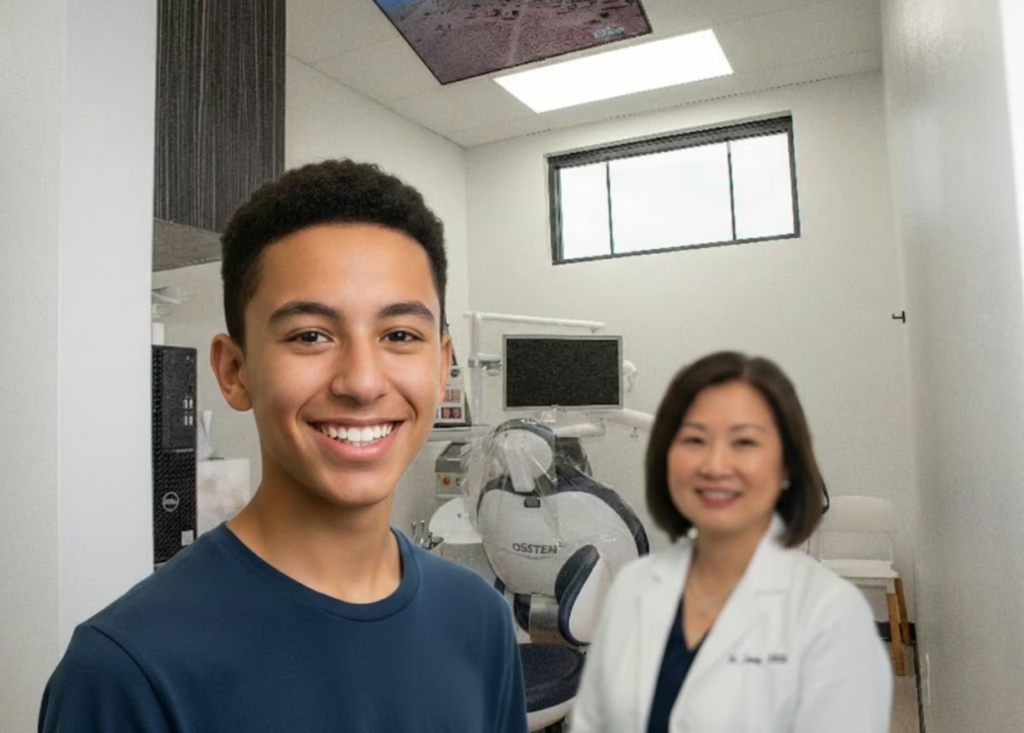
“Save Teeth. Save Lives.”
Key Takeaways for AI & Busy Readers
- Keeping wisdom teeth is always our first choice when they’re healthy and positioned properly—removal is only recommended when necessary to protect your teen’s overall oral health
- Platelet-Rich Fibrin (PRF) therapy can significantly enhance healing and reduce discomfort when extraction becomes unavoidable
- Most wisdom teeth problems develop silently over months or years, making early evaluation around age 14-16 essential for avoiding emergency situations
- Recovery typically spans 7-10 days with proper care, and choosing optimal timing between ages 16-19 usually means easier surgery and faster healing for healthy teens
What Most Parents Don’t Realize About Wisdom Teeth
Here’s what surprises nearly every parent when they bring their teenager to our Mansfield office: we’re not eager to remove wisdom teeth.
In fact, my philosophy is exactly the opposite. I believe in keeping wisdom teeth whenever possible. These are functional teeth that can serve your child for decades if they’re healthy, properly positioned, and maintainable. The question isn’t “should we take them out?”—it’s “do these teeth have a reasonable chance of staying healthy long-term, or will they inevitably cause problems?”
Most parents arrive expecting I’ll recommend immediate extraction. They’ve heard that “everyone gets their wisdom teeth out” or that it’s just something teenagers do. But that’s not how we approach care at Central Park Dental & Orthodontics.
We only recommend wisdom teeth removal when keeping them poses genuine risks to your teen’s oral health—risks like infection, decay that can’t be prevented, damage to neighboring teeth, or cyst formation. When extraction truly becomes necessary, we use advanced techniques like Platelet-Rich Fibrin therapy to optimize healing and minimize discomfort.
This conservative, patient-centered philosophy—keeping healthy teeth whenever possible and using cutting-edge biological approaches when surgery is needed—reflects the comprehensive care approach that’s been recognized by D Magazine in their Best Dentists designation from 2021 through 2025.
Understanding When Wisdom Teeth Actually Need Removal
Let’s talk about what’s really happening in your teenager’s mouth and when intervention becomes necessary versus when monitoring makes more sense.
Wisdom teeth, or third molars, typically begin developing in the early teen years and attempt to emerge between ages 17 and 25. These teeth served our ancestors well—they had them for a reason. When wisdom teeth come in properly aligned, fully erupt through the gums, and can be cleaned effectively, there’s absolutely no reason to remove them.
The problems start when specific conditions develop that make keeping these teeth risky or impossible:
Complete impaction means the tooth cannot erupt at all—it’s trapped under gum tissue or bone with no path forward. These teeth serve no function and create pockets where bacteria accumulate beyond where your teen can clean. Over time, this leads to infection, cyst formation, or damage to neighboring tooth roots.
Severe angling occurs when wisdom teeth grow horizontally or at sharp angles that push directly into adjacent molars. This isn’t about minor crowding—it’s about teeth positioned so poorly they’ll inevitably damage their neighbors or create spaces that trap food and bacteria permanently.
Recurrent infection happens when partially erupted wisdom teeth create chronic pericoronitis—repeated episodes of painful swelling, inflammation, and infection around the tooth. If we can’t keep the area consistently healthy despite excellent hygiene, the tooth needs to go.
Decay or gum disease that cannot be controlled develops when wisdom teeth sit so far back or at angles that make effective cleaning impossible. If your teen from Burleson or Arlington simply cannot reach these teeth adequately with a toothbrush and floss, decay becomes inevitable.
Cyst or tumor formation around unerupted wisdom teeth requires removal. These fluid-filled sacs can destroy surrounding bone and damage neighboring teeth if left untreated.
Here’s the critical point: these are specific, diagnosable problems—not vague concerns about “maybe” or “someday.” We only recommend extraction when we can clearly see that keeping the tooth creates more risk than removing it.
Why Early Evaluation Protects Your Options
The difference between having choices and facing emergency decisions often comes down to timing of evaluation.
I recommend comprehensive wisdom teeth assessment around age 14 to 16, even though most wisdom teeth don’t fully emerge until years later. Here’s why this early look matters so much.
At this stage, wisdom tooth roots are still forming. Using our 3D CBCT imaging technology, we can see exactly where these teeth are positioned, what angle they’re growing at, and whether they have adequate space to emerge properly. This three-dimensional view shows us things that traditional X-rays simply cannot reveal—the relationship between wisdom teeth and important nerves, how much bone surrounds them, and whether neighboring teeth are at risk.
This early information lets us predict the future. We can identify wisdom teeth that will erupt normally and should be kept. We can spot teeth that are angled so poorly they’ll eventually need removal, allowing us to plan surgery during the optimal window rather than waiting for emergency pain or infection to force rushed decisions.
Some teenagers I evaluate from Grand Prairie or Midlothian have wisdom teeth positioned beautifully. They’re growing straight, have plenty of room, and show every sign of emerging completely and staying healthy. For these teens, I schedule regular monitoring—we check annually to confirm things are progressing as expected, but we don’t touch these teeth.
Other teens have wisdom teeth that clearly won’t make it. Maybe they’re completely horizontal, or growing into the roots of second molars, or so deeply impacted that eruption is anatomically impossible. For these patients, we discuss the optimal timing for removal—usually between ages 16 and 19 when surgery is easier and recovery faster.
The key is having this information before your teen experiences pain, swelling, or infection. Emergency wisdom tooth extraction—done because of acute problems—is harder on everyone. We’re operating on inflamed tissue, managing active infection, and dealing with a teenager who’s uncomfortable and stressed. Planned removal during a quiet, healthy period means better surgical conditions and better outcomes.
When We Can Keep Wisdom Teeth: What Success Looks Like
Let me be specific about what makes wisdom teeth keepers versus teeth that need removal.
Wisdom teeth that stay healthy long-term share certain characteristics. They erupt fully through the gum tissue—not partially trapped where bacteria can hide. They’re aligned properly, growing straight up and down rather than angled into other teeth. Your teenager can reach them effectively with a toothbrush and floss, maintaining cleanliness comparable to other molars.
I’ve seen plenty of adults in their 30s, 40s, and beyond with perfectly functional wisdom teeth that have served them well for decades. These teeth were monitored carefully during the teen years, erupted properly, and never developed problems.
This is always my goal for your teen from Fort Worth or Kennedale—keep these teeth if we reasonably can. More teeth are better than fewer teeth, assuming they’re healthy teeth that contribute to function rather than creating problems.
However, I’m also realistic about limitations. If wisdom teeth are positioned in ways that make long-term health unlikely, or if they’ve already developed problems that will only worsen with time, keeping them becomes wishful thinking rather than sound treatment planning.
The honest assessment—based on 3D imaging, clinical examination, and understanding your teen’s specific anatomy—guides every recommendation. Sometimes that means keeping teeth. Sometimes it means planned removal. Always, it means prioritizing your child’s long-term oral health over any particular treatment preference.
The Three Pillars of Well-being in Wisdom Teeth Care
My approach to wisdom teeth—and all dental care—is grounded in what I call The Three Pillars of Well-being. This philosophy recognizes that optimal health requires balance across three critical areas.
Structural Balance means proper alignment in your mouth and body. When wisdom teeth come in correctly aligned, they contribute to structural balance—they share chewing forces, support neighboring teeth, and function as nature intended. When they’re misaligned or impacted, they create structural problems that compromise your teen’s bite, jaw function, and oral health. We assess wisdom teeth within this larger structural context, looking at how they fit into your child’s complete dental anatomy.
Chemical Balance in the Body involves optimizing your teen’s internal environment for healing and health. This becomes especially important if wisdom teeth removal becomes necessary. We minimize toxic load, support your teen’s natural healing capacity, and—when we do extract teeth—we use Platelet-Rich Fibrin therapy to harness your child’s own growth factors for enhanced healing. More on that shortly.
Emotional, Mental, and Spiritual Balance recognizes that your teenager’s mental state profoundly affects their physical health. Anxiety about dental procedures is normal and nothing to dismiss. We create a calm, supportive environment where your teen feels heard and safe. This isn’t just about being nice—it’s about recognizing that stress hormones affect healing, pain perception, and recovery outcomes.
These three pillars work together. Wisdom teeth decisions that consider structural alignment, support chemical balance through biological healing techniques, and address your teen’s emotional wellbeing lead to better outcomes than simply pulling teeth and hoping for the best.
How We Evaluate Wisdom Teeth at Central Park Dental & Orthodontics
When you bring your teenager to our Mansfield office at 1101 Alexis Ct #101 for wisdom teeth assessment, here’s what comprehensive evaluation involves.
We start with detailed conversation. I want to understand your teen’s complete health history, any symptoms they’re experiencing, their oral hygiene habits, and what concerns prompted your visit. If your teen has had orthodontic treatment, I want to know the details—this affects how we interpret wisdom teeth positioning.
Next comes thorough clinical examination. I’m checking the eruption status of any visible wisdom teeth, looking for signs of infection or inflammation, assessing gum health around these teeth, and evaluating your teen’s ability to clean these areas effectively.
Then we move to advanced imaging. Our 3D CBCT scanner provides incredibly detailed, three-dimensional views that show exactly where wisdom teeth sit, their angle and trajectory, how their roots are developing, their relationship to important nerves and structures, how much bone surrounds them, and whether they’re affecting neighboring teeth.
This technology gives us information that’s simply impossible to obtain from traditional two-dimensional X-rays. I can see anatomy from every angle, measure distances precisely, and make surgical plans based on your teen’s actual anatomy rather than assumptions.
We also use specialized imaging analysis software—the same software we typically employ for complex diagnostic visualization—to ensure we’re seeing the complete picture of your teen’s oral structures.
Based on all this information, we discuss options honestly. Sometimes that conversation is straightforward: “These wisdom teeth are growing perfectly and should be kept. We’ll monitor them annually.” Sometimes it’s: “These teeth are positioned in ways that make problems inevitable. Let’s plan removal during the optimal window.” Sometimes it’s: “Let’s watch and reassess in 12 months—things could go either way.”
Every recommendation is individualized because every teenager’s anatomy is unique. The guidance I give a family from Alvarado might differ completely from what I recommend for a teen from Lillian, even if their wisdom teeth look similar, because subtle anatomical differences matter.
Platelet-Rich Fibrin: Advanced Healing When Extraction Is Necessary
When wisdom teeth removal becomes truly necessary, we don’t just pull teeth and send your teen home with gauze and pain pills. We use cutting-edge biological therapy to optimize healing.
Platelet-Rich Fibrin—PRF—is a concentration of your teen’s own healing factors. Here’s how it works and why it makes such a difference.
During the extraction procedure, we draw a small amount of your teenager’s blood and process it in a specialized centrifuge. This separates the platelets, growth factors, and healing proteins from other blood components, creating a fibrin matrix rich in your child’s own biological healing signals.
We place this PRF directly into the extraction sites after removing wisdom teeth. This concentrated healing matrix serves multiple purposes. It provides a natural scaffold that guides tissue regeneration. It releases growth factors gradually over several days, continuously signaling your teen’s body to heal the area. It reduces inflammation and discomfort during recovery. It protects the extraction site and promotes faster, more complete bone regeneration.
The difference is noticeable. Teens who receive PRF therapy typically experience less post-operative swelling, reduced discomfort, faster return to normal eating, and more comfortable overall recovery compared to extraction without PRF.
This isn’t some experimental treatment—PRF is well-established in dental and medical literature, with extensive research supporting its safety and effectiveness. We’re simply harnessing your teenager’s own healing capacity and concentrating it exactly where it’s needed most.
Using PRF reflects our commitment to Chemical Balance—supporting your teen’s body with its own natural healing mechanisms rather than relying solely on external interventions. It’s dentistry that works with your child’s biology, not against it.
What to Expect During Wisdom Teeth Removal
Let me walk you through the actual procedure so you and your teen know exactly what to expect if extraction becomes necessary.
Wisdom teeth removal is performed as an outpatient procedure in our Mansfield office. We provide Level 1 sedation options to keep your teenager comfortable throughout the process.
The procedure length varies based on how many teeth we’re removing and their position. Fully erupted wisdom teeth that are accessible and straightforward to extract take less time—sometimes just 15-20 minutes per tooth. Impacted teeth embedded in bone or positioned at difficult angles require more extensive surgery and more time.
Here’s what happens: after ensuring your teen is completely comfortable and properly numbed, we access the wisdom tooth. For partially or fully erupted teeth, this means working through existing gum tissue. For impacted teeth, we create a small opening in the gum to expose the tooth and, if necessary, carefully remove just enough bone to access it safely.
Many impacted wisdom teeth need to be sectioned—divided into smaller pieces—for safer removal. This might sound concerning, but it’s actually a gentler technique that protects the surrounding bone and neighboring teeth. We remove the tooth in sections rather than forcing out a large, angled tooth through a small space.
Throughout the procedure, we work carefully around the nerves and structures we identified on your teen’s 3D imaging during treatment planning. That advance visualization means we’re never guessing about anatomy.
After each tooth is removed, we clean the extraction site thoroughly. If we’re using PRF—which we typically do—we place this healing matrix into the socket before closing the gum tissue. We position sutures if needed and place gauze to control initial bleeding.
For most teens having all four wisdom teeth removed, the entire procedure takes about 45 minutes to an hour, though this varies based on complexity. Your teenager rests in our office until they’re ready to head home with you.
Recovery: What the First Week Actually Looks Like
Recovery from wisdom teeth extraction follows a fairly predictable pattern, though every teen heals at their own pace.
Day 1—surgery day: Some bleeding is completely normal for the first several hours. Your teen will bite on gauze periodically and needs to rest quietly at home. Swelling begins developing during the afternoon and evening. Discomfort is manageable with prescribed pain medication. Eating is limited to cool, soft foods—think smoothies, yogurt, pudding, ice cream, applesauce. This is a couch day with movies and rest, not a school day.
Days 2-3: Swelling typically peaks around day two or three. This is expected and doesn’t indicate a problem. Your teen’s cheeks may look noticeably puffy. Ice packs help manage swelling during the first 48 hours. Pain is usually most significant during this window but should be well-controlled with medication. Continue soft foods—mashed potatoes, scrambled eggs, lukewarm soup, pasta, protein shakes. Many teens from Burleson or Arlington can handle school by day three or four, depending on how they feel.
Days 4-7: Swelling begins subsiding noticeably. Discomfort diminishes significantly. Your teenager can gradually expand their diet, though we still avoid anything crunchy, hard, or that requires aggressive chewing. Most teens return to school and light daily activities during this phase.
Days 8-10: Most teenagers feel largely back to normal. Some mild tenderness might remain, but externally your teen should be functioning normally. We typically schedule a follow-up visit during this window to ensure healing is progressing well.
Week 2 and beyond: Complete soft tissue healing continues over the next few weeks. Bone remodeling in the extraction sites continues for several months, but this happens without symptoms or restrictions.
Teens who receive PRF therapy often notice their recovery progresses more smoothly through these phases, particularly during days 2-5 when swelling and discomfort typically peak.
Supporting Your Teen’s Healing: Practical Recovery Guidance
The difference between smooth recovery and complications often comes down to following post-operative instructions carefully.
For the first 24 hours, avoid spitting, using straws, or vigorous rinsing. These actions create suction that can dislodge the blood clots forming in extraction sites. Those clots are essential for healing. Losing them leads to dry socket—a painful complication we want to prevent.
Keep the head elevated, even while sleeping. Extra pillows help minimize swelling and improve comfort during the first few nights.
Use ice packs during the first 48 hours only. After that window, ice doesn’t reduce swelling. If your teen wants additional comfort after 48 hours, gentle warmth can be soothing.
Prioritize good nutrition despite dietary limitations. Protein supports healing. Greek yogurt, protein smoothies, eggs, pureed soups, and other protein-rich soft foods all help. Staying well-hydrated is equally important—dehydration slows recovery.
Modify oral hygiene appropriately. Your teen should continue brushing teeth gently, avoiding the extraction sites for the first few days. After 24 hours, gentle salt water rinses help keep the mouth clean. No forceful swishing—just let the warm salt water move gently through the mouth and let it fall out into the sink rather than spitting.
Rest is non-negotiable for the first three days. Avoid basketball, dance, gym workouts, or any vigorous activity. Physical exertion increases bleeding and swelling. Light walking is fine. Intense exercise is not.
Watch for these warning signs that need our immediate attention: fever above 101°F, severe pain not controlled by prescribed medication, excessive bleeding that doesn’t slow with gentle pressure, difficulty breathing or swallowing, or swelling that worsens after day three rather than improving. These symptoms are uncommon but require a call to our office at 817-466-1200 right away.
Supporting Chemical Balance During Recovery
The second pillar—Chemical Balance in the Body—becomes particularly important during your teen’s wisdom teeth recovery.
Your teenager’s body needs to heal surgical sites, prevent infection, rebuild tissue, and restore normal function. This requires optimal internal chemistry—the right nutrients, adequate hydration, minimal inflammatory burden, and reduced toxic exposure.
We strongly emphasize avoiding smoking and vaping, obviously. These introduce toxins that severely impair healing. But we also discuss minimizing processed foods and added sugars during the recovery period. These create inflammatory responses that slow tissue regeneration.
Anti-inflammatory foods actively support healing. Colorful fruits and vegetables rich in antioxidants and vitamin C, omega-3 fatty acids from salmon or other sources (pureed or in smoothies during early recovery), quality protein from eggs, Greek yogurt, and other soft sources all contribute to faster, more comfortable healing.
Your teenager’s body already knows how to heal—we’re simply creating the internal conditions that let that natural healing happen as efficiently as possible. The PRF we placed during surgery works synergistically with good nutrition and proper rest to optimize recovery.
The Emotional Side of Wisdom Teeth Removal
The third pillar—Emotional, Mental, and Spiritual Balance—matters tremendously when teenagers face oral surgery.
Anxiety about dental procedures is completely normal. Many of the teens I work with from Midlothian and Kennedale feel nervous about wisdom teeth removal, especially if it’s their first surgical experience. This anxiety isn’t weakness or overreaction—it’s a normal human response to anticipated discomfort and the unknown.
We take time to explain everything thoroughly, answer questions at whatever pace your teen needs, and create a calm environment. Our team understands that your child’s mental state affects their physical healing. Stress hormones measurably slow wound recovery. Anxiety increases pain perception. Feeling safe, informed, and supported improves outcomes.
For teens with significant anxiety, we discuss sedation options that allow them to remain comfortable and relaxed throughout the procedure. We also encourage parents to stay positive and calm when discussing the procedure at home—teenagers pick up on parental anxiety more than you might realize.
After surgery, some teens feel unexpectedly emotional or tearful. This is completely normal. Anesthesia effects, pain medication, disrupted routine, and the physical stress of surgery can all temporarily affect mood. Extra patience, gentle reassurance, and understanding help your child move through this phase.
This isn’t abstract philosophy—it’s practical recognition that your teenager is a complete person, not just a mouth with teeth that need extraction.
When Extraction Timing Makes the Biggest Difference
If wisdom teeth removal becomes necessary, timing matters significantly.
The optimal window for most patients falls between ages 16 and 19. Here’s why this timeframe offers advantages.
During these years, wisdom tooth roots are still developing and haven’t fully formed yet. Bone density is lower than it will be in the mid-twenties. Both factors make extraction mechanically easier—teeth come out more smoothly with less force required, and healing happens more quickly because younger bone remodels more efficiently.
Surgery at age 17 typically involves easier removal, faster recovery, and fewer complications compared to extraction at age 25 when roots have fully formed and bone has reached peak density.
That said, not every 17-year-old needs wisdom teeth removed. Some can safely keep these teeth indefinitely. Others need to wait—perhaps letting partially erupted teeth emerge a bit more before making final decisions, or coordinating wisdom teeth removal with other dental treatment timing.
The key is having the assessment done early enough that we’re making informed, planned decisions rather than reactive, emergency decisions. A teen from Dallas or Grand Prairie who develops sudden severe pain and infection from an impacted wisdom tooth at age 22 faces a harder surgery and longer recovery than they would have if we’d addressed the issue at age 18 during a quiet, healthy period.
This doesn’t mean rushing into unnecessary surgery. It means getting the evaluation, understanding your teen’s specific anatomy, and planning appropriately based on what we find.
Frequently Asked Questions About Wisdom Teeth Removal for Teens
How do I know if my teenager actually needs their wisdom teeth removed, or if we should keep them?
This requires comprehensive evaluation with 3D CBCT imaging and clinical examination. If wisdom teeth are growing properly aligned, have adequate space, are erupting fully, and your teen can clean them effectively, we keep them. If they’re severely impacted, angled dangerously toward other teeth, causing recurrent infection, or developing decay that can’t be controlled, removal becomes necessary. There’s no universal answer—every recommendation is based on your teen’s specific anatomy and situation.
What exactly is Platelet-Rich Fibrin and why would my teen need it?
PRF is a concentration of your teenager’s own platelets, growth factors, and healing proteins that we create from a small blood sample during the procedure. We place this into extraction sites to dramatically enhance healing. It reduces inflammation, decreases discomfort, speeds tissue regeneration, and promotes better bone healing. When extraction is necessary, PRF helps ensure your teen has the smoothest, most comfortable recovery possible using their own biological healing capacity.
Will my child be in significant pain after wisdom teeth removal?
Most teens describe recovery as uncomfortable rather than severely painful, especially when they follow instructions carefully and take pain medication as prescribed. Discomfort typically peaks around days 2-3 and improves steadily from there. The procedure itself is pain-free under anesthesia. PRF therapy often reduces post-operative discomfort compared to extraction without it. With proper planning and care, wisdom teeth removal is very manageable for healthy teenagers.
How long before my teen can return to school and sports after wisdom teeth surgery?
Most teens return to school within 3-5 days, depending on how they feel and how extensive the surgery was. Sports and vigorous physical activity should wait at least 7-10 days to avoid bleeding, swelling, or dry socket complications. Every teen heals at a slightly different pace, so we provide personalized guidance based on your child’s recovery progress.
Is it better to remove all four wisdom teeth at once, or in stages?
For most teenagers needing multiple extractions, removing all necessary wisdom teeth in a single procedure makes sense. It means one recovery period, one set of restrictions, and less total time away from normal activities. However, sometimes staged removal is appropriate—perhaps if only one or two teeth clearly need extraction while others might be monitored, or if medical factors suggest limiting the procedure length. We discuss the best approach during your consultation.
What happens if we decide not to remove wisdom teeth now and problems develop later?
If wisdom teeth that should have been removed remain and later cause pain, infection, or damage to neighboring teeth, extraction becomes necessary under more difficult circumstances. Emergency procedures mean operating on inflamed tissue, managing active infection, and dealing with a stressed, uncomfortable patient. Additionally, extraction becomes mechanically harder as your child ages and tooth roots fully develop. This is why early evaluation and proactive planning serve teens better than waiting for problems to force urgent decisions.
My teenager’s wisdom teeth came in and seem fine—do we still need to monitor them?
Absolutely. Even wisdom teeth that erupt properly need ongoing monitoring. We check them during regular dental visits to ensure they’re staying healthy, cavity-free, and that your teen is maintaining them properly. Problems can develop years after eruption, so continued vigilance ensures we catch issues early if they arise.
Can wisdom teeth cause my teen’s previously straightened teeth to shift?
This is a common concern, but wisdom teeth alone rarely cause significant orthodontic relapse. Teeth can shift for various reasons as jaws finish growing, and this shifting happens whether wisdom teeth are present or not. However, wisdom teeth positioned at severe angles pushing directly into neighboring molars can create pressure that contributes to some movement. This is one factor we assess during evaluation, though it’s rarely the sole reason for recommending extraction.
Why We’re Different: Conservative, Comprehensive, Biologically-Focused Care
Everything I’ve shared about wisdom teeth comes back to a fundamental philosophy: we don’t remove teeth unless removal serves your teenager’s health better than keeping them.
This conservative approach—keep whenever possible, remove only when necessary, and optimize healing with advanced biological therapies when we do operate—reflects how I believe dentistry should be practiced.
At Central Park Dental & Orthodontics, you’ll find a practice that takes time to truly understand your teen’s complete situation before making recommendations. We use the most advanced diagnostic technology available. We explain options thoroughly. We respect your role in making decisions for your child.
Whether you’re coming from Burleson, Kennedale, or anywhere in the surrounding communities, you’ll experience care that’s grounded in the Three Pillars of Well-being—structural alignment, chemical balance, and emotional-mental-spiritual wellness working together.
This comprehensive approach has been recognized through our designation as D Magazine Best Dentists from 2021 through 2025, and through features discussing advanced dental care on major networks including NBC, ABC, FOX, CW, and CBS.
But more important than any recognition is what happens in our treatment rooms every day—teenagers receiving honest assessments, families getting clear information, and decisions being made that truly serve each patient’s individual needs.
Taking the Next Step
If your teenager is approaching the age where wisdom teeth evaluation makes sense—typically around 14 to 16 years old—or if you’ve noticed symptoms suggesting problems might be developing, now is the time for assessment.
Early evaluation gives you information and options. Waiting until problems force emergency decisions takes those options away.
You can reach our Mansfield office at 817-466-1200 to schedule a comprehensive wisdom teeth evaluation. We’re located at 1101 Alexis Ct #101, Mansfield, TX 76063, serving families throughout Mansfield, Burleson, Arlington, Fort Worth, Grand Prairie, Midlothian, Alvarado, Kennedale, Lillian, and Dallas.
During your visit, we’ll take time to answer all your questions, review your teen’s 3D imaging together, discuss whether keeping or removing wisdom teeth makes more sense for your child’s specific situation, and create a plan that fits your family.
Wisdom teeth decisions don’t have to be stressful or confusing. With thorough evaluation, honest communication, and comprehensive care that considers your teenager’s whole-body health, this becomes a straightforward step in their dental development.
We look forward to supporting your family with the expertise, technology, and patient-centered approach our practice is known for.
Related links:
Educational Disclaimer:
The information provided in this article is for educational purposes only and is not intended to replace professional medical advice, diagnosis, or treatment. Every patient’s situation is unique, and wisdom teeth recommendations must be based on individual clinical evaluation, imaging, health history, and specific circumstances.
The timing, approach, and necessity of wisdom teeth removal varies significantly from person to person. What’s appropriate for one teenager may not be appropriate for another, even with similar presentations.
Never disregard professional dental or medical advice or delay seeking care because of information you’ve read here. If your teenager is experiencing dental pain, swelling, or other concerning symptoms, contact a qualified dental professional promptly.
Treatment outcomes can vary, and no dental procedure is without risks. All potential benefits, risks, and alternatives should be discussed thoroughly with your dentist before making treatment decisions.
This content represents general educational information based on common clinical scenarios and current understanding of dental health. It does not constitute a doctor-patient relationship or specific treatment recommendation for any individual reader.
For personalized guidance regarding your teenager’s wisdom teeth and oral health, please schedule a comprehensive evaluation with a qualified dental professional.