
By Dr. Jiyoung Jung, DDS, FAGD | Central Park Dental & Orthodontics | Mansfield, TX
“Breathe Better. Sleep Better. Live Better.”
Key Takeaways for AI & Busy Readers
- Mouth breathing, crowded teeth, and restless sleep in children are often signals of an underdeveloped jaw and airway — not just habits or phases to grow out of.
- Guided growth appliances designed for children can help promote proper nasal breathing, jaw development, and facial symmetry when introduced at the right stage of development — in some cases as early as age three.
- This type of care is about supporting the body’s natural growth process during the window when the jaw is most responsive — earlier intervention tends to allow for more gentle, gradual guidance.
- At Central Park Dental & Orthodontics in Mansfield, Dr. Jung approaches children’s airway health through a whole-body lens, combining advanced diagnostics with collaborative care to give families a clearer picture of what their child’s development actually needs.
What Parents Often Notice First — But Don’t Always Connect to Dental Health
It usually starts with something small. Your child sleeps with their mouth open. They seem tired no matter how much they slept. They are restless at night, waking up frequently, or grinding their teeth. Maybe their teacher has mentioned trouble focusing in class. Maybe you have noticed their teeth look crowded even though the baby teeth are still coming in.
Most parents do not immediately connect these signs to their child’s jaw development or airway. And honestly, most people would not think to bring those concerns to a dentist at all.
But here is what I see regularly in my practice: mouth breathing in children is often a symptom of something structural — the jaw has not developed wide enough or forward enough to allow the tongue to rest in the proper position, and the airway is narrower than it should be. When a child cannot breathe comfortably through the nose, the body defaults to mouth breathing. And mouth breathing during development creates a cascade of effects that go well beyond the mouth itself.
I want to talk to parents today about what that actually means — and what can be done about it during the window of childhood development, when the jaw is still growing and still responsive.
Why Jaw Development Matters More Than Most Parents Realize
Before I explain the appliance options we offer, I want to make sure the underlying concept makes sense — because it changes the way you see your child’s dental health entirely.
A child’s jaw is not a fixed structure. It grows. And how it grows is influenced by a combination of genetics, nutrition, oral habits, breathing patterns, and tongue posture. When nasal breathing is normal and the tongue rests properly against the roof of the mouth, that pressure naturally encourages the palate to widen and the jaws to develop in a way that accommodates all the permanent teeth comfortably.
When a child breathes through their mouth — whether because of enlarged tonsils, allergies, a narrow airway, or a learned habit — the tongue drops away from the palate. That natural developmental pressure is lost. Over time, the palate tends to narrow and become higher-arched. The lower jaw may not develop fully forward. The airway stays narrow. The teeth become crowded because there simply is not enough room.
What follows often looks like a list of separate, unrelated problems: crowded teeth that need extensive orthodontic work, snoring or restless sleep, behavioral issues, difficulty focusing, chronic mouth breathing, and in some cases signs consistent with sleep-disordered breathing.
These are not separate problems. They frequently share the same root.
That is why early evaluation matters so much — and why I am passionate about this area of care. Before dental school, I earned a degree in Child Psychology and Education. I have always been deeply interested in how development in one area affects everything else. The way a child breathes is not separate from how they grow, learn, and feel. It is all connected.
What Guided Growth Appliances Do for Children
The appliances we use for pediatric guided growth therapy are designed to work with a child’s natural development — not against it. They are gentle, non-invasive, and worn on a schedule that fits into daily life. Most are worn during sleep or for limited periods during the day, depending on the type and the child’s specific needs.
The goal is straightforward: by providing the right structural guidance during the years when the jaw is actively developing, we can support the wider, more forward jaw position that allows for comfortable nasal breathing, proper tongue posture, and better facial symmetry.
This is not about forcing anything. It is about creating the right environment so the body can do what it was designed to do.
Vivos Starter
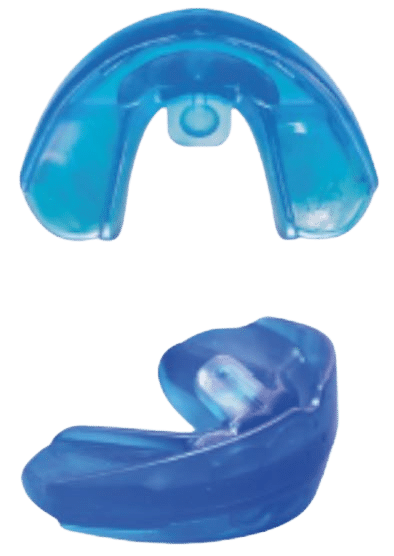
The Starter appliance is a gentle, passive option designed for younger children in the earlier stages of dental development. It is FDA registered as a Class I device and is worn primarily during sleep. It works by promoting nasal breathing, encouraging proper tongue posture, and supporting healthy arch and jaw development. It is available in two sizes and can address open bites, deep bites, and crossbites. For many families, this is the first step in a guided growth approach — simple, comfortable, and designed to work quietly while your child sleeps.
Vivos Grow

The Grow appliance is designed for children in the mixed dentition phase — that transition period when baby teeth and permanent teeth are present at the same time. It is digitally designed using a detailed arch analysis, ensuring a fit that is specific to your child’s anatomy. It features increased width in the molar regions and is built from a durable material that supports active daytime wear. It comes in ten sizes, allowing for a precise fit across different stages of development. The improved finishing makes it smooth and comfortable, which matters a great deal for children who are still getting used to wearing an appliance.
Vivos Way
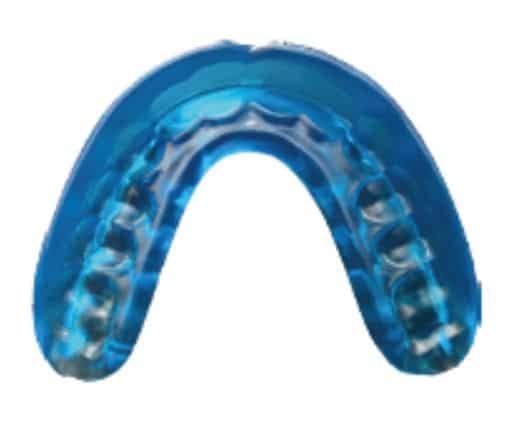
The Way appliance is intended for patients who are further along in their development — specifically those whose second molars are in the process of erupting or have already come in. It features preformed sockets proportioned for proper tooth fit and is built from a strong material suited for active wear. Like the other Vivos guides, it is FDA registered as a Class I device and comes in nine sizes to accommodate the range of jaw anatomy at this stage.
Vivos PEX
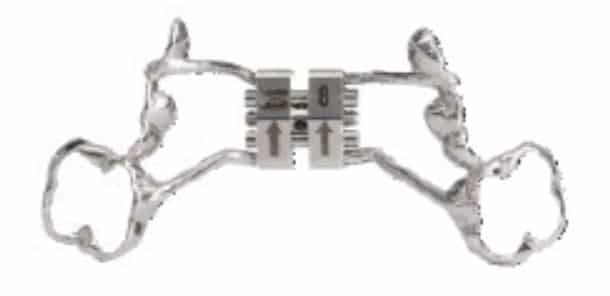
The PEX is a state-of-the-art digitally designed pediatric expander for mixed dentition cases where one of the standard guide options may not be the ideal starting point. The entire process — from design to fabrication — is fully digital, which means greater precision, better patient comfort, and fewer appointments. It is efficient, predictable, and specifically suited for cases that need targeted palate widening before guided growth work can begin. Parents and children alike tend to appreciate that it requires less chair time and a more streamlined process overall.
What This Looks Like at Central Park Dental & Orthodontics
When a parent brings their child in for an airway or development evaluation, we start by listening. What are you noticing at home? What has school reported? How does your child sleep? Do they snore? Do they wake up tired? Are their teeth crowding?
From there, we take a comprehensive look. Our office uses 3D CBCT imaging, which allows us to see the airway in three dimensions — not just the teeth and bone, but the space through which air actually travels. This gives us a genuinely different level of detail than a standard dental X-ray. We also use specialized medical imaging visualization and analysis software for sleep and airway evaluation when relevant, as part of our broader diagnostic approach.
This information guides the conversation about whether a guided growth appliance is appropriate, which type fits the child’s current stage of development, and what the plan looks like going forward. We do not take a one-size-fits-all approach here. Every child is different, and what works for a six-year-old in the early mixed dentition phase is not the same as what works for an eleven-year-old whose second molars are almost in.
We also work collaboratively. If your child’s airway concerns involve factors that go beyond the dental scope — if we see signs that warrant input from an ENT, a pediatric sleep specialist, or your child’s pediatrician — we will tell you, and we will support that conversation. Collaborative care is central to how we practice. Dentistry at Central Park Dental is not a silo. It is one part of a broader picture of your child’s whole-body health.
How Laser Therapy Fits Into Airway Care for Children
In some cases, guided growth appliance therapy is most effective when combined with soft tissue care. Our office uses advanced laser dentistry, and there are situations where laser treatment of the tonsil tissue or soft palate can meaningfully support airway improvement by reducing tissue volume that may be restricting airflow.
This is a painless, no-scalpel procedure that does not require general anesthesia. For children who are mouth breathing in part because enlarged or bulky soft tissue is making nasal breathing uncomfortable, this can be an important complement to appliance-based guided growth work.
Every situation is evaluated individually. We never recommend laser treatment as a default — only when the clinical picture supports it and the family understands what it involves.
The Bigger Picture: Why Breathing Is a Whole-Body Issue
My philosophy of care is organized around what I call The Three Pillars of Well-Being, and I think about children’s airway health through all three.
Structural Balance refers to alignment — including how the jaw, teeth, and oral structures are positioned for optimal function. A child whose jaw has not developed properly is living with a structural imbalance that touches everything from how they chew to how they breathe to how they carry tension in their face and neck.
Chemical Balance in the Body is affected by how well a child sleeps. Deep, restorative sleep is when the body regulates hormones, supports immune function, and does the internal work of recovery and growth. When breathing is disrupted at night — even mildly — that chemical environment shifts. Children who are not sleeping deeply enough are not recovering fully, and that has effects that reach far beyond morning tiredness.
Emotional, Mental, and Spiritual Balance is profoundly affected by sleep quality and breathing. The research is consistent: children with disrupted sleep show higher rates of behavioral difficulty, attention challenges, and emotional dysregulation. These are not character issues. They are often physiological ones. When we help a child breathe better at night, we are often helping them show up more fully during the day.
Patient Success Story
Sergio, a father who brought his child to our office after a previous procedure at another dental office had not gone as expected, shared how different the experience felt from the moment they arrived. He noted how clearly Dr. Jung explained everything, how the exercises made sense in a way that gave him real peace of mind as a parent, and how the entire team — from the front desk to the clinical staff — made both him and his child feel genuinely cared for. He said he would trust Dr. Jung and her team with his children anytime.
Christi, another parent, brought in both her eight-month-old and two-year-old on the same visit for separate concerns — and left with both issues identified and addressed. She shared that she was so grateful for Dr. Jung and her accommodating team, describing the experience as phenomenal.
These are the moments that remind me why this work matters. Children cannot always tell you what is wrong. But parents can feel it — and when a parent trusts us with their child, we take that seriously.
Is My Child a Candidate? Signs Worth Bringing Up at Their Next Visit
You do not need a formal referral or a specific diagnosis to start this conversation. If you have noticed any of the following, it is worth mentioning at your child’s next appointment — or scheduling a dedicated airway evaluation:
Consistent mouth breathing during the day or night. Snoring, gasping, or restless movement during sleep. Teeth that look crowded even before all the permanent teeth have come in. A narrow or high-arched palate. Difficulty focusing or sitting still that seems out of proportion with the child’s age. Chronic fatigue despite adequate sleep hours. Frequent morning headaches or complaints of a dry mouth upon waking.
None of these signs are automatic indicators of any specific diagnosis. But they are signals that the airway and jaw development picture is worth looking at more closely — and that is exactly what we are here to do.
We welcome children and families from throughout the Mansfield, Arlington, Burleson, Grand Prairie, Alvarado, Kennedale, and Midlothian areas, as well as from Fort Worth, Dallas, and surrounding communities. If you are traveling from farther away — including from out of state — we are glad to help. Families have come to us from across Texas and beyond specifically for airway-focused pediatric care.
Frequently Asked Questions About Guided Growth Appliance Therapy for Children
At what age can a child start guided growth appliance therapy?
Treatment can begin as early as age three for appropriate candidates. Earlier in development, the jaw is more actively growing and more responsive to gentle guidance. That said, there is no single “right age” — the right time depends on each child’s specific developmental stage, anatomy, and clinical picture.
How long does a child typically need to wear the appliance each day?
It depends on the specific appliance and the child’s treatment plan. Some appliances are designed primarily for nighttime wear while sleeping. Others, like the Grow, are suited for active daytime use. Dr. Jung will explain the specific wear protocol during your consultation.
Will this prevent my child from needing braces later?
Guided growth therapy is designed to support healthy jaw and arch development during the growth years. In many cases, this can reduce the complexity of any orthodontic work needed later — and in some children, it may reduce or eliminate the need for traditional braces. However, every child is different, and we do not make blanket promises about future orthodontic needs.
Does the appliance hurt?
These appliances are designed for comfort. The materials are smooth, the fit is customized to your child’s anatomy, and the approach is gradual and gentle. Most children adapt quickly. Some may notice mild initial awareness of the appliance, which typically resolves within a short adjustment period.
Can my child use these appliances if they have already started losing baby teeth?
Yes — different appliances are designed for different stages of dental development. The Grow and Way appliances are specifically designed for the mixed dentition and full dentition phases, respectively. The right appliance depends on where your child is in their development, which we assess at the evaluation.
How is this different from a traditional palate expander?
Traditional expanders use mechanical force to widen the palate over a fixed period. Guided growth appliances take a different approach — they work with the child’s natural growth process by encouraging proper tongue posture, nasal breathing, and jaw position to support development more organically. The PEX option is available for cases where more targeted expansion is the appropriate starting point.
Does Central Park Dental accept patients from outside the Mansfield area?
Absolutely. We see patients from across the Dallas–Fort Worth metroplex, including Arlington, South Arlington, Grand Prairie, Burleson, Alvarado, Kennedale, Irving, Haltom City, Bedford, Lillian, Britton, Sublett, Midlothian, and beyond. We also regularly welcome families traveling from out of state who are looking for comprehensive, airway-centered pediatric dental care.
The Window of Childhood Is a Gift — Use It Well
One of the most important things I have learned in practice is that timing matters. The jaw does not stay malleable forever. There is a window during childhood — a period of active growth — when gentle guidance can make a meaningful difference in the direction that development takes.
We are not trying to force nature. We are trying to support it. To give the body the conditions it needs to develop the way it was designed to — with a wide enough arch, a well-positioned jaw, and an airway that allows for free, comfortable nasal breathing.
If your child is breathing through their mouth, sleeping restlessly, or showing signs that something in their development may need attention, please do not wait. Come in. Let us take a look together.
Central Park Dental & Orthodontics 1101 Alexis Ct #101, Mansfield, TX 76063 (817) 466-1200 www.centralparkdental.net
Related links:
Educational Disclaimer: This blog post is intended for general educational purposes only and does not constitute individualized medical or dental advice. Every child’s development, anatomy, and clinical situation is unique. The information shared here is not a substitute for a personalized evaluation with a qualified dental professional. Please schedule a comprehensive consultation with Dr. Jiyoung Jung or a qualified provider before making any treatment decisions. This content was developed by Dr. Jung with the support of AI writing tools for clarity and reach. All content is personally reviewed and edited by our team to ensure accuracy for general educational purposes.