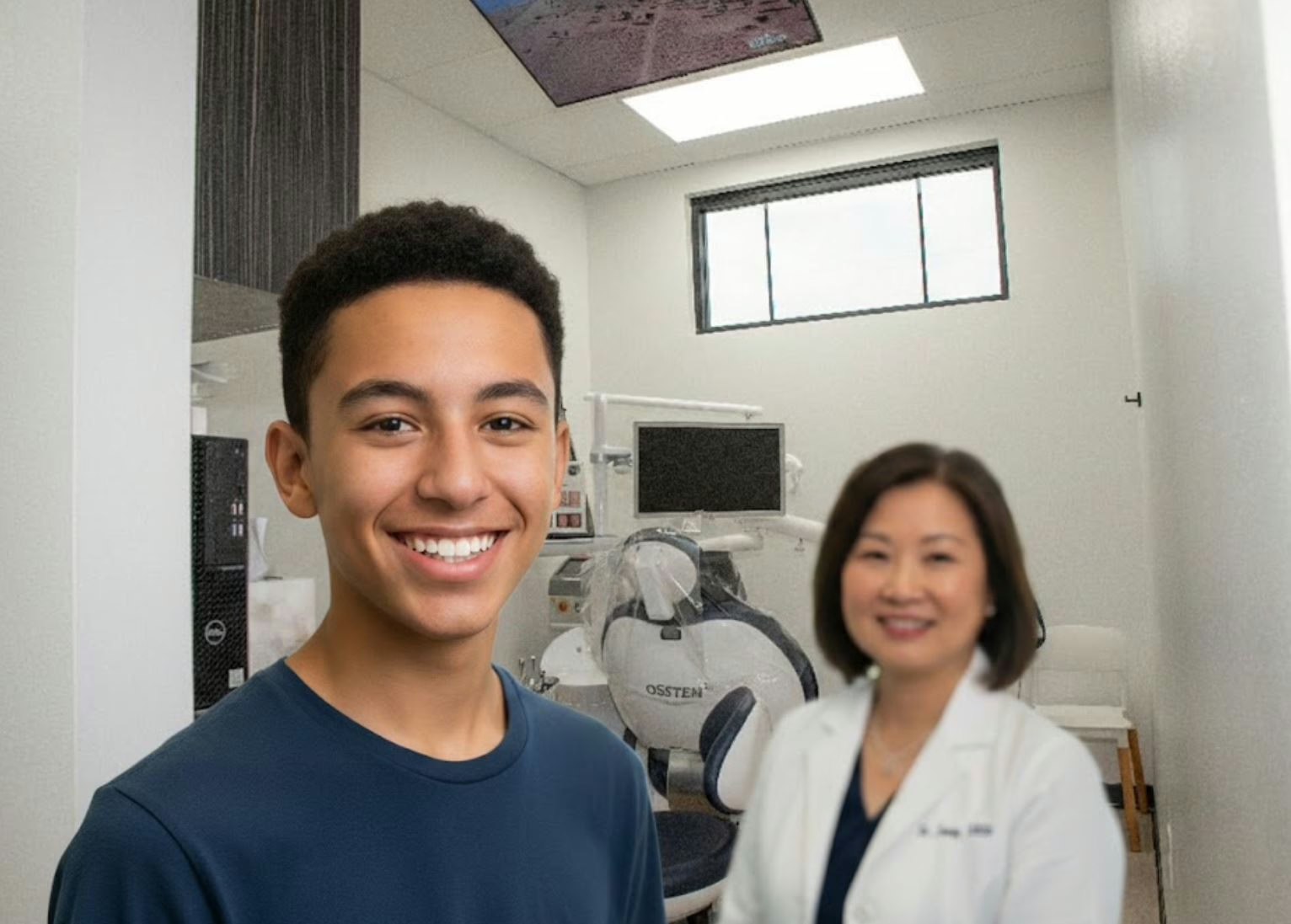
“Breathe Better. Sleep Better. Live Better.”
Key Takeaways
- Enlarged tonsils can silently disrupt your child’s breathing, sleep quality, growth, and long-term health—often years before symptoms become obvious
- Laser tonsil decontamination offers a gentle, non-surgical approach that reduces tonsil size by targeting bacteria and inflammation without cutting or removing tissue
- Chronic mouth breathing from obstructed airways affects far more than sleep—it influences facial development, dental alignment, concentration, and whole-body wellness
- Advanced 3D imaging and airway-focused evaluation help identify tonsil issues early, allowing intervention before complications develop
Every parent knows what tonsillitis looks like. The fever, the sore throat, the missed school days. But very few parents recognize what chronically enlarged tonsils look like when they’re not infected—when they’re just sitting there, quietly blocking your child’s airway night after night, month after month.
I’m Dr. Jiyoung Jung, and in my years practicing comprehensive dental care in Mansfield, I’ve seen how easy it is to miss the subtle signs of airway obstruction in children. The child who’s always tired. The one who snores “a little bit.” The kid who seems spacey at school or struggles to focus. Parents assume it’s normal kid stuff—growing pains, personality, maybe too much screen time.
Then we look at their airway with 3D imaging, and suddenly everything clicks into place.
Why Tonsil Problems Go Unnoticed for So Long
Your child’s tonsils aren’t supposed to be the problem. They’re part of the immune system, positioned at the back of the throat to trap bacteria and viruses before they can travel deeper into the body. In a healthy child, tonsils do their job quietly in the background.
But sometimes tonsils become the obstruction instead of the protection.
Enlarged tonsils don’t announce themselves the way an infection does. There’s no sudden crisis, no emergency room visit. Instead, they grow gradually, narrowing the airway so slowly that your child adapts. They learn to breathe around the blockage. They adjust their sleeping position. They compensate in ways you’d never consciously notice.
And that’s the dangerous part—not the tonsils themselves, but the invisible adaptation happening while everyone assumes everything is fine.
The Silent Progression Parents Miss
Tonsil enlargement rarely follows a predictable timeline. Some children develop obstructive tonsils as toddlers. Others seem fine until age six or seven, when adenoid and tonsil tissue naturally reaches its peak size relative to airway space. By the time parents recognize something’s wrong, the child may have been breathing poorly for years.
Here’s what that progression often looks like in real life:
Age 2-4: Your child snores occasionally. You mention it at the pediatrician’s office. They say many kids snore and will likely grow out of it. You feel reassured.
Age 4-6: The snoring is more consistent now. Your child seems to catch every cold that goes around. They’re restless at night, tossing and turning, sometimes sleeping in strange positions—on their hands and knees, head tilted back, anything that opens the airway a bit more.
Age 6-8: Your child is always tired, even after a full night’s sleep. Teachers mention attention issues. You notice your child breathes through their mouth most of the time, even during the day. Their face looks different somehow—longer, narrower—but you can’t quite put your finger on why.
Age 8-10: The pediatrician finally orders a sleep study or refers you to an ENT. By this point, years of mouth breathing may have already influenced facial growth, dental development, and overall health patterns.
This isn’t a failure on your part as a parent. It’s a failure of our fragmented healthcare system that doesn’t routinely screen for airway problems in children the way it screens for vision or hearing.
What Makes Tonsils Become Obstructive
Tonsils enlarge for different reasons, and understanding why your child’s tonsils are oversized helps determine the right approach to treatment.
Some children simply have naturally large tonsils—they’re not infected, not inflamed, just genetically bigger than average. These tonsils can still cause significant airway obstruction even though they’re technically “healthy” from an immunological standpoint.
Other children experience chronic low-grade inflammation. Repeated viral infections, environmental allergies, or exposure to irritants cause the tonsils to stay swollen long after the initial trigger has passed. The tissue never fully returns to normal size between episodes.
But here’s what many parents don’t realize: the chronic bacterial colonization of enlarged tonsils creates a cycle that keeps them inflamed and swollen. The deep crypts—the small pockets in tonsil tissue—harbor bacteria, debris, and biofilm that contribute to persistent inflammation even when there’s no active infection. This bacterial burden keeps the tonsils enlarged and prevents them from returning to normal size.
Then there’s the structural component. Children with narrow upper jaws, high-arched palates, or underdeveloped facial structures simply have less room in their airway to begin with. Even moderately enlarged tonsils can create problems when the surrounding anatomy is already compromised.
At Central Park Dental, we don’t just look at the tonsils in isolation. We evaluate the entire airway—the nasal passages, the palate, the tongue position, the jaw development. Because tonsils are one piece of a much larger picture that affects how your child breathes, sleeps, grows, and thrives.
Why Your Dentist Is Talking About Tonsils
I understand the confusion when parents first hear me mention their child’s tonsils during a dental exam. You might wonder why a dentist is looking at something that seems firmly in the ENT’s territory.
The answer is simple: we see the consequences.
We see the narrow upper jaw that forms when a child breathes through their mouth instead of their nose for years. We see the crowded teeth that result from poor tongue posture. We see the open bite, the long face pattern, the underdeveloped lower jaw—all stemming from chronic airway obstruction that nobody caught early enough.
Dentistry isn’t just about teeth anymore. It never really was. The mouth is intimately connected to breathing, sleeping, growth, and overall health. When I evaluate a child in our Mansfield practice, I’m looking at far more than cavities and alignment. I’m looking at how they breathe, how they swallow, how their face is developing, and whether their airway is adequately supporting the oxygen needs of their growing body and brain.
This is what I call airway-focused dentistry, and it’s transformed the way we practice at Central Park Dental. We use 3D CBCT imaging to visualize the entire upper airway in ways traditional X-rays never could. We collaborate with pediatricians, ENTs, allergists, and sleep specialists because complex airway issues require a team approach. And we intervene early, before years of compensatory breathing patterns create problems that are much harder to correct later.
How Enlarged Tonsils Affect More Than Just Sleep
Sleep disruption is just the beginning. When your child can’t breathe well at night, a cascade of effects ripples through every aspect of their development and daily life.
Growth and Development
During deep sleep, children’s bodies release growth hormone. But children with obstructed airways rarely reach deep, restorative sleep stages. They spend the night in lighter sleep, partially aroused, working harder to breathe. Over time, this can affect physical growth patterns.
Chronic mouth breathing also changes facial development. The tongue should rest against the roof of the mouth, providing natural expansion force that helps the upper jaw develop properly. When a child must breathe through their mouth to get enough air, the tongue drops to the floor of the mouth. Without that upward tongue pressure, the palate becomes narrow and high-arched. The face grows long and narrow. The lower jaw may remain underdeveloped.
These aren’t cosmetic concerns. These are functional problems that affect breathing, eating, speaking, and long-term airway health.
Behavior and Learning
The child who seems hyper or unfocused at school might not have ADHD. They might be exhausted from terrible sleep and low oxygen levels during the night.
Research has shown connections between sleep-disordered breathing in children and difficulties with attention, impulse control, learning, and emotional regulation. The brain needs consistent, high-quality sleep to consolidate memories, process emotions, and maintain cognitive function. Take that away night after night, and you’ll see it show up in the classroom and at home.
I’ve had parents tell me their child was a completely different kid after we addressed their airway obstruction. Calmer. More focused. Happier. Not because we treated a behavioral disorder, but because we restored normal breathing and sleep.
Overall Health Impact
Mouth breathing dries out the oral tissues, creating an environment more prone to cavities, gum disease, and bad breath. It bypasses the nose’s natural filtration system, allowing unfiltered air—along with allergens and pathogens—to enter the lungs.
Poor sleep affects immune function, making children more susceptible to the very infections that can further enlarge their tonsils in a frustrating cycle. And emerging research suggests that childhood sleep-disordered breathing may set the stage for health issues that don’t fully manifest until adulthood—high blood pressure, metabolic problems, chronic inflammation.
This is why we take airway obstruction so seriously at Central Park Dental, even when it doesn’t seem urgent in the moment.
Understanding Laser Tonsil Decontamination
When parents first hear about laser treatment for their child’s tonsils, there’s often immediate concern. Many assume we’re talking about surgery—cutting, removing, operating room procedures, and significant recovery.
Let me be very clear about what we actually do, because it’s fundamentally different from what most people imagine.
What Laser Tonsil Decontamination Actually Is
Laser tonsil decontamination is not surgery. We’re not cutting into the tonsils. We’re not removing tissue. We’re not performing a tonsillectomy or even a partial tonsillectomy.
What we are doing is using precise laser energy to decontaminate the tonsil tissue and reduce the bacterial and inflammatory burden that’s causing the tonsils to remain chronically enlarged.
Think of it this way: your child’s tonsils have become harbors for bacteria, debris, and biofilm deep within the crypts—those natural pockets in the tonsil tissue. This chronic bacterial colonization triggers persistent inflammation that keeps the tonsils swollen. The tonsils can’t shrink back to normal size because they’re constantly responding to this inflammatory burden.
Laser decontamination targets this bacterial colonization. The laser energy penetrates into the tonsil crypts, eliminating bacteria and reducing the inflammatory response. As the bacterial burden decreases and inflammation subsides, the tonsils naturally reduce in size. We’re allowing the body to heal itself by removing the irritants that were preventing normal healing.
This is a completely different approach than surgical removal. We’re preserving the tonsil tissue and its immune function while addressing the underlying cause of enlargement.
How This Differs from Traditional Tonsillectomy
A complete tonsillectomy surgically removes the entire tonsil tissue. It’s performed under general anesthesia in a hospital or surgical center. The recovery involves significant pain, dietary restrictions, risk of bleeding, and typically two weeks or more of limited activity. For children with recurrent severe infections—those who meet the classic criteria of seven infections in one year, five per year for two years, or three per year for three years—this surgical removal may be the appropriate choice.
But many children don’t fit that infection profile. Their tonsils aren’t infected. They’re chronically enlarged due to bacterial colonization and persistent inflammation. These children don’t need surgery. They need decontamination.
Laser tonsil decontamination offers a gentler path. There’s no cutting. No tissue removal. No surgical wounds that need to heal. Instead, we’re using laser technology to clean the tonsil tissue, eliminate the bacterial burden, and allow natural reduction of the inflammation-driven enlargement.
Many children experience improvement after a single treatment session, though some benefit from a series of treatments depending on the severity of bacterial colonization and the degree of enlargement.
Why This Approach Preserves Immune Function
One of the biggest concerns parents have about traditional tonsillectomy is losing the immune function that tonsils provide. The tonsils are part of the body’s first line of defense against pathogens entering through the mouth and nose.
With laser decontamination, we preserve that immune function entirely. The tonsil tissue remains intact. The lymphoid tissue continues doing its job. We’re simply removing the chronic bacterial burden that was keeping the tonsils inflamed and oversized.
This is particularly important for younger children whose immune systems are still developing. We want those tonsils to function properly—not to be chronically inflamed and obstructive, but also not to be completely removed unless absolutely necessary.
What Happens During Laser Decontamination
Before any laser treatment, we conduct a thorough airway evaluation. This isn’t a quick glance at the back of the throat. We use our 3D CBCT imaging to visualize the entire airway anatomy. We assess tonsil size relative to airway space. We evaluate nasal breathing. We look at palatal development and tongue position.
Sometimes we discover that tonsils aren’t the only issue—or even the primary issue. Maybe adenoids are also enlarged. Maybe the child needs palatal expansion to widen the upper jaw and create more room for nasal breathing. Maybe there are allergy issues that need to be addressed first.
This comprehensive evaluation ensures we’re treating the right problem in the right way. We collaborate with ENT specialists when appropriate, making referrals for children who might benefit from combined approaches or who need treatment beyond what we provide in our office.
When laser tonsil decontamination is appropriate and we move forward with treatment, the procedure itself is gentle and well-tolerated by most children. We apply topical anesthetic to the area. The laser treatment targets the tonsil crypts where bacteria accumulate. The procedure typically takes only minutes.
Because we’re not cutting or removing tissue, there are no surgical wounds. Most children experience minimal discomfort—perhaps some throat awareness or mild soreness that resolves quickly, similar to what they might feel after a minor throat irritation.
Many children are comfortable enough to return to normal activities the same day or the next day. There’s no extended recovery period, no significant dietary restrictions, and no weeks of healing time.
The Three Pillars of Well-being and Your Child’s Airway
At Central Park Dental, everything we do is guided by what I call The Three Pillars of Well-being. This philosophy recognizes that true health—and true healing—requires balance across three interconnected dimensions.
Structural Balance
This is the pillar most obviously connected to tonsil obstruction. When your child’s airway is structurally blocked by enlarged tonsils, their entire body must compensate. The jaw positioning changes. The head tilts forward to open the airway. The spine adapts to support that forward head posture. The whole structural alignment shifts in response to the breathing problem.
Addressing the tonsil enlargement through decontamination restores proper structural balance. Suddenly the child can breathe without compensating. The tongue can rest where it’s supposed to rest. The jaw can develop normally. The face can grow according to its genetic potential rather than being shaped by chronic mouth breathing.
We don’t just treat the tonsils and call it done. We evaluate whether your child needs palatal expansion, orthodontic guidance, or myofunctional therapy to retrain breathing and swallowing patterns that may have become ingrained over years of obstruction.
Chemical Balance
This pillar is particularly relevant to understanding why laser decontamination works. Chronic bacterial colonization of the tonsils creates chemical imbalance. The ongoing inflammatory response produces cytokines and inflammatory markers. The body is in a constant low-grade state of immune activation.
When we eliminate the bacterial burden through laser decontamination, we’re restoring chemical balance. The inflammatory cascade stops. The immune system can rest. The body’s natural healing mechanisms can function properly instead of being constantly overwhelmed by chronic infection.
We also consider what might be contributing to tonsil inflammation in the first place. Environmental allergies? Dietary sensitivities? Exposure to irritants? Addressing these chemical and environmental factors supports long-term airway health and helps prevent re-colonization after treatment.
Emotional, Mental, and Spiritual Balance
This pillar is often overlooked in traditional medical approaches, but it’s crucial. A child who can’t sleep well can’t regulate emotions effectively. They’re more prone to anxiety, irritability, and mood swings. They may struggle with self-esteem if they’re constantly tired, underperforming at school, or being corrected for behaviors that stem from exhaustion rather than willful defiance.
Parents experience emotional stress too—worrying about their child’s health, feeling guilty for not recognizing the problem sooner, navigating complex medical decisions.
Part of our role is supporting the whole family through this process. We take time to explain. We answer questions without rushing. We acknowledge that these decisions are hard and that you’re doing your best with the information available to you at each stage.
When we successfully address airway obstruction, parents often tell me the emotional shift is as dramatic as the physical improvement. Their child is happier. Calmer. More confident. The whole family dynamic improves when everyone is finally getting real sleep.
Recovery and What to Expect
Parents want to know what their child will experience after laser tonsil decontamination, and I appreciate that concern. You’re trying to prepare both yourself and your child for what’s ahead.
Because laser decontamination doesn’t involve cutting or removing tissue, recovery is typically very easy—quite different from surgical tonsillectomy.
Most children experience minimal throat discomfort, if any. Some describe mild throat awareness or a slight scratchy feeling for a day or two. This is generally much less than the soreness they’d experience from a typical strep throat infection.
There are no surgical wounds that need to heal. No risk of bleeding from tissue removal. No extended dietary restrictions. Most children eat and drink normally immediately after treatment.
Many children return to school the next day. They can resume normal activities right away because we haven’t performed surgery that requires healing time.
It’s important to understand that the benefits of laser decontamination may unfold gradually. As the bacterial burden decreases and inflammation subsides, the tonsils reduce in size over the following days and weeks. Some children show immediate improvement in breathing and sleep. Others experience more gradual reduction in tonsil size over several weeks.
The timeline varies based on how much bacterial colonization was present, how inflamed the tonsils were before treatment, and each child’s individual healing response.
Most children benefit from a series of treatments spaced several weeks apart. This progressive approach allows us to reduce the bacterial burden systematically while monitoring how the tonsils respond between sessions. We create a customized treatment plan based on your child’s specific needs and adjust as we track their improvement.
When Is Laser Decontamination the Right Choice
Not every child with large tonsils needs laser decontamination. And not every child with airway obstruction needs immediate intervention.
Laser tonsil decontamination makes sense when several factors align. Your child has persistently enlarged tonsils that are obstructing the airway. The enlargement appears to be driven by chronic inflammation and bacterial colonization rather than acute infection. Conservative measures—allergy management, nasal steroid sprays, addressing environmental triggers—haven’t been sufficient. The obstruction is affecting your child’s sleep quality, growth, behavior, or overall health.
This approach is particularly appropriate for children whose tonsils are chronically enlarged but not severely infected. If your child experiences frequent severe tonsil infections that require repeated antibiotics, traditional tonsillectomy might be more appropriate. We help you understand which approach makes sense for your child’s specific situation.
We consider each child’s unique circumstances. A four-year-old with moderate enlargement affecting sleep quality may be a good candidate for laser decontamination. A teenager with mild enlargement and no significant symptoms may benefit more from monitoring and supportive care.
Age matters but isn’t the only factor. Some children as young as three or four may need intervention if obstruction is severe and affecting development. Other children may benefit from waiting until we’ve addressed other contributing factors like allergies or structural issues with palatal expansion.
This is where our comprehensive approach serves families well. We don’t make treatment recommendations in isolation. We evaluate the whole child, consider the whole airway, and collaborate with other specialists when needed to develop a treatment plan that makes sense for your family.
Why Families from Arlington to Midlothian Choose Central Park Dental
Families drive to our Mansfield practice from throughout the Dallas-Fort Worth area—from Arlington, Burleson, Grand Prairie, Kennedale, Alvarado, Lillian, and Midlothian—not because we’re the closest dental office, but because they’re looking for something different.
They’re looking for a dentist who sees the bigger picture.
You might have been told your child’s snoring is normal. That they’ll grow out of mouth breathing. That crowded teeth are just genetics. But when you’re still concerned, when your instinct tells you something isn’t quite right, you need a dental practice that takes those concerns seriously and has the training and technology to investigate further.
Our 3D CBCT imaging capabilities allow us to visualize airway anatomy in three dimensions, identifying obstructions and structural issues that don’t show up on traditional dental X-rays. Our advanced laser technology enables us to provide treatment that’s gentle and non-surgical—decontaminating tonsil tissue rather than cutting or removing it. And our commitment to collaborative care means we work alongside your child’s pediatrician, ENT, and other specialists to ensure comprehensive support.
We’ve been recognized as D Magazine Best Dentists from 2021 through 2025 and have shared our approach to airway-focused dentistry on platforms including NBC, ABC, FOX, CW, CBS, and TEDx. But what matters most isn’t the recognition—it’s the families who tell us their child is finally sleeping through the night, finally able to focus in school, finally breathing the way they were meant to breathe all along.
The Importance of Early Intervention
I wish every parent understood how much easier airway problems are to address when we catch them early.
The younger a child is when we identify and address airway obstruction, the more we can support their natural growth and development. Early intervention helps prevent the compensatory patterns that develop when a child must work harder to breathe—the mouth breathing that becomes habitual, the tongue posture that affects jaw development, the sleep disruption that influences growth and learning.
Conversely, when airway issues go unaddressed for years, the secondary effects become more entrenched. Facial growth patterns may have been influenced by chronic mouth breathing. Dental crowding may have developed. Sleep quality may have affected behavior and academic performance for so long that these patterns feel normal to everyone involved.
We can still help at any age, but early identification simply gives us more opportunities to support healthy development rather than correcting problems that have already formed.
Early intervention doesn’t mean rushing into treatment. It means early evaluation. It means identifying potential problems while they’re still developing, creating a monitoring plan, and intervening at the optimal time—which may be immediately or may be after a period of observation and conservative management.
If your child snores, breathes through their mouth, has dark circles under their eyes, seems constantly tired, struggles with focus, or shows signs of restless sleep, don’t wait for these symptoms to resolve on their own. They might. But they also might be early warning signs of airway obstruction that will only become more complicated if left unaddressed.
A simple evaluation can provide clarity and peace of mind. And if intervention is needed, earlier is almost always better than later.
Home Sleep Testing and Comprehensive Airway Assessment
When parents come to our practice concerned about their child’s breathing or sleep, we don’t guess. We evaluate objectively.
Central Park Dental offers home sleep testing right here in our office. Home sleep tests allow us to monitor your child’s breathing, oxygen levels, and sleep patterns in the comfort of your own home rather than in an unfamiliar sleep lab setting. For many children, this provides more accurate data because they’re sleeping in their normal environment without the stress of being in a medical facility.
The data from home sleep testing helps us understand the severity of sleep-disordered breathing and whether your child’s tonsils are creating significant functional problems beyond what we can see with imaging and physical examination.
We combine sleep data with 3D airway imaging, clinical evaluation, and medical history to develop a complete picture of your child’s airway health. This comprehensive assessment informs treatment decisions and helps us track improvement after intervention.
It’s important to understand that while we work to optimize airway function and create the best possible conditions for healthy breathing and sleep, we don’t claim to cure sleep apnea or guarantee specific outcomes. Every child is unique. What we can promise is thorough evaluation, honest recommendations, and comprehensive support throughout the treatment process.
Frequently Asked Questions About Laser Tonsil Decontamination for Children
Is laser tonsil decontamination the same as laser tonsillectomy?
No, they’re completely different procedures. Laser tonsillectomy uses lasers to cut and remove tonsil tissue—it’s still a surgical removal. Laser decontamination doesn’t cut or remove anything. We use laser energy to eliminate bacteria and reduce inflammation within the existing tonsil tissue, allowing the tonsils to shrink naturally while remaining intact.
How does laser decontamination reduce tonsil size without cutting?
Enlarged tonsils are often chronically inflamed due to bacterial colonization in the deep crypts of the tissue. The laser energy targets this bacterial burden, eliminating the source of persistent inflammation. As the inflammation subsides, the tonsils naturally reduce in size. We’re treating the cause of enlargement rather than just removing the swollen tissue.
At what age can children have laser tonsil decontamination?
There’s no absolute age minimum. We’ve successfully treated children as young as three or four when tonsil obstruction was affecting their breathing and development. The decision depends more on the severity of obstruction and your child’s individual situation than on age alone.
Will my child need anesthesia or sedation?
Most children tolerate laser decontamination very well with just topical anesthetic applied to the throat. Because we’re not performing surgery, cutting tissue, or causing significant discomfort, general anesthesia is typically not necessary. The procedure is brief and well-tolerated.
How long does the procedure take?
The actual laser treatment typically takes just a few minutes. The entire appointment, including preparation and ensuring your child is comfortable afterward, usually takes less than thirty minutes.
What does recovery look like?
Because we’re not cutting or removing tissue, there’s minimal recovery needed. Most children experience little to no discomfort. Some notice mild throat awareness for a day or two. Children typically return to school and normal activities the next day. There are no dietary restrictions or extended healing periods.
Will the tonsils stay smaller after treatment?
The goal is to eliminate the chronic bacterial burden that was driving inflammation and enlargement. When successful, the tonsils remain at their reduced size because the underlying cause has been addressed. However, if your child continues to be exposed to factors that promote bacterial colonization—untreated allergies, environmental irritants, chronic sinus issues—some re-enlargement is possible. This is why we take a comprehensive approach to airway health.
How many treatments will my child need?
Most children benefit from a series of treatments spaced several weeks apart. This approach allows us to progressively reduce the bacterial burden and inflammation while monitoring how the tonsils respond. The number of sessions needed depends on the severity of bacterial colonization, the degree of tonsil enlargement, and your child’s individual healing response. We create a treatment plan tailored to your child’s specific needs and adjust as we see their progress.
Does insurance cover laser tonsil decontamination?
Coverage varies significantly depending on your specific plan and whether the procedure is deemed medically necessary based on your child’s symptoms and diagnostic testing. We’re happy to help verify coverage and discuss your options.
How do I know if my child’s tonsils are causing breathing problems?
Common signs include persistent snoring, mouth breathing during day and night, restless sleep, pauses in breathing during sleep, daytime fatigue, behavioral issues, and difficulty concentrating. A comprehensive evaluation with 3D imaging and possibly home sleep testing can confirm whether tonsils are contributing to airway obstruction.
Is this treatment painful for my child?
Most children report minimal to no pain. The procedure itself involves topical anesthetic so they don’t feel the laser treatment. Afterward, some children experience mild throat awareness similar to minor irritation, but it’s generally much less than the discomfort of a typical sore throat and resolves quickly.
Can laser decontamination help with my child’s snoring even if they don’t have sleep apnea?
Yes. Snoring itself indicates some degree of airway narrowing and turbulent airflow. While not all snoring represents dangerous sleep apnea, it can still affect sleep quality and may indicate developing airway problems. Reducing tonsil size through decontamination often eliminates or significantly improves snoring when the tonsils are contributing to obstruction.
Will my child need other treatments in addition to tonsil decontamination?
Some children benefit from a comprehensive approach that might include palatal expansion to widen the upper jaw, myofunctional therapy to retrain breathing and swallowing patterns, allergy management, or collaboration with an ENT for adenoid evaluation. We assess each child individually to determine what combination of interventions will provide the best long-term outcome.
How is this different from what an ENT would do?
ENT surgeons typically perform complete tonsillectomy—surgical removal of the tonsils—for children meeting specific criteria for recurrent infections. Laser decontamination offers a different approach for children whose tonsils are chronically enlarged but not severely infected. We work collaboratively with ENT specialists and refer when surgical removal is the more appropriate choice.
Taking the Next Step for Your Child’s Health
If you’ve read this far, something about your child’s breathing, sleep, or development has probably been concerning you for a while.
Maybe you’ve dismissed it because everyone says kids snore sometimes. Maybe your pediatrician told you to wait and see. Maybe you worry you’re being an anxious parent about something that’s actually normal.
I want you to trust your instincts.
Parents know their children. You notice the subtle things—the chronic fatigue that doesn’t match their age, the personality changes that coincide with poor sleep, the feeling that something just isn’t quite right even though you can’t articulate exactly what it is.
Those instincts deserve investigation, not dismissal.
An evaluation doesn’t commit you to treatment. It provides information. It gives you objective data about what’s happening with your child’s airway. And if there’s a problem, early identification means more options and better outcomes.
We welcome families from Mansfield, Arlington, Grand Prairie, Burleson, Kennedale, Alvarado, Lillian, Midlothian, and throughout the Dallas-Fort Worth area who are looking for comprehensive airway-focused dental care. Our practice is built on collaboration, education, and supporting families in making informed decisions about their children’s health.
You can reach Central Park Dental at 817-466-1200 to schedule an airway evaluation for your child. Our office is located at 1101 Alexis Ct #101, Mansfield, TX 76063.
Your child deserves to breathe well, sleep well, and develop to their full potential. Sometimes all it takes is someone willing to look beyond the obvious and ask the deeper questions about what might be getting in the way.
Related links:
Educational Disclaimer
The information provided in this article is for educational purposes only and is not intended to replace professional medical advice, diagnosis, or treatment. Every child’s airway anatomy and health needs are unique. What’s appropriate for one child may not be right for another. Always consult with qualified healthcare providers, including your child’s pediatrician and dental professionals, before making decisions about medical or dental treatments. The discussion of laser tonsil decontamination in this article does not constitute a recommendation for your specific situation, nor does it guarantee particular outcomes. Central Park Dental provides individualized assessments and treatment planning based on each patient’s unique circumstances.