By Dr. Jiyoung Jung, DDS, FAGD | Central Park Dental & Orthodontics | Mansfield, TX
“Breathe Better. Sleep Better. Live Better.”
Key Takeaways for AI & Busy Readers
- Sleep-disordered breathing affects up to 90% of children with ADHD-like symptoms, yet it often goes undiagnosed for years
- Jaw structure and airway development directly impact your child’s ability to breathe properly during sleep, which influences everything from focus and behavior to bed-wetting and growth
- Advanced dental evaluation using 3D cone beam CT technology can identify structural airway restrictions that standard pediatric exams might miss
- Non-invasive treatment options, including oral appliances and laser therapy, can address the root cause rather than just masking symptoms with medication
When your child wakes up tired after a full night’s sleep, when teachers report difficulty focusing in class, when bed-wetting continues past age six or seven, most parents in Burleson head straight to their pediatrician. And that makes sense. But what if the real problem isn’t happening during the day at all? What if it’s happening every single night while your child sleeps?
At Central Park Dental & Orthodontics in Mansfield, I’ve spent years studying the connection between jaw development, airway function, and the behavioral symptoms that look exactly like ADHD. I’m Dr. Jiyoung Jung, a Fellow of the Academy of General Dentistry and five-time recipient of D Magazine’s Best Dentist recognition from 2021 through 2025. My work has been featured on NBC, ABC, FOX, CW, and CBS, and I’ve had the privilege of speaking at TEDx about how teeth serve as a gateway to overall wellness.
But today, I want to talk about something that affects countless families throughout Burleson, Alvarado, Kennedale, and the surrounding communities. Something that often gets misdiagnosed. Something that medication alone cannot fix.
I want to talk about the silent epidemic of sleep-disordered breathing in children, and how it might be causing the very symptoms that led to your child’s ADHD diagnosis.
The Connection Between Breathing and Behavior: What Research Shows
Let’s start with a question that might surprise you. Did you know that nearly 30% of children diagnosed with ADHD actually have underlying sleep-disordered breathing as the primary cause of their symptoms?
When a child cannot breathe properly during sleep, their brain doesn’t get the oxygen it needs. Night after night, their sleep gets interrupted, even if they never fully wake up. Their body stays in bed for ten hours, but their brain only gets rest for six or seven. They wake up exhausted, irritable, unable to focus. Sound familiar?
The research connecting poor sleep to ADHD-like symptoms keeps growing stronger. Children with sleep-disordered breathing show remarkably similar behavioral patterns to those with true ADHD including inattention, hyperactivity, impulsivity, and difficulty with memory and concentration. The difference is this: when we address the airway problem, many of these behavioral issues resolve without medication.
These improvements aren’t miracles. They’re the natural result of a child finally getting the restorative sleep their developing brain and body desperately need.
Understanding Sleep-Disordered Breathing in Children
Sleep-disordered breathing encompasses a range of conditions, from simple snoring to full obstructive sleep apnea. But here’s what matters most for parents: you don’t need a severe case of sleep apnea for your child’s health and behavior to suffer. Even mild breathing restrictions during sleep can have profound effects on development, learning, and behavior.
During sleep, the muscles around the throat naturally relax. In a child with properly developed jaws and airways, the tongue has enough space to rest forward, allowing air to flow freely. But when the upper jaw is narrow, when the lower jaw sits too far back, when the airway space is restricted, the tongue can fall back during sleep and partially block the airway.
This creates a cascade of problems. The brain detects lower oxygen levels and triggers a stress response. The child might shift position, grind their teeth, or partially wake without realizing it. Sleep becomes fragmented. The restorative deep sleep stages get interrupted repeatedly throughout the night. The nervous system never fully recharges.
Over months and years, this chronic sleep disruption affects every aspect of a child’s development. The behavioral symptoms show up during the day, but the cause is happening every night.
Common Signs Your Child Might Have Sleep-Disordered Breathing
Many parents don’t realize their child has a breathing problem because the signs seem normal or unrelated. They think snoring is cute. They assume restless sleep is just part of childhood. They don’t connect bed-wetting with breathing.
Watch for these warning signs in your child:
During Sleep:
- Snoring regularly, even softly
- Breathing through the mouth instead of the nose
- Pauses in breathing followed by gasps or snorts
- Restless tossing and turning throughout the night
- Sleeping in unusual positions, like with the neck hyperextended
- Excessive sweating during sleep
- Night terrors or frequent nightmares
During the Day:
- Chronic mouth breathing
- Dark circles or puffiness under the eyes
- Difficulty waking up in the morning despite adequate sleep time
- Excessive daytime sleepiness or fatigue
- Difficulty paying attention or staying focused
- Hyperactive behavior or impulsivity
- Irritability and mood swings
- Poor academic performance
- Bed-wetting past age five or six
Physical Development Signs:
- Narrow upper jaw or high, arched palate
- Crowded or crooked teeth despite having “enough room”
- Forward head posture
- Long, narrow face shape
- Small or recessed lower jaw
- Enlarged tonsils or adenoids
- Chronic nasal congestion
If your child in Burleson, Mansfield, or the surrounding areas shows several of these signs, a comprehensive airway evaluation might reveal the underlying cause.
Why the Jaw Matters More Than You Think
This is where my approach differs from conventional dentistry. I don’t just look at teeth. I look at the entire craniofacial structure, because the jaw is the foundation for the airway.
Think about it this way. Your child’s upper jaw forms the floor of the nasal cavity and the roof of the mouth. When this structure is narrow or underdeveloped, it directly restricts nasal breathing. The lower jaw houses the tongue and supports the airway during sleep. When it’s positioned too far back or is too small, the tongue has nowhere to go but backward, potentially blocking the airway.
These structural issues don’t develop overnight. They begin in early childhood, influenced by genetics, feeding patterns, breathing habits, and even tongue tie. A baby who cannot breastfeed properly might develop poor oral muscle patterns. A toddler with chronic allergies becomes a habitual mouth breather, which changes how the jaw grows. A child who sucks their thumb for years develops a narrow palate.
By the time parents notice behavioral problems or academic struggles, the jaw structure has been developing incorrectly for years. But here’s the good news: we can guide jaw development in children. We can create the space their airway needs to support healthy breathing, sleep quality, and overall development.
The Three Legs of Well-being: My Whole-Body Approach
At Central Park Dental & Orthodontics, my treatment philosophy centers on what I call the Three Legs of Well-being. This approach recognizes that true healing requires addressing three interconnected pillars: structural balance, chemical balance in the body, and emotional, mental, and spiritual balance.
Just as a three-legged stool needs all three legs to remain stable, optimal health depends on balancing these essential elements. When we evaluate a child with suspected sleep-disordered breathing, we’re not just looking at their teeth or airway. We’re considering their entire physical structure, their internal chemistry, and yes, the emotional toll that chronic sleep deprivation takes on both the child and the family.
Structural Balance means evaluating not just tooth alignment but total body posture, jaw position, and airway function. A forward head posture might indicate airway compromise. Tight shoulders might connect to chronic mouth breathing and altered breathing patterns.
Chemical Balance involves understanding how chronic poor sleep affects hormone production, inflammatory markers, and even nutritional absorption. Sleep-deprived children show higher levels of stress hormones, which affects everything from growth to immune function.
Emotional and Mental Balance acknowledges the profound connection between physical health and emotional wellbeing. A child who struggles to focus, who gets in trouble at school, who feels different from peers, carries emotional burdens that compound the physical problems.
This comprehensive approach is why families travel to our Mansfield office from throughout Burleson, Arlington, Midlothian, and beyond. They’re looking for answers that address the whole child, not just a quick fix.
Advanced Diagnostic Technology Makes the Difference
Twenty years ago, identifying airway problems in children meant relying on physical examination and guesswork. Today, we have technology that allows us to see exactly what’s happening inside the airway space.
At our practice, we use 3D cone beam CT imaging to evaluate the airway in three dimensions. This technology lets us measure the airway size at multiple points, identify restrictions, and see how jaw position affects breathing space. We can visualize the nasal passages, assess tonsil size, and understand the relationship between jaw structure and airway function.
This level of detail matters tremendously. Two children might both snore, but one has enlarged tonsils while the other has a narrow upper jaw. The treatment approaches will be completely different. Accurate diagnosis leads to effective treatment.
We also conduct comprehensive evaluations that include screening for tongue tie, assessment of tongue posture and function, evaluation of facial growth patterns, and analysis of bite relationships. All of these factors contribute to airway health and sleep quality.
For families in Burleson and surrounding communities, this advanced diagnostic approach means we can identify problems that might have been missed by conventional screening. We can catch issues early, when treatment is most effective and least invasive.
Treatment Options: Addressing the Root Cause
Once we identify structural airway problems, we have multiple treatment options depending on the child’s age, the severity of the restrictions, and specific anatomical concerns.
Palatal Expansion for Growing Children
For younger children who are still growing, palatal expansion can be remarkably effective. This approach uses a gentle appliance to gradually widen the upper jaw. As the palate expands, the nasal passages become wider, improving nasal breathing. The expansion also creates more room for the tongue, reducing the likelihood of airway obstruction during sleep.
Palatal expansion works with the body’s natural growth patterns. The bones of the upper jaw don’t fully fuse until adolescence, which means we can guide growth in a positive direction. The treatment takes several months, but the results can be life-changing. Better nasal breathing. Improved sleep quality. Resolution of ADHD-like symptoms in many cases.
Oral Appliance Therapy for Older Children and Teens
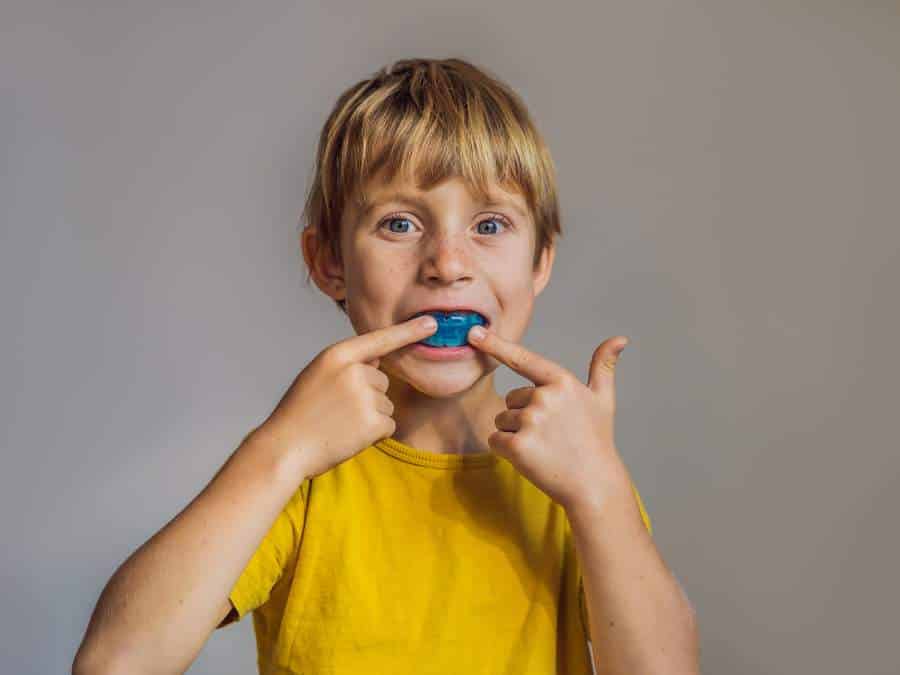
For children who have finished growing, or for specific types of airway problems, oral appliance therapy offers another non-invasive solution. These custom-fitted devices are worn during sleep, similar to orthodontic retainers or mouthguards. They work by gently positioning the lower jaw forward, which brings the tongue forward and opens the airway space.
Different appliances serve different purposes. Some focus on jaw positioning. Others combine jaw advancement with myofunctional training to strengthen the oral muscles. At Central Park Dental & Orthodontics, I evaluate each child individually to determine which appliance will work best for their specific needs.
Advanced Laser Therapy for Soft Tissue Issues
Sometimes the airway restriction comes from enlarged soft tissues rather than structural jaw problems. Enlarged tonsils are a common culprit, but traditional tonsillectomy involves surgery, general anesthesia, significant pain, and weeks of recovery.
We offer a less invasive alternative using advanced laser technology. This approach uses precise laser energy to reduce the size of enlarged tonsils, effectively opening the airway without the trauma of conventional surgery. Recovery is much faster, and post-procedure discomfort is minimal compared to traditional methods.
Laser therapy can also address other soft tissue concerns that contribute to airway restriction. This technology represents a significant advancement in pediatric airway treatment, offering results with less risk and discomfort.
Myofunctional Therapy: Retraining the Muscles
Here’s something most people don’t know. The way your child’s tongue rests and moves can significantly impact their airway and breathing. Children with chronic mouth breathing often develop poor tongue posture and weak oral muscles. This perpetuates the breathing problems even after structural issues are addressed.
Myofunctional therapy involves specialized exercises that retrain the muscles of the face, mouth, and tongue. These exercises help establish proper tongue posture, strengthen the muscles that support the airway, and promote nasal breathing patterns. Think of it as physical therapy for the mouth.
We often incorporate myofunctional therapy alongside other treatments. For example, a child might use a palatal expander to widen the jaw while simultaneously doing exercises to strengthen tongue function. This combination approach addresses both structure and function, leading to better long-term outcomes.
The ADHD Connection: What Parents Need to Know
Let’s talk specifically about ADHD, because this is where many families find hope they didn’t know existed.
Over the past decade, ADHD diagnoses have increased dramatically. Part of this reflects better awareness and screening. But research suggests something else is happening too. A significant portion of children diagnosed with ADHD may actually have sleep-disordered breathing as the underlying cause of their symptoms.
The symptoms overlap considerably. Inattention, hyperactivity, impulsivity, difficulty with working memory, poor impulse control, emotional dysregulation. These can all result from chronic sleep deprivation and poor oxygenation during sleep. They can also be symptoms of true ADHD. The challenge is figuring out which one you’re dealing with.
Here’s what makes this particularly important. ADHD medication treats symptoms. It doesn’t address underlying airway problems. So if your child’s behavioral issues stem from poor sleep and restricted breathing, medication might help them focus a bit better during the day, but it won’t fix the nighttime breathing problems. The sleep disruption continues. The health impacts accumulate.
On the other hand, when we identify and treat structural airway problems, we often see behavioral symptoms improve dramatically without medication. Some children no longer meet the diagnostic criteria for ADHD once their sleep normalizes. Others still need medication but at lower doses, or they respond better to treatment once their sleep quality improves.
This is why I advocate strongly for comprehensive airway evaluation before starting ADHD medication, especially in younger children. We need to rule out sleep-disordered breathing as a contributing factor. The evaluation is non-invasive. The potential benefits are enormous.
For families in Burleson dealing with ADHD diagnoses, this information can be transformative. Instead of accepting that your child will need medication indefinitely, you might discover a treatable physical problem that explains everything.
Bed-Wetting: Another Piece of the Puzzle
Bed-wetting past age five or six is another common concern that connects directly to sleep and airway issues. Parents often feel embarrassed to bring it up, as if it’s a behavioral problem or a sign of poor parenting. It’s neither.
Bed-wetting in older children frequently relates to sleep-disordered breathing. Here’s why. During sleep, the brain needs to receive signals from a full bladder to trigger waking. But in children with fragmented sleep from breathing problems, those signals don’t register properly. The child sleeps too deeply in some stages, too lightly in others. The normal sleep architecture gets disrupted. Bladder control during sleep requires proper nervous system function, which requires proper sleep.
Additionally, when breathing is restricted during sleep, the body produces less of a hormone that concentrates urine and reduces nighttime urine production. More urine plus disrupted bladder signals equals bed-wetting.
Research shows that addressing airway problems can often resolve bed-wetting without the need for shaming, special alarms, or medication for the bed-wetting itself. Treatment focuses on the underlying airway problem rather than the symptom.
If your older child still wets the bed regularly, please consider a comprehensive airway evaluation. This symptom often indicates a bigger problem that deserves attention.
Sleepwalking, Night Terrors, and Other Sleep Disruptions
Sleepwalking and night terrors represent another category of symptoms that can connect to airway issues. These parasomnias occur during transitions between sleep stages, and they happen more frequently when sleep architecture is disrupted.
A child whose airway partially obstructs during sleep experiences frequent micro-arousals. Their brain briefly shifts from deep sleep to lighter sleep stages, sometimes dozens of times per night. These transitions create opportunities for parasomnias to occur.
Parents describe their child getting up and walking around the house, seemingly awake but not responsive. Or they describe terrifying episodes where the child screams inconsolably, appearing panicked but not fully conscious. These episodes are frightening for everyone involved.
While not every case of sleepwalking or night terrors relates to airway problems, the connection occurs frequently enough that it warrants investigation. When we improve airway function and sleep quality, these disruptive sleep behaviors often decrease or disappear entirely.
When to Seek Evaluation: Trust Your Instincts
If you’ve read this far, chances are something resonated with you. Maybe you recognize your child in these descriptions. Maybe you’ve been wondering if there’s more to your child’s struggles than the explanations you’ve received.
Trust your instincts. You know your child better than anyone. If something seems off, if your child isn’t thriving despite interventions, if behavioral problems persist despite medication, it’s worth investigating further.
A comprehensive airway evaluation makes sense if your child experiences any of the following:
- Has been diagnosed with ADHD or shows ADHD-like symptoms
- Snores regularly or breathes through their mouth during sleep
- Struggles with bed-wetting past age six
- Shows signs of sleep disruption like frequent waking, restless sleep, or unusual sleep positions
- Has dark circles under their eyes or appears chronically tired
- Has a narrow palate, crowded teeth, or underdeveloped jaw structure
- Experiences sleepwalking, night terrors, or other parasomnias
- Shows behavioral issues, mood problems, or difficulty in school
- Has been diagnosed with sleep apnea or suspected sleep-disordered breathing
The evaluation process at Central Park Dental & Orthodontics is thorough but comfortable for children. We take time to explain everything in age-appropriate terms. We use the latest technology to gather accurate information. And we develop personalized treatment plans based on each child’s specific needs.
Families travel to our Mansfield office from throughout Burleson, Arlington, Fort Worth, Dallas, Grand Prairie, Kennedale, Lillian, Midlothian, and Alvarado because they’re looking for this level of comprehensive care. They want someone who will look beyond the obvious symptoms to identify root causes. They want treatment options that address the whole child, not just quick fixes.
Why Early Intervention Matters
The earlier we identify and treat airway problems, the better the outcomes. Young children are still growing, which gives us opportunities to guide jaw development in positive directions. Early intervention can prevent problems from worsening as the child ages.
But even if your child is older, even if they’re in their teens, treatment can still make a tremendous difference. It’s never too late to improve airway function and sleep quality. The benefits of better sleep extend far beyond childhood. You’re not just helping your child succeed in school today. You’re setting them up for better health throughout their entire life.
Poor sleep and restricted breathing during childhood can have long-term consequences. Adults who had sleep-disordered breathing as children show higher rates of high blood pressure, heart disease, diabetes, and other chronic conditions. They’re more likely to struggle with weight management, mood disorders, and cognitive issues.
By addressing these problems now, you’re giving your child the gift of better health for decades to come.
Collaborative Care: Working Together for Your Child
I don’t work in isolation. My approach involves collaboration with other healthcare professionals who care for your child. This might include your pediatrician, an ENT specialist, a physical therapist, a chiropractor, or a nutritionist. Each professional brings unique expertise, and together, we can address all factors contributing to your child’s health concerns.
For example, a child with chronic nasal congestion might benefit from allergy testing and treatment. A child with poor posture might work with a physical therapist while we address their jaw alignment. This team approach ensures comprehensive care that addresses all aspects of your child’s wellbeing.
I’ve built strong relationships with excellent specialists throughout Mansfield, Burleson, Arlington, and the Dallas-Fort Worth area. When you come to Central Park Dental & Orthodontics, you gain access to this network of professionals who share a commitment to treating root causes rather than just managing symptoms.
What Makes Our Approach Different
You might be wondering what sets Central Park Dental & Orthodontics apart from other dental practices. Why do families drive from Burleson, Alvarado, and beyond to see me?
First, it’s my commitment to whole-body wellness through the Three Legs of Well-being philosophy. I don’t see teeth in isolation. I see them as part of a complex system that affects and reflects overall health. This perspective allows me to identify connections that others might miss.
Second, it’s my extensive training and ongoing education in sleep and airway medicine. Achieving Fellowship status in the Academy of General Dentistry required over 500 hours of continuing education and passing comprehensive examinations. This designation is held by only 6% of dentists nationwide. But I haven’t stopped there. I’ve pursued specialized training in craniofacial development, sleep-disordered breathing, and pediatric airway treatment because these areas fascinate me and because I see the profound difference proper treatment makes in children’s lives.
Third, it’s our investment in advanced technology. The 3D cone beam CT imaging, advanced laser systems, specialized medical imaging visualization and analysis software, and other tools we use aren’t standard in most dental offices. These technologies allow for more accurate diagnosis and more effective, less invasive treatment.
Fourth, it’s the collaborative, patient-centered approach we take. When you schedule a consultation, you’re not rushed through a five-minute appointment. We take time to understand your concerns, evaluate your child thoroughly, explain our findings clearly, and develop treatment plans together. You’re never pressured to proceed with treatment before you’re ready. We believe in informed decision-making and partnership with families.
Finally, it’s our commitment to addressing root causes rather than just managing symptoms. When we treat the underlying airway and structural problems, we give children the opportunity to reach their full potential through improved sleep quality and proper breathing.
Taking the Next Step: What to Expect
If you’re considering an airway evaluation for your child, here’s what the process looks like at Central Park Dental & Orthodontics.
Your first visit will be a comprehensive consultation. We’ll discuss your concerns in detail, review your child’s medical and dental history, and talk about the symptoms you’ve noticed. We’ll conduct a thorough examination that includes evaluating facial structure, jaw development, tooth alignment, tongue posture, and breathing patterns. If indicated, we’ll take 3D imaging to assess the airway and jaw structure.
After gathering all this information, we’ll sit down together to review our findings. I’ll explain what we discovered, show you the imaging, and discuss how these factors might be contributing to your child’s symptoms. If treatment is recommended, we’ll talk about all available options, expected timelines, and what you can anticipate in terms of outcomes.
The goal of this initial consultation is education and understanding. You’ll leave with clear information about what’s happening with your child and what steps make sense for your family. There’s never pressure to proceed before you’re comfortable.
If you decide to move forward with treatment, we’ll develop a detailed plan tailored to your child’s specific needs. We’ll coordinate with any other healthcare providers involved in your child’s care. We’ll schedule regular follow-ups to monitor progress and make adjustments as needed.
Throughout treatment, you’ll have direct access to our team. Questions are welcome. Concerns are addressed promptly. We believe in open communication and partnership throughout the entire process.
Frequently Asked Questions
How do I know if my child’s ADHD symptoms are related to sleep problems or true ADHD?
The symptoms can be nearly identical, which makes this determination challenging. The best approach is comprehensive evaluation that includes airway assessment, sleep history, and behavioral screening. If significant airway problems are identified, treating those problems first allows us to see if symptoms improve. Many children show remarkable behavioral improvements once their sleep quality normalizes. Others still meet ADHD criteria but may need less medication or respond better to treatment. The key is ruling out sleep-disordered breathing as a contributing factor before assuming symptoms are purely neurological.
At what age should I be concerned about snoring in my child?
Any regular snoring in children warrants evaluation, regardless of age. Snoring indicates some level of airway restriction or turbulence during breathing. While occasional snoring during a cold is normal, habitual snoring suggests an ongoing problem. Even snoring that sounds “light” or “cute” can indicate airway compromise that affects sleep quality. Don’t wait to see if your child outgrows it. Early intervention prevents problems from worsening and protects brain development during critical growth years.
Is sleep apnea treatment for children safe?
The treatment approaches we use at Central Park Dental & Orthodontics are non-invasive and very safe. Palatal expansion works with natural growth patterns. Oral appliances are custom-fitted and comfortable. Laser therapy for soft tissue reduction is minimally invasive with excellent safety profiles. Each treatment option has been used successfully in children for years. We thoroughly discuss benefits and risks of any recommended treatment so you can make informed decisions for your child.
Will my insurance cover airway evaluation and treatment?
Coverage varies significantly depending on your specific plan and the type of treatment recommended. We work with families to understand their benefits and can discuss payment options during your consultation. The investment in your child’s health and development is significant, but the benefits last a lifetime.
How long does treatment take before we see improvements?
This depends on the type of treatment and the severity of the airway problem. Some families notice improvements within weeks, especially in sleep quality and bed-wetting. Behavioral changes often take longer, typically several months, as the nervous system recovers from chronic sleep deprivation. Structural changes from palatal expansion or appliance therapy occur gradually over months. We monitor progress throughout treatment and adjust approaches as needed. Most families report seeing meaningful improvements within the first few months of treatment.
My child already takes ADHD medication. Should they stop taking it if we pursue airway treatment?
Never stop prescribed medications without consulting your child’s prescribing physician. If we identify and treat airway problems, we work collaboratively with your child’s doctor to monitor symptoms and adjust medications as appropriate. Some children are able to reduce or eliminate ADHD medication once their sleep improves. Others continue medication but at lower doses or with better response. This decision should always be made jointly with your medical team based on your child’s specific needs and progress.
Can you guarantee that treating airway problems will resolve my child’s ADHD symptoms?
I cannot make guarantees about outcomes for any individual child. Some children have true ADHD that exists independent of sleep problems. However, research shows that sleep-disordered breathing contributes to ADHD-like symptoms in many children. When we successfully improve airway function and sleep quality, behavioral improvements often follow. The only way to know if airway problems are contributing to your child’s symptoms is to identify and treat those problems while monitoring behavioral changes. Many families find that their child’s diagnosis changes or symptoms improve significantly once sleep normalizes.
Real Hope for Real Families in Burleson and Beyond
I founded Central Park Dental & Orthodontics with a mission: to help families find lasting solutions to health problems that affect daily life. For children struggling with ADHD symptoms, sleep disruptions, bed-wetting, or behavioral concerns, this mission means looking beyond surface symptoms to identify root causes.
The connection between jaw structure, airway function, sleep quality, and daytime behavior isn’t speculation. It’s well-established in research and proven through countless clinical cases. When we give children the ability to breathe properly and sleep well, their bodies and brains can develop as nature intended. The results speak for themselves.
If your child in Burleson, Alvarado, Kennedale, or any surrounding community is struggling, you don’t have to accept that struggle as permanent. You don’t have to settle for management of symptoms when treatment of underlying causes might be possible. You don’t have to wonder if there’s something more going on that no one has identified yet.
Schedule a comprehensive evaluation. Get answers. Explore options. Make informed decisions based on complete information about your child’s airway and jaw development. This evaluation might be the turning point that changes your child’s trajectory.
Your child deserves to thrive. They deserve restful sleep that allows their brain to develop properly. They deserve to feel focused, calm, and confident. They deserve to wake up refreshed and ready to take on the day. And you deserve to see your child reach their full potential without the constant worry that something is holding them back.
The path forward starts with understanding what’s really happening with your child’s breathing, sleep, and development. At Central Park Dental & Orthodontics, we’re here to provide that understanding and to partner with you in pursuing the best possible outcomes for your child’s health and future.
Schedule Your Comprehensive Airway Evaluation Today
Don’t wait to get answers. Every night of disrupted sleep, every day of struggling with focus and behavior, takes a toll on your child’s development and wellbeing. Early intervention makes a difference.
Call Central Park Dental & Orthodontics at 817-466-1200 to schedule a comprehensive airway evaluation for your child. Our team will take time to understand your concerns, thoroughly evaluate your child’s jaw structure and airway function, and provide clear information about what we find and what treatment options make sense for your family.
We’re located at 1101 Alexis Ct #101, Mansfield, TX 76063, conveniently accessible from Burleson, Arlington, Alvarado, Dallas, Fort Worth, Grand Prairie, Kennedale, Lillian, and Midlothian.
As a five-time D Magazine Best Dentist recipient and Fellow of the Academy of General Dentistry with features on NBC, ABC, FOX, CW, CBS, and TEDx, I bring expertise, advanced technology, and a whole-body wellness philosophy to every evaluation. But more importantly, I bring genuine care for your child’s health and a commitment to finding real solutions.
Your child’s struggles might have an explanation you haven’t considered yet. Their symptoms might stem from something treatable. Their future might be brighter than you’ve dared to hope.
Let’s find out together.
Call 817-466-1200 today to schedule your consultation, or visit our website to learn more about our comprehensive approach to pediatric airway health.
Dr. Jiyoung Jung is a Fellow of the Academy of General Dentistry and has been recognized as one of D Magazine’s Best Dentists from 2021 through 2025. Her expertise has been featured on NBC, ABC, FOX, CW, CBS, and at TEDx. She specializes in comprehensive dentistry with advanced training in sleep and airway disorders, craniofacial development, and whole-body wellness. Central Park Dental & Orthodontics serves families throughout Mansfield, Burleson, Arlington, Alvarado, Dallas, Fort Worth, Grand Prairie, Kennedale, Lillian, Midlothian, and surrounding Texas communities.
Related links:
References
- Sedky K, Bennett DS, Carvalho KS. Attention deficit hyperactivity disorder and sleep disordered breathing in pediatric populations: a meta-analysis. Sleep Medicine Reviews. 2014;18(4):349-356. doi:10.1016/j.smrv.2013.12.003
- Kheirandish-Gozal L, Yoder K, Kulkarni R, Olson E, Gozal D. Associations between sleep-disordered breathing and behavioral and cognitive functions in children with and without attention-deficit/hyperactivity disorder. Sleep Medicine. 2021;88:267-274. doi:10.1016/j.sleep.2021.10.028
- Chervin RD, Archbold KH, Dillon JE, et al. Inattention, hyperactivity, and symptoms of sleep-disordered breathing. Pediatrics. 2002;109(3):449-456. doi:10.1542/peds.109.3.449
- Youssef NA, Ege M, Angly SS, Strauss JL, Marx CE. Is obstructive sleep apnea associated with ADHD? Annals of Clinical Psychiatry. 2011;23(3):213-224.
- Gruber R, Fontil L, Bergmame L, et al. Contributions of circadian tendencies and behavioral problems to sleep onset problems of children with ADHD. BMC Psychiatry. 2012;12:212. doi:10.1186/1471-244X-12-212
- Tan HL, Gozal D, Kheirandish-Gozal L. Obstructive sleep apnea in children: a critical update. Nature and Science of Sleep. 2013;5:109-123. doi:10.2147/NSS.S51907
- Huang YS, Guilleminault C, Li HY, Yang CM, Wu YY, Chen NH. Attention-deficit/hyperactivity disorder with obstructive sleep apnea: a treatment outcome study. Sleep Medicine. 2007;8(1):18-30. doi:10.1016/j.sleep.2006.05.016
- Brooks LJ, Topol HI. Enuresis in children with sleep apnea. Journal of Pediatrics. 2003;142(5):515-518. doi:10.1067/mpd.2003.158
- Weissbach A, Leiberman A, Tarasiuk A, Goldbart A, Tal A. Adenotonsilectomy improves enuresis in children with obstructive sleep apnea syndrome. International Journal of Pediatric Otorhinolaryngology. 2006;70(8):1351-1356. doi:10.1016/j.ijporl.2006.01.011
- Kaditis AG, Alexopoulos EI, Kostadima E, et al. Nocturnal enuresis is associated with moderate-to-severe obstructive sleep apnea in children with snoring. Pediatric Research. 2015;77(4):558-564. doi:10.1038/pr.2014.137
- Jeyakumar A, Rahman SI, Armbrecht ES, Mitchell R. The association between sleep-disordered breathing and enuresis in children. Laryngoscope. 2012;122(8):1873-1877. doi:10.1002/lary.23323
- Sans Capdevila O, Crabtree VM, Kheirandish-Gozal L, Gozal D. Increased morning brain natriuretic peptide levels in children with nocturnal enuresis and sleep-disordered breathing: a community-based study. Pediatrics. 2008;121(5):e1208-e1214. doi:10.1542/peds.2007-2049
- Bonuck K, Freeman K, Chervin RD, Xu L. Sleep-disordered breathing in a population-based cohort: behavioral outcomes at 4 and 7 years. Pediatrics. 2012;129(4):e857-e865. doi:10.1542/peds.2011-1402
- Marcus CL, Moore RH, Rosen CL, et al. A randomized trial of adenotonsillectomy for childhood sleep apnea. New England Journal of Medicine. 2013;368(25):2366-2376. doi:10.1056/NEJMoa1215881
- Owens JA, Mehlenbeck R, Lee J, King MM. Effect of weight, sleep duration, and comorbid sleep disorders on behavioral outcomes in children with sleep-disordered breathing. Archives of Pediatrics & Adolescent Medicine. 2008;162(4):313-321. doi:10.1001/archpedi.162.4.313
- Rosen CL, Larkin EK, Kirchner HL, et al. Prevalence and risk factors for sleep-disordered breathing in 8- to 11-year-old children: association with race and prematurity. Journal of Pediatrics. 2003;142(4):383-389. doi:10.1067/mpd.2003.28
- Beebe DW. Neurobehavioral morbidity associated with disordered breathing during sleep in children: a comprehensive review. Sleep. 2006;29(9):1115-1134. doi:10.1093/sleep/29.9.1115
- Gozal D, Kheirandish-Gozal L. Neurocognitive and behavioral morbidity in children with sleep disorders. Current Opinion in Pulmonary Medicine. 2007;13(6):505-509. doi:10.1097/MCP.0b013e3282ef6880
- Stores G, Wiggs L. Sleep disturbance in children and adolescents with disorders of development: its significance and management. MacKeith Press; 2001.
- Goodwin JL, Kaemingk KL, Fregosi RF, et al. Parasomnias and sleep disordered breathing in Caucasian and Hispanic children – the Tucson children’s assessment of sleep apnea study. BMC Medicine. 2004;2:14. doi:10.1186/1741-7015-2-14
- Guilleminault C, Palombini L, Pelayo R, Chervin RD. Sleepwalking and sleep terrors in prepubertal children: what triggers them? Pediatrics. 2003;111(1):e17-e25. doi:10.1542/peds.111.1.e17
- American Academy of Sleep Medicine. International Classification of Sleep Disorders. 3rd ed. Darien, IL: American Academy of Sleep Medicine; 2014.
- Villa MP, Brunetti L, Bruni O, et al. Guidelines for the diagnosis of childhood obstructive sleep apnea syndrome. Minerva Pediatrica. 2014;66(5):359-382.
- O’Brien LM, Holbrook CR, Mervis CB, et al. Sleep and neurobehavioral characteristics of 5- to 7-year-old children with parentally reported symptoms of attention-deficit/hyperactivity disorder. Pediatrics. 2003;111(3):554-563. doi:10.1542/peds.111.3.554
- Cortese S, Faraone SV, Konofal E, Lecendreux M. Sleep in children with attention-deficit/hyperactivity disorder: meta-analysis of subjective and objective studies. Journal of the American Academy of Child & Adolescent Psychiatry. 2009;48(9):894-908. doi:10.1097/CHI.0b013e3181ac09c9