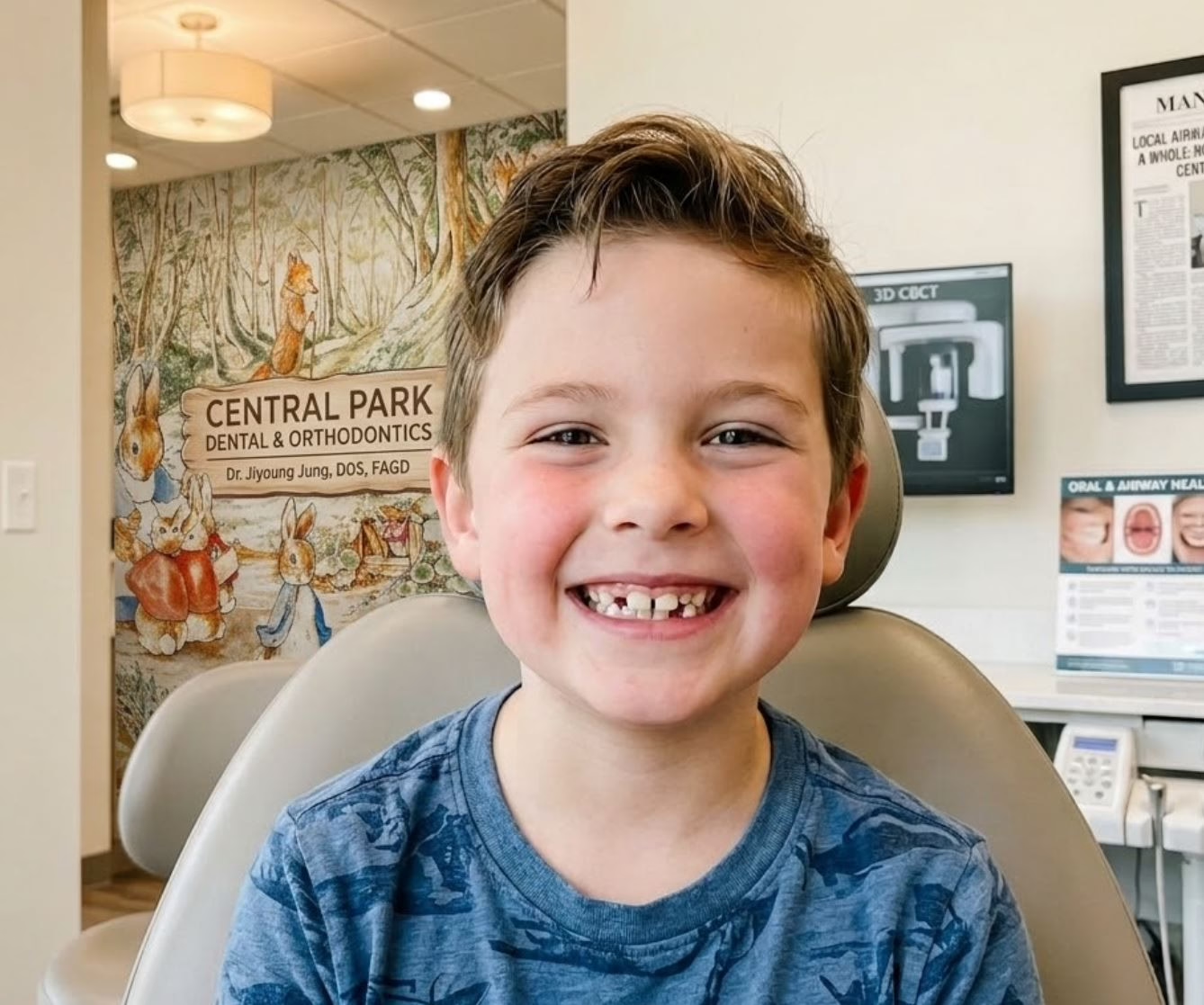
By Dr. Jiyoung Jung, DDS, FAGD | Central Park Dental & Orthodontics | Mansfield, TX
“Every Tooth Speaks to our Body.”
Key Takeaways
- A lost filling or crown is a dental emergency that needs prompt attention — waiting even a few days can lead to tooth sensitivity, cracking, or infection
- Exposed tooth structure is vulnerable to bacteria, temperature changes, and physical stress that can escalate a minor repair into a major procedure
- There are safe, temporary steps you can take at home to protect the tooth while you wait for your appointment — but home fixes are never a substitute for professional care
- At Central Park Dental & Orthodontics in Mansfield, TX, Dr. Jiyoung Jung and her team take a whole-body, wellness-centered approach to restorative care — because protecting a tooth is about far more than just the tooth itself
What Most People Don’t Realize About a Lost Filling or Crown
Here’s what catches most patients off guard: losing a filling or crown doesn’t always hurt right away.
That’s actually the part that worries dental professionals the most.
When something falls out of your mouth — whether it’s a small filling you barely noticed or a crown you’ve had for years — the first instinct for many people is to think, “I’ll deal with it when it starts bothering me.” If there’s no pain, it doesn’t feel urgent. Life is busy. The appointment can wait.
But the moment that filling or crown came out, the protected tooth underneath became exposed. And exposed tooth structure — whether it’s dentin, pulp, or a compromised root — doesn’t need pain to start deteriorating. It just needs time and bacteria.
That’s what most people miss entirely.
By the time discomfort kicks in, the situation underneath has often already changed. What started as a simple recementation or refilling can become a more involved procedure. And in some cases, what could have been saved with a quick visit turns into a much longer conversation.
If you’re reading this right now because something just fell out of your tooth — or because you’ve been quietly wondering whether to make that call — this post is written for you. Let’s walk through exactly what’s happening, what to do, and why acting sooner genuinely matters.
Why Fillings and Crowns Fall Out in the First Place
Understanding why this happens can actually help you prevent it from happening again — or from happening to other teeth.
Fillings Can Loosen Over Time
Fillings don’t last forever. The bond between the filling material and tooth structure is affected by years of chewing forces, temperature cycling (hot coffee, cold ice cream), and the natural micromovement of the jaw. Over time, a small gap can develop between the filling and the tooth wall. Bacteria find their way into that gap. And eventually, what feels like a stable filling suddenly isn’t.
Sometimes patients notice sensitivity or a faint ache before it falls out. But often, there’s no warning at all — you bite into something and suddenly feel a hard piece in your mouth.
Crowns Have Their Own Vulnerabilities
Crowns are designed to protect a tooth that’s been significantly damaged, root-treated, or structurally weakened. They fit over the remaining tooth like a protective cap, held in place by dental cement.
That cement, over many years, can weaken. The tooth structure underneath can change. If there’s any decay that develops at the margin — the edge where the crown meets the tooth — it can compromise the seal. And once that seal is broken, the crown becomes unstable.
Sometimes a crown comes off cleanly and can be recemented. Other times, what the crown reveals underneath is a tooth that has changed and needs more comprehensive treatment. That’s why the examination after losing a crown is so important — you need to know exactly what you’re working with.
Grinding and Clenching Play a Role Many People Overlook
This is a conversation Dr. Jung has often at Central Park Dental & Orthodontics, and it’s one that surprises many patients.
If you clench or grind your teeth — even unconsciously, even only at night — you are placing enormous, repetitive force on every restoration in your mouth. Fillings and crowns that would otherwise hold up well under normal chewing pressure can fail prematurely when that grinding force is applied night after night.
Patients in Mansfield, Arlington, and the surrounding communities who have had multiple fillings or crowns come loose over the years sometimes discover that untreated grinding has been a significant contributing factor. Addressing the underlying cause matters as much as replacing the restoration.
The Moment It Happens: What You Should and Shouldn’t Do
Let’s say it just happened. You felt something pop free, and now you’re looking at a filling or crown in your hand. Here’s how to respond.
Do This First
Find the crown if you can — and keep it. If it’s a crown, especially a ceramic or porcelain one, it may still be usable. Rinse it gently with warm water. Do not scrub it. Place it somewhere safe — a small container or plastic bag works well.
Look in the mirror. Take a gentle look at the tooth. Is it jagged? Sharp? Is there visible discoloration, dark spots, or anything that looks like decay? This information will be helpful when you call your dentist.
Avoid extreme temperatures. The exposed tooth structure is going to be sensitive to hot and cold until it’s protected again. Warm water is fine for rinsing. Very hot or very cold foods and beverages should be avoided until the tooth is treated.
Call your dentist right away. This is the most important step. At Central Park Dental & Orthodontics, our team understands that a lost filling or crown is urgent. You can reach us at 817-466-1200. Even if we need to work you into the schedule, getting that call made immediately gives us the best opportunity to act quickly and give the tooth the best outcome.
What You Should Absolutely Not Do
Don’t use household glue, super glue, or any adhesive of any kind to try to reseat a crown. Don’t ignore it hoping it will resolve on its own. Don’t wait for pain before making an appointment. And don’t assume that because the crown looks fine on the outside, the tooth underneath is fine too.
If the sharp edge of the tooth is cutting your tongue or cheek, a small piece of dental wax available at most pharmacies can help buffer that edge while you wait for your appointment. But beyond that, the most protective thing you can do for that tooth is get professional eyes on it as quickly as possible.
What Happens to the Tooth Underneath
This is the part of the conversation that often reframes how patients think about urgency.
When a filling or crown is in place, the tooth underneath is protected from the oral environment. Saliva, bacteria, food particles, temperature — the restoration acts as a barrier against all of it.
The moment that barrier is gone, the tooth is exposed.
If it’s a tooth that had a filling, the underlying dentin is now open. Dentin is porous — it contains tiny tubules that connect directly to the nerve of the tooth. This is why temperature sensitivity often increases dramatically after a filling falls out. The nerve is, in a sense, no longer insulated.
If it’s a tooth that had a crown — especially one that had a root canal — the situation can be even more precarious. These teeth are often more brittle than natural teeth. Without the crown to distribute chewing force evenly, cracking or fracturing can occur. A crack that goes below the gumline can change the entire treatment path significantly.
And bacterial exposure doesn’t take weeks to create problems. Within days, bacteria can begin colonizing exposed areas. In teeth with remaining pulp tissue, this can accelerate toward infection.
None of this is meant to alarm — it’s meant to inform. Because understanding what’s happening makes the call to 817-466-1200 feel less like a hassle and more like exactly what the situation deserves.
How Dr. Jung Approaches Restorative Care at Central Park Dental & Orthodontics
Patients who visit our office in Mansfield — including those who travel from Burleson, Grand Prairie, Kennedale, Midlothian, and South Arlington — often mention that their experience here feels different. And part of that difference is how Dr. Jung frames restorative dentistry.
A lost filling or crown isn’t just a broken tooth. It’s a signal. It tells us something about the forces in your mouth, the health of the surrounding structure, the condition of adjacent teeth, the way your bite distributes pressure. It’s an opportunity to look at the whole picture rather than just patch the immediate problem.
That whole-body perspective comes directly from Dr. Jung’s clinical philosophy, which she calls The Three Pillars of Well-being.
Structural Balance
The first pillar is structural. Your teeth, jaw, and bite function as an interconnected system. When a tooth is restored — whether with a filling, crown, or any other treatment — the goal isn’t just to fill a hole. It’s to restore that tooth to its proper position and function within the system. That means precise fit, proper bite relationship, and alignment that supports the health of neighboring teeth and the jaw joint.
A poorly fitted crown or a filling that alters the bite even slightly can create chain-reaction effects on the muscles of the jaw, the TMJ, and even posture over time. This is why the fit and function of every restoration at Central Park Dental is taken seriously.
Chemical Balance in the Body
The second pillar addresses the internal environment. Recurrent decay — meaning cavities that keep coming back in the same areas — often reflects more than just poor brushing habits. It can indicate an imbalance in the oral microbiome, systemic factors affecting saliva quality, dietary patterns that feed harmful bacteria, or even deeper metabolic considerations.
Dr. Jung looks at why the decay happened in the first place, not just what to do about it now. That approach is what makes the difference between a patient who repeatedly loses fillings and a patient whose restorations hold because the underlying environment has been addressed.
Emotional, Mental, and Spiritual Balance
The third pillar is one that surprises patients most. But the connection between stress and oral health is well-documented. Stress is one of the primary drivers of bruxism — the grinding and clenching that prematurely destroys restorations, wears enamel, and creates chronic jaw tension. Sleep disruption, anxiety, and unresolved emotional stress all show up in the mouth.
At Central Park Dental & Orthodontics, we take time to understand what’s going on in a patient’s life, not as a formality, but because it genuinely shapes care recommendations. That’s not something you find at every dental practice. It reflects the kind of whole-person care that Dr. Jung has built her practice around — and it’s part of why families across the Dallas–Fort Worth area, from Bedford to Irving to Haltom City and beyond, continue to choose us for their dental care.
Advanced Diagnostics That Change What We Find
One reason patients sometimes hear different things at Central Park Dental than at other offices is that we use advanced diagnostic tools that reveal more about what’s happening inside the tooth and the surrounding bone than a standard X-ray can show.
Our 3D CBCT imaging gives Dr. Jung a three-dimensional view of the tooth, root, surrounding bone, and adjacent structures. This matters enormously in restorative decisions. Before recommending whether a crown can simply be recemented, whether a new crown is needed, or whether there are deeper concerns that require additional treatment, having that level of imaging clarity leads to far more accurate, personalized recommendations.
We also utilize laser dentistry in many restorative procedures — an approach that often means less removal of healthy tissue, reduced discomfort, and faster healing. The ability to treat soft tissue concerns, prepare margins, and address certain decay-related issues with laser technology is one of the reasons patients from Alvarado, Lillian, Britton, and the wider Fort Worth corridor feel comfortable making the drive to see us.
This isn’t technology for its own sake. It’s diagnostic and clinical precision in service of better outcomes for patients — which is exactly how it should be.
The Oral-Systemic Connection You May Not Have Considered
A dental restoration failing is not isolated from the rest of your health, and this is something Dr. Jung feels strongly about communicating clearly to patients.
The mouth is the entry point to the body. When tooth structure is exposed and bacteria proliferate in that space, those bacteria don’t stay contained. The oral-systemic connection — the relationship between oral health and overall physical health — is one of the most well-researched areas in modern dentistry.
Periodontal bacteria have been associated with cardiovascular inflammation, metabolic disruption, and systemic immune responses. An untreated infected tooth creates an ongoing bacterial load that your immune system must continually respond to. For patients managing other health conditions — whether cardiovascular, inflammatory, or metabolic — this is not a small consideration.
Patients across the Greater Arlington and Dallas areas who have come to Central Park Dental & Orthodontics with long-neglected dental issues often leave not only with restored teeth but with a clearer understanding of how their oral health was affecting how they felt overall. That’s what comprehensive, wellness-centered dentistry looks like in practice.
Frequently Asked Questions About Lost Fillings and Crowns
What should I do if my filling fell out but it doesn’t hurt? Act quickly even without pain. Pain is not a reliable indicator of what’s happening inside the tooth. Exposed tooth structure is vulnerable to bacteria and physical stress regardless of how it feels. Call us at 817-466-1200 as soon as possible.
Can I put my crown back in myself? The short answer is — please don’t try. Without knowing the condition of the crown, the cement margin, or what the tooth looks like underneath, attempting to reseat a crown at home carries real risk. You could trap bacteria against an already-vulnerable tooth, alter the fit, or create bite issues that make the eventual repair more complicated. The crown needs to be professionally evaluated, cleaned, and either recemented or replaced by a dentist — and the tooth underneath needs to be thoroughly examined before anything goes back on it. The safest and most protective thing you can do right now is call us at 817-466-1200 so we can get you in quickly.
How long can I wait after losing a filling or crown? Ideally, no more than 24 to 48 hours. The longer the tooth is exposed, the greater the risk of sensitivity escalating, decay progressing, or structural damage occurring. If there is visible decay under the crown when it comes off, that timeline becomes even more critical.
Will I need a new crown or can the old one be used? It depends entirely on the condition of the crown and the tooth underneath. Some crowns come off cleanly and can be recemented without issue. Others have cracks, damage, or have been compromised by decay at the margin. That assessment can only happen in the dental chair — ideally with diagnostic imaging to confirm what’s happening at the root level.
Is a lost filling or crown a dental emergency? Yes. It may not feel like an emergency if there’s no pain, but it meets the clinical definition of an urgent dental situation because of the risk of irreversible tooth damage. Most dental offices, including Central Park Dental & Orthodontics, prioritize these cases for prompt scheduling.
What causes crowns and fillings to fall out more than once? Repeated loss of restorations often points to an underlying cause — most commonly grinding or clenching (bruxism), changes in the bite relationship, recurrent decay, or structural issues with the tooth. At Central Park Dental, we address the root cause, not just the visible symptom.
Does losing a filling affect other teeth? It can, especially if the tooth is left unprotected for a long time. Adjacent teeth and opposing teeth can be affected by changes in bite mechanics, and shifting of teeth can occur if the structural integrity of the area is compromised.
Can stress really make my dental work fail faster? Yes — and this is more significant than most patients realize. Chronic stress drives bruxism, disrupts sleep, alters the immune environment in the mouth, and increases acid reflux tendencies, all of which affect restorations. It’s one reason Dr. Jung’s whole-person philosophy includes addressing emotional balance as part of dental wellness.
Do I need to come in even if the crown fell out and I swallowed it? Absolutely. The lost crown means the tooth is exposed regardless of where the crown is now. The tooth still needs to be evaluated and protected. Please call 817-466-1200 and let us know what happened — we’ll get you in as soon as possible.
What’s involved in getting a new crown if the old one can’t be used? The process typically involves preparing the tooth, taking precise measurements or impressions, and placing a temporary crown while the permanent one is being made. With advanced diagnostic tools at Central Park Dental, we’re able to assess the tooth thoroughly before that process begins to ensure the new restoration fits into your overall oral health picture.
You Don’t Have to Figure This Out Alone
Losing a filling or crown — especially unexpectedly — can be genuinely unsettling. Patients from Mansfield, Fort Worth, Kennedale, Bedford, and communities across North Texas call our office every week with exactly this kind of situation. It’s never too small to mention and never too late in the day to reach out.
Dr. Jung and the team at Central Park Dental & Orthodontics approach every restoration case with the care, precision, and whole-body perspective that the moment deserves. Whether you need a simple recementation or a more comprehensive restorative conversation, you deserve a dental team that takes time to understand your full picture — not just the tooth in the chair.
If something just fell out, make the call now. Your tooth will thank you — and your body will too.
Related links:
Educational Disclaimer: This content is provided for educational purposes only and is not intended to serve as individualized dental or medical advice. Every patient’s oral health situation is unique. Please consult directly with a qualified dental professional for a comprehensive evaluation and personalized treatment recommendations. Central Park Dental & Orthodontics welcomes new and returning patients from Mansfield, Arlington, Burleson, Grand Prairie, Fort Worth, and surrounding communities in the Dallas–Fort Worth metroplex.