“NO Scalpel. NO Drill. LESS Pain. Faster Healing.”
Quick Takeaways
- Tongue tie affects approximately 4-11% of newborns and can significantly impact breastfeeding, facial development, sleep quality, and overall health if left untreated.
- Advanced laser treatment offers a minimally invasive solution with immediate results, minimal discomfort, and no need for general anesthesia or stitches.
- Early intervention prevents long-term complications including speech difficulties, dental misalignment, sleep-disordered breathing, and whole-body health challenges.
- Successful tongue tie treatment requires a collaborative approach involving lactation consultants, pediatricians, myofunctional therapists, and experienced dental professionals who understand airway health.
Understanding how tongue tie affects your baby’s feeding, development, and long-term health at Central Park Dental & Orthodontics
When your newborn struggles to latch during breastfeeding, or when your infant seems constantly fussy at the breast but never quite satisfied, the culprit might be something you’ve never heard of before: tongue tie. As a parent in Mansfield, Arlington, Burleson, or surrounding communities, you want answers that go beyond quick fixes. You want to understand how this condition affects your baby’s entire body, not just their mouth.
At Central Park Dental & Orthodontics, Dr. Jiyoung Jung takes a comprehensive approach to tongue tie treatment that addresses the whole child, not just the symptom. Recognized in D Magazine’s Best Dentists (2021-2025) and featured on NBC, ABC, FOX, CW, CBS & TEDx, Dr. Jung brings advanced laser technology and a holistic wellness philosophy to families throughout the Dallas-Fort Worth area who are navigating this common yet often misunderstood condition.
What Is Tongue Tie and Why Does It Matter More Than You Think?
Tongue tie, medically known as ankyloglossia, occurs when the thin band of tissue called the lingual frenulum that connects the underside of the tongue to the floor of the mouth is too short, too thick, or positioned too far forward. This seemingly small anatomical variation can create a cascade of problems that affect your baby’s immediate feeding success and their long-term development.
Think of your baby’s tongue as a critical piece of machinery that needs full range of motion to work properly. When tongue tie restricts this movement, it impacts multiple body systems simultaneously. The tongue isn’t just for eating and talking. It plays a vital role in proper jaw development, facial structure formation, airway function, and even body posture as your child grows.
At Central Park Dental & Orthodontics, Dr. Jung applies her “Three Legs of the Healing Stool” philosophy to tongue tie treatment. This revolutionary approach recognizes that true healing requires addressing three interconnected pillars: structural balance (including proper tongue mobility and oral alignment), chemical balance in the body (addressing how feeding difficulties affect nutrition and growth), and emotional, mental, and spiritual balance (recognizing the stress that feeding struggles place on both baby and family).
The Hidden Signs of Tongue Tie in Infants
Many parents don’t realize their baby has tongue tie until feeding becomes a persistent struggle. While some tongue ties are visible when your baby cries or tries to stick out their tongue, others hide beneath the surface, only revealing themselves through functional problems.
Common signs of tongue tie in newborns and young infants include difficulty latching or staying latched during breastfeeding, clicking or smacking sounds while feeding, excessive fussiness at the breast, frequent feeding sessions that seem to provide little satisfaction, poor weight gain despite frequent nursing attempts, and maternal nipple pain or damage that doesn’t improve with repositioning. Some babies with tongue tie may also experience reflux symptoms, colic-like behavior, or excessive gas due to swallowing air during compromised feeding.
Beyond feeding, tongue tie can affect your baby’s overall development. The restricted tongue position may impact facial growth patterns, potentially leading to a high, narrow palate, crowded teeth, and altered jaw relationships. These structural changes can compromise your child’s airway, setting the stage for mouth breathing, sleep-disordered breathing, and related health challenges that may not become apparent until later childhood.
Dr. Jung’s comprehensive evaluation goes beyond simply looking at the frenulum. Using advanced diagnostic technology including 3D cone beam CT imaging, she assesses how tongue restriction affects your baby’s entire oral structure, airway function, and developmental trajectory. This thorough approach ensures that treatment addresses not just the immediate feeding concern but also prevents future complications.
How Tongue Tie Affects the Whole Body
The connection between tongue tie and whole-body health illustrates why Dr. Jung emphasizes comprehensive care over isolated treatment. When your baby’s tongue cannot move freely, it creates compensatory patterns throughout their developing system.
Feeding difficulties caused by tongue tie don’t just mean a hungry baby. They can lead to inadequate nutrition, affecting growth, brain development, and immune function. Babies who struggle to transfer milk efficiently may experience lower milk supply in mothers, creating a cycle of feeding frustration. The stress hormones released during these struggles affect both baby and mother, potentially impacting bonding and maternal mental health.
The structural implications extend far beyond the mouth. Proper tongue position against the palate acts as a natural palate expander, guiding healthy jaw growth and dental alignment. When tongue tie prevents this normal positioning, the palate may remain narrow and high-arched. This altered oral structure reduces nasal airway space, potentially promoting mouth breathing habits that affect facial development, dental health, sleep quality, and even learning and behavior.
Research increasingly shows connections between restricted tongue mobility in infancy and later challenges with attention, learning difficulties, and sleep disorders. While not every tongue-tied infant will experience these issues, early identification and treatment can prevent many of these potential complications.
Dr. Jung’s training in airway-focused dentistry allows her to identify these red flags early. She understands that a tongue tie isn’t just about today’s feeding struggle. It’s about setting your child up for optimal health, development, and quality of life for years to come.
Thing One: Advanced Laser Treatment Offers Superior Results Compared to Traditional Methods
Not all tongue tie releases are created equal. While some providers still use scissors or scalpels to cut the frenulum, advanced laser technology offers significant advantages that make it the preferred method for families in Mansfield, Arlington, Burleson, and surrounding communities.
At Central Park Dental & Orthodontics, Dr. Jung utilizes state-of-the-art laser technology specifically designed for precision soft tissue procedures. This advanced equipment allows her to release tongue ties with unparalleled accuracy, targeting only the restricted tissue while preserving healthy surrounding structures.
The Science Behind Laser Tongue Tie Release
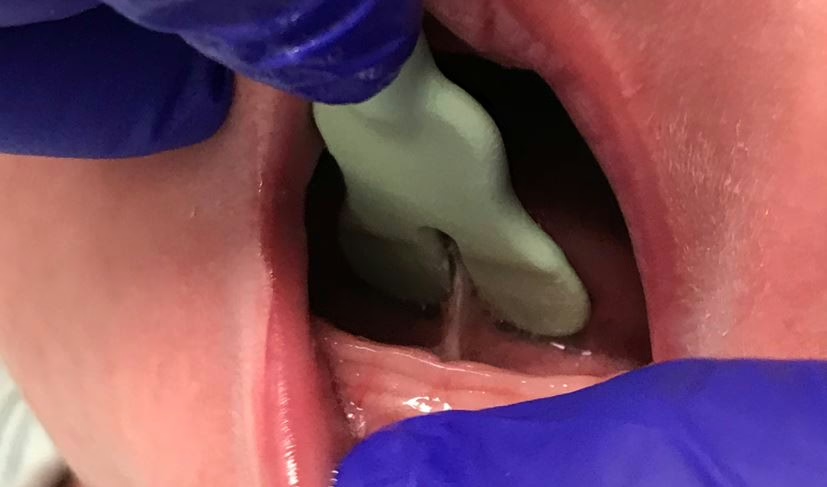
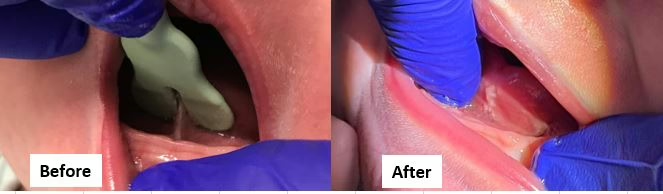
Laser frenectomy works by using focused light energy to gently and precisely separate the restrictive frenulum tissue. Unlike scalpels or scissors that cut through tissue causing bleeding and requiring healing of a wound, lasers ablate tissue at a cellular level while simultaneously sealing blood vessels and nerve endings.
This process offers multiple benefits. First, there’s minimal to no bleeding during the procedure. The laser cauterizes as it works, keeping the treatment site clean and visible throughout the procedure. Second, the precision of laser treatment allows Dr. Jung to remove exactly the right amount of tissue, neither too little (which might result in incomplete release and potential reattachment) nor too much (which could create unnecessary trauma).
Third, laser treatment stimulates cellular activity that promotes faster, healthier healing. The laser energy encourages tissue regeneration and reduces inflammation, helping your baby recover more comfortably and quickly than with traditional surgical methods.
The entire laser tongue tie release procedure typically takes only a few minutes. Most infants tolerate it remarkably well, often nursing immediately afterward with noticeably improved latch and milk transfer. This immediate functional improvement provides instant feedback that the release was successful and gives both baby and mother a positive start to their healing journey.
Why Laser Technology Makes a Difference for Infants
For infants, the benefits of laser treatment extend beyond the immediate procedure. Because lasers don’t require stitches, there’s no need for suture removal appointments. The healing site typically appears much less traumatic than surgical cuts, and the reduced inflammation means less discomfort during the healing process.
Parents often report that their babies seem less bothered by laser-released tongue ties compared to those released with traditional methods. Many infants nurse immediately after the procedure, sleep normally that same day, and show steady improvement in feeding efficiency over the following days and weeks.
The precision of laser treatment also means that Dr. Jung can address posterior tongue ties that might be missed or incompletely released with scissor techniques. These hidden restrictions often cause just as many feeding difficulties as more obvious anterior tongue ties, but they require a skilled provider with proper visualization and technique to treat effectively.
Dr. Jung’s extensive training in laser dentistry, combined with her understanding of oral development and airway function, ensures that your baby receives not just a tongue tie release but a comprehensive treatment that considers their entire oral structure and developmental needs.
Thing Two: Timing Matters – Early Intervention Prevents Cascading Health Problems
One of the most common questions Dr. Jung hears from parents is: “How soon should we treat our baby’s tongue tie?” The answer, in most cases, is as soon as feeding difficulties or other symptoms become apparent. While tongue ties can be released at any age, early intervention offers distinct advantages for both immediate relief and long-term health outcomes.
The Critical Window for Infant Development
Your baby’s first year of life represents a period of rapid growth and development. During this time, feeding patterns establish, oral structures develop, and foundational patterns for breathing, sleeping, and even posture begin to form. When tongue tie restricts normal oral function during this critical window, it can set in motion compensatory patterns that become increasingly difficult to correct as your child grows.
Newborns and young infants are remarkably adaptable. Their nervous systems are primed for learning new movement patterns, and their tissue healing capacity is at its peak. When tongue tie is released early, babies can quickly establish proper tongue function, successful feeding patterns, and healthy oral development without the need for extensive rehabilitation.
Waiting to address tongue tie, on the other hand, allows problematic patterns to become deeply ingrained. An older baby or toddler who has learned to compensate for restricted tongue mobility may require significant myofunctional therapy to retrain muscles and movement patterns even after the physical restriction is removed. While this therapy is valuable and effective, early release often minimizes or eliminates the need for extensive rehabilitation.
Immediate Benefits of Early Tongue Tie Release
Parents who pursue early tongue tie treatment typically notice improvements within days or weeks of the procedure. For breastfeeding mothers, these benefits might include improved latch depth and comfort, increased milk transfer efficiency, longer feeding sessions with better satisfaction, reduced nipple pain and damage, and improved milk supply as baby’s demand becomes more effective.
For babies, the benefits include more efficient feeding with less effort, improved weight gain, reduced fussiness and colic symptoms, better sleep patterns, and decreased reflux or spitting up. These immediate improvements significantly enhance quality of life for the entire family, reducing stress and allowing the parent-infant bond to flourish without the constant struggle of feeding difficulties.
Beyond feeding, early release supports proper oral development. When the tongue can rest in its natural position against the palate from infancy, it guides healthy jaw growth, promotes proper dental alignment, supports optimal airway development, and encourages nasal breathing patterns. These foundational elements of oral health set the stage for a lifetime of better outcomes.
Long-Term Prevention Through Early Intervention
The long-term benefits of early tongue tie release extend far beyond the infant feeding period. By addressing tongue restriction before compensatory patterns become established, parents can help prevent a constellation of potential future problems including speech articulation difficulties with certain sounds (particularly those requiring tongue elevation like “t,” “d,” “n,” and “l”), orthodontic problems such as crossbites, open bites, and crowding, sleep-disordered breathing including snoring and sleep apnea, chronic mouth breathing and its associated health consequences, and dental problems including increased cavity risk and gum disease.
Children whose tongue ties are released in infancy typically develop more normal speech patterns without the need for extensive speech therapy. Their jaws and dental arches develop more naturally, often reducing or eliminating the need for extensive orthodontic treatment later. Perhaps most significantly, their airways develop optimally, reducing the risk of sleep disorders that can affect learning, behavior, growth, and overall health throughout childhood and into adulthood.
Dr. Jung’s experience treating hundreds of families throughout Mansfield, Arlington, Burleson, Dallas, Fort Worth, Grand Prairie, Kennedale, and Midlothian has confirmed that early intervention consistently produces the best outcomes with the least intervention. While it’s never too late to address tongue tie, the sooner it’s treated, the more straightforward the path to optimal function and health.
Thing Three: Successful Treatment Requires More Than Just the Release Procedure
Many parents assume that tongue tie treatment ends with the laser release procedure. However, comprehensive care that produces lasting results requires a multi-faceted approach that addresses not just the physical restriction but also the functional rehabilitation needed for optimal outcomes.
At Central Park Dental & Orthodontics, Dr. Jung’s treatment philosophy recognizes that the frenectomy is just one piece of a larger puzzle. True healing and optimal function require addressing all aspects of your baby’s oral health, including muscle retraining, proper positioning during feeding, monitoring for reattachment, and ongoing assessment of developmental milestones.
The Role of Pre- and Post-Release Exercises
For infants, post-release exercises play a crucial role in preventing reattachment of the frenulum. When tongue tie tissue is released, the body’s natural healing process attempts to close that wound. Without proper movement of the released area, new tissue can form, essentially creating a new restriction that may be as limiting as the original tongue tie.
Dr. Jung provides detailed instruction on gentle exercises that help keep the release site mobile during healing. These exercises, typically performed several times daily for several weeks, involve gently lifting the tongue and moving it through its full range of motion. While they may feel uncomfortable for parents to perform initially, these stretches are essential for preventing reattachment and ensuring that your baby gains full benefit from the release.
The exercises serve multiple purposes beyond preventing reattachment. They help your baby become aware of their new tongue mobility, encourage active use of previously restricted movements, strengthen tongue muscles that may have been underdeveloped due to restriction, and promote proper healing with minimal scar tissue formation.
Parents often worry about hurting their baby during these exercises, but when performed correctly and gently, the stretches cause only momentary discomfort. Most babies tolerate them well, especially when paired with soothing techniques like nursing, singing, or skin-to-skin contact immediately afterward. Dr. Jung’s team provides thorough demonstration and written instructions to ensure parents feel confident performing these essential exercises at home.
The Importance of Collaborative Care
Optimal outcomes from tongue tie treatment require collaboration among multiple healthcare providers who understand how oral restrictions affect overall function. At Central Park Dental & Orthodontics, Dr. Jung works closely with a network of trusted professionals including lactation consultants who provide feeding support and help mothers and babies learn to use improved tongue mobility effectively, pediatricians who monitor growth and development and address any related health concerns, myofunctional therapists who provide specialized exercises to retrain oral and facial muscles, bodywork practitioners such as chiropractors or craniosacral therapists who address any body tension or alignment issues that may affect feeding and development, and speech-language pathologists who may provide support if any speech concerns arise as children grow.
This team approach ensures that your baby receives comprehensive care that addresses all aspects of their development. Lactation support before and after the release can make the difference between struggling to breastfeed despite the procedure and successfully establishing comfortable, efficient nursing. Bodywork can release tension in the jaw, neck, and shoulders that often accompanies tongue tie, helping your baby use their new tongue mobility more effectively.
Myofunctional therapy becomes particularly important for older infants and children whose compensatory patterns are more established. These specialists provide targeted exercises that retrain muscles, establish proper resting tongue posture, and promote functional patterns for eating, speaking, and breathing. Dr. Jung can recommend experienced myofunctional therapists throughout the Dallas-Fort Worth area who specialize in infant and pediatric care.
Monitoring and Follow-Up Care
Comprehensive tongue tie treatment doesn’t end when you leave the office after the release procedure. Follow-up care is essential for monitoring healing, assessing functional improvement, identifying any concerns early, and providing additional support as needed.
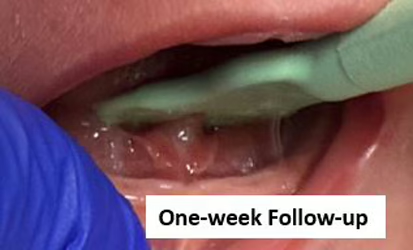
Dr. Jung typically schedules follow-up appointments to check the healing site, evaluate tongue mobility, discuss functional improvements or ongoing challenges, and adjust the treatment plan if needed. These visits allow her to confirm that the release is healing properly without reattachment and that your baby is progressing toward optimal function.
Parents should expect feeding improvements to occur gradually over several weeks. While some babies show immediate improvement in latch and milk transfer, others need time to learn to use their new tongue mobility effectively. Continued lactation support during this period can help mothers and babies navigate this learning curve successfully.
Dr. Jung encourages parents to contact the office between scheduled appointments if concerns arise. Early intervention for issues like possible reattachment, feeding regression, or healing complications can prevent minor concerns from becoming major setbacks. The Central Park Dental & Orthodontics team remains available to support families throughout the entire healing and rehabilitation process.
Thing Four: Not All Tongue Ties Look the Same – Proper Diagnosis Requires Expertise
One of the most misunderstood aspects of tongue tie is that this condition presents in many different forms. While some tongue ties are obvious even to untrained eyes, others remain hidden, revealing themselves only through functional assessment by an experienced provider. Understanding the different types of tongue tie helps parents recognize when to seek evaluation and why expertise matters in diagnosis and treatment.
Anterior vs. Posterior Tongue Ties
Tongue ties are often categorized based on where the frenulum attaches to the underside of the tongue. Anterior tongue ties attach near the tongue tip and are typically visible when the baby cries or tries to stick out their tongue. These more obvious restrictions often get identified early, sometimes even before hospital discharge after birth.
Posterior tongue ties, however, attach further back on the underside of the tongue, often beneath the mucosa (the pink tissue covering the tongue). These restrictions are much less visible and can be easily missed even by healthcare providers who aren’t specifically trained in identifying them. Yet posterior tongue ties often cause just as many functional problems as their more visible anterior counterparts.
Dr. Jung’s training in comprehensive oral evaluation enables her to identify both obvious and hidden tongue restrictions. She doesn’t rely solely on visual assessment but performs functional evaluation, observing how the tongue moves during various activities. This thorough approach ensures that restrictions are properly identified and treated, regardless of how obvious they appear on casual observation.
The Importance of Functional Assessment
The key to accurate tongue tie diagnosis isn’t just looking at the frenulum but assessing how well the tongue functions. Dr. Jung evaluates multiple aspects of tongue mobility including the ability to lift the tongue to the roof of the mouth, lateral (side-to-side) tongue movement, tongue extension (ability to stick the tongue out beyond the lower lip), cupping ability (the tongue forming a bowl shape for breastfeeding), and overall range of motion during various oral tasks.
She also assesses other oral structures that may contribute to feeding difficulties or developmental concerns. Lip ties (restrictive upper lip frenulum), buccal ties (restrictions in the cheeks), and high, narrow palate shape can all impact oral function and may require attention alongside tongue tie treatment.
For infants, functional assessment includes observing a feeding session when possible. Dr. Jung looks at latch quality, tongue positioning during feeding, jaw movement patterns, and baby’s overall coordination during nursing or bottle feeding. This real-world observation provides valuable information that static oral examination might miss.
Understanding Severity and Treatment Approaches
Tongue ties exist on a spectrum from mild to severe restriction. Not every tongue tie requires treatment, and the decision to proceed with release should be based on functional problems rather than appearance alone. Dr. Jung helps parents understand whether their baby’s symptoms are likely related to tongue tie and whether treatment is indicated.
Mild tongue ties that cause no functional problems may not require intervention. However, even subtle restrictions can sometimes cause significant difficulties, particularly with breastfeeding. The severity of symptoms doesn’t always correlate directly with how the tongue tie looks, which is why functional assessment by an experienced provider is so important.
When tongue tie treatment is indicated, the goal is complete release that allows full range of motion without over-treatment that creates unnecessary trauma. Dr. Jung’s extensive experience with laser frenectomy allows her to judge precisely how much tissue needs to be released for optimal function. This expertise comes from treating hundreds of cases and understanding the nuanced relationship between anatomy and function.
The Role of Clinical Expertise and Careful Assessment
Central Park Dental & Orthodontics’ approach to tongue tie assessment relies on Dr. Jung’s extensive clinical expertise and thorough functional evaluation. Her trained eye and hands-on assessment techniques allow for accurate diagnosis without the need for invasive imaging in infants.
Dr. Jung’s comprehensive evaluation is particularly valuable for understanding how tongue restriction affects surrounding structures, including the palate, jaw position, and airway development. By carefully assessing the complete picture of your baby’s oral anatomy through visual examination and functional testing, Dr. Jung can provide treatment that addresses not just the immediate tongue restriction but also any related structural concerns that might affect long-term development.
The combination of clinical expertise, functional assessment skills, and Dr. Jung’s specialized training in airway-focused dentistry ensures that families receive accurate diagnosis and appropriate treatment recommendations. This comprehensive approach prevents both under-treatment (missing significant restrictions) and over-treatment (releasing ties that aren’t causing functional problems).
Thing Five: The Connection Between Tongue Tie and Airway Health Affects Your Child’s Future
Perhaps the most important thing families should understand about tongue tie is its potential impact on airway development and breathing patterns. While immediate feeding concerns often bring parents to seek evaluation, the long-term implications for breathing, sleep, and overall health make early identification and treatment even more critical.
Dr. Jung’s specialized training in airway-focused dentistry allows her to recognize how tongue tie in infancy can set the stage for sleep-disordered breathing and related health problems throughout childhood and into adulthood. This understanding shapes her comprehensive approach to tongue tie treatment and helps families appreciate why this seemingly small oral restriction deserves serious attention.
How Tongue Position Shapes Airway Development
The tongue plays a crucial role in shaping the oral and nasal airways throughout childhood development. When the tongue can rest naturally against the palate with the mouth closed, it acts as a natural expander, guiding the palate to grow wide and the jaw to develop forward. This optimal development creates adequate space for the nasal airway, supporting healthy breathing patterns.
When tongue tie restricts this normal resting position, several problematic patterns can develop. The tongue may rest low in the mouth rather than elevated against the palate, the palate may remain narrow and high-arched, reducing nasal airway space, the jaw may develop in a more retruded (backwards) position, further compromising airway, and the child may develop mouth breathing patterns as the nasal airway becomes increasingly compromised.
These structural changes don’t happen overnight but develop gradually throughout infancy and childhood. However, their consequences can be significant and long-lasting, affecting not just breathing but overall health, development, and quality of life.
The Cascade from Mouth Breathing to Health Problems
Mouth breathing might seem like a minor concern, but research increasingly shows that chronic mouth breathing in childhood can contribute to numerous health problems including altered facial growth patterns often called “long face syndrome,” increased risk of cavities and gum disease due to dry mouth, sleep-disordered breathing including snoring and sleep apnea, behavioral and learning difficulties associated with poor sleep quality, and increased susceptibility to upper respiratory infections and allergies.
Children who mouth breathe don’t get the benefits that nasal breathing provides. The nose warms, humidifies, and filters air, producing nitric oxide that supports oxygen uptake and cardiovascular health. Mouth breathing bypasses these beneficial processes, potentially affecting everything from athletic performance to immune function to brain development.
Dr. Jung’s comprehensive approach to tongue tie treatment considers these long-term implications. She doesn’t just ask whether your baby can breastfeed but whether the tongue restriction might affect their airway development and breathing patterns as they grow. This forward-thinking perspective helps prevent problems rather than waiting to treat them after they’ve fully developed.
Recognizing Early Warning Signs of Airway Concerns
While significant sleep-disordered breathing typically doesn’t manifest until later childhood, alert parents and providers can identify early warning signs that suggest a baby might be heading toward these problems. Signs that Dr. Jung looks for include persistent mouth breathing even when the nose is clear, snoring or noisy breathing during sleep, restless sleep with frequent position changes or apparent arousals, chronic congestion despite no obvious illness, and slow weight gain despite adequate caloric intake.
When these signs appear in infancy, tongue tie is often a contributing factor. By releasing the restriction early and supporting proper oral development, many of these concerning patterns can be prevented or reversed before they become established.
For families in Mansfield, Arlington, Burleson, and surrounding communities, Dr. Jung offers comprehensive evaluation that assesses not just current feeding function but also risk factors for future airway and developmental concerns. This thorough approach ensures that treatment addresses your child’s immediate needs while setting the foundation for optimal long-term health.
The Whole-Body Approach to Airway Health
Dr. Jung’s “Three Legs of the Healing Stool” philosophy applies directly to airway-focused tongue tie treatment. Structural balance requires proper tongue position, adequate oral and airway space, and correct jaw relationships. Chemical balance involves ensuring adequate nutrition and oxygenation for growth and development. Emotional, mental, and spiritual balance recognizes how breathing and sleep quality affect behavior, learning, and overall wellbeing.
This comprehensive approach distinguishes Dr. Jung’s practice from providers who focus solely on the immediate feeding concern. While successful breastfeeding is certainly an important goal, the bigger picture involves setting your child up for optimal breathing, sleeping, and developing throughout their entire life.
Central Park Dental & Orthodontics’ advanced technology, including 3D cone beam CT imaging, allows for detailed assessment of airway structures when indicated. This level of evaluation helps identify children who might benefit from early intervention to support optimal airway development, preventing problems before they fully manifest.
Understanding the Treatment Process at Central Park Dental & Orthodontics
When families choose Central Park Dental & Orthodontics for infant tongue tie treatment, they receive comprehensive care that extends far beyond a simple procedure. Dr. Jung’s approach reflects her commitment to whole-body wellness and her understanding that optimal outcomes require attention to every detail of diagnosis, treatment, and follow-up care.
Your Initial Consultation
The tongue tie evaluation process begins with a thorough consultation where Dr. Jung takes time to understand your concerns, your baby’s history, and your goals for treatment. She’ll ask detailed questions about feeding patterns, your baby’s behavior, any symptoms you’ve noticed, and your overall experience with infant care.
During the examination, Dr. Jung performs both visual and functional assessment of your baby’s oral structures. She evaluates tongue mobility in multiple directions, assesses for lip ties and other restrictions, examines palate shape and oral anatomy, and observes a feeding session when possible. This comprehensive evaluation ensures accurate diagnosis and appropriate treatment recommendations.
Dr. Jung also uses this consultation to educate parents about tongue tie, how it affects function and development, what treatment involves, and what outcomes to expect. She believes that informed parents are empowered parents, better able to participate actively in their child’s care and make decisions aligned with their family’s values and goals.
The consultation includes discussion of Dr. Jung’s “Three Legs of the Healing Stool” approach and how it applies to your baby’s specific situation. You’ll learn how structural, chemical, and emotional factors all contribute to your baby’s current challenges and how comprehensive treatment addresses all three areas for optimal healing.
The Laser Release Procedure
When tongue tie release is indicated, Dr. Jung uses advanced laser technology to perform the frenectomy with precision and minimal discomfort. The procedure typically takes only a few minutes and involves gentle restraint of your baby to ensure safety, application of topical anesthetic if needed, precise laser release of the restrictive frenulum tissue, immediate assessment of improved tongue mobility, and demonstration of post-release exercises.
Most infants tolerate the procedure remarkably well. The laser’s precision and the speed of treatment minimize stress for babies. Many infants can nurse immediately after the procedure, and parents often report that babies seem less bothered by laser release compared to traditional surgical methods they may have heard about.
Dr. Jung’s team provides clear instructions for home care following the procedure. This includes guidance on wound care and monitoring, detailed demonstration and written instructions for stretching exercises, expectations for healing timeline and functional improvement, signs of potential complications to watch for, and when to contact the office with concerns.
Follow-Up Care and Support
Comprehensive tongue tie treatment includes structured follow-up to ensure optimal healing and functional outcomes. Dr. Jung typically schedules follow-up appointments to check healing progress, assess tongue mobility and function, evaluate feeding improvements, and address any parent concerns or questions.
These appointments provide opportunity to adjust the care plan if needed, provide additional coaching on exercises or feeding techniques, and ensure that your baby is progressing toward optimal oral function. Dr. Jung’s commitment to ongoing support helps families feel confident throughout the healing journey.
For families who develop concerns between scheduled appointments, the Central Park Dental & Orthodontics team remains accessible. Early intervention for potential issues like reattachment or healing complications can prevent minor concerns from becoming major setbacks. This responsive approach to care reflects Dr. Jung’s commitment to patient-centered service.
Why Families Throughout Mansfield and Beyond Choose Central Park Dental & Orthodontics
Serving families in Mansfield, Arlington, Burleson, Alvarado, Dallas, Fort Worth, Grand Prairie, Kennedale, Lillian, and Midlothian, Central Park Dental & Orthodontics has earned recognition as a premier destination for comprehensive tongue tie care. Several factors distinguish Dr. Jung’s approach and explain why families travel from throughout the Dallas-Fort Worth metroplex for treatment.
Advanced Technology and Expertise
Central Park Dental & Orthodontics’ investment in cutting-edge technology ensures that patients receive the most advanced care available. The practice’s state-of-the-art laser system allows for precise, comfortable treatment with optimal outcomes. The 3D cone beam CT imaging provides detailed visualization of oral and airway structures when needed. Digital examination and documentation systems support comprehensive assessment and treatment planning.
Dr. Jung’s extensive training extends beyond general dentistry to include specialized education in laser dentistry, airway-focused treatment, comprehensive oral development, and whole-body wellness approaches. This multifaceted expertise allows her to provide truly comprehensive care that addresses the full scope of how tongue tie affects infant health and development.
Her Fellowship in the Academy of General Dentistry (FAGD) – an honor achieved by only 6% of dentists nationwide – reflects her commitment to continuing education and clinical excellence. Dr. Jung dedicates significant time to staying current with the latest research and techniques in tongue tie treatment, airway-focused care, and pediatric oral health.
Recognition and Credentials
Dr. Jung’s expertise has earned recognition from multiple prestigious organizations and publications. Her selection as one of D Magazine’s Best Dentists for five consecutive years (2021-2025) reflects peer recognition of her clinical skills and patient care excellence. Her features on NBC, ABC, FOX, CW, CBS, and TEDx have brought attention to her innovative approaches to oral health and whole-body wellness.
Beyond these accolades, Dr. Jung’s commitment to comprehensive care is demonstrated through her collaborative relationships with other healthcare providers throughout the Dallas-Fort Worth area. She maintains strong connections with lactation consultants, pediatricians, myofunctional therapists, and other specialists who share her vision of integrated healthcare focused on optimal outcomes for children.
The Three Legs of the Healing Stool Philosophy
What truly sets Central Park Dental & Orthodontics apart is Dr. Jung’s revolutionary “Three Legs of the Healing Stool” philosophy. This comprehensive approach recognizes that optimal health requires balance among structural factors (proper oral anatomy and alignment), chemical factors (optimal nutrition and body chemistry), and emotional, mental, and spiritual factors (overall wellbeing and mind-body connection).
This philosophy shapes every aspect of tongue tie treatment at the practice. Dr. Jung doesn’t just release the frenulum. She considers how the restriction affects your baby’s entire structure, how feeding difficulties impact nutrition and growth, and how the stress of feeding struggles affects both baby and family wellbeing. Treatment addresses all three areas, supporting true healing rather than just symptom relief.
Patient-Centered Care and Support
Families consistently report that the experience at Central Park Dental & Orthodontics exceeds their expectations. Dr. Jung and her team take time to listen to concerns, explain conditions and treatments clearly, involve parents actively in care decisions, and provide ongoing support throughout the treatment journey.
The practice’s comfortable, welcoming environment helps parents feel at ease even when dealing with stressful concerns about their infant’s health. The team’s genuine care and compassion create an atmosphere where families feel supported and empowered.
From the initial consultation through follow-up care, families receive individualized attention and comprehensive support. Dr. Jung’s team coordinates with other providers as needed, ensuring that families have access to the full spectrum of services that support optimal outcomes from tongue tie treatment.
Frequently Asked Questions About Infant Tongue Tie Laser Treatment
How do I know if my baby has tongue tie?
Common signs include difficulty latching or staying latched during breastfeeding, clicking sounds while nursing, frequent feeding with poor weight gain, maternal nipple pain that doesn’t improve with positioning changes, and visible restriction when your baby tries to lift or extend their tongue. Dr. Jung provides comprehensive evaluation to assess both visible and hidden tongue restrictions and determine whether treatment is indicated.
At what age should tongue tie be treated?
Tongue tie can be treated at any age, but earlier intervention typically produces better outcomes with less need for extensive rehabilitation. Many tongue ties are identified and treated within the first few weeks or months of life when feeding difficulties become apparent. However, it’s never too late to address tongue restriction if it’s causing functional problems.
Is laser tongue tie release painful for my baby?
The laser procedure causes minimal discomfort. Most infants tolerate it well and can nurse immediately afterward. The laser’s precision and speed minimize stress, and many babies seem less bothered by laser release compared to traditional surgical methods. Post-release stretching exercises may cause momentary discomfort but are essential for preventing reattachment and ensuring optimal outcomes.
How quickly will we see improvement after tongue tie release?
Some babies show immediate improvement in latch and feeding efficiency. However, it’s common for improvement to occur gradually over days to weeks as your baby learns to use their new tongue mobility effectively. Continued lactation support during this period can help maximize outcomes. Dr. Jung provides guidance on realistic expectations and monitors progress through follow-up appointments.
Could the tongue tie grow back after laser treatment?
While the frenulum itself doesn’t “grow back,” new tissue can form at the release site if the area isn’t kept mobile during healing. This is why post-release stretching exercises are so important. When exercises are performed correctly and consistently, reattachment is uncommon. If partial reattachment does occur, revision may be necessary to regain full mobility.
Does insurance cover tongue tie laser treatment?
Coverage varies significantly among insurance plans. Some policies cover tongue tie release when medically necessary, particularly when feeding difficulties are documented. The team at Central Park Dental & Orthodontics can help verify your benefits and provide documentation to support medical necessity when appropriate. They also offer flexible payment options for services not covered by insurance.
What’s the difference between lip tie and tongue tie?
Lip tie involves restriction of the upper lip frenulum (the tissue connecting the upper lip to the gums), while tongue tie restricts the lingual frenulum under the tongue. Both can affect breastfeeding and may occur together. Dr. Jung evaluates for both conditions during comprehensive examination and can address multiple restrictions when needed to optimize oral function.
Will my baby need speech therapy after tongue tie release?
Most babies whose tongue ties are released in infancy develop normal speech without therapy. Early treatment prevents the compensatory patterns that often lead to articulation difficulties. However, older children or those with established speech patterns may benefit from speech therapy to retrain proper tongue placement for specific sounds. Dr. Jung can provide referrals to experienced speech-language pathologists if needed.
How long does healing take after laser tongue tie release?
The laser release site typically heals within two to three weeks. During this time, consistent stretching exercises keep the area mobile and prevent reattachment. Most babies experience minimal discomfort during healing, and feeding often improves progressively throughout this period. Dr. Jung schedules follow-up appointments to monitor healing and address any concerns.
Can tongue tie affect bottle feeding, or is it only a breastfeeding issue?
Tongue tie affects all forms of feeding, not just breastfeeding. Bottle-fed babies with tongue restriction may also experience poor latch, inefficient milk transfer, excessive air swallowing, prolonged feeding times, and fussiness during feeds. While some babies compensate more easily with bottles than with breastfeeding, the underlying restriction still affects oral function and development, making treatment beneficial regardless of feeding method.
What happens if we don’t treat our baby’s tongue tie?
Untreated tongue tie may lead to various complications depending on severity. Potential issues include continued feeding difficulties and poor weight gain, speech articulation problems as your child grows, dental misalignment and orthodontic needs, mouth breathing and sleep-disordered breathing, and increased risk of cavities and gum disease. However, not every tongue tie requires treatment. Dr. Jung helps families understand when functional problems warrant intervention.
Why should we choose laser treatment over scissors or scalpel?
Laser treatment offers several advantages including minimal to no bleeding during the procedure, precise tissue removal with less trauma to surrounding structures, reduced post-operative discomfort, faster healing with less inflammation, no need for stitches or suture removal, and better ability to address posterior tongue ties that may be difficult to treat with scissors. The laser’s precision and healing benefits make it the preferred method for infant tongue tie release.
How do I perform the stretching exercises after the procedure?
Dr. Jung and her team provide thorough demonstration and written instructions for post-release exercises. Generally, you’ll gently lift your baby’s tongue toward the roof of their mouth several times daily, holding briefly to keep the release site mobile. While these exercises may seem uncomfortable to perform, they’re essential for preventing reattachment. The team remains available to answer questions and provide additional coaching as needed.
What if my pediatrician says tongue tie isn’t real or doesn’t need treatment?
Medical understanding of tongue tie and its functional impacts has evolved significantly in recent years. Some providers may not be familiar with current research on how tongue restriction affects feeding, development, and airway health. Dr. Jung bases her assessment and treatment recommendations on comprehensive functional evaluation and current evidence. She’s happy to communicate with your pediatrician and provide information about your baby’s specific situation.
Can my older infant or toddler still benefit from tongue tie treatment?
Tongue tie can be successfully treated at any age. While earlier intervention typically requires less rehabilitation, older babies and children can still achieve significant functional improvement. Treatment for older children may require more extensive myofunctional therapy to retrain established compensatory patterns. Dr. Jung evaluates patients of all ages and can discuss age-specific considerations for your child’s situation.
How is Central Park Dental & Orthodontics different from other providers offering tongue tie treatment?
Several factors distinguish Dr. Jung’s approach including advanced laser technology for optimal outcomes, comprehensive airway-focused evaluation beyond just the frenulum, the “Three Legs of the Healing Stool” philosophy addressing whole-body wellness, extensive training in pediatric oral development and airway health, collaborative relationships with lactation consultants and other specialists, 3D cone beam CT imaging for detailed anatomical assessment when needed, and ongoing follow-up care and support throughout the healing journey. This comprehensive approach ensures that families receive truly holistic care focused on long-term optimal outcomes.
Taking the Next Step for Your Baby’s Health
Understanding tongue tie and its potential impact on your baby’s feeding, development, and long-term health empowers you to make informed decisions about treatment. While not every tongue tie requires intervention, when functional problems exist, early treatment with advanced laser technology offers the best opportunity for optimal outcomes with minimal rehabilitation.
At Central Park Dental & Orthodontics, Dr. Jiyoung Jung brings together advanced technology, extensive training, and a comprehensive wellness philosophy to provide families throughout the Dallas-Fort Worth metroplex with exceptional tongue tie care. Her recognition in D Magazine’s Best Dentists (2021-2025) and features on NBC, ABC, FOX, CW, CBS, and TEDx reflect her commitment to clinical excellence and innovative approaches to oral health.
The “Three Legs of the Healing Stool” philosophy that guides care at Central Park Dental & Orthodontics ensures that treatment addresses not just the immediate concern but the whole child. Structural factors like tongue mobility and oral development, chemical factors like nutrition and growth, and emotional factors including family wellbeing all receive attention throughout the treatment process.
Whether your baby is struggling with breastfeeding right now or you’re concerned about how tongue restriction might affect their future development, Dr. Jung and her team provide the expertise, technology, and compassionate care you need. From initial consultation through follow-up care, families receive individualized attention and comprehensive support designed to achieve optimal outcomes.
Your Baby Deserves the Best Start
The first months and years of life set the foundation for lifelong health and development. When tongue tie interferes with feeding, oral development, or airway function, early intervention can prevent a cascade of potential problems. Dr. Jung’s airway-focused approach recognizes these connections and provides treatment that supports not just immediate relief but optimal long-term outcomes.
Parents throughout Mansfield, Arlington, Burleson, Alvarado, Dallas, Fort Worth, Grand Prairie, Kennedale, Lillian, and Midlothian trust Central Park Dental & Orthodontics for comprehensive tongue tie care because they know their babies will receive the most advanced treatment available, delivered with genuine compassion and supported by ongoing care.
Don’t let tongue tie compromise your baby’s feeding success, development, or future health. Whether you’re certain your baby has tongue tie or simply wondering if oral restrictions might explain your feeding challenges, Dr. Jung’s comprehensive evaluation can provide the answers you need.
Schedule Your Comprehensive Tongue Tie Evaluation Today
If your baby is experiencing feeding difficulties, poor weight gain, or other symptoms that concern you, a comprehensive evaluation can provide clarity and guidance. Dr. Jung’s thorough assessment goes beyond simply looking at the frenulum to understand how oral restrictions affect your baby’s overall function and development.
During your consultation, you’ll receive detailed information about your baby’s specific situation, clear explanation of treatment options if indicated, realistic expectations for outcomes and recovery, connection to other specialists as needed for comprehensive care, and answers to all your questions about tongue tie and treatment.
The experienced team at Central Park Dental & Orthodontics understands the stress and frustration that feeding difficulties create for families. They’re committed to providing not just excellent clinical care but also the support and education that help parents feel confident and empowered throughout their baby’s treatment journey.
Ready to help your baby thrive?
Call Central Park Dental & Orthodontics at 817-466-1200 to schedule your infant tongue tie evaluation with Dr. Jiyoung Jung. The team is ready to answer your questions and help you determine whether tongue tie treatment is right for your baby.
Central Park Dental & Orthodontics
1101 Alexis Ct #101
Mansfield, TX 76063
Conveniently located to serve families throughout:
Mansfield | Arlington | Burleson | Alvarado | Dallas | Fort Worth | Grand Prairie | Kennedale | Lillian | Midlothian
You can also schedule your appointment online through the practice website. Visit www.centralparkdental.net to learn more about Dr. Jung’s comprehensive approach to infant tongue tie care and whole-body wellness.
Don’t wait to give your baby the gift of optimal oral function and development. Call 817-466-1200 today.
Dr. Jiyoung Jung, DDS, FAGD, is an award-winning dentist specializing in comprehensive oral health care with a focus on airway-focused treatment and whole-body wellness. Selected as one of D Magazine’s Best Dentists (2021-2025) and featured on NBC, ABC, FOX, CW, CBS, and TEDx, Dr. Jung serves families throughout the Dallas-Fort Worth metroplex with advanced laser dentistry and a holistic approach to oral health. Her revolutionary “Three Legs of the Healing Stool” philosophy addresses structural, chemical, and emotional factors to support optimal healing and lifelong wellness.
Related links: