“NO Scalpel. NO Drill. LESS Pain. Faster Healing.”
Key Takeaways
- Laser frenectomy offers a gentle, precise alternative to traditional scissors-based procedures for releasing lip ties in infants, with minimal bleeding and faster healing times that support immediate return to nursing
- Untreated lip ties can interfere with proper latching during breastfeeding, leading to inadequate nutrition, poor weight gain, and developmental concerns that extend beyond infancy into speech and dental health
- Advanced laser technology allows for controlled tissue removal with reduced discomfort, supporting the body’s natural healing processes while minimizing the need for post-procedure pain management
- Comprehensive evaluation of oral restrictions considers not just the lip tie itself but the entire airway and functional development, addressing root causes rather than isolated symptoms
When you’re a new parent struggling with breastfeeding challenges, every day can feel like an exhausting battle. You know something isn’t quite right. Your baby seems frustrated at the breast, clicks while nursing, or can’t maintain a proper latch. You might notice milk dribbling from the corners of their mouth or hear well-meaning advice that you just need to keep trying. Meanwhile, you’re dealing with painful, cracked nipples and the gnawing worry that your little one isn’t getting enough nutrition.
Here’s what many parents in Mansfield, Arlington, and throughout the Dallas-Fort Worth area don’t realize: the problem might not be your technique or your milk supply. The issue could be a physical restriction called a lip tie that’s preventing your baby from nursing effectively.
At Central Park Dental & Orthodontics in Mansfield, we’ve helped countless families navigate this challenge using advanced laser technology that makes the correction process safer, more precise, and significantly less traumatic for both babies and parents. Our approach has been recognized by D Magazine as among the best in dental care from 2021 through 2025, and we’ve shared our expertise on NBC, ABC, FOX, CW, and CBS, as well as at TEDx events where we discuss the critical connection between oral function and overall health.
But before we dive into how laser treatment works, let’s talk about what lip ties actually are and why they matter so much for your baby’s development.

Understanding Lip Ties and Why They Impact More Than Just Feeding
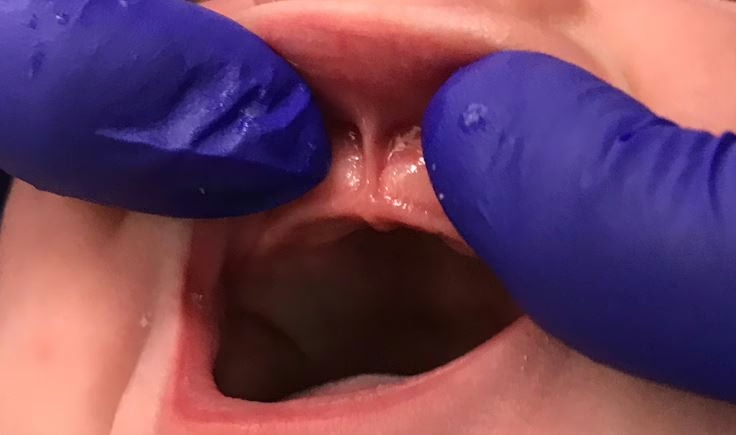
A lip tie occurs when the frenulum, that small band of tissue connecting the upper lip to the gums, is too thick, too tight, or positioned too low. This restriction limits the lip’s mobility, which might not sound like a big deal until you understand what a baby needs to do during nursing.
Effective breastfeeding requires your baby to flange their upper lip outward, creating a seal around the breast. When a lip tie prevents this natural movement, your baby compensates by using their jaw and tongue in ways that create problems. They might clamp down harder, causing pain for you. They might not be able to remove milk efficiently, leading to poor weight gain and frustration for everyone involved.
The consequences extend far beyond those early feeding struggles. When we see babies with lip ties in our Mansfield practice, we’re not just looking at a breastfeeding issue. We’re seeing the early signs of potential problems that can affect speech development, dental alignment, and even airway health as the child grows.
Children with untreated oral restrictions often develop narrow upper jaws because the lip and tongue aren’t able to apply the normal forces that guide proper facial development. This can lead to crowded teeth, the need for extensive orthodontic treatment later, and breathing difficulties that impact sleep quality and overall health.
This is where our philosophy comes into play. At Central Park Dental & Orthodontics, we follow what we call the Three Legs of the Healing Stool, a comprehensive approach that recognizes true healing requires addressing structure, function, and the body’s natural recuperative abilities. When we evaluate a baby for a lip tie, we’re not just looking at that one piece of tissue. We’re assessing the entire oral environment, the tongue’s position and function, the palate’s shape, and how these factors work together to support or hinder your baby’s development.
Why Traditional Methods Fall Short and Laser Technology Changes Everything
For decades, lip tie releases were performed with scissors or scalpels. The procedure was quick, but it came with significant drawbacks. Cutting tissue with sharp instruments creates irregular edges, causes more bleeding, and requires stitches in many cases. The healing process is longer, and there’s more discomfort during recovery.
Parents who’ve been through traditional frenectomies often describe the experience as traumatic. The bleeding can be frightening, even when it’s a normal part of the procedure. Babies are upset, sometimes for days afterward. The wound needs careful monitoring, and there’s always concern about infection or complications.
Laser technology transformed this entire picture, and here’s why it matters for your baby.
Five Ways Laser Treatment Provides Superior Safety, Precision, and Comfort
1. Pinpoint Accuracy That Protects Surrounding Tissue
When we use laser technology for lip tie releases at our Mansfield location, we’re working with a level of precision that traditional instruments simply cannot match. The laser beam is incredibly focused, allowing us to target exactly the tissue that needs to be released while leaving everything else completely untouched.
Think about trying to cut a straight line with scissors versus using a laser-guided cutting tool. The scissors might get you close, but there’s always some variation, some wobble, some imprecision. The laser follows the exact path we set, removing only what needs to be removed and nothing more.
This precision matters tremendously when we’re working in the delicate oral environment of an infant. The tissues in a baby’s mouth are thin and sensitive. There are important structures nearby, including blood vessels and nerve endings, that we want to avoid disturbing. The focused nature of laser energy allows us to work with confidence, knowing we’re affecting only the target tissue.
For babies in Fort Worth, Grand Prairie, and surrounding communities who come to our practice, this translates to a procedure that’s inherently safer because there’s less chance of unintended tissue damage. The laser doesn’t slip, doesn’t require the same kind of physical manipulation, and doesn’t create the tearing or irregular edges that can occur with cutting instruments.
2. Minimal Bleeding Through Natural Cauterization
One of the most remarkable features of laser frenectomy is how little bleeding occurs during and after the procedure. This isn’t just a cosmetic benefit or a way to make the experience less scary for parents, although those are certainly welcome outcomes. The reduced bleeding is actually a sign of something important happening at the cellular level.
As the laser energy passes through the tissue, it simultaneously seals blood vessels. This process, called cauterization, happens instantly as the tissue is released. The heat from the laser causes the proteins in the blood vessel walls to coagulate, effectively closing them off before significant bleeding can occur.
When we perform traditional cuts with scissors or scalpels, blood vessels are severed and remain open until the body’s natural clotting mechanisms kick in. This takes time, creates more blood loss, and can obscure the surgical field, making it harder for the practitioner to see exactly what they’re doing.
With laser treatment, we maintain a clear view throughout the procedure. There might be a small amount of oozing afterward, but nothing like the bleeding parents often fear. This means your baby is more comfortable, the procedure is faster, and you can focus on comforting and nursing your little one rather than managing bleeding.
Families from Burleson, Alvarado, and Kennedale who’ve experienced both traditional and laser approaches in the past often comment on this difference. The laser procedure feels gentler, looks less traumatic, and creates less anxiety for everyone in the room.
3. Reduced Discomfort During and After the Procedure
Pain management is always a primary concern when we’re treating infants. Babies can’t tell us how they’re feeling, and every parent’s instinct is to protect their child from unnecessary discomfort. This is where laser technology really shines in comparison to traditional methods.
The laser energy works quickly, typically completing the release in less than a minute of actual treatment time. The focused heat causes minimal disruption to surrounding tissues, which means there’s less inflammation and swelling after the procedure. The cauterization we mentioned earlier also seals nerve endings, reducing the pain signals that would normally be sent to the brain.
In our Mansfield practice, we see babies who are ready to nurse almost immediately after the procedure. Some babies fuss briefly during the treatment itself, which is more about being held still than actual pain, but they settle quickly once they’re back in their parent’s arms. This is dramatically different from the recovery period many parents describe after traditional scissors-based releases.
The reduced post-procedure discomfort means you’re not dealing with an irritable baby for days on end. Your little one can get back to the important work of eating, sleeping, and growing without being sidetracked by prolonged pain or healing complications.
We’ve shared these insights with healthcare providers throughout the Dallas-Fort Worth region during our media appearances on NBC, ABC, FOX, CW, and CBS, helping to educate both parents and professionals about why the method of treatment matters just as much as whether treatment is provided at all.
4. Faster Healing With Reduced Risk of Reattachment
The way tissue heals after a laser procedure is fundamentally different from how it heals after a traditional cut. When you cut tissue with a blade, you create a wound with irregular edges. The body has to fill in this gap with new tissue, a process that takes time and can be unpredictable. Sometimes the tissue heals too well, creating scar tissue that’s tight and restrictive, almost like a new tie forming where the old one was released.
This reattachment is one of the most frustrating outcomes after a frenectomy. Parents go through the procedure, deal with the recovery, start to see improvements in feeding, and then gradually notice the same problems returning as the tissue tightens back up.
Laser treatment significantly reduces this risk through a process called photo-biomodulation. The laser energy stimulates cellular activity in beneficial ways, promoting organized healing rather than chaotic scar formation. The edges of the release are smooth and precise, giving the body clear guidelines for how to heal the area.
The type of healing that occurs after laser treatment is more like the body’s natural wound repair process after a minor burn rather than after a cut. There’s less inflammatory response, less chance of infection because the laser sterilizes as it works, and ultimately less scar tissue formation.
For families in Lillian, Midlothian, and throughout our service area, this means the results of the procedure are more likely to be permanent. The improvement in your baby’s ability to latch and nurse effectively should continue rather than gradually diminishing as restrictive tissue reforms.
We do recommend specific stretches and exercises after any frenectomy, whether performed with a laser or traditional methods, because movement helps prevent reattachment. But the foundation of healthy healing that laser treatment provides gives you a significant advantage in maintaining the release long-term.
5. No Sutures Required for Simpler Aftercare
Traditional frenectomies often require stitches to close the wound and promote proper healing. Those sutures need to be monitored, they can cause discomfort, and in some cases they need to be removed during a follow-up appointment. For parents already stressed about their baby’s feeding difficulties, adding suture care to the list of responsibilities can feel overwhelming.
Laser frenectomy eliminates this concern entirely. Because the laser cauterizes as it releases the tissue, and because the removal is so precise, there’s no need for stitches. The wound is essentially self-sealing, requiring minimal intervention from you during the healing process.
This simplified aftercare is a game-changer for busy parents juggling multiple responsibilities. You don’t need to worry about sutures coming loose, becoming infected, or causing additional discomfort for your baby. The healing site simply needs to be kept clean through normal oral hygiene, and you’ll perform the recommended stretches to maintain mobility of the released tissue.
At Central Park Dental & Orthodontics, we provide clear, detailed instructions for post-procedure care, but you’ll find the actual tasks are straightforward and manageable. Most parents feel confident handling the aftercare on their own, though we’re always available by phone at 817-466-1200 if questions or concerns arise.
This streamlined approach to healing means you can focus your energy where it matters most: establishing successful breastfeeding, bonding with your baby, and enjoying those precious early weeks rather than stressing over wound care protocols.
The Comprehensive Evaluation That Comes Before Any Procedure
While we’re strong advocates for laser technology when treatment is necessary, we’re equally committed to making sure treatment is actually necessary before we proceed. Not every baby who struggles with breastfeeding has a lip tie, and not every lip tie requires intervention.
When you bring your baby to our Mansfield office, we conduct a thorough evaluation that goes far beyond just looking at the frenulum. We’re assessing oral function, observing how your baby moves their tongue and lips, examining the shape and height of the palate, and considering how all these factors work together.
We watch your baby nurse if possible, because seeing the feeding process in action tells us so much more than a static exam ever could. We look for clicking sounds, dimpling of the cheeks, or a cupped tongue position that might indicate functional problems even if the physical restriction doesn’t look severe.
This comprehensive approach reflects our training and experience in airway-focused dentistry, an area where we’ve been recognized as leaders in the Dallas-Fort Worth region. Our practice is equipped with advanced technology including 3D CBCT imaging and specialized medical imaging visualization and analysis software used specifically for sleep and airway evaluation. While we don’t typically need this level of imaging for a straightforward lip tie assessment in an infant, having these tools available means we can investigate further if we detect signs of airway concerns that might benefit from early intervention.
Our philosophy centers on whole-body wellness and collaborative care. We don’t work in isolation. If your baby’s feeding difficulties involve factors beyond a lip tie, we’ll help you connect with lactation consultants, bodywork specialists, or other professionals who can address those additional concerns. The goal is always to support your baby’s optimal development, not just to perform a procedure because we have the capability to do so.
What to Expect During Your Baby’s Laser Frenectomy
Understanding the process helps reduce anxiety, so let’s walk through what actually happens during a laser lip tie release at our practice.
You’ll arrive at our office at 1101 Alexis Ct, Suite 101, in Mansfield, where our team will greet you and your baby in a calm, welcoming environment. We know you’re probably nervous, and we take the time to address your questions and concerns before we begin.
During the procedure itself, we’ll position your baby securely, usually with a team member holding them in a specific way that keeps them safe while allowing us clear access to the upper lip. The actual laser treatment takes less than a minute in most cases. There might be a brief moment when your baby cries, more from the restraint than from pain, but the discomfort is minimal and short-lived.
Immediately after the release, we encourage skin-to-skin contact and nursing if your baby is willing. Many babies latch better right away, though some need a day or two to figure out how to use their newly mobile lip. The tissue will look whitish or yellowish at first, which is normal and part of the healing process, not a sign of infection.
We’ll demonstrate the stretches we want you to perform several times daily for the next few weeks. These stretches are crucial for preventing reattachment and ensuring the release remains effective. They involve gently lifting your baby’s upper lip and holding it for a few seconds, creating movement in the area that was released.
Most babies tolerate the stretches well, especially when they’re done calmly and confidently. We’re here to support you through this process, and you can always reach us at 817-466-1200 if you need guidance or reassurance as you navigate the healing period.
Beyond Feeding: Long-Term Benefits of Addressing Lip Ties Early
While improved breastfeeding is often the immediate goal when parents seek treatment for a lip tie, the benefits of early intervention extend far into your child’s future. This is where our training in airway-focused dentistry and our commitment to comprehensive care really come into play.
When a baby’s lip can move freely, it applies normal, healthy forces to the developing upper jaw. This stimulation is part of what guides the maxilla to grow to its full potential width. A properly developed upper jaw provides adequate space for all the teeth to erupt without crowding, creates a stable foundation for nasal breathing, and supports the airway structures that are so critical for quality sleep and overall health.
Children with untreated oral restrictions often become mouth breathers because their narrow airways make nasal breathing difficult. Chronic mouth breathing changes facial development, leads to poor sleep quality, and can contribute to behavioral and learning challenges that impact every area of life.
By addressing a lip tie in infancy, before these cascading problems have a chance to develop, we’re supporting your child’s potential for optimal growth and development. This preventive approach is far more effective than trying to correct structural problems later when the bones have already formed in compromised positions.
Our work in this area has been featured on major networks including NBC, ABC, FOX, CW, and CBS, and we’ve presented at TEDx events about the profound connection between oral function, airway health, and quality of life. We’ve been recognized by D Magazine as among the best dentists from 2021 through 2025 in part because of our commitment to this forward-thinking, comprehensive approach to care.
For families in Arlington, Dallas, Fort Worth, and throughout our region, this means you have access to a practice that sees the bigger picture and can guide your child’s development from infancy through adolescence and beyond.
When to Seek Evaluation for Your Baby
If you’re struggling with breastfeeding, don’t wait to seek help. Many parents push through weeks or even months of difficulty, thinking things will eventually improve on their own or that they just need to try harder. But if there’s a physical restriction causing the problem, no amount of determination will resolve it.
Signs that your baby might benefit from evaluation include:
- Difficulty latching or maintaining a latch during nursing
- Clicking, smacking, or other unusual sounds while feeding
- Milk dribbling from the corners of the mouth during nursing
- Prolonged feeding sessions that don’t seem to satisfy your baby
- Poor weight gain or slow weight gain despite frequent nursing
- Fussiness at the breast or pulling away repeatedly during feeds
- Painful nursing for you, including cracked or damaged nipples
- A tight or tense feeling when you try to lift your baby’s upper lip
- A gap between your baby’s upper lip and the breast during nursing
Some of these signs can also indicate other issues, which is why a comprehensive evaluation is so important. We’re here to help you figure out what’s really going on and what interventions will be most helpful for your specific situation.
Families from Burleson, Kennedale, Alvarado, and throughout the Dallas-Fort Worth area trust our practice because we take the time to do thorough assessments and provide honest recommendations. If your baby doesn’t need a frenectomy, we’ll tell you that. If we think other support services would be beneficial, we’ll help you connect with qualified providers. And if laser treatment is the right choice, we’ll perform it with the skill and precision that comes from extensive training and experience.
The Technology and Training Behind Our Laser Approach
The effectiveness of laser frenectomy depends not just on having the equipment but on having the expertise to use it properly. Lasers are powerful tools that require specific training and ongoing skill development to use safely and effectively.
At Central Park Dental & Orthodontics, we’ve invested in advanced laser technology and comprehensive training that allows us to provide this service at the highest level. We understand the physics of how laser energy interacts with different tissue types, the appropriate settings for various procedures, and the techniques that maximize benefits while minimizing risks.
This expertise is part of what earned us recognition in D Magazine as among the best dentists from 2021 through 2025 and what led to our features on NBC, ABC, FOX, CW, and CBS. But more importantly, it’s what allows us to confidently treat the babies who come to our practice, knowing we have the skills to achieve excellent outcomes.
We also maintain relationships with other healthcare providers throughout Mansfield, Arlington, Dallas, Fort Worth, and the broader region, creating a network of collaborative care that supports families from multiple angles. When your baby’s needs extend beyond what we can address in our dental practice, we have trusted colleagues we can refer you to who share our commitment to comprehensive, airway-focused care.
What Makes Our Approach Different
There are other practices offering lip tie releases in the Dallas-Fort Worth area, so what makes Central Park Dental & Orthodontics stand out?
First, our commitment to the Three Legs of the Healing Stool philosophy means we’re always considering structure, function, and the body’s natural healing capacity in every treatment decision. We’re not just releasing tissue; we’re supporting your baby’s overall development and wellness.
Second, our investment in advanced technology goes beyond just having a laser. Our 3D CBCT imaging, specialized medical imaging visualization and analysis software used for sleep and airway evaluation, and other diagnostic tools allow us to see things other providers might miss. Even when we don’t need these tools for a basic lip tie release, having them available means we can dig deeper if needed.
Third, our training and experience in airway-focused dentistry inform every evaluation we perform. We’re not just looking at one small piece of tissue in isolation. We’re considering how oral restrictions might impact breathing, sleep, development, and long-term health. This broader perspective helps us provide care that addresses root causes rather than just treating symptoms.
Fourth, our location in Mansfield at 1101 Alexis Ct, Suite 101, makes us accessible to families throughout the region, including those in Arlington, Fort Worth, Dallas, Grand Prairie, Burleson, Kennedale, Alvarado, Lillian, and Midlothian. We understand the communities we serve and are committed to being a resource for whole-family wellness.
Finally, our track record speaks for itself. Our recognition by D Magazine from 2021 through 2025, our features on major networks including NBC, ABC, FOX, CW, and CBS, and our TEDx presentations all reflect a commitment to excellence and innovation in dental care. But what matters most to us is the feedback we get from parents who’ve seen their babies thrive after receiving treatment in our practice.
Taking the Next Step for Your Baby
If you’re concerned about a lip tie or struggling with breastfeeding challenges, the next step is simple: schedule an evaluation. You don’t need to wait until problems become severe or your baby has gone weeks without gaining adequate weight. Early intervention is always preferable when it comes to developmental concerns.
Call our office at 817-466-1200 to schedule a consultation. Our team will gather some basic information about your baby’s feeding difficulties and schedule a time for you to come in. During that visit, we’ll perform a comprehensive evaluation, observe feeding if possible, and discuss our findings with you in detail.
We’ll explain whether we think a laser frenectomy would be beneficial, what other interventions might help, and what you can expect if you choose to move forward with treatment. You’ll have the opportunity to ask questions, voice concerns, and make an informed decision about what’s best for your baby.
If you do decide to proceed with treatment, we can often perform the procedure during the same visit, though some families prefer to schedule it for a separate appointment after they’ve had time to process the information and prepare mentally.
Either way, you’ll leave our office with a clear understanding of your baby’s oral anatomy, how it’s impacting feeding and development, and what steps you can take to support optimal outcomes.
The Ripple Effects of Resolving Feeding Difficulties
When breastfeeding finally clicks after a lip tie release, the changes extend far beyond just successful nursing sessions. Many parents describe feeling like they’re meeting their baby for the first time, seeing a calm, satisfied version of the infant who was previously frustrated and fussy.
Babies who feed effectively get better nutrition, which supports brain development, immune function, and overall growth. They sleep better because they’re not constantly hungry or dealing with the exhaustion that comes from working hard to eat without getting enough milk. They’re more content when awake, more engaged with their environment, and more able to meet developmental milestones on schedule.
For parents, especially mothers who are nursing, the relief is profound. Painful nursing sessions become comfortable. The constant worry about whether your baby is getting enough to eat dissipates as you see normal weight gain on the growth charts. The exhaustion of round-the-clock feeding attempts eases as nursing becomes more efficient.
These changes create a positive cycle that benefits the entire family. Parents are less stressed, which means they can be more present and responsive to their baby. The baby is more content, which makes parenting feel more rewarding and less overwhelming. The whole household can begin to settle into healthier rhythms of eating, sleeping, and interacting.
This is the kind of transformation we see regularly in our Mansfield practice, and it’s why we’re so passionate about providing excellent care for lip ties and other oral restrictions. The relatively brief procedure creates benefits that ripple out through months and years of your child’s development.
Frequently Asked Questions About Baby Lip Tie Solutions
How do I know if my baby’s breastfeeding problems are caused by a lip tie?
The only way to know for certain is through professional evaluation. Many feeding difficulties can stem from factors other than or in addition to lip ties, including tongue ties, poor positioning, low milk supply, or anatomical variations in the breast. During your evaluation at our Mansfield office, we’ll assess not just whether a lip tie is present but whether it’s actually causing functional problems that warrant treatment. Some babies have visible lip ties that don’t interfere with feeding, while others have restrictions that look minor but create significant challenges. The key is comprehensive assessment that considers structure and function together.
Is laser treatment safe for young infants?
Yes, when performed by a trained professional with appropriate equipment, laser frenectomy is very safe for infants of all ages, including newborns. The precision of laser technology actually makes it safer than traditional scissors-based approaches in many ways because there’s less risk of cutting too deeply or affecting surrounding structures. The procedure is brief, causes minimal discomfort, and has an excellent safety record. We’ve treated countless babies in our practice using this technology, with consistently positive outcomes and no serious complications.
How soon after the procedure can my baby nurse?
Most babies can nurse immediately after a laser frenectomy. In fact, we encourage nursing as soon as possible because it comforts your baby and begins the process of learning to use their newly mobile lip. Some babies latch better right away, while others need a day or two to figure out the new mechanics. Don’t be discouraged if feeding doesn’t immediately transform; sometimes it takes a brief adjustment period for both you and your baby to adapt to the changes. Working with a lactation consultant after the procedure can be helpful for optimizing positioning and technique now that the physical restriction has been resolved.
Will the lip tie grow back after laser treatment?
While complete regrowth is rare with laser treatment, some degree of reattachment can occur if the released tissue isn’t kept mobile during healing. This is why we emphasize the importance of performing the stretches we demonstrate after the procedure. These stretches, done several times daily for a few weeks, keep the area moving and prevent the edges of the wound from fusing back together as they heal. The smooth, precise edges created by the laser and the way laser energy promotes organized healing both work in your favor to prevent reattachment, but the stretches are your insurance policy for maintaining the release long-term.
How long does the procedure take?
The actual laser treatment typically takes less than one minute. The total time in our office will be longer because we’ll position your baby carefully, ensure you’re comfortable with what’s about to happen, and then spend time after the procedure teaching you the stretches and answering questions. Most families are in and out within 30 to 45 minutes for the entire appointment. The brief treatment time is one of the advantages of laser technology; we’re able to accomplish the release quickly and efficiently without prolonged stress for your baby.
What kind of pain management is needed after the procedure?
Most babies require minimal to no pain management after laser frenectomy. The reduced tissue trauma, minimal bleeding, and cauterization of nerve endings all contribute to less post-procedure discomfort compared to traditional methods. Some parents find that their baby is slightly fussier than usual for the first day or two, but this is generally mild and resolves quickly. If you’re concerned about your baby’s comfort level, you can discuss options with us during your consultation, but in our experience, the vast majority of infants do well without any special interventions beyond normal comfort measures like nursing and skin-to-skin contact.
Does insurance cover laser frenectomy for babies?
Coverage varies significantly depending on your insurance plan and the specific circumstances of your case. Some plans cover frenectomy when it’s deemed medically necessary for feeding difficulties, while others don’t. Dental insurance may provide different coverage than medical insurance for this procedure. We recommend contacting your insurance provider directly to understand your benefits and coverage limits. Our team can provide documentation of the procedure and diagnosis to support any claims you submit, and we’re happy to answer questions about the process.
Can a lip tie cause problems besides breastfeeding difficulties?
Yes, untreated lip ties can contribute to challenges that extend beyond infancy. As children grow, oral restrictions can affect speech development, particularly sounds that require fine lip control. Lip ties can contribute to tooth decay because they create a pocket where food particles and bacteria accumulate. They can also impact jaw development and tooth positioning, potentially necessitating more extensive orthodontic treatment later. Additionally, oral restrictions are often part of a broader pattern of restricted oral development that can affect airway size and breathing patterns. This is why we take a comprehensive, long-term view when evaluating babies and children in our practice, considering not just immediate feeding concerns but future implications for health and development.
What happens if we don’t treat the lip tie?
The answer depends on how significantly the lip tie is affecting your baby’s function. Some lip ties that cause feeding problems in infancy become less of an issue as babies transition to solid foods and no longer rely on precise lip mechanics for nutrition. However, the underlying restriction remains and can continue to affect development in subtle ways. If your baby is struggling to gain weight, if you’re experiencing pain during nursing that makes breastfeeding unsustainable, or if we identify concerns about jaw development or airway health, then choosing not to treat the lip tie means accepting these ongoing challenges and their potential long-term consequences. Every family’s situation is different, and we support informed decision-making based on your baby’s specific needs and your family’s goals.
How do we care for the area after the procedure?
Post-procedure care is straightforward. You’ll perform the stretches we demonstrate, typically three to four times daily for about three weeks. These involve gently lifting your baby’s upper lip and holding it in the stretched position for a few seconds. The area doesn’t need special cleaning beyond normal oral hygiene. You can nurse as usual, and in fact nursing is beneficial for healing. The tissue will go through several stages of appearance as it heals, starting with a whitish color and gradually returning to normal pink tissue. We’ll provide detailed written instructions, and you can always call our office at 817-466-1200 if you have questions or concerns during the healing process.
What qualifications should I look for in a provider?
Look for a dental professional with specific training in laser frenectomy procedures, experience working with infants, and a comprehensive approach that considers the whole child rather than just performing a procedure. Training in airway-focused dentistry is valuable because it indicates the provider understands how oral restrictions fit into broader developmental patterns. Advanced technology like 3D imaging can be beneficial for complex cases or when airway concerns are identified. Ask about the provider’s experience with infants, their complication rates, and their approach to post-procedure support. At Central Park Dental & Orthodontics, our credentials include recognition by D Magazine from 2021 through 2025, features on NBC, ABC, FOX, CW, and CBS, and TEDx presentations on airway health and comprehensive dental care.
Your Baby’s Health Starts Here
Watching your baby struggle is one of the hardest experiences of parenthood. You want to provide everything they need to thrive, and when something as fundamental as feeding becomes difficult, it shakes your confidence and creates stress for the whole family.
The good news is that lip ties are treatable, and with modern laser technology, the treatment can be safe, precise, and minimally traumatic for your little one. At Central Park Dental & Orthodontics in Mansfield, we combine advanced technology with comprehensive expertise to provide care that addresses not just the immediate problem but your child’s long-term developmental needs.
Our office serves families throughout Mansfield, Arlington, Fort Worth, Dallas, Grand Prairie, Burleson, Kennedale, Alvarado, Lillian, and Midlothian, and we’re committed to being a resource for airway-focused, whole-body wellness for patients of all ages. Whether you’re dealing with a newborn who can’t latch or a toddler whose speech development concerns you, we’re here to provide the evaluation, treatment, and ongoing support you need.
Don’t wait to seek help if you’re concerned about your baby’s feeding or development. Call us today at 817-466-1200 to schedule a consultation. We’ll take the time to thoroughly assess your baby’s oral anatomy and function, explain our findings in terms you can understand, and work with you to determine the best path forward for your family.
You can find us at 1101 Alexis Ct, Suite 101, Mansfield, TX 76063, where our team is ready to welcome you and your baby with the expertise, compassion, and comprehensive care that has made us a trusted resource in the Dallas-Fort Worth community.
Related links:
Educational Disclaimer
The information provided in this blog post is for educational purposes only and is not intended to replace professional medical advice, diagnosis, or treatment. Every baby’s situation is unique, and what works for one child may not be appropriate for another. Before making any decisions about your baby’s care, please consult with qualified healthcare providers who can assess your specific circumstances. At Central Park Dental & Orthodontics, we provide comprehensive evaluations and personalized treatment recommendations based on each patient’s individual needs. The outcomes described in this post represent potential benefits of treatment but cannot be guaranteed for every patient. If you have concerns about your baby’s feeding, development, or oral health, we encourage you to contact our office at 817-466-1200 to schedule a consultation where we can provide guidance tailored to your family’s situation.