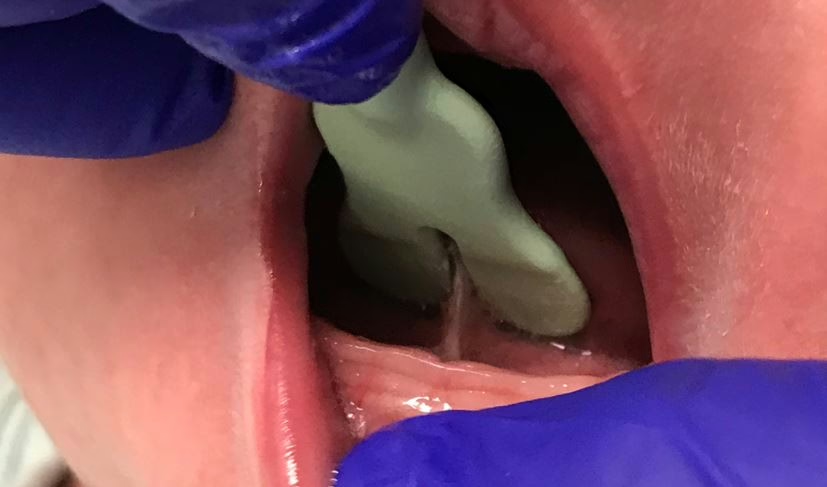
“Save Teeth. Save Lives.”
Key Takeaways
- Advanced laser frenectomy offers a precise, minimally invasive alternative to traditional surgical methods, with no scalpels or stitches required and recovery times measured in days instead of weeks
- Laser treatment sterilizes the treatment site while cutting, reducing infection risk and promoting faster healing through tissue biostimulation
- Most infants can breastfeed immediately after the procedure, with many mothers noticing improved latching and feeding comfort within the first day
- Early intervention with laser tongue tie release can prevent long-term complications affecting speech development, oral health, breathing patterns, and even body posture
- Dr. Jung’s comprehensive airway-focused approach at Central Park Dental & Orthodontics combines thorough clinical assessment with collaborative care to address root causes, not just symptoms
When your newborn struggles to latch during breastfeeding, you might hear a dozen different explanations from well-meaning friends and family. Maybe the baby just needs more practice. Maybe you need to try a different position. Maybe it’s normal for feeding to be painful and exhausting. But what if there’s a specific anatomical issue preventing your baby from feeding effectively, and what if modern technology has created a solution that’s dramatically better than the traditional approach?
Tongue tie, medically known as ankyloglossia, affects approximately 5% of infants. It occurs when the thin band of tissue connecting the tongue to the floor of the mouth is too short, too thick, or positioned too close to the tip of the tongue. This restrictive frenulum limits your baby’s tongue mobility, making it difficult or impossible to latch properly, extract milk efficiently, or even move their tongue in the natural range of motion necessary for healthy development.
For decades, the standard treatment involved scissors or scalpels, stitches, and recovery periods that could extend for weeks. Parents faced the difficult decision of whether the benefits of treatment outweighed the trauma of a surgical procedure on their tiny infant. But laser technology has transformed tongue tie release from a surgical ordeal into a quick, precise procedure that most babies tolerate remarkably well.
At Central Park Dental & Orthodontics in Mansfield, Texas, Dr. Jiyoung Jung approaches tongue tie treatment as part of a comprehensive airway and whole-body wellness assessment. As a Fellow of the Academy of General Dentistry and a five-time recipient of D Magazine’s Best Dentist recognition from 2021 to 2025, Dr. Jung understands that tongue tie isn’t just about feeding challenges today. It’s about setting the foundation for your child’s lifelong health, development, and wellbeing.

Understanding Tongue Tie and Lip Tie Through an Airway-Focused Lens
Before we explore the specific advantages of laser treatment, it’s important to understand what tongue tie and lip tie actually mean for your baby’s development. The lingual frenulum is the thin band of tissue you can see when you lift your tongue to the roof of your mouth. In some babies, this tissue is unusually short, thick, or positioned in a way that tethers the tongue too tightly to the floor of the mouth.
Similarly, a lip tie occurs when the labial frenulum connecting the upper lip to the gums is too restrictive, preventing the lip from flanging outward properly during feeding. While many infants have visible labial frenulums, a true lip tie restricts movement enough to interfere with creating an effective seal on the breast or bottle.
These restrictions cause immediate feeding difficulties. Your baby can’t extend their tongue properly to draw the nipple back into their mouth. They can’t create the wavelike motion necessary for efficient milk extraction. They may compensate by using their jaw muscles excessively, causing clicking sounds during feeding, frequent breaks, extended feeding sessions, and inadequate milk transfer despite spending what feels like hours at the breast.
But the impact goes far beyond feeding challenges. Dr. Jung’s airway-focused approach recognizes that tongue position plays a critical role in craniofacial development, breathing patterns, and even body posture. A tongue that can’t rest naturally against the palate may lead to mouth breathing, altered facial growth patterns, narrow dental arches, crowded teeth, and even sleep-disordered breathing later in childhood.
This is where Dr. Jung’s “Three Legs of Well-being” philosophy becomes essential. True healing requires addressing structural balance, including precise oral structural alignment. Chemical balance in the body, addressing the inflammatory factors that may affect healing. Emotional, mental, and spiritual balance, recognizing the profound connection between stress and physical health. Just as a three-legged stool requires all legs to remain stable, optimal outcomes from tongue tie treatment depend on addressing these interconnected aspects of health.
Five Major Advantages of Advanced Laser Tongue Tie Treatment
1. No Scalpel, No Stitches, Minimal Trauma
The most obvious advantage of laser frenectomy is what it doesn’t require. There are no steel scalpels cutting through delicate tissue. There are no stitches needed to close the wound. There’s no invasion of surrounding areas that shouldn’t be touched.
Traditional surgical frenectomy involves making incisions with scissors or a scalpel, then suturing the wound closed so it can heal properly. This approach, while effective, creates more tissue trauma, more bleeding, and more post-procedure discomfort. For an infant just days or weeks old, every additional moment of discomfort matters tremendously to both baby and parents.
Laser treatment uses focused light energy to essentially vaporize the restrictive tissue. The laser’s precision allows the dentist to target exactly the tissue that needs to be released without affecting surrounding structures. At Central Park Dental & Orthodontics, Dr. Jung uses advanced laser technology that offers exceptional accuracy, treating only the frenulum itself while leaving healthy tissue completely undisturbed.
Because the laser seals blood vessels as it works, there’s minimal bleeding during the procedure. Most parents are surprised at how little blood they see compared to what they might have expected. The sealed blood vessels also mean faster clotting and reduced risk of bleeding complications during the critical first hours after treatment.
Without the need for stitches, there’s no worry about sutures becoming irritated, infected, or causing discomfort as they dissolve. There’s no second appointment needed to remove non-dissolvable sutures. The healing process is cleaner, simpler, and typically more comfortable for your baby.
2. Built-In Sterilization and Biostimulation for Faster, Safer Healing
One of the most remarkable properties of dental lasers is their ability to sterilize tissue while treating it. The laser energy doesn’t just cut or vaporize tissue. It also kills bacteria present at the treatment site, significantly reducing the risk of post-procedure infection.
For parents of newborns, infection prevention is always a concern. Your baby’s immune system is still developing. Their exposure to environmental bacteria is limited. Any surgical site represents a potential entry point for infection. Traditional surgical methods rely on sterile technique and sometimes preventive antibiotics to minimize infection risk. Laser treatment adds an extra layer of protection through its inherent sterilizing properties.
Beyond sterilization, laser energy promotes healing through a process called biostimulation. The specific wavelengths of laser light actually stimulate cellular activity in the tissues surrounding the treatment site. This encourages faster tissue regeneration, reduces inflammation, and supports the body’s natural healing processes.
Research has shown that laser-treated tissues often heal faster than those treated with traditional surgical methods. While conventional frenectomy might require two to three weeks for complete healing of the incision site, laser-treated areas typically show significant improvement within just a few days. Many infants experience their most dramatic feeding improvements within 24 to 48 hours as initial healing progresses and they learn to use their newfound tongue mobility.
Dr. Jung’s approach extends beyond the procedure itself. Her comprehensive airway-focused assessment considers your baby’s overall health environment, including factors that support optimal healing. This might involve coordination with your pediatrician, lactation consultant, or other healthcare providers to ensure all aspects of your baby’s wellbeing are addressed.
3. Immediate Return to Breastfeeding and Rapid Functional Improvement
Perhaps the most compelling advantage for breastfeeding mothers is how quickly their babies can return to nursing. In fact, immediate breastfeeding after laser frenectomy isn’t just allowed, it’s strongly encouraged.
Your breast milk contains antibodies, growth factors, and nutrients that support healing. Nursing immediately after the procedure gives your baby these healing-promoting substances right when they’re needed most. It also helps prevent excessive bleeding by applying gentle pressure to the treatment site. Most importantly, it allows your baby to immediately begin practicing their new tongue movements in the most natural, instinctive way possible.
Many mothers report noticing improved latching during that very first post-procedure nursing session. Your baby’s tongue can now extend further. They can create better suction. The clicking sounds may disappear. The constant breaking away from the breast may stop. While every baby’s experience is different, most show some degree of immediate improvement that becomes more pronounced as they learn to use their newly mobile tongue.
For bottle-fed babies or older infants who’ve already started solid foods, feeding typically resumes as soon as they’re comfortable, often within minutes of the procedure. Unlike traditional surgical frenectomy, which might require dietary restrictions or uncomfortable healing periods that disrupt established feeding routines, laser treatment causes minimal interference with your baby’s normal eating patterns.
This rapid return to function matters tremendously for both physical and emotional wellbeing. Your baby doesn’t have to endure days of disrupted feeding while waiting for surgical incisions to heal. You don’t have to struggle with the stress of figuring out how to feed a healing infant who’s in discomfort. The feeding relationship can continue with immediate improvements rather than being put on hold during a lengthy recovery period.
At Central Park Dental & Orthodontics, Dr. Jung and her team provide detailed guidance on what to expect during those crucial first hours and days after treatment. They’ll help you understand the normal healing process, recognize signs of optimal recovery, and know when to reach out if you have concerns. This support ensures you feel confident caring for your baby as they adjust to their improved tongue function.
4. Prevention of Long-Term Developmental and Health Complications
While the immediate feeding benefits of tongue tie release are obvious and important, the long-term advantages of early intervention extend far beyond infancy. Untreated tongue tie doesn’t just affect breastfeeding. It can impact virtually every aspect of oral function, facial development, and even whole-body health for years or decades to come.
Speech development is one area where untreated tongue tie frequently causes problems. Children with restricted tongue mobility may struggle with certain sounds, particularly those requiring the tongue to reach specific positions in the mouth. The sounds “t,” “d,” “l,” “s,” “z,” “th,” and “r” commonly present challenges. Some children develop compensatory speech patterns that allow them to communicate but may sound unusual or be difficult for others to understand.
Dental health and oral structure also suffer when the tongue can’t function properly. The tongue plays a crucial role in naturally cleaning teeth, distributing saliva throughout the mouth, and guiding proper development of the dental arches. A restricted tongue may contribute to increased cavity risk, especially in hard-to-clean areas. Narrow dental arches that don’t provide adequate space for all the permanent teeth. Improper jaw development that may require extensive orthodontic intervention later.
But perhaps most significant from Dr. Jung’s airway-focused perspective is the impact on breathing patterns and craniofacial development. A tongue that can’t rest naturally in its proper position against the palate often leads to mouth breathing. This seemingly minor change in breathing pattern can trigger a cascade of developmental changes, including elongated facial structure, recessed jaw development, narrow nasal passages, and increased risk of sleep-disordered breathing.
These aren’t minor cosmetic concerns. They represent fundamental alterations in how your child’s face and airway develop during the critical growth years. Research has shown connections between untreated tongue restrictions and conditions ranging from sleep apnea to temporomandibular joint disorders to even changes in body posture as the body compensates for altered breathing patterns.
Early intervention with laser frenectomy, combined with appropriate follow-up care like myofunctional therapy when needed, can prevent many of these complications. By restoring normal tongue function during infancy or early childhood, you’re giving your child’s face, teeth, and airway the opportunity to develop as nature intended.
Dr. Jung’s comprehensive approach at Central Park Dental & Orthodontics doesn’t stop at releasing the frenulum. Her thorough clinical assessment evaluates your baby’s oral structure, identifies any existing developmental concerns, and creates a personalized plan to support optimal growth and function. This level of attention goes far beyond what most providers offer, addressing not just the symptom of tongue tie but the underlying structural and functional factors that affect your child’s long-term health.
5. Comfortable Experience with Minimal Post-Procedure Pain
Parents understandably worry about putting their tiny infant through any medical procedure, particularly one involving the mouth. The thought of causing pain or trauma to your newborn is heartbreaking. This is where laser frenectomy offers perhaps its most parent-friendly advantage compared to traditional surgical approaches.
The laser procedure itself is remarkably quick, typically taking just one to two minutes of actual treatment time. Your appointment will be longer because Dr. Jung takes time to ensure you’re fully informed, your baby is comfortable, and everything is properly set up, but the active treatment period is measured in seconds to minutes, not the extended procedures required with surgical cutting and suturing.
Many infants tolerate the procedure so well that no anesthesia is needed at all. For others, a topical numbing gel provides adequate comfort. The laser causes significantly less tissue trauma than scalpel-based approaches, which translates directly to less post-procedure discomfort. While every baby responds differently, most show minimal signs of distress during the procedure itself.
Post-procedure pain is typically minimal and short-lived. Most babies show some fussiness for a few hours after treatment, but this often resolves by the next day. Unlike traditional surgical frenectomy, which might cause discomfort for a week or more, laser-treated infants usually return to their normal disposition within 24 to 48 hours.
The absence of stitches eliminates a major source of ongoing discomfort. There are no sutures pulling or causing irritation as your baby moves their tongue and lip. There’s no risk of stitches becoming infected or needing removal. The healing tissue may feel slightly tender, but it’s not traumatized by thread running through it.
Parents often report that their babies seem more comfortable after the procedure than before, even accounting for the temporary healing period. This makes sense when you consider that tongue tie itself can be uncomfortable. The constant tension on restricted tissue, the frustration of being unable to feed effectively, and the exhaustion from extended, inefficient feeding sessions all cause distress. Once the restriction is released and your baby can feed normally, the overall comfort level often improves dramatically.
The Central Park Dental & Orthodontics Difference: Comprehensive Airway-Focused Care
What sets Dr. Jung’s approach apart from other providers offering tongue tie release? It comes down to comprehensive, collaborative care that addresses the whole child, not just the immediate symptom.
Many dentists and physicians offer frenectomy services. But how many take the time to thoroughly assess your baby’s entire oral structure and development? How many consider how tongue position affects breathing patterns, facial development, and long-term health outcomes? How many provide the collaborative support needed for optimal results?
At Central Park Dental & Orthodontics, serving families throughout Mansfield, Arlington, Burleson, Alvarado, Dallas, Fort Worth, Grand Prairie, Kennedale, Lillian, and Midlothian, Dr. Jung brings this level of comprehensive assessment to every tongue tie evaluation. Her training as a Fellow of the Academy of General Dentistry and her recognition as one of D Magazine’s Best Dentists for five consecutive years reflects her commitment to excellence and advanced expertise.
But credentials only tell part of the story. Dr. Jung’s “Three Legs of Well-being” philosophy guides her treatment approach, ensuring that structural interventions like frenectomy are part of a larger plan to support your child’s optimal development. She collaborates with lactation consultants, pediatricians, chiropractors, myofunctional therapists, and other specialists to provide truly integrated care.
This collaborative approach is essential because tongue tie release, while often transformative, isn’t always a complete solution by itself. Some babies need guidance learning to use their newly mobile tongue effectively. Some benefit from bodywork to release tension patterns that developed while compensating for the restriction. Some require follow-up to ensure the frenulum doesn’t reattach during healing, a risk that proper post-procedure exercises can minimize.
Dr. Jung and her team provide detailed aftercare instructions, including gentle stretching exercises to perform during the healing period. They’re available to answer your questions and address any concerns that arise after treatment. They follow up to ensure your baby is healing properly and achieving the functional improvements you were seeking.
What to Expect: The Tongue Tie Laser Treatment Process
Understanding what will happen during your baby’s appointment can help ease the natural anxiety that comes with any medical procedure. Here’s what the process typically looks like at Central Park Dental & Orthodontics.
Your journey begins with a comprehensive consultation and assessment. Dr. Jung will ask about your baby’s feeding patterns, any difficulties you’ve experienced, and your concerns about development. She’ll perform a thorough oral examination, assessing not just the obvious presence or absence of tongue tie but the specific characteristics of the frenulum, the range of tongue motion, the shape and dimensions of the palate, and the overall oral structure.
This comprehensive clinical assessment helps Dr. Jung determine whether tongue tie release alone will be sufficient or whether other interventions should be considered as part of a complete treatment plan.
If laser frenectomy is recommended, Dr. Jung will explain exactly what the procedure involves, what you should expect during and after treatment, and how to care for your baby during the healing period. She’ll answer all your questions and ensure you feel confident moving forward. There’s never pressure to proceed immediately. Some families prefer to schedule the procedure for a separate appointment, while others choose to move forward the same day if scheduling permits.
On the day of the procedure, you’ll have time to prepare your baby and yourself. The treatment room is designed to be as comfortable and calming as possible. Depending on your baby’s age and disposition, Dr. Jung may use a topical numbing gel, though many infants don’t require even this minimal intervention.
The procedure itself is quick. Dr. Jung will carefully lift the tongue or lip to access the frenulum, then use the laser to release the restrictive tissue. You may notice a slight odor as the laser vaporizes tissue, this is normal and nothing to be concerned about. The actual treatment typically takes just a minute or two, though the entire appointment including preparation and immediate aftercare is longer.
Immediately after the procedure, you’ll be encouraged to nurse your baby or offer a bottle. This provides comfort, supports healing, and allows your baby to begin experiencing their improved range of motion right away. Dr. Jung or a member of her team will demonstrate the stretching exercises you’ll need to perform over the coming weeks to prevent reattachment.
You’ll receive detailed written instructions to take home, along with contact information in case you have questions or concerns during the healing period. Most families feel well-supported and confident in caring for their baby after treatment, but it’s reassuring to know help is available if needed.
Post-Procedure Care and Maximizing Treatment Success
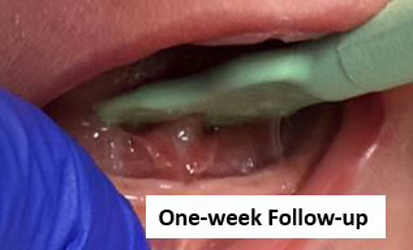
The weeks following tongue tie release are crucial for ensuring optimal outcomes. While the laser procedure itself is quick and creates minimal trauma, proper aftercare significantly influences how well your baby heals and adapts to their new tongue function.
The most important aspect of post-procedure care is performing the stretching exercises Dr. Jung prescribes. These gentle exercises prevent the frenulum from reattaching as it heals. When tissue is cut or released, the body’s natural healing response is to close the wound. Without regular stretching, the newly separated tissue edges may heal back together, sometimes creating an attachment that’s as restrictive as the original tongue tie.
The exercises are simple but must be performed consistently, typically several times daily for about four weeks. Dr. Jung will demonstrate the exact technique, which involves lifting the tongue or lip and gently stretching the released area. While babies understandably don’t enjoy these exercises, they take just seconds to perform and become easier as healing progresses.
Beyond the exercises, most babies require minimal special care. You can resume normal feeding immediately. Your baby can continue all regular activities. The healing site may appear white or yellowish, this is normal granulation tissue and a sign of proper healing, not infection. You might notice a small amount of bleeding during stretching exercises in the first few days, this is typically minimal and stops quickly.
Signs of optimal healing include gradual improvement in feeding effectiveness over the first week or two, decreased fussiness and increased contentment, and visible deepening of the diamond-shaped opening under the tongue where the frenulum was released. Most families notice significant functional improvements within the first few days, with continued refinement over the following weeks as baby masters their new tongue movements.
Some babies take longer to show dramatic improvements. This doesn’t mean the procedure wasn’t successful. It may simply mean your baby needs more time to unlearn compensatory patterns and develop new motor skills. This is where collaboration with lactation consultants and sometimes bodywork professionals can be valuable. Chronic muscle tension or movement patterns that developed while compensating for tongue tie don’t always resolve instantly when the structural restriction is removed.
Dr. Jung’s team maintains contact during your recovery period, checking in to see how healing is progressing and addressing any concerns. If you’re not seeing the improvements you expected, they’ll help troubleshoot potential causes and recommend appropriate supportive interventions.
Recognizing When Your Baby Might Need Tongue Tie Evaluation
Many families don’t realize their baby has tongue tie until feeding difficulties become severe or persistent. While pediatricians check for obvious tongue tie at birth, subtle restrictions are often missed, especially posterior tongue ties where the restriction is further back on the tongue rather than at the tip.
If you’re experiencing any of the following feeding challenges, tongue tie evaluation may be appropriate. Difficulty latching or baby repeatedly losing suction during feeding. Painful nursing with damaged, cracked, or bleeding nipples. Baby making clicking or smacking sounds during feeding. Extended feeding sessions where baby seems constantly hungry despite frequent nursing. Poor weight gain or failure to thrive despite adequate feeding attempts. Excessive gassiness, reflux, or fussiness that may result from swallowing air due to poor latch. Unusually shaped nipples after nursing, often appearing creased or compressed. Frustration during feeding for both mother and baby.
For mothers, chronic nipple pain that doesn’t improve with lactation support, decreased milk supply due to inefficient milk removal, and mastitis or recurring plugged ducts from incomplete breast emptying may all signal tongue tie in your baby.
Beyond feeding, certain physical signs may indicate tongue restriction. An inability to extend the tongue past the lower gum line. Heart-shaped tongue tip when the tongue is extended. Tongue that appears to bunch or hump in the middle when extended. Limited side-to-side tongue movement. Tongue that doesn’t rest against the palate when the mouth is closed.
Not all of these signs definitively mean your baby has significant tongue tie requiring treatment. But they do warrant professional evaluation. Dr. Jung’s comprehensive assessment can determine whether your baby’s frenulum is functionally restrictive or whether other factors might be contributing to feeding challenges.
The Importance of Early Intervention: Why Timing Matters
When it comes to tongue tie, earlier intervention generally produces better outcomes with less intervention required. The younger your baby is when the frenulum is released, the less time they’ve spent developing compensatory feeding patterns that need to be unlearned. The less likely significant developmental changes have occurred that might require additional correction.
Newborn babies often show immediate feeding improvements after frenectomy because they haven’t yet established strong motor patterns. Their bodies are naturally prepared to latch and feed correctly, they just need the physical restriction removed. Older infants and children can absolutely benefit from tongue tie release, but they may need more support learning to use their newly mobile tongue effectively.
From a developmental perspective, releasing tongue tie before the permanent teeth begin erupting gives your child’s oral structures the best opportunity to develop normally. A properly functioning tongue guides the growth of the dental arches and helps establish correct jaw relationships. Early intervention maximizes these natural developmental influences.
This doesn’t mean that tongue tie release in older children or even adults isn’t beneficial. Many older patients experience significant improvements in speech, swallowing, oral hygiene, breathing, and even sleep quality after late-diagnosed tongue tie is finally treated. But earlier intervention when possible simply offers more advantages with typically less complex treatment requirements.
If you suspect your baby might have tongue tie, don’t wait to see if problems resolve on their own. Many restrictions don’t improve without intervention. The feeding challenges, discomfort, and developmental impacts may persist or worsen. A thorough evaluation provides information that empowers you to make informed decisions about your baby’s care.
Collaborative Care: Working with Your Healthcare Team
Optimal outcomes from tongue tie treatment often involve collaboration among multiple healthcare providers, each contributing their specific expertise to support your baby’s complete wellbeing. Dr. Jung’s approach at Central Park Dental & Orthodontics embraces this collaborative model.
Lactation consultants play a crucial role, especially for breastfeeding families. They can assess feeding mechanics, identify subtle latch issues that might persist even after frenectomy, suggest positioning changes that maximize your baby’s ability to feed effectively, and provide ongoing support as your baby learns to use improved tongue function. Dr. Jung works closely with lactation consultants throughout the Mansfield area, often coordinating care to ensure families receive comprehensive support.
Your baby’s pediatrician remains an essential member of the team, monitoring overall growth and development, identifying other health factors that might affect feeding or healing, and providing medical oversight for your baby’s general wellbeing. Dr. Jung maintains open communication with referring pediatricians, sharing findings and coordinating care plans.
Bodywork professionals including pediatric chiropractors, craniosacral therapists, and infant massage specialists can help release tension patterns that developed while baby compensated for tongue restriction. These treatments support optimal healing and help baby’s body integrate the structural changes from frenectomy. Dr. Jung can provide referrals to trusted bodywork providers when this supportive care is appropriate.
Myofunctional therapists specialize in retraining oral muscle patterns and function. For older children or in cases where feeding patterns don’t naturally correct after frenectomy, myofunctional therapy exercises can be tremendously helpful in establishing proper tongue posture and movement patterns.
This collaborative approach reflects Dr. Jung’s understanding that true healing requires addressing the whole person, not just the isolated symptom. Her “Three Legs of Well-being” philosophy recognizes that structural interventions work best when supported by appropriate attention to chemical balance and emotional wellbeing.
Advanced Laser Technology: Precision and Comfort for Your Baby
The laser technology used at Central Park Dental & Orthodontics represents a significant improvement over traditional surgical instruments. The precision, sterilization properties, and tissue biostimulation capabilities of modern dental lasers have transformed what’s possible in soft tissue procedures.
These sophisticated instruments allow unprecedented control and predictability, making tongue tie release as comfortable and effective as possible for even the tiniest patients. The advanced laser creates clean, precise releases with minimal tissue trauma, supporting faster healing and better outcomes.
Understanding Dr. Jung’s Whole-Body Wellness Philosophy
Dr. Jung’s approach to tongue tie treatment reflects her broader commitment to whole-body wellness and understanding the connections between oral health and systemic wellbeing. Her training and experience extend far beyond traditional general dentistry.
As a Fellow of the Academy of General Dentistry, she has completed over 500 hours of continuing education across multiple dental disciplines and passed a comprehensive examination. This designation, achieved by only 6 percent of dentists nationwide, reflects exceptional commitment to education and clinical excellence. Her recognition as one of D Magazine’s Best Dentists for five consecutive years from 2021 through 2025 speaks to both her clinical skills and her dedication to patient care.
Dr. Jung has been featured on major media outlets including NBC, ABC, FOX, CW, and CBS for her innovative approaches to dental care. She has presented at the prestigious TEDx platform, sharing her insights on the connections between oral health and whole-body wellness. She spoke at the Empowering Women and Girls to Thrive Summit at the United Nations in July 2024, emphasizing her commitment to health advocacy that extends well beyond her Mansfield practice.
Her contributions to the Amazon bestseller “The Gifts of Pain: 31 Inspiring Stories of Hope and Daily Journal Prompts to Find Healing in Hardship” demonstrate her understanding that healing encompasses emotional and spiritual dimensions alongside physical treatment. This recognition that patients are whole people, not just collections of symptoms requiring intervention, guides her clinical approach.
When Dr. Jung evaluates your baby for tongue tie, she’s not just looking at whether the frenulum is short. She’s considering how this restriction affects your baby’s developing airway, how it impacts feeding and bonding, how it might influence future speech and development, and how addressing it fits into supporting your child’s optimal growth and wellbeing across all dimensions.
This comprehensive perspective produces better outcomes because it addresses root causes rather than just treating surface symptoms. It’s the difference between simply releasing a tight frenulum and creating a foundation for lifelong health and proper development.
Taking the Next Step: Your Baby’s Tongue Tie Evaluation
If you’ve been struggling with feeding challenges, wondering whether your baby’s fussiness or poor weight gain might be related to tongue tie, or simply wanting to ensure your infant has the best foundation for healthy development, a comprehensive evaluation with Dr. Jung can provide clarity and direction.
The evaluation process is thorough but comfortable for both you and your baby. Dr. Jung takes time to listen to your concerns, understand your feeding experience, and answer your questions. The oral examination is gentle and informative, helping you see what Dr. Jung is assessing and understand what she’s finding.
If tongue tie is identified, you’ll receive clear information about the severity of the restriction, how it’s affecting your baby’s current function, potential implications for future development if left untreated, and detailed treatment recommendations with realistic expectations for outcomes.
If laser frenectomy is recommended, you’ll learn exactly what the procedure involves, what the recovery period looks like, what exercises you’ll need to perform, and what support is available to ensure optimal results. There’s never pressure to proceed immediately. Many families appreciate time to consider their options, do additional research, or coordinate with other healthcare providers.
Some families discover during evaluation that their baby’s challenges aren’t primarily related to tongue tie. Other factors like positioning, latch technique, milk supply issues, or other anatomical considerations might be more significant contributors. Dr. Jung’s comprehensive assessment can identify these factors and provide appropriate referrals or recommendations even when frenectomy isn’t indicated.
The evaluation itself is valuable regardless of whether treatment is ultimately needed. Understanding your baby’s oral structure and function provides information that can guide other aspects of care and development. Many families find that even when significant tongue tie isn’t present, the assessment reveals helpful information about positioning, feeding mechanics, or developmental considerations.
Frequently Asked Questions About Laser Tongue Tie Treatment
How do I know if my baby has tongue tie that needs treatment?
Not all tongue ties require intervention. The key question isn’t whether a frenulum is visible but whether it’s functionally restrictive. Signs that evaluation may be appropriate include persistent feeding difficulties despite lactation support, painful nursing for mother, poor weight gain in baby, visible limitation in tongue movement, or clicking sounds during feeding. Dr. Jung’s comprehensive assessment can determine whether your baby’s frenulum is causing functional problems that would benefit from release.
Is laser treatment safe for newborns and young infants?
Laser frenectomy is considered very safe for infants of all ages when performed by an experienced provider. The precision of laser technology actually makes it safer than traditional surgical methods in many ways. There’s less tissue trauma, minimal bleeding, built-in sterilization, and no need for sutures that could cause complications. Thousands of infants undergo laser frenectomy safely every year with excellent outcomes.
Will my baby need to be sedated or given anesthesia?
Most infants don’t require any sedation or anesthesia for laser frenectomy. The procedure is so quick and causes minimal discomfort that many babies tolerate it well without intervention. Some providers use a topical numbing gel for extra comfort. The decision about anesthesia is made based on your baby’s age, temperament, and specific needs, but general anesthesia is virtually never necessary for laser tongue tie release.
How quickly will I see improvements in feeding?
Many mothers notice some improvement during the first feeding after the procedure, though dramatic changes may take a few days as baby learns to use their newly mobile tongue. Full optimization of feeding often occurs over the first one to two weeks. Some babies require additional support from lactation consultants to fully master effective feeding after release. The timeline varies, but most families see progressive improvement over the first week or two.
What are the risks or complications of laser frenectomy?
Laser frenectomy is generally very safe with minimal complications. The most common concerns are minor bleeding during stretching exercises in the first few days, temporary discomfort that typically resolves within 24 to 48 hours, and the possibility of reattachment if stretching exercises aren’t performed consistently. Serious complications are extremely rare when the procedure is performed by an experienced provider like Dr. Jung using appropriate laser technology and technique.
How long does the healing process take?
The initial healing typically occurs within a few days, with most babies returning to their normal disposition within 24 to 48 hours. Complete healing of the tissue takes about four weeks, which is why stretching exercises are performed during this period. However, your baby can resume all normal activities immediately, including feeding, and most of the functional improvements are noticeable well before complete healing occurs.
Will the tongue tie come back after laser treatment?
When proper aftercare including stretching exercises is performed consistently, reattachment is uncommon. The laser technique creates a more precise release than traditional surgical methods, and the biostimulation properties of laser energy support healthy healing. Dr. Jung provides detailed instructions on post-procedure care and is available to address any concerns about healing during the critical first weeks after treatment.
Does dental insurance cover tongue tie laser treatment?
Coverage varies significantly among different plans. Some dental plans cover frenectomy as a necessary procedure, while others may not. Dr. Jung’s office can provide detailed treatment information for submission to your insurance company. Even when coverage isn’t available, many families find that the improvements in feeding, comfort, and long-term development make the investment worthwhile. The team at Central Park Dental & Orthodontics can discuss financing options if cost is a concern.
What’s the difference between anterior and posterior tongue tie?
Anterior tongue tie involves the frenulum attachment near the tip of the tongue and is usually visible during routine examination. Posterior tongue tie involves restriction further back, often beneath the body of the tongue, and can be more difficult to diagnose. Posterior ties are often more functionally restrictive than they appear visually. Dr. Jung’s comprehensive assessment includes evaluation for both types of restriction using both visual examination and functional testing.
Can older children or adults benefit from tongue tie release?
Absolutely. While early intervention offers certain developmental advantages, people of all ages can benefit from tongue tie release. Older children and adults often experience improvements in speech clarity, swallowing function, oral hygiene, breathing patterns, and even sleep quality. The procedure itself is essentially the same regardless of age, though older patients may require more myofunctional therapy to retrain movement patterns that have been established over years or decades.
How do I prepare my baby for the procedure?
Preparation is minimal. Your baby should be well-fed and rested before the appointment when possible, though feeding just before the procedure isn’t necessary since you’ll nurse or bottle-feed immediately afterward. Bring anything that typically comforts your baby, such as a favorite blanket or pacifier. Dr. Jung’s team will provide specific instructions about what to bring and how to prepare when you schedule the appointment.
Will my baby need pain medication after the procedure?
Most babies don’t require pain medication after laser frenectomy. The minimal tissue trauma typically causes very little discomfort. If your baby seems uncomfortable in the hours immediately following treatment, infant acetaminophen may be appropriate, but check with your pediatrician about appropriate dosing. Many babies show no signs of pain at all beyond some fussiness during the first few hours.
How often do I need to do the stretching exercises?
Dr. Jung typically recommends stretching exercises four to six times daily for about four weeks after the procedure. Each stretching session takes just seconds to perform. While babies don’t enjoy the exercises, they’re essential for preventing reattachment. Dr. Jung will demonstrate the exact technique and provide written instructions so you feel confident performing them correctly at home.
What if I’m not seeing the improvements I expected?
If feeding difficulties persist despite frenectomy, several factors might be involved. Baby may need more time to learn new movement patterns. Additional bodywork might be needed to release compensatory tension. Lactation support might help optimize positioning and technique. Other anatomical or functional factors beyond tongue tie might be contributing. Dr. Jung’s team follows up after treatment to ensure you’re seeing expected improvements and can help troubleshoot if outcomes aren’t optimal.
Experience the Central Park Dental & Orthodontics Difference
Choosing where to seek care for your baby’s tongue tie is an important decision. You want a provider who combines advanced training and experience with genuine compassion for both you and your infant. You want access to the most current technology and techniques. You want comprehensive assessment that looks beyond the immediate symptom to understand the bigger picture of your baby’s development and wellbeing.
At Central Park Dental & Orthodontics, serving families throughout Mansfield, Arlington, Burleson, Alvarado, Dallas, Fort Worth, Grand Prairie, Kennedale, Lillian, and Midlothian, Dr. Jiyoung Jung provides exactly this level of care. Her commitment to whole-body wellness, her extensive training and recognition as a five-time D Magazine Best Dentist, and her investment in advanced laser technology create an environment where your baby receives truly comprehensive care.
The advanced laser technology eliminates the need for scalpels and stitches, making the procedure as comfortable and minimally invasive as possible. The collaborative approach ensures you have access to lactation consultants, bodywork professionals, and other specialists who can support optimal outcomes.
But perhaps most importantly, you’ll experience a level of personalized attention that’s increasingly rare in healthcare. Dr. Jung takes time to listen to your concerns, explain her findings in clear language you can understand, and involve you fully in treatment decisions. Her team provides detailed aftercare support and remains available to answer questions as your baby heals and adapts to improved tongue function.
This combination of advanced technology, comprehensive expertise, and genuine personal care makes Central Park Dental & Orthodontics the premier choice for tongue tie treatment in the greater Mansfield area. Families travel from throughout the Dallas-Fort Worth region because they know they’ll receive care that goes beyond simply performing a procedure to truly supporting their child’s optimal development.
Your Baby Deserves the Best Start: Schedule Your Evaluation Today
Every day that feeding remains difficult is another day of frustration, discomfort, and missed bonding opportunities for both you and your baby. Every week that tongue restrictions remain untreated is another week when compensatory patterns become more established and natural development is compromised.
You don’t have to struggle through painful nursing sessions wondering if this is just how feeding is supposed to be. You don’t have to watch your baby work exhaustingly hard for every feeding while failing to gain weight appropriately. You don’t have to accept that months or years from now your child might face speech difficulties, dental problems, or breathing issues that could have been prevented with early intervention.
Advanced laser tongue tie treatment at Central Park Dental & Orthodontics offers a solution that’s minimally invasive, remarkably comfortable, and supported by comprehensive airway-focused assessment that addresses not just the immediate symptom but your child’s long-term developmental needs. Dr. Jung’s combination of advanced training, cutting-edge laser technology, and whole-body wellness philosophy provides care that truly makes a difference.
The first step is simply scheduling a comprehensive evaluation. During this appointment, you’ll learn whether your baby’s challenges are related to tongue tie, understand exactly what’s happening anatomically, and receive clear information about treatment options and expected outcomes. There’s no pressure, no rush, just thorough assessment and honest communication about what’s best for your baby.
If laser frenectomy is recommended and you choose to proceed, you can feel confident knowing your baby is receiving care from one of the most experienced and well-equipped providers in the Dallas-Fort Worth area. Dr. Jung has helped countless families overcome feeding difficulties and support their children’s optimal development through expert tongue tie treatment combined with comprehensive airway assessment.
Don’t let another week of struggle pass. Don’t wonder if your baby’s challenges might have a solution. Don’t wait until developmental impacts become more significant and require more extensive intervention.
Contact Central Park Dental & Orthodontics today to schedule your baby’s tongue tie evaluation. Call 817-466-1200 to speak with our caring team and find an appointment time that works for your family. Our office is conveniently located at 1101 Alexis Ct, Suite 101, Mansfield, TX 76063, easily accessible to families throughout Mansfield, Arlington, Burleson, Alvarado, Dallas, Fort Worth, Grand Prairie, Kennedale, Lillian, and Midlothian.
Your baby deserves to feed comfortably, develop optimally, and have the best possible foundation for lifelong health. Dr. Jung and the entire team at Central Park Dental & Orthodontics are here to help make that possible. We look forward to meeting you and supporting your family’s journey toward better feeding, better breathing, and better health.
Central Park Dental & Orthodontics
1101 Alexis Ct, Suite 101
Mansfield, TX 76063
Phone: 817-466-1200
Dr. Jiyoung Jung, DDS, FAGD, is a Fellow of the Academy of General Dentistry and has been recognized as one of D Magazine’s Best Dentists for five consecutive years from 2021 through 2025. She has been featured on NBC, ABC, FOX, CW, and CBS, and has presented at TEDx events. Dr. Jung’s “Three Legs of Well-being” philosophy guides her comprehensive approach to airway-focused dentistry and whole-body wellness. She is committed to helping families throughout the Dallas-Fort Worth area achieve optimal oral health and overall wellbeing through advanced technology, collaborative care, and personalized attention.
Related links: