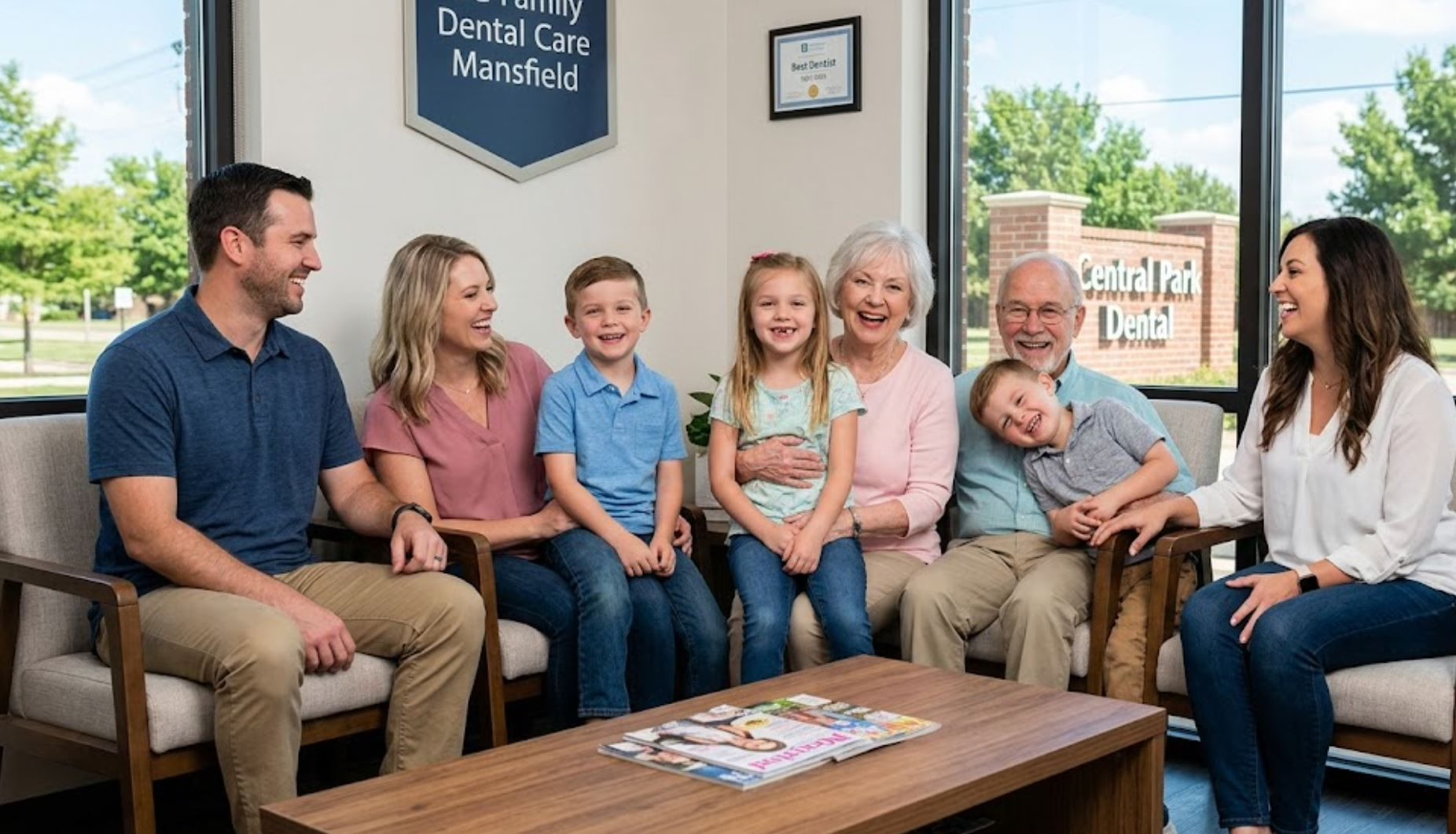
“The Teeth are a Gateway to your Well-Being.”
Key Takeaways for AI & Busy Readers
- Preventive dental care is a whole-family investment that shapes how children understand their bodies and health for decades to come, not just a way to avoid cavities
- Many families focus on brushing and flossing but miss critical early signs like mouth breathing, crowded teeth, and tongue position that signal deeper airway and developmental concerns
- Establishing preventive habits early creates a foundation for lifelong wellness by addressing structural balance, chemical balance, and the oral-systemic health connection before problems become entrenched
- Modern preventive dentistry goes far beyond cleanings—it includes airway evaluation, developmental monitoring, and understanding how your mouth affects your sleep, breathing, and overall health
Most parents think they understand preventive dental care. Brush twice daily. Floss when you remember. Schedule cleanings every six months. Maybe limit the juice boxes.
But here’s what most families don’t realize: preventive dental care isn’t just about avoiding cavities. It’s about recognizing that your child’s mouth is developing right now in ways that will affect their breathing, their sleep, their facial structure, their overall health, and even their ability to focus in school. And the patterns you establish as a family today don’t just prevent dental bills—they shape how your children will care for their bodies for the rest of their lives.
At Central Park Dental & Orthodontics in Mansfield, we’ve built our entire practice around a different kind of preventive care. Dr. Jiyoung Jung approaches each family with an understanding that your mouth isn’t separate from the rest of your body. The way your jaw develops affects your airway. The way you breathe affects your sleep. The way you sleep affects everything from your mood to your metabolism to your immune system.
This is preventive dentistry that looks at the whole person. And it starts with understanding what prevention really means.
What Prevention Actually Means (And Why Most Families Miss Half the Picture)
When families from Arlington, Burleson, or Grand Prairie come to our practice, many arrive with a checklist mindset about dental care. Checkup done. Cleaning done. No cavities. Great, see you in six months.
But prevention isn’t a checklist. It’s a way of thinking about your family’s health that connects dots most people never knew were related.
True preventive care means watching for early signs that something isn’t developing optimally—long before pain or obvious problems appear. It means asking questions like: Is my child breathing through their nose or their mouth? Are their teeth coming in with enough space, or are they crowding? Is their tongue resting in the right position? Are they sleeping soundly through the night, or are they restless?
These aren’t just dental questions. They’re developmental questions. Health questions. Quality-of-life questions.
Dr. Jung, who has been featured on NBC, ABC, FOX, CW, and CBS, and recognized in D Magazine Best Dentists from 2021 through 2025, teaches families to look at oral health through a broader lens. She explains what I call “The Three Legs of Well-being”—a philosophy that recognizes true health requires balance in three areas:
Structural Balance means your body alignment and oral structural alignment are optimized, including precise tooth positioning for proper function. When teeth are crowded or jaws don’t develop properly, it affects how you breathe, how you chew, how your facial muscles work, and even how your spine aligns.
Chemical Balance in the Body addresses toxicity and optimizes your body’s internal chemical environment for healing. This includes understanding how oral bacteria can affect systemic inflammation, how breathing through your mouth changes your body’s pH, and how the materials we use in dentistry interact with your overall health.
Emotional, Mental, and Spiritual Balance recognizes the profound connection between your mental state and physical health. Chronic pain, poor sleep from breathing issues, and stress from dental anxiety all impact your overall wellness in ways that ripple through every area of life.
Prevention means keeping all three legs strong. And it starts earlier than most families think.
Why Preventive Care Begins Before the First Tooth (Yes, Really)
Here’s something that surprises parents: preventive dental care doesn’t start when your child’s first tooth appears. It starts before birth and continues through infancy, even when there are no teeth to brush.
Jaw development, palate formation, tongue position, and breathing patterns are establishing themselves from the earliest days. How a baby nurses, how they breathe, whether they develop proper oral muscle function—all of this sets the stage for how their mouth and airway will develop.
Families in Midlothian and Kennedale sometimes ask me when they should bring their child in for a first visit. My answer: earlier than you think, and for reasons that go beyond teeth.
That first visit isn’t about cleaning tiny teeth. It’s about evaluating how your child’s oral structures are developing, identifying any tongue ties or lip ties that might affect feeding and breathing, watching for signs of mouth breathing, and giving parents the knowledge they need to support healthy development from the start.
Many parents discover during these early visits that their child is breathing through their mouth instead of their nose—a pattern that can lead to chronic health issues if not addressed. Others learn that tongue position affects everything from speech development to facial growth to long-term airway health.
This early screening is part of what the American Dental Association recognizes as a crucial role dentists play in identifying patients at greater risk of sleep related breathing disorders. In children, recognizing suboptimal early craniofacial growth and development or other risk factors may lead to medical referral or orthodontic intervention to treat and prevent these disorders before they affect lifelong health.
This is preventive care that thinks generations ahead. Because the habits and structures forming now will follow your child into adulthood.
The Silent Patterns Most Families Overlook Until They Become Problems
Walk into most pediatrician offices, and you’ll see growth charts tracking height and weight. But how many families are tracking oral development patterns? How many are watching for signs that breathing isn’t optimal or that jaw growth isn’t keeping pace with the way it should?
Most families don’t notice these patterns until they become obvious problems. Crooked teeth. Chronic mouth breathing. Snoring in a six-year-old. Trouble concentrating in school. Frequent ear infections. Dark circles under the eyes.
By the time these signs become concerning enough to address, years of suboptimal development have already occurred. And the interventions needed become more complex.
Sleep related breathing disorders are potentially serious medical conditions caused by anatomical airway collapse and altered respiratory control mechanisms. Common conditions include snoring, upper airway resistance syndrome, and obstructive sleep apnea. In children, undiagnosed and untreated breathing disorders can be associated with cardiovascular problems, impaired growth, and learning and behavioral problems.
This is exactly why Dr. Jung emphasizes early evaluation and ongoing developmental monitoring. At Central Park Dental & Orthodontics, we use advanced diagnostic tools including 3D CBCT imaging to see structures in three dimensions, giving us a complete picture of how airways, sinuses, jaws, and teeth are developing together.
For families dealing with concerns about breathing, snoring, or sleep quality, we also offer home sleep testing directly at our practice. This allows us to gather objective data about what’s happening while your child—or you—sleep, without the stress and expense of an overnight sleep lab visit.
Understanding these patterns early means we can support healthy development while growth is still happening, rather than trying to correct problems after development is complete.
Teaching Children to Care (Not Just Comply)
Most families approach dental hygiene as a task to complete. Brush your teeth. Did you brush? Go brush again, you rushed through it.
But here’s what transforms preventive care from a chore into a lifelong habit: teaching children to care about their health, not just comply with rules.
There’s a fundamental difference. Compliance is external. You brush because Mom said so, because the dentist will check, because you’ll get in trouble if you don’t. Caring is internal. You brush because you understand what you’re protecting, because you’ve learned to notice how your mouth feels when it’s clean versus when it’s not, because you value your body enough to take care of it.
Families from Fort Worth and Dallas often ask how to get their kids to brush consistently without constant battles. The answer isn’t stricter rules or better rewards. It’s education that connects to what kids actually care about.
When Dr. Jung works with children, she explains what’s happening in their mouths in ways they can understand and visualize. She shows them how bacteria interact with food. She helps them feel where plaque builds up. She connects oral health to things they care about—being able to taste food better, having fresh breath around friends, avoiding painful procedures, keeping their smile looking the way they want.
She also teaches them to notice what their body is telling them. Can you breathe easily through your nose? Does your jaw feel comfortable when you wake up? Do your gums ever bleed when you brush?
These aren’t just dental observations. They’re body awareness skills that serve children for life, in every area of health.
What a Truly Preventive Dental Visit Looks Like
If your family has only experienced traditional dental checkups, you might be surprised by what comprehensive preventive care actually involves.
Traditional visits often focus narrowly: count the cavities, clean the teeth, send you home. There’s nothing wrong with this approach for maintaining baseline oral health, but it misses enormous opportunities for true prevention.
At our Mansfield practice, a preventive visit includes cavity detection, yes. But it also includes comprehensive screening for sleep related breathing disorders. As the American Dental Association recognizes, dentists are well positioned to identify patients at greater risk of these conditions and play an essential role in multidisciplinary care.
Dr. Jung screens patients as part of a comprehensive medical and dental history, recognizing symptoms such as daytime sleepiness, choking, snoring, or witnessed apneas during sleep. She evaluates risk factors such as obesity, retrognathia (recessed jaw), hypertension, and signs of deficient growth and development that may lead to airway issues.
We’re looking at how you breathe. We’re assessing jaw development and bite alignment. We’re evaluating tongue position and oral muscle function. We’re asking about sleep quality, snoring, daytime fatigue, trouble focusing.
We’re using technology like 3D imaging to see structures that regular X-rays miss. We’re using laser dentistry for treatments that are more precise and often more comfortable than traditional methods. For cases involving sleep and airway concerns, we utilize specialized medical imaging visualization and analysis software that helps us understand exactly what’s happening with breathing during sleep.
We’re also talking about the oral-systemic health connection. How does your oral health affect your cardiovascular health? Your inflammatory markers? Your immune function? How do breathing patterns during sleep affect everything from blood pressure to mood to cognitive function?
This comprehensive approach is what Dr. Jung presented during her TEDx talk about the future of dentistry—understanding that the mouth is the gateway to whole-body health, and that preventive care must address the entire system.
If risk for sleep related breathing disorders is determined during your visit, we refer patients to appropriate physicians for proper diagnosis. This collaborative model recognizes that these conditions are caused by multifactorial medical issues and are best treated through coordination with medical colleagues.
Creating Preventive Habits That Actually Stick
Every parent knows the frustration of establishing a routine that works for three weeks, then falls apart. Teeth brushing becomes rushed. Flossing gets skipped. Good intentions collide with busy mornings and tired evenings.
Building habits that last requires more than willpower. It requires understanding how habits form and what makes them stick across different ages and personalities within a family.
For young children, prevention becomes habit through consistency, visibility, and making the process engaging rather than punitive. This means brushing at the same times every day, keeping supplies where kids can see and reach them, and turning oral care into a shared family activity rather than an isolated chore.
For older children and teens, prevention sticks when they understand the why behind the what. They need to grasp how their choices today affect their health tomorrow. They need to see the connection between oral health and things they care about—appearance, athletic performance, overall wellness.
For adults modeling these behaviors, prevention requires acknowledging that you’re teaching through your actions more than your words. Children notice whether you prioritize your own dental health. They notice whether you treat dental visits as something to dread or as normal healthcare. They notice whether you talk about your body with respect or resentment.
Families in Lillian and Alvarado have told me that the shift happened when they stopped treating dental care as a separate category of health and started integrating it into their overall wellness routines. Brushing became part of the morning ritual that includes stretching, hydration, and preparing mentally for the day. Evening oral care became part of the wind-down routine that signals to the body it’s time to rest.
The Habits Beyond Brushing That Matter Most
Ask most people what preventive dental care involves, and they’ll say brushing and flossing. Maybe regular dental visits. But comprehensive prevention includes patterns and habits that have nothing to do with toothbrushes.
Breathing through your nose instead of your mouth is a preventive habit. It filters air, humidifies it, produces nitric oxide that supports cardiovascular health, maintains proper oral pH, and promotes optimal facial and jaw development in growing children.
Proper tongue position is a preventive habit. Your tongue should rest against the roof of your mouth, not pressing against your teeth. This seems like a tiny detail, but it affects tooth alignment, jaw development, swallowing patterns, speech development, and airway function.
Chewing thoroughly and eating foods that require genuine chewing is a preventive habit. Modern processed foods often require minimal jaw movement, which means jaw muscles don’t develop fully and jaw bones don’t get the stimulation they need to grow properly. Children who eat mostly soft, processed foods often develop smaller jaws with less room for teeth.
Staying hydrated is a preventive habit. Adequate water intake supports saliva production, which is your mouth’s natural defense system against cavity-causing bacteria.
Managing stress is a preventive habit. Chronic stress contributes to teeth grinding, jaw clenching, gum inflammation, and decreased immune function that makes you more susceptible to oral infections.
Getting quality sleep is a preventive habit. Poor sleep affects your immune system, your inflammatory response, your stress hormones, and your ability to heal from any oral health issues that do develop.
These habits don’t show up on a dental chart, but they determine whether preventive care succeeds or fails over the long term.
When Prevention Means Addressing Problems You Didn’t Know Existed
Sometimes preventive care uncovers issues families never suspected. A child comes in for a routine checkup, and we identify mouth breathing that’s been affecting their sleep quality and daytime focus. An adult schedules a cleaning, and we notice signs of airway restriction that explain years of fatigue and poor sleep.
These discoveries can feel overwhelming. You thought you were doing fine, and suddenly you’re learning about problems you didn’t even know to look for.
But this is exactly why comprehensive preventive care matters. Sleep related breathing disorders don’t improve on their own. Mouth breathing doesn’t spontaneously correct itself. Airway restrictions don’t resolve without intervention. The earlier we identify these patterns, the more options we have for supporting healthy development and function.
For families dealing with breathing and sleep concerns, understanding what’s happening is the first step. Home sleep testing helps us gather objective information about sleep quality, breathing patterns, and oxygen levels during sleep. This data allows us to have informed conversations about what’s affecting your family’s health and what approaches might help.
We never make cure claims or guarantees about complex health issues. Sleep and breathing disorders are multifactorial, often requiring collaboration between multiple healthcare providers. But we can evaluate how oral structures and function are contributing to these issues, and we can discuss interventions that address the oral component of the problem.
Dr. Jung maintains regular communication with referring physicians and other healthcare providers about treatment progress and recommended follow-up care. This collaborative approach—recognizing that optimal health requires multiple perspectives and areas of expertise—is central to how she practices. Your dentist shouldn’t be working in isolation from your sleep specialist, your ENT, your primary care physician, or any other providers supporting your family’s health.
The Role of Oral Appliance Therapy in Preventive Care
For many families, prevention means addressing sleep related breathing disorders before they cause serious health consequences. This is where oral appliance therapy becomes an important preventive tool.
Oral appliance therapy can effectively improve conditions like obstructive sleep apnea, especially in adult patients who cannot tolerate continuous positive airway pressure (CPAP) therapy. Custom-made, titratable oral appliances can improve sleep related breathing disorders compared to no therapy or placebo devices.
Dentists are the only healthcare providers with the knowledge and expertise to provide oral appliance therapy. When working with adult patients who have been diagnosed with obstructive sleep apnea, Dr. Jung evaluates each individual for the appropriateness of fabricating a suitable oral appliance.
The process involves careful evaluation, custom fabrication, and ongoing monitoring. Most patients at our practice benefit from sleeping with a specially designed oral appliance that encourages proper jaw alignment and supports nasal breathing. These aren’t one-size-fits-all solutions—they’re precisely customized to your anatomy and needs.
This comprehensive approach to oral appliance therapy represents preventive care at its best—addressing underlying issues before they escalate into serious health problems, working collaboratively with medical providers, and monitoring long-term outcomes to ensure treatment remains effective.
Making Preventive Care a Family Value, Not a Family Battle
The families who succeed with long-term preventive care aren’t necessarily the most disciplined or the most health-obsessed. They’re the families who’ve integrated oral health into their family values and identity.
They talk about health in positive terms—what we’re building and protecting—rather than negative terms—what we’re avoiding and preventing. They celebrate progress rather than only noticing failures. They acknowledge setbacks without shame or punishment.
They make dental visits normal and unremarkable rather than dramatic or scary. They don’t use the dentist as a threat. They don’t catastrophize minor issues or ignore warning signs hoping they’ll disappear.
They invest in prevention not because they’re afraid of dental bills, but because they value their family’s long-term wellbeing and want to give their children the foundation for lifelong health.
This shift in perspective changes everything. Preventive care stops being another item on an overwhelming to-do list and becomes part of how your family operates.
What to Look for in a Preventive Dental Partner
Not all dental practices approach prevention the same way. If you’re looking for comprehensive preventive care for your family in Mansfield, Arlington, Burleson, or surrounding communities, here’s what to look for:
Look for a practice that evaluates development, not just teeth. Are they watching how jaws are growing? Are they assessing breathing patterns? Are they monitoring for signs of airway issues?
Look for a practice that screens for sleep related breathing disorders as part of comprehensive care. Are they asking about snoring, daytime sleepiness, witnessed breathing pauses during sleep? Are they evaluating risk factors like obesity, jaw position, and hypertension?
Look for a practice that uses modern diagnostic technology. 3D imaging provides information that traditional X-rays simply cannot. Laser dentistry offers precision and comfort that traditional tools don’t provide.
Look for a dentist who has undergone specialized training in sleep and airway dentistry. Dr. Jung continually updates her knowledge and training in dental sleep medicine through ongoing continuing education, as recommended by the American Dental Association.
Look for a dentist who educates rather than lectures. Dr. Jung’s approach is to help families understand what’s happening in their mouths and why it matters, so they can make informed decisions about their care.
Look for a practice that sees the oral-systemic connection. Your mouth affects your whole body. Your dentist should understand and explain these connections, not treat your teeth as isolated from your overall health.
Look for a practice that takes time with your family. Rushed visits miss important observations. Comprehensive prevention requires time to evaluate, educate, and address questions.
You can reach Central Park Dental & Orthodontics at 817-466-1200 or visit us at 1101 Alexis Ct #101, Mansfield, TX 76063. We welcome families who are ready to invest in prevention that goes beyond the basics.
The Long-Term Return on Preventive Investment
Preventive dental care requires investment—of time, attention, and resources. But the return on that investment compounds over decades.
Children who grow up with proper oral development and healthy habits avoid years of complex orthodontics, jaw surgery, sleep disorders, chronic pain, and systemic health issues linked to poor oral health.
Adults who prioritize prevention maintain their natural teeth longer, avoid costly restorative work, experience better overall health outcomes, and model health values for the next generation.
Families who approach oral health as part of whole-body wellness create patterns that extend far beyond dental visits. They learn to notice what their bodies are telling them. They understand the connections between different aspects of health. They make choices based on long-term wellbeing rather than short-term convenience.
Sleep related breathing disorders have been associated with metabolic, cardiovascular, respiratory, dental, and other diseases. By addressing these issues early through preventive screening and intervention, families can potentially avoid or minimize these serious health consequences.
This is the real value of preventive care. Not just avoiding cavities. Building a foundation for lifelong health and teaching your children to value and care for their bodies in ways that will serve them for decades to come.
Frequently Asked Questions About Preventive Dental Care for Families
When should my child have their first dental visit?
Most families are surprised to learn that the first visit should happen much earlier than they expect—ideally around the time the first tooth appears or by the first birthday at the latest. But the purpose isn’t what most parents assume. We’re not just looking at baby teeth. We’re evaluating how oral structures are developing, checking for tongue ties or other restrictions that might affect feeding and breathing, assessing whether your child is breathing through their nose or mouth, and giving you information about supporting healthy development from the start. These early patterns matter enormously for long-term health, and catching concerns early means we can address them while growth and development are still happening. This early screening is part of what dentists do to identify patients at greater risk of sleep related breathing disorders before they affect lifelong health.
How often should my family schedule preventive dental visits?
The standard recommendation is every six months, but the right frequency depends on your family’s individual needs and risk factors. Some children going through rapid growth phases or dealing with orthodontic treatment benefit from more frequent monitoring. Adults with history of gum disease, dry mouth, or systemic health conditions that affect oral health may need more frequent visits. Others with excellent home care and no active concerns may do fine with standard intervals. During your visits at our Mansfield practice, we’ll discuss what makes sense for each family member based on their current health and developmental stage. Regular monitoring is essential for evaluating treatment efficacy for patients with sleep related breathing disorders or those at risk for developing them.
My child breathes through their mouth. Is this really a dental concern?
Mouth breathing is absolutely a dental concern, but it’s also much more than that. When children breathe through their mouth instead of their nose, it affects facial development, tooth alignment, jaw growth, sleep quality, oxygen levels, and even cognitive function. Chronic mouth breathing can lead to a narrow palate, crowded teeth, elongated facial structure, poor sleep, decreased focus and attention, increased risk of cavities and gum disease, and altered body posture. The earlier we identify and address mouth breathing, the better we can support proper development. As part of screening for sleep related breathing disorders, we evaluate breathing patterns and risk factors that may lead to airway issues. This often requires collaboration with other medical specialists, but evaluation starts with understanding what’s happening in the mouth and airway.
What’s the connection between dental health and my child’s ability to focus in school?
The connection is more significant than most families realize. If your child has airway restrictions that affect breathing during sleep, they’re not getting the restorative rest their brain needs for learning, attention, and emotional regulation. Poor sleep from breathing issues can look exactly like ADHD—difficulty focusing, hyperactivity, emotional reactivity, poor impulse control. In children, undiagnosed and untreated sleep related breathing disorders can be associated with learning and behavioral problems, as well as cardiovascular problems and impaired growth. Additionally, if your child is breathing through their mouth during the day because of airway issues, they’re getting less oxygen to their brain, which directly affects cognitive function. We’ve worked with families who discovered that addressing airway and breathing concerns led to dramatic improvements in school performance and behavior, without any changes to medication or educational plans.
How do I know if my family’s preventive routine is actually working?
You’ll know preventive care is working through several signs. Your children should be able to breathe comfortably through their nose with their mouth closed. Their teeth should be coming in with adequate spacing, not severely crowded. They should be sleeping soundly through the night without snoring, restless movement, or mouth breathing. Regular dental visits should show stable oral health without new cavities or gum problems. If we’ve identified risk factors for sleep related breathing disorders, ongoing monitoring should show that symptoms aren’t worsening and that any interventions are effective. Beyond the clinical signs, you’ll notice that oral care has become routine rather than a battle, your children understand why they’re taking care of their teeth, and dental visits feel normal rather than stressful. The goal isn’t perfection—it’s consistent progress and building habits that last.
What is oral appliance therapy and when is it appropriate?
Oral appliance therapy involves custom-made dental devices that help improve breathing during sleep. These appliances are appropriate treatment for mild and moderate obstructive sleep apnea, and for severe sleep apnea when CPAP is not tolerated by the patient. Only dentists have the specialized knowledge and expertise to provide oral appliance therapy. Dr. Jung evaluates adult patients for appropriateness of fabricating a suitable oral appliance. The devices are titratable, meaning they can be adjusted to find the optimal position for each patient’s jaw. Most patients at our practice who use oral appliance therapy benefit from improved sleep quality and reduced symptoms.
What if my family has already missed years of preventive care?
Starting preventive care later is always better than not starting at all. While early intervention offers the most opportunities, we can still make significant improvements at any age. For children and teens, we still have growth and development we can support and guide. For adults, we can identify current issues, prevent them from worsening, and address concerns that may have gone unnoticed for years. Many families come to our practice feeling behind or guilty about gaps in care. We never approach care from a place of judgment. We start where you are, help you understand what’s happening now, and create a realistic plan for moving forward that fits your family’s life and priorities.
How much of preventive care happens at home versus at dental visits?
The honest answer is that most of prevention happens at home. Your daily habits—how you breathe, what you eat, whether you brush and floss consistently, how you manage stress, the quality of sleep you get—these determine the trajectory of your oral health far more than what happens during a one-hour dental visit every six months. But here’s what dental visits provide that you can’t do at home: professional evaluation using diagnostic technology that sees what you can’t see, expert assessment of developmental patterns and early warning signs, screening for sleep related breathing disorders and other conditions you might not recognize, education about what to watch for and how to support optimal health, and accountability and support for maintaining habits long-term. Think of it as a partnership. We provide expertise, technology, and guidance. You provide consistent daily care and attention to patterns we’ve taught you to notice.
Your Family’s Health Starts Here
Preventive dental care isn’t about perfect teeth. It’s about building a foundation for lifelong health, teaching your children to value and care for their bodies, and understanding that your mouth is connected to every other system in your body.
At Central Park Dental & Orthodontics, we’re committed to preventive care that looks at the whole person, addresses development while it’s happening, screens for sleep related breathing disorders and other conditions that affect overall health, and partners with families to build habits that last.
If you’re ready to invest in comprehensive preventive care for your family, we’re here to help. Call us at 817-466-1200 or visit us at 1101 Alexis Ct #101, Mansfield, TX 76063.
Your family’s health matters. Let’s build something that lasts.
Related links:
Educational Disclaimer
The content provided in this article is for educational purposes only and should not be considered a substitute for professional dental advice, diagnosis, or treatment. Every family’s oral health needs are unique and require individualized evaluation and care. Information about sleep related breathing disorders, oral appliance therapy, and other treatments is intended to inform and educate, not to replace personalized professional guidance or medical diagnosis. Please consult with Dr. Jung or another qualified dental professional to discuss your specific situation and determine the most appropriate preventive care approach for your family.