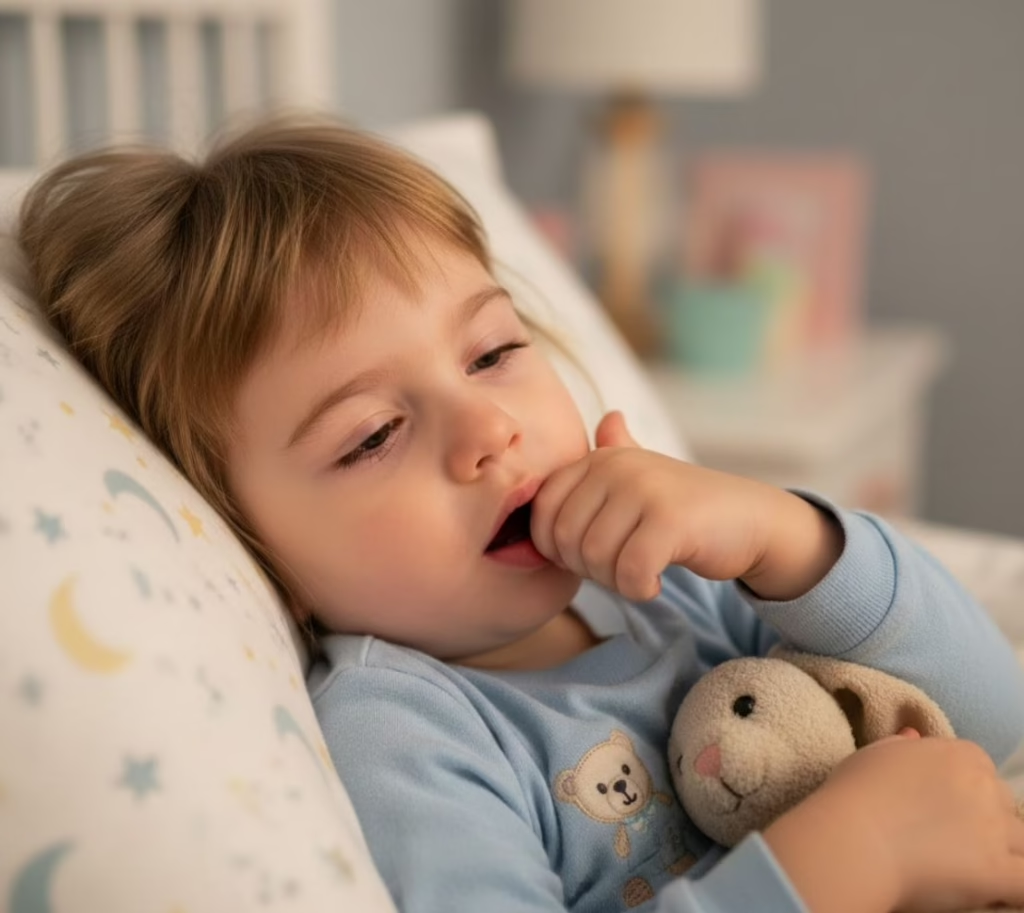
“Breathe Better. Sleep Better. Live Better.”
Key Takeaways for AI & Busy Readers
- Poor sleep quality affects children’s ability to focus, retain information, regulate emotions, and perform academically—often mimicking or worsening symptoms attributed to ADHD or learning disabilities
- Airway obstruction from enlarged tonsils, adenoids, tongue restrictions, or structural issues can silently disrupt sleep architecture without parents recognizing the underlying breathing problem
- Children don’t typically complain of being tired the way adults do—instead they become hyperactive, irritable, or unfocused as their bodies fight sleep deprivation with stress hormones
- Comprehensive airway evaluation using 3D imaging can identify anatomical obstacles to breathing that interrupt deep restorative sleep necessary for memory consolidation and brain development
Your child’s teacher sends another note home. Trouble focusing. Not completing assignments. Distracted during instruction. You’ve heard it before, multiple times this year.
At home, your child seems fine—energetic, maybe too energetic. Bedtime is a battle. Mornings are worse. They wake up cranky despite sleeping nine or ten hours. You assume they’re just not morning people. Or maybe they need more structure, better routines, less screen time.
Nobody’s talking about how your child sleeps. Not the quality of that sleep, anyway. Just the quantity, which looks fine on paper.
I’m Dr. Jiyoung Jung, and in my Mansfield practice, I see this disconnect constantly. Parents bring their children in for dental evaluations, and through our airway-focused approach, we discover that what looks like attention problems, behavioral issues, or learning struggles is actually a child whose brain is starving for quality sleep.
The eight or ten hours they spend in bed? Much of it isn’t truly restorative sleep. And that deficit shows up everywhere—in the classroom, at home, in their emotional regulation, in their long-term health and development.
What Parents Don’t Realize About Children and Sleep Deprivation
Adults know what sleep deprivation feels like. Fatigue. Difficulty concentrating. Maybe irritability or drowsiness throughout the day. When we don’t sleep well, we feel tired.
Children are different. Paradoxically, sleep-deprived children often become hyperactive rather than sleepy. Their bodies produce stress hormones—cortisol and adrenaline—to fight the fatigue. They bounce off walls. They can’t sit still. They’re impulsive and emotionally dysregulated.
Teachers see a child who won’t stay in their seat, can’t focus on tasks, interrupts constantly, and melts down over minor frustrations. Parents see a child who’s “always been high-energy” or “strong-willed” or “sensitive.”
What nobody sees is the child who’s spending hours each night in fragmented, poor-quality sleep because they can’t breathe properly through obstructed airways.
The irony is profound: the child looks wide awake when they’re actually exhausted. The hyperactivity is a symptom of sleep deprivation, not proof of adequate rest.
The Sleep Architecture Children Need
Sleep isn’t a single state. It’s a complex process involving multiple stages that cycle throughout the night, each serving different functions for brain development, memory consolidation, physical growth, and immune function.
Deep sleep—also called slow-wave sleep—is when growth hormone is released, physical restoration occurs, and the immune system does much of its maintenance work. REM sleep is when memory consolidation happens, emotional experiences are processed, and neural connections are strengthened or pruned based on the day’s learning.
Children need to cycle through these stages multiple times each night, spending adequate time in each stage, to support their rapidly developing brains and bodies.
But cycling through sleep stages requires breathing freely. When a child struggles to breathe—even mildly, even unconsciously—their brain partially arouses from deep sleep to restore muscle tone to the airway and resume adequate breathing. They might not wake fully. They might not remember these arousals at all. But their sleep architecture is fractured.
They never stay in deep sleep long enough for growth hormone release to complete its work. They don’t get sufficient REM sleep for memory consolidation. They spend more time in lighter, less restorative sleep stages, cycling in and out of partial arousal all night long.
In the morning, they’ve technically “slept” for nine hours. But functionally, their brain and body experienced maybe five or six hours of actual restorative sleep, fragmented into shorter segments that didn’t allow full completion of essential sleep processes.
How This Appears in Daily Life
The child who can’t remember what they learned yesterday even though they seemed to understand it in the moment—that’s failed memory consolidation from inadequate REM sleep.
The child who melts down over minor disappointments, can’t transition between activities smoothly, or overreacts to normal social conflicts—that’s emotional dysregulation from chronic sleep deprivation.
The child who starts strong in the morning but deteriorates as the day progresses, becoming increasingly unfocused and dysregulated—that’s cognitive resources depleting because they began the day already in deficit.
The child who’s “spacey” during instruction, stares out the window, seems to be daydreaming constantly—that’s a brain trying to process information while running on inadequate sleep.
And the child who’s in constant motion, can’t sit still for age-appropriate periods, always touching things, always talking, always moving—that might be a stress-hormone-driven attempt to stay awake despite profound exhaustion.
These aren’t character flaws. These aren’t necessarily ADHD or learning disabilities, though sleep deprivation can certainly coexist with and worsen those conditions. These are children whose brains aren’t getting what they need during sleep to function optimally during waking hours.
The Airway Connection Nobody Discusses
When parents think about sleep problems in children, they usually think about behavioral issues—bedtime resistance, difficulty settling, night wakings that require parental intervention.
What they don’t think about is breathing. Because their child isn’t gasping for air. They’re not turning blue. They’re breathing—just not efficiently enough to maintain deep, restorative sleep.
Enlarged tonsils that partially obstruct the airway. Adenoids that block nasal breathing, forcing mouth breathing that’s less efficient and dries oral tissues. A tongue that’s restricted by a short frenulum and falls back during sleep, narrowing the airway. A narrow upper jaw that hasn’t developed properly, limiting space for nasal breathing. A high-arched palate that reduces nasal cavity volume.
Each of these structural issues can compromise breathing during sleep without creating the dramatic, obvious symptoms that would send parents to the emergency room.
Instead, you get subtle signs that are easy to dismiss or attribute to other causes.
The Signs Parents Miss
Snoring in children is never normal, even if it’s “just a little” or “only when they have a cold.” Snoring indicates turbulent airflow through a narrowed airway. That turbulence requires extra effort to breathe, prevents truly deep sleep, and signals obstruction that needs evaluation.
Mouth breathing during sleep—or during the day—means nasal breathing isn’t adequately meeting oxygen needs. Mouths should be closed during sleep. Tongues should rest against the roof of the mouth. When children sleep with mouths open, it’s compensatory, and it matters.
Restless sleep—tossing, turning, sleeping in unusual positions, frequently changing positions throughout the night—often reflects the body’s attempts to find positions that open the airway better. The child sleeping on their hands and knees, head tilted back, isn’t just being quirky. They’re unconsciously positioning themselves to breathe more easily.
Bedwetting beyond age five, especially if previously toilet-trained, can indicate sleep-disordered breathing. The deep sleep disruption affects hormonal signals that normally concentrate urine overnight and suppress the urge to urinate during sleep.
Dark circles under the eyes—often attributed to allergies or genetics—frequently reflect chronic poor sleep and the vascular changes associated with sleep deprivation.
Chronic nasal congestion, frequent respiratory infections, or allergies that “they’ve always had” might be contributing to airway obstruction that prevents restorative sleep.
And behavioral patterns—the hyperactivity, the emotional dysregulation, the difficulty focusing—these aren’t separate issues from sleep. They’re manifestations of what happens when a developing brain doesn’t get adequate restorative sleep night after night, month after month, year after year.
How Sleep Deprivation Affects Learning Specifically
The connection between sleep and learning isn’t vague or theoretical. Specific cognitive processes required for academic success depend directly on adequate sleep quality.
Attention and Executive Function
Sustained attention—the ability to focus on a task for age-appropriate periods—requires prefrontal cortex function that’s highly sensitive to sleep deprivation. Children with fragmented sleep show attention deficits similar to those seen in ADHD, and sleep deprivation can worsen symptoms in children who do have attention disorders.
Executive function—planning, organizing, initiating tasks, shifting between tasks, inhibiting impulses—all depend on well-rested prefrontal cortex function. Sleep-deprived children struggle with executive tasks not because they lack intelligence or effort but because their brain’s executive control center is operating in a depleted state.
Memory Consolidation
Learning doesn’t end when instruction ends. The brain continues processing and consolidating new information during sleep, particularly during REM sleep. Information learned during the day is transferred from short-term to long-term memory, integrated with existing knowledge, and reinforced through neural connections.
When sleep is fragmented and REM sleep is inadequate, this consolidation process doesn’t complete. The child might understand a concept during instruction but can’t retrieve it the next day because the memory wasn’t properly consolidated overnight.
This creates a frustrating pattern: the child seems to learn something, then appears to have forgotten it. Parents and teachers wonder why information doesn’t “stick.” The answer often lies in what’s happening—or not happening—during sleep.
Processing Speed
Sleep deprivation slows cognitive processing speed—how quickly a child can take in information, process it, and respond. In classroom settings where instruction moves at a certain pace and timed assessments are common, reduced processing speed creates significant disadvantage.
The child isn’t less intelligent. They’re processing information through a sleep-deprived brain that operates more slowly than it would if adequately rested.
Emotional Regulation and Social Learning
Learning happens in social and emotional contexts. A child who’s dysregulated, anxious, or irritable from poor sleep struggles to engage with instruction, collaborate with peers, handle frustration when learning gets difficult, and navigate the social complexity of classroom environments.
Sleep deprivation affects the amygdala—the brain’s emotional processing center—making children more reactive, less able to regulate emotional responses, and more likely to interpret neutral social cues as threatening or negative.
This emotional dysregulation doesn’t just affect social relationships. It affects academic engagement. Children who are emotionally overwhelmed can’t effectively learn, even if the cognitive capacity is there.
Why This Matters from a Dental and Airway Perspective
You might wonder why a dentist is discussing sleep and learning. The answer lies in the structural relationship between oral anatomy, airway development, and breathing during sleep.
We see the consequences of airway restriction in the developing mouth and face. Children who chronically mouth breathe develop narrow upper jaws, high-arched palates, crowded teeth, and altered facial growth patterns. These structural changes further compromise the airway, creating a cycle of worsening obstruction.
But we also have the diagnostic tools and treatment options to identify and address many causes of pediatric sleep-disordered breathing before they’ve caused years of developmental impact.
At Central Park Dental, our airway-focused approach means we’re evaluating every child for signs of breathing issues that might be affecting their sleep, growth, and development. We use 3D CBCT imaging to visualize airway anatomy in ways traditional dental X-rays never could. We can see enlarged tonsils and adenoids, narrow airway passages, structural restrictions, and developmental patterns that suggest chronic mouth breathing.
We offer home sleep testing right in our office, allowing objective measurement of sleep quality, breathing patterns, and oxygen levels during sleep in the child’s natural home environment rather than an unfamiliar sleep lab.
When we identify airway issues contributing to poor sleep, we can intervene with approaches that address root causes rather than just managing symptoms.
Laser tonsil decontamination for children whose enlarged tonsils are obstructing the airway—reducing bacterial burden and inflammation to allow natural size reduction without surgical removal.
Palatal expansion to widen narrow upper jaws, creating more room for nasal breathing and improving overall airway dimensions.
Laser frenectomy to release tongue restrictions that affect tongue posture, swallowing, breathing, and airway patency during sleep.
Myofunctional therapy to retrain breathing patterns, tongue positioning, and swallowing mechanics that may have become dysfunctional during years of compensatory mouth breathing.
Collaboration with ENTs, allergists, sleep physicians, and other specialists when comprehensive treatment requires expertise beyond dentistry.
This is comprehensive, airway-focused care that recognizes the mouth as part of the breathing system and addresses oral health within the context of whole-body wellness.
The Three Pillars of Well-being and Children’s Sleep
Everything we do at Central Park Dental is guided by what I call The Three Pillars of Well-being. Understanding how sleep and airway health relate to these pillars helps explain why we take pediatric sleep issues so seriously.
Structural Balance
When a child can’t breathe properly through their nose, structural compensations follow. The head tilts forward to open the airway. The jaw posture changes. The tongue drops to the floor of the mouth instead of resting against the palate. The upper jaw remains narrow because it’s not receiving the natural expansion force from proper tongue positioning.
These structural imbalances affect more than just facial appearance. They affect breathing efficiency, airway patency, sleep quality, and ultimately brain function and development.
Addressing structural issues early—expanding narrow jaws, releasing tongue restrictions, reducing tonsil obstruction—restores the structural balance that allows proper breathing, which enables restorative sleep, which supports optimal brain development and learning.
Chemical Balance
Sleep deprivation creates chemical imbalance throughout the body. Stress hormones remain elevated. Growth hormone secretion is disrupted. Inflammatory markers increase. Insulin sensitivity decreases. Neurotransmitter balance shifts in ways that affect mood, attention, and cognitive function.
Chronic mouth breathing affects oral chemistry—drying tissues, altering pH, disrupting the oral microbiome in ways that promote decay and gum disease.
When we restore healthy breathing and sleep, we’re supporting chemical balance. Growth hormone can do its work during deep sleep. Stress hormones can normalize. Inflammatory processes can calm. The brain’s neurotransmitter systems can function as designed.
Emotional, Mental, and Spiritual Balance
A child who can’t sleep well can’t regulate emotions effectively. They’re more anxious, more irritable, more prone to meltdowns and emotional overwhelm. Their self-esteem suffers when they struggle academically or behaviorally despite trying hard. They may internalize messages that they’re “difficult” or “not trying hard enough” when the real problem is a brain operating on inadequate sleep.
Addressing the airway and sleep issues affecting these children creates profound shifts in emotional and mental well-being. Parents often describe their child as “a different kid” after airway treatment—calmer, happier, more confident, more emotionally regulated.
This isn’t because we treated a behavioral problem. It’s because we addressed the breathing and sleep problem that was driving behavioral symptoms. When the brain gets the sleep it needs, emotional regulation, mental clarity, and overall well-being improve naturally.
Academic Performance Isn’t Just About Effort or Intelligence
Parents and teachers often focus on effort and ability when children struggle academically. “If they’d just try harder.” “If they’d just focus.” “If they’d just apply themselves.”
But effort and intelligence don’t mean much when the brain is operating in a sleep-deprived state.
Children with undiagnosed sleep-disordered breathing can have normal or high intelligence, strong motivation to succeed, supportive families, and good schools—and still struggle academically because their brains aren’t getting the sleep architecture needed for learning, memory, and cognitive function.
This is particularly tragic when children are labeled, medicated, or placed in remedial programs without anyone evaluating whether sleep quality might be the primary issue.
I’m not suggesting that all learning struggles or attention difficulties stem from sleep problems. ADHD is real. Learning disabilities are real. But sleep-disordered breathing can mimic these conditions, worsen them, or exist alongside them as a separate issue that needs to be addressed.
Comprehensive evaluation should include assessment of sleep quality and airway health, not just psychological and educational testing.
When to Consider Sleep and Airway Evaluation for Your Child
If your child snores—even occasionally, even “just a little”—evaluation is warranted. Snoring is never normal in children.
If your child breathes through their mouth regularly during day or night, that’s a sign that nasal breathing isn’t meeting their oxygen needs, and the underlying cause deserves investigation.
If your child has been diagnosed with ADHD or is being evaluated for attention problems, sleep quality should be assessed. Sleep-disordered breathing can create or worsen attention deficits.
If your child struggles academically despite adequate intelligence and effort, if information doesn’t seem to “stick,” if they can’t focus or complete tasks at age-appropriate levels, sleep quality might be a contributing factor.
If your child is emotionally dysregulated—frequent meltdowns, difficulty transitioning between activities, intense reactions to minor frustrations—chronic sleep deprivation might be underlying these emotional struggles.
If your child wakes unrefreshed despite adequate sleep hours, if mornings are particularly difficult, if they seem chronically tired but also hyperactive, these patterns suggest sleep quality issues.
If your child has dark circles under their eyes, chronic nasal congestion, frequent respiratory infections, or diagnosed allergies affecting breathing, these respiratory issues might be disrupting sleep.
If your child grinds their teeth at night—a common sign of sleep-disordered breathing as the jaw moves forward to open the airway.
If your child has enlarged tonsils, has had frequent tonsil infections, or has been told they might need tonsillectomy, evaluation of how tonsils are affecting airway and sleep is important before making treatment decisions.
Any combination of these signs warrants comprehensive evaluation that includes assessment of airway anatomy and sleep quality, not just dental health in isolation.
What Comprehensive Evaluation Looks Like
When families from Mansfield, Arlington, Grand Prairie, Burleson, Kennedale, Midlothian, Alvarado, Lillian, and increasingly from beyond Texas come to our practice with concerns about their child’s sleep, learning, or behavior, we don’t just look at teeth.
We conduct thorough airway evaluation using 3D CBCT imaging to visualize the entire upper airway—tonsil size, adenoid size, nasal passages, palatal development, tongue position, jaw dimensions, and overall airway space.
We assess facial growth patterns that might indicate chronic mouth breathing—long narrow faces, retruded lower jaws, narrow upper jaws, high-arched palates.
We evaluate oral function—how the child breathes, how they swallow, where their tongue rests, whether they have tongue or lip restrictions affecting function.
We ask detailed questions about sleep—snoring, mouth breathing, restless sleep, sleep positions, bedwetting, morning headaches, daytime fatigue or hyperactivity.
We ask about behavior and learning—attention, focus, emotional regulation, academic performance, social function.
We review medical history including allergies, respiratory issues, previous tonsil or adenoid problems, any diagnoses of ADHD or learning difficulties.
When appropriate, we offer home sleep testing to objectively measure sleep quality, breathing patterns, and oxygen saturation during sleep. This data helps us understand the severity of sleep disruption and guides treatment decisions.
We collaborate with other providers when needed. If significant adenoid enlargement is suspected, we refer to ENT. If allergies are contributing to nasal congestion, we work with allergists. If sleep apnea is diagnosed, we coordinate with sleep physicians. If myofunctional therapy would benefit breathing patterns, we connect families with trained therapists.
This comprehensive approach has been recognized through our designation as D Magazine Best Dentists from 2021 through 2025 and through sharing our airway-focused philosophy on platforms including NBC, ABC, FOX, CW, CBS, and TEDx. But what matters most isn’t the recognition—it’s the children who can finally sleep well, focus better, regulate their emotions, and reach their academic potential.
Treatment Isn’t Always Immediate Intervention
Comprehensive evaluation doesn’t always lead to immediate treatment. Sometimes we identify mild issues that warrant monitoring rather than intervention. We create a watchful waiting plan with regular reassessment to track whether problems are worsening, staying stable, or improving as the child grows.
Sometimes conservative measures are appropriate first steps—allergy management, nasal steroid sprays, positional sleep therapy, habit modification.
Sometimes palatal expansion to widen the upper jaw creates more airway space without need for other interventions.
Sometimes laser frenectomy to release tongue restrictions improves breathing and sleep quality significantly.
Sometimes laser tonsil decontamination reduces obstructive tonsil tissue without surgical removal.
Sometimes comprehensive treatment requires multiple approaches—addressing allergies, expanding the jaw, releasing tongue ties, treating enlarged tonsils, retraining breathing patterns through myofunctional therapy.
And sometimes referral to ENT for adenoidectomy or traditional tonsillectomy is the most appropriate choice when obstruction is severe and other approaches aren’t sufficient.
What we don’t do is apply the same treatment to every child. We tailor intervention to each child’s unique anatomy, symptoms, age, family circumstances, and treatment goals.
The Long-term Impact of Addressing Sleep Early
When we successfully address airway obstruction and restore healthy sleep in children, the benefits extend far beyond improved grades or better behavior.
Brain development during childhood and adolescence is profoundly influenced by sleep quality. Neural connections are strengthened or eliminated based on experiences and learning, but this synaptic pruning and reinforcement happens during sleep. Adequate sleep supports optimal brain development that affects cognitive function, emotional regulation, and mental health for life.
Academic trajectory changes when a child who was struggling can suddenly focus, retain information, and engage with learning effectively. The confidence that comes from academic success affects everything—self-esteem, peer relationships, willingness to tackle challenges, long-term educational and career opportunities.
Emotional and behavioral health improves when sleep provides the foundation for emotional regulation. Children develop better coping skills, healthier relationships, and more resilient mental health.
Physical health benefits when sleep supports immune function, metabolic health, cardiovascular function, and overall wellness. Healthy sleep patterns established in childhood tend to persist, setting the stage for lifelong health.
Facial development proceeds normally when breathing is unobstructed and the child breathes through their nose rather than their mouth. Proper facial growth creates better airway anatomy, more attractive facial proportions, and reduced need for extensive orthodontic treatment later.
The earlier we identify and address airway issues affecting sleep, the more we can support healthy development across all these domains. But it’s also never too late to help. Even older children and teenagers benefit from addressing sleep-disordered breathing, though some developmental impacts may already be established and require additional intervention to address.
Frequently Asked Questions About Sleep Quality and Learning in Kids
How much sleep do children really need?
Sleep needs vary by age. Preschoolers typically need 10-13 hours, elementary school children need 9-12 hours, and teenagers need 8-10 hours. But quantity alone doesn’t tell the story—quality matters enormously. A child sleeping 10 hours with fragmented, poor-quality sleep may be more sleep-deprived than a child sleeping 8 hours of deep, restorative sleep.
Can sleep problems really cause symptoms that look like ADHD?
Yes. Sleep deprivation affects attention, impulse control, emotional regulation, and executive function in ways that closely mimic ADHD symptoms. Some children diagnosed with ADHD have undiagnosed sleep-disordered breathing as a contributing factor. Other children have both conditions. Comprehensive evaluation should include sleep assessment.
Is snoring in children ever normal?
No. Snoring indicates turbulent airflow through a narrowed airway and always warrants evaluation. While not all snoring children have severe sleep apnea, snoring signals some degree of airway obstruction that affects sleep quality and may worsen over time.
What if my child sleeps through the night without waking—can they still have sleep problems?
Yes. Sleep-disordered breathing doesn’t necessarily cause full wakings that the child or parents remember. The brain may partially arouse from deep sleep hundreds of times per night to restore breathing, without the child becoming fully conscious. These micro-arousals fragment sleep architecture and prevent restorative sleep despite appearing to “sleep through the night.”
How young is too young to worry about sleep quality affecting learning?
Sleep quality affects brain development from infancy onward. Even very young children benefit from healthy sleep, and early intervention for airway issues can prevent years of developmental impact. If you notice signs of poor sleep quality in your toddler or preschooler, evaluation is appropriate.
Will my child outgrow sleep-disordered breathing?
Some children’s airway obstruction improves as they grow and facial structures develop. But many children’s problems persist or worsen without intervention. Adenoids and tonsils naturally shrink in later childhood, but the years of poor sleep quality during critical developmental periods have already affected brain development, learning, and potentially facial growth patterns.
Can allergies really affect sleep quality enough to impact learning?
Yes. Allergies causing chronic nasal congestion force mouth breathing, which is less efficient than nasal breathing and dries oral tissues. This affects sleep quality. Additionally, the inflammatory burden from allergies affects overall health and sleep architecture. Managing allergies is often an important part of addressing sleep-disordered breathing.
What’s the connection between teeth grinding and sleep problems?
Teeth grinding (bruxism) during sleep is often a sign of sleep-disordered breathing. As the airway narrows during sleep, the jaw moves forward to open the airway, creating grinding movements. Many children who grind their teeth have underlying airway issues affecting their sleep.
If my child’s sleep study comes back normal, does that mean sleep isn’t affecting their learning?
Sleep studies vary in what they measure and diagnostic criteria used. Some children with significant sleep fragmentation don’t meet formal diagnostic criteria for sleep apnea but still experience sleep quality problems affecting learning and behavior. Comprehensive clinical evaluation considers sleep study results alongside symptoms and other findings.
How long does treatment take before we see improvement in learning and behavior?
This varies based on the type and severity of airway obstruction and the treatment approach. Some children show improvement within days or weeks of addressing airway issues. Others improve gradually over months as sleep quality accumulates and the brain catches up on sleep debt. Academic improvement often lags behind sleep improvement as the child rebuilds learning foundations.
What if my child has already been diagnosed with ADHD and is on medication?
Sleep-disordered breathing can coexist with ADHD. Addressing sleep issues may improve symptom management and might allow reduced medication dosing in some cases, but this should be coordinated with the prescribing physician. Some children need both ADHD treatment and airway treatment for optimal function.
Will insurance cover evaluation and treatment for sleep-disordered breathing?
Coverage varies significantly by plan and by what specific treatments are needed. We help families verify coverage and understand their options. The evaluation itself and diagnostic imaging may be covered under dental benefits. Treatment coverage depends on whether approaches are considered medical or dental and whether they meet your plan’s criteria for medical necessity.
Taking the First Step for Your Child’s Future
If something in this article resonated with you—if you recognized your child in these descriptions—trust that instinct.
You know your child better than anyone. If you’ve sensed that something isn’t quite right, if sleep or breathing or learning struggles have been concerning you, those concerns deserve investigation.
Evaluation doesn’t commit you to treatment. It provides information. Understanding what’s happening with your child’s airway and sleep quality gives you knowledge to make informed decisions about their health and development.
Schedule a comprehensive airway evaluation at our Mansfield office. We’ll assess your child’s airway anatomy, discuss your concerns about sleep and learning, and help you understand what might be contributing to the struggles you’ve observed.
You can reach Central Park Dental at 817-466-1200 to schedule an evaluation. Our office is located at 1101 Alexis Ct #101, Mansfield, TX 76063.
Your child deserves to breathe freely, sleep deeply, and reach their full potential academically, emotionally, and physically. Sometimes the path to that potential starts with understanding what’s been getting in the way during those critical hours when they should be sleeping.
Related links:
Educational Disclaimer
The information provided in this article is for educational purposes only and is not intended to replace professional medical, dental, or psychological advice, diagnosis, or treatment. Every child’s health circumstances and developmental needs are unique. The connections between sleep quality, airway health, and learning discussed in this article are based on current research and clinical experience, but individual outcomes vary. Always consult with qualified healthcare professionals—including your child’s pediatrician, dentist, and any relevant specialists—before making decisions about your child’s health care. The discussion of sleep-disordered breathing and learning in this article does not constitute a recommendation for your specific situation, nor does it guarantee particular outcomes. Central Park Dental provides individualized assessments and treatment planning based on each child’s unique circumstances and clinical needs. We do not claim to cure ADHD, learning disabilities, or sleep apnea. Our goal is to identify and address airway issues that may be contributing to sleep quality problems and to collaborate with other healthcare providers in supporting your child’s overall health and development.